

- RSIS
- Research
- Institute of Defence and Strategic Studies
- Centre Resources
- Humanitarian Futures Forum
Today, the humanitarian system is under immense strain. Traditional sources of funding are shrinking as donor countries divert resources to domestic priorities and rising defence expenditures, prompted by ongoing conflicts such as the war in Ukraine and the humanitarian catastrophe in Gaza. The closure or scaling back of major aid agencies underscores the fragility of current humanitarian financing models, highlighting the tension between institutional history and present political perspectives. Crises in the future are also predicted to grow significantly in magnitude and frequency, aggravated by climatic, technological, socio-economic and geopolitical factors at regional and global levels.
The Indo-Pacific, like other regions around the world, is increasingly exposed to compounding risks—rising sea levels, extreme weather, food insecurity, cyber threats, misinformation, and large-scale displacement—affecting multiple countries. These risks are further compounded by eroding public trust in multilateral institutions. Moreover, local and regional actors are being asked to shoulder more responsibility with fewer traditional resources and uncertain support. Therefore, the need for humanitarian actors in the region to prepare for future complex crises is clear.
In this fragile global environment, the need for anticipatory, adaptive, and collaborative approaches to humanitarian assistance and disaster response has never been more urgent. Particularly, the willingness of actors involved in humanitarian action—government, military, civil society, the private sector, philanthropic entities, academic and scientific institutions, media and international organisations— to adapt to these approaches is key. Apart from addressing immediate humanitarian concerns and drawing lessons from experience, humanitarian futures calls for an anticipatory and adaptive approach to preparing for future scenarios.
In line with this call, the Humanitarian Futures Forum 2026 aims to strengthen regional preparedness and resilience through inclusive dialogue and knowledge-sharing. Hosted by the Humanitarian Assistance and Disaster Relief (HADR) Programme at the Institute for Defence and Strategic Studies (IDSS), RSIS, and the Changi Regional HADR Coordination Centre (RHCC), the Forum will serve as a key platform for engagement on humanitarian crises. Held on 27 October 2026, the Forum will feature a keynote address and three interactive panel sessions. Each panel session will have 3 – 4 speakers drawn from diverse sectors and geographies to discuss 3 thematic areas. Panel 1 will explore Frontiers in Civil-Military Dynamics in Conflict and Disasters (TBC). Panel 2 will discuss the role of Harmful Information in Times of Crisis (TBC). Panel 3 will discuss how humanitarian actors are Navigating Humanitarian Dilemmas and Trends of Today (TBC).
The successor to a series of events focused on humanitarian futures held during the COVID-19 pandemic, the 5th Humanitarian Futures Forum brings together local and overseas participants from the military, government agencies, think tanks and academia, private sector, philanthropy, local civil society, regional organisations, International NGOs and International Organisations, and media. The forum aims to facilitate the participating organisations to review their experiences in humanitarian settings, share perspectives and offers an avenue to interact with the wider humanitarian community. It seeks to inform humanitarian preparedness, planning and response to crises in our immediate and long-term future. At a time when global systems are stretched and future crises loom large, this gathering provides an essential space for collective reflection, strategic thinking, regional solidarity and exploring partnerships in the face of shared challenges.
CLICK HERE TO VIEW HUMANITARIAN FUTURES FORUM 2025 PHOTO GALLERY.
Dr Alistair D. B. Cook is a Senior Fellow and Coordinator in the Humanitarian Assistance and Disaster Relief Programme within the Institute of Defence and Strategic Studies at the S. Rajaratnam School of International Studies (RSIS), Nanyang Technological University. His research interests focus geographically on the Asia-Pacific and Myanmar in particular and thematically on humanitarian assistance and disaster relief (HADR), foreign policy and regional cooperation. He has taught undergraduate, graduate and professional development courses at Purdue University, University of Melbourne, Deakin University, Nanyang Technological University, Australian National University, Singapore Civil Defence Academy and SAFTI.
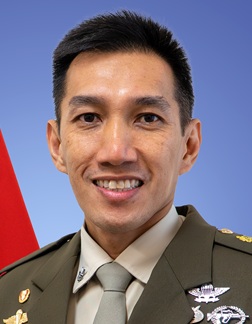
Col Lew Tze Soon is presently the Deputy Chief Guards Officer in the Guards Formation, Singapore Armed Forces (SAF). He is concurrently the Director of Changi Regional Humanitarian Assistance and Disaster Relief (HADR) Coordination Centre (Changi RHCC).
Enlisted into the SAF on 2 October 2001, Col Lew was commissioned as a sword of merit on 5 October 2002, and completed the Guards Officers Conversion Course in 2003. He has served in numerous command and staff appointments in the SAF over the last two decades.
Col Lew’s key command appointments included Commanding Officer, 3rd Battalion Singapore Guards, and Delta Wing Commander, Officer Cadet School (OCS). His staff appointments included Head Operations in 1st Battalion Singapore Guards, Head Plans in Headquarters Personnel Command (HQ PERSCOM), and Head SAF Manpower Operations in Joint Manpower Department (JMPD). Prior to his present appointment, Col Lew was the Chief of Staff in Headquarters Medical Command (HQ MC).
As Director RHCC, Col Lew looks forward to strengthen the regional and global HADR networks, as well as the disaster relief preparedness of the SAF with its partners.
Lim Junli is a Research Fellow with the Humanitarian Assistance and Disaster Relief (HADR) programme, Institute of Defence and Strategic Studies (IDSS), at RSIS. She is an international lawyer focussed on issues of public international law including international humanitarian, refugee, and disaster law.
Junli has experience at international criminal tribunals, and has served as a consultant with a range of international institutions including the Judicial Integrity Group, Deutsche Gesellschaft für Internationale Zusammenarbeit (GIZ), Konrad Adenauer Stiftung, the European Institute of Peace, and the Women’s Initiative for Gender Justice. In 2021, she supported evacuation efforts from Afghanistan and was part of the team at Atlas Women to be awarded the PILnet Pro Bono Publico Award. Since 2023, she has been mentoring legal representatives for victims of conflict-related sexual violence in Ukraine.
Junli holds a BA (Hons.) in political science from the National University of Singapore and University of Melbourne. She graduated with a MA (Research) from the University of Melbourne and a Master of Laws (J.D.) from Monash University.
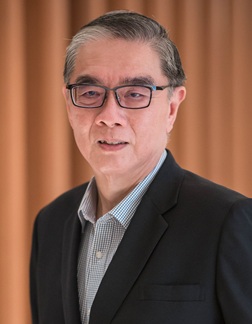
Ambassador Ong Keng Yong is Executive Deputy Chairman of the S. Rajaratnam School of International Studies (RSIS) at the Nanyang Technological University in Singapore. He is concurrently Director of the Institute of Defence and Strategic Studies (IDSS) and Head of International Centre for Political Violence and Terrorism Research (ICPVTR) at RSIS.
Mr Ong continues to hold the position of Ambassador-at-Large at the Singapore Ministry of Foreign Affairs. He is also Singapore’s Non-Resident Ambassador to Iran. Mr Ong chairs Humanity Matters, a non-profit humanitarian organisation focused on inter-faith understanding and volunteerism, and is based in Singapore.
Mr Ong was High Commissioner of Singapore to Malaysia from 2011 to 2014. He served as High Commissioner of Singapore to India and concurrently Singapore’s Ambassador to Nepal from 1996 to 1998.
Mr Ong served as the 11th Secretary-General of ASEAN (Association of Southeast Asian Nations), based in Jakarta, Indonesia, for 5 years from January 2003.
Mr Ong started his diplomatic career in 1979 and was posted to the Singapore Embassies in Saudi Arabia, Malaysia, and the United States of America between 1984 and 1994. From September 1998 to December 2002, he was Press Secretary to the then Prime Minister of Singapore, Mr Goh Chok Tong, while holding senior appointments in the Ministry of Information, Communications and the Arts, and the People’s Association in Singapore. From 2008 to 2011, he served as Director of the Institute of Policy Studies (IPS) in the Lee Kuan Yew School of Public Policy at the National University of Singapore. Mr Ong was the Chairman of the Singapore International Foundation (SIF) from 2015 to 2023.
Mr Ong graduated from the then University of Singapore with a LLB (Hons). He studied at Georgetown University in Washington D.C., USA, and graduated with a MA in Arab Studies.
Registration
Welcome Remarks
Keynote Address
Break
Panel Session 1: Frontiers in Civil-Military Dynamics in Conflcit and Disasters (TBC)
Lunch
Panel Session 2: Harmful Information in Times of Crisis
Break
Panel Session 3: Navigating Humanitarian Dilemmas and Trends of Today
Townhall/Sharing Session
Closing Remarks
Cocktail Reception