


 Add to Google calendar
 Add to Outlook calendar
Abstract
The rapid development and widespread accessibility of artificial intelligence (AI) is transforming the global information environment, creating both new opportunities and significant risks. One growing concern is the increasing use of AI by malicious actors to generate and disseminate disinformation and misinformation at scale. Recent trends suggest that influence operations are becoming both more frequent and more sophisticated. Technology platforms have reported a steady rise in coordinated campaigns designed to manipulate public discourse and exploit vulnerabilities in the online information ecosystem. AI tools can automate the production of disinformation, flood digital spaces with competing narratives, and personalise propaganda for targeted audiences. Such tactics can overwhelm information environments, dilute credible reporting, and gradually erode public trust in institutions and media sources.
These developments carry particular implications for highly connected societies such as Singapore. With high internet penetration, widespread social media usage, and a multilingual population, AI-enabled translation and localisation can rapidly expand the reach of disinformation campaigns across different communities. As AI technologies continue to evolve, understanding how these tools may be exploited for influence operations, and how they can be harnessed to strengthen information resilience has become increasingly important.
At the same time, AI also presents promising capabilities for detecting and countering disinformation. A growing ecosystem of AI-enabled platforms now supports the monitoring of online discourse, verification of digital media, and detection of coordinated inauthentic behaviour. By combining techniques such as natural language processing, network analysis, sentiment analysis, and multimedia verification, these tools can assist analysts in identifying emerging narratives, tracing influence networks, and assessing the dynamics of information manipulation campaigns.
This roundtable is convened to examine the evolving role of AI in the disinformation landscape. It will explore how governments and organisations can develop more effective, data-driven strategies to safeguard information integrity. The discussion will also address the ethical and practical challenges associated with deploying AI in strategic communications and public information environments.
About the Speakers
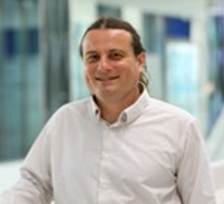 Preslav Nakov is a Professor and the Department Chair for Natural Language Processing (NLP) at the Mohamed bin Zayed University of Artificial Intelligence (MBZUAI). Prior to joining MBZUAI, he was a Principal Scientist at the Qatar Computing Research Institute (QCRI), HBKU, where he led the Tanbih mega-project in collaboration with MIT, aiming to limit the impact of digital propaganda and media bias. He received his PhD in Computer Science from the University of California, Berkeley. Dr Nakov is a leading global expert on online disinformation, fact-checking, and media bias detection, having published over 300 peer-reviewed research papers. He currently serves as the Chair of the European Chapter of the Association for Computational Linguistics (EACL) and is a secretary of the board of trustees for Truth and Trust Online (TTO).
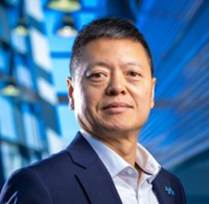 Siwei Lyu is a SUNY Distinguished Professor and Empire Innovation Professor in the Department of Computer Science and Engineering at the University at Buffalo. He serves as the Director of the UB Institute for Artificial Intelligence and Data Science and is the founding Co-Director of the Center for Information Integrity (CII). He earned his PhD in Computer Science from Dartmouth College. Dr Lyu’s research centers on digital media forensics, computer vision, and machine learning, with a heavy emphasis on developing counter-technologies against deepfakes and synthetic media manipulation. He is the creator of the open-source deepfake detection platform DeepFake-o-Meter and is a recognized Fellow of the IEEE and the International Association for Pattern Recognition (IAPR).
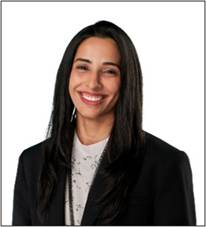 Kokil Jaidka is an Associate Professor of Computational Communication at the National University of Singapore (NUS), where she holds an affiliate position at the NUS Institute of Data Sciences. Her research focuses on developing computational language models to analyse computer-mediated communication, specifically examining how algorithmic design and social networks shape public discourse, political behavior, and digital information resilience. She is the Principal Investigator on a major Ministry of Education Tier 3 grant evaluating long-term digital information resilience against online misinformation. Dr Jaidka holds a PhD in Information Studies from Nanyang Technological University (NTU) and previously completed postdoctoral research fellowships at both NTU and the University of Pennsylvania’s World Wellbeing Project.