
 Add to Google calendar
 Add to Outlook calendar
Abstract
US–China relations today stand at the edge of a precarious “Balance of Terror” in which economic and technological interdependence replaces Cold War nuclear deterrence. Rather than fully decoupling, both powers wield asymmetric choke points against each other. The United States retains dominance in advanced AI chips, semiconductor equipment, and design software, using export controls to slow China’s technological progress. China, meanwhile, controls most of the world’s rare-earth processing and magnet production, giving it leverage over key US industries, including defense, semiconductors, and clean energy. Both countries also know that the economic interdependence also meant that any strategic miscalculation could lead to catastrophic economic destruction for the two countries, and for the rest of the world. At the May 2026 Trump–Xi summit, both sides agreed to a temporary truce. However, the agreement addressed symptoms rather than underlying tensions. The likely future is not cooperation but managed rivalry: fragmented supply chains, continued diversification efforts, and periodic trade truces punctuated by renewed technological and resource warfare. The speaker will examine these issues in detail and also the strategic implications for ASEAN and Singapore.
About the Speaker
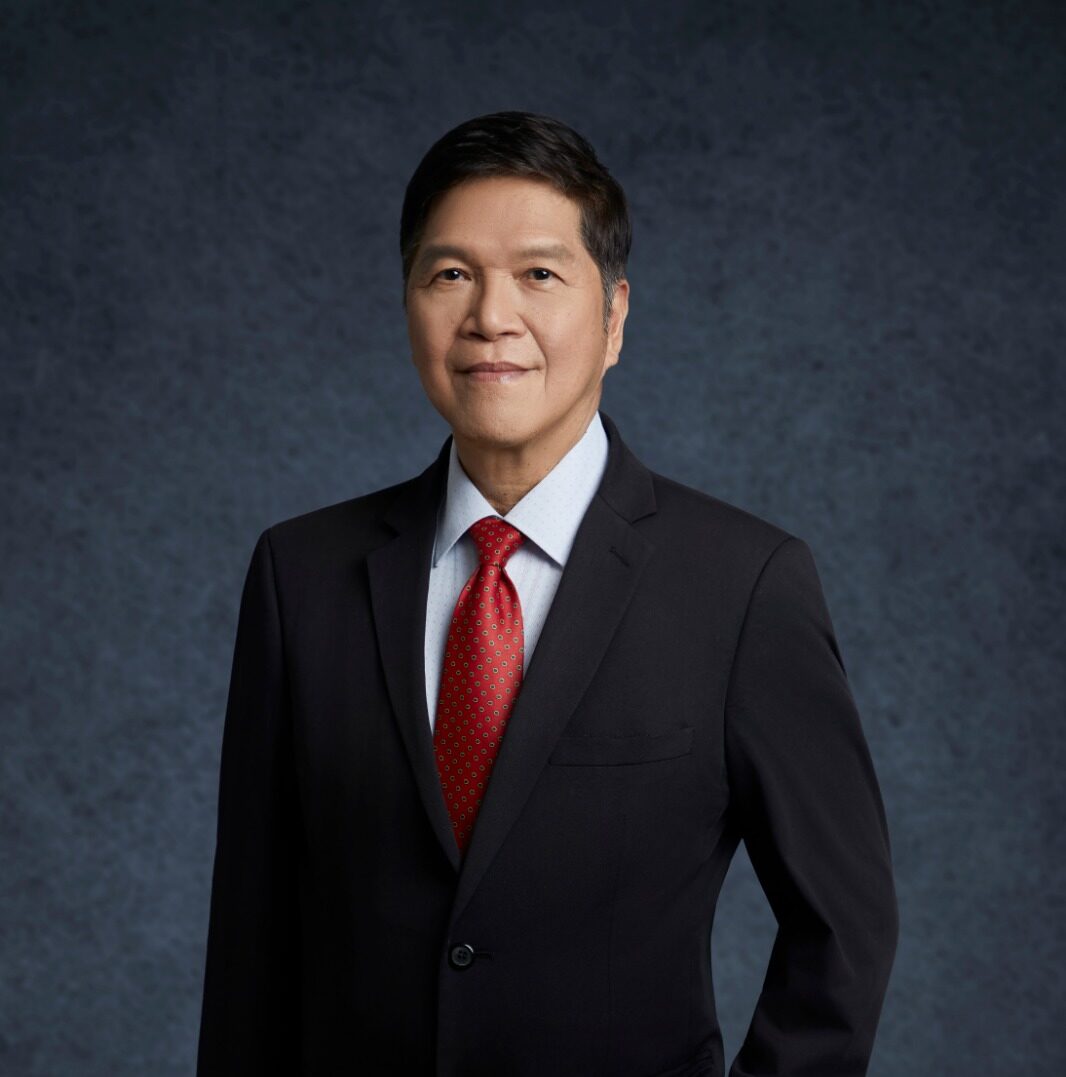
Tan Kong Yam is Emeritus Professor of Economics at the Nanyang Technological University in Singapore. He was a board member of Changi Airport Group (2014-2024).
From 1985-88, he was an assistant director in the Monetary Authority of Singapore in charge of exchange rate policy. He was the chief assistant to Dr Goh Keng Swee, the late deputy Prime Minister of Singapore invited by Mr Deng Xiaoping to advise China on economic development strategy (1985-95).
From 2002 to 2005, he was a senior economist at the World Bank office in Beijing where he worked on the 11th Five Year Plan with the State Council. Prior to that, he was the chief economist of the Singapore government (1999-2002).
He was also the director of the Asia Competitiveness Institute at the Lee Kuan Yew School of Public Policy (2010-2020). In 2018, the Institute completed a major study project on “Business Environment of 28 Indian States” for PM Modi’s office.
He has taught in the mayor program in NTU for over 10 years. His students are mayors and senior government officials from China doing their MPA program in Singapore. He has taught over 6,000 officials, businessmen and entrepreneurs from China in various programs over the past 25 years.
He is a graduate of Princeton (1975-79, class of 1931 scholar, Paul Volcker Thesis prize) and Stanford University where he completed his Master and PhD in three years (1980-83).
His research interests are in international trade and finance, economic reforms in China. He has published twelve books and articles in major international journals. He has also consulted for many organizations including Temasek, GIC, IBM, China Construction Bank.