


 Add to Google calendar
 Add to Outlook calendar
Abstract
In many cities across the world, Sikh gurdwaras quietly reshape the urban landscape. Often encountered in unexpected locations, they function not only as places of worship but as vital spaces of community life, hospitality, and social participation. Through their architecture, gurdwaras make diasporic presences visible, translating religious tradition into built forms that engage with the everyday realities of the city.
Through the European project GAP – Gurdwara Architecture in DiasPora, funded by the Marie Skłodowska-Curie Actions, Dr Silvia Omenetto investigates how gurdwaras are produced, perceived, and lived in contrasting contexts such as Singapore and Italy. In Singapore, where the Sikh community has a long-established history, gurdwaras appear as prominent and officially recognized landmarks, carefully integrated into dense and highly regulated urban environments. In Italy, where Sikh migration is more recent and spatially dispersed, gurdwaras often emerge through the adaptive reuse of existing buildings in peri-urban or rural settings, giving rise to hybrid architectures shaped by local constraints and opportunities.
By reading gurdwaras as architectural and social practices, the project highlights their role as spaces where tradition, innovation, and public visibility are continuously negotiated, revealing how religious architecture can foster inclusion and social cohesion within diverse diasporic landscapes.
About the Speaker
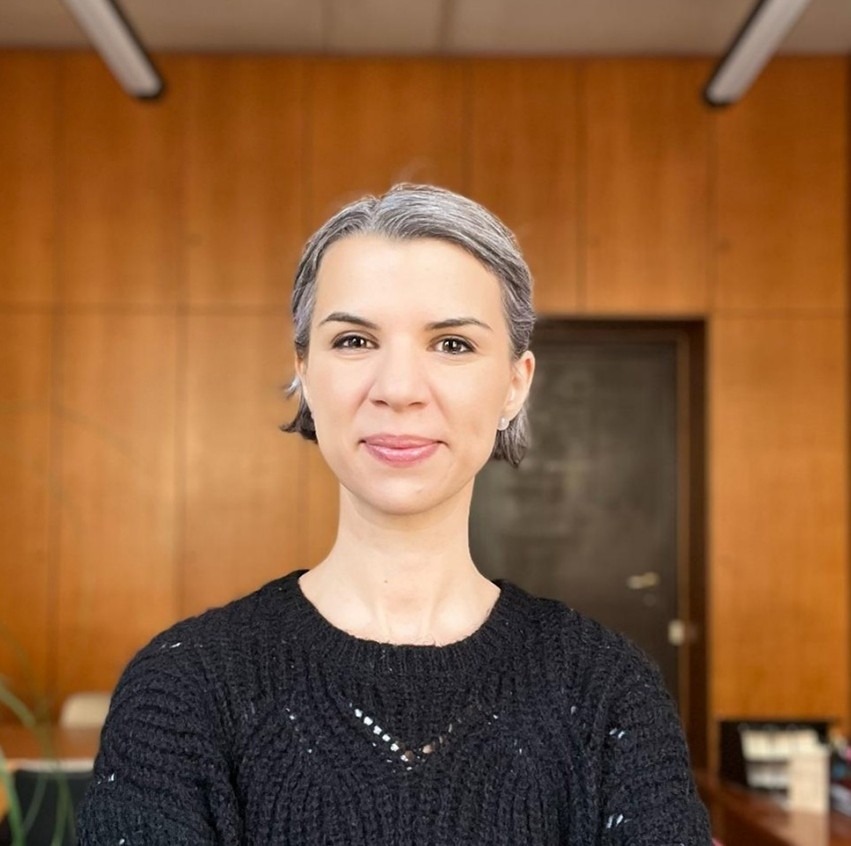
Silvia Omenetto is a Marie Skłodowska-Curie Postdoctoral Global Fellow at the Department of History, Anthropology, Religions, Arts and Performance Studies, Sapienza University of Rome, and a Visiting Scholar at the College of Integrative Studies, Singapore Management University. She is a member of the Sharp Lab research group, which focuses on the study of shared religious spaces. Her current research analyses the architectural transformations of Sikh temples between Italy and Singapore.
Her work examines the materiality of religions in urban space, religious and funerary architectures, and the use of digital humanities methods, particularly GIS, for spatial analysis of religion.
She is the recipient of the 3rd “Costantino Caldo” Scientific Award (2023). Her recent publications include “GIS Analysis of the Location of the Great Mosque of Rome” (Historia Religionum, 2024).