


 Add to Google calendar
 Add to Outlook calendar
Abstract
Russia’s full-scale invasion of Ukraine in 2022 has brought renewed attention to the Central Asian region’s continued geopolitical, security, energy and infrastructural dependence on Russia, and to the persistence of an imperial frame shaping these relationships. In response, Central Asian states have intensified their long-standing multivectoral strategies, seeking to diversify trade, energy and transport routes, security partnerships, and labour migration destinations, while publicly reaffirming close strategic ties with Russia and maintaining neutrality in the war.
While ruling elites have adopted a cautious and deferential stance towards Moscow, calls for “decolonisation” (“decolonial talk”) are gaining wider resonance in academic, activist and societal spaces, particularly among younger generations. This seminar examines how Central Asian governments navigate this tension: signalling autonomy and sovereignty without provoking confrontation with Russia, while attempting to turn structural constraints into opportunities. It assesses the scope and limits of diversification across economic, security, infrastructural and labour migration domains, and shows how ruling elites selectively appropriate decolonial language to project agency and independence without fundamentally disrupting existing dependencies.
About the Speaker
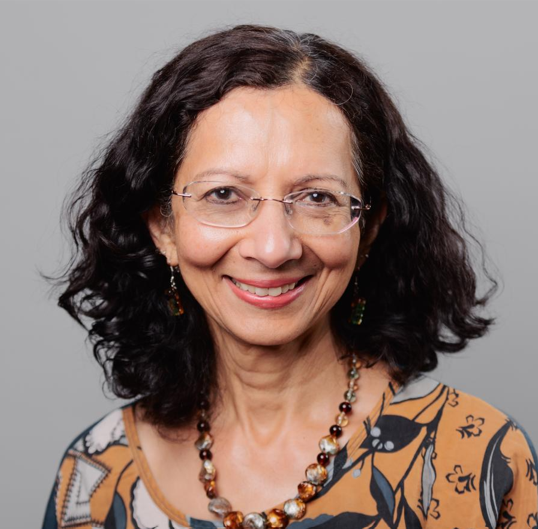
Bhavna Dave (PhD in Political Science from Syracuse University, NY) is Senior Lecturer in Central Asian Politics in the Department of Politics and International Studies at SOAS, University of London. She is the author of the book Kazakhstan: Ethnicity, Language and Power (Routledge: London, 2007). She has published works on issues of labour migration in Kazakhstan and Russia, language and ethnic identities, minorities, elections and patronage in Kazakhstan, and EU-Central Asia relations, the role of the Russian Far East in Russia’s “pivot to Asia” policy, social and security implications of China’s Belt and Road initiative in Central Asia, and India-Central Asia relations. Her research has been supported by funding from British Academy, British Council, Open Society Foundation, IDE (Japan), MacArthur Foundation and research grants from SOAS. Her current research and writing are centred on: 1) geopolitics and alliances in Eurasia, and the consequences of China’s Belt and Road initiative for Central Asian states; and 2) The political economy and legal framework of labour migration in Eurasia and effects on the migrant sending states. She has held positions as Visiting Research Scholar at the Institute of Developing Economies (IDE-JETRO) in Chiba, Japan, S. Rajaratnam School of International Studies (RSIS), Nanyang Technological University, Singapore, and Watson Institute, Brown University. She has taught masterclasses and short courses in Russian at numerous universities across Russia, Kazakhstan, Kyrgyzstan, and Tajikistan.


