


 Add to Google calendar
 Add to Outlook calendar
Abstract
In an age of intensifying great-power competition, governments increasingly define trade, technology, and research as matters of national security. While securitization is often a rational response to strategic rivalry, its unchecked expansion creates a growing problem: over-securitisation. Treating too many domains as existential threats can become self-defeating, undermining innovation, openness, and long-term competitiveness. This problem reflects structural pressures generated by great-power competition, deep interdependence, and domestic political incentives.
This talk introduces bounded securitisation as a framework for managing security risks without eroding the foundations of national strength. The approach emphasizes selectivity, proportionality, and reversibility; distinguishes probable from merely possible threats; and treats openness as a strategic asset rather than a default vulnerability. The argument is illustrated through U.S.–China relations, where economic, technological, and academic exchanges have become increasingly securitised on both sides. These dynamics show how cycles of mutual suspicion can generate security overreach. The broader lesson, however, extends well beyond the U.S.–China case: in an era when “everything” risks becoming national security, the central challenge for states is not whether to securitise, but how to discipline securitisation to avoid strategic self-harm.
About the Speaker
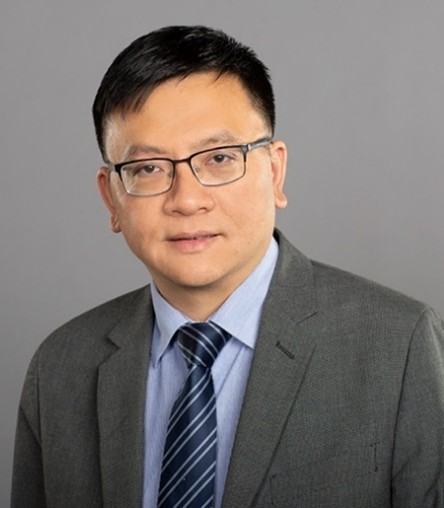 Xiaoyu Pu holds a PhD in Political Science from The Ohio State University (2012) and is an Associate Professor of Political Science at the University of Nevada. He is the author of Rebranding China (Stanford University Press, 2019), and his work has been published in leading journals, including International Security, International Affairs, and The China Quarterly. He serves on the editorial boards of PS: Political Science & Politics, The Chinese Journal of International Politics, and Foreign Affairs Review. He has held fellowships with the Australian National University, the Inter-American Dialogue, Fundação Getulio Vargas (Brazil), the National Committee on U.S.–China Relations, the Penn Project on the Future of U.S.–China Relations, and Princeton University. His research interests include Chinese foreign policy, U.S.–China relations, and international security.


