 Add to Google calendar
 Add to Outlook calendar
Abstract
The American nuclear umbrella has long served as a credible deterrent against North Korea’s nuclear threat. As the US has failed to resolve the North Korean nuclear problem through diplomacy, however, a growing number of South Korean pundits have questioned the reliability of extended nuclear deterrence by the US. They are calling for the redeployment of American tactical nuclear weapons or a NATO type of ‘nuclear sharing.’ Washington has rejected such requests, while adopting the Washington Declaration in April 2023 in which the US agreed to form the Nuclear Consultative Group with South Korea and to engage in joint nuclear planning and exercises as well as intelligence sharing. Nevertheless, hardcore conservatives are still urging the South Korean government to go for nuclear weapons or at least to acquire nuclear latency. This seminar will examine the nature of current debates on Seoul’s pursuit of an independent nuclear path and related costs and benefits as well as constraints and opportunities.
About the Speaker
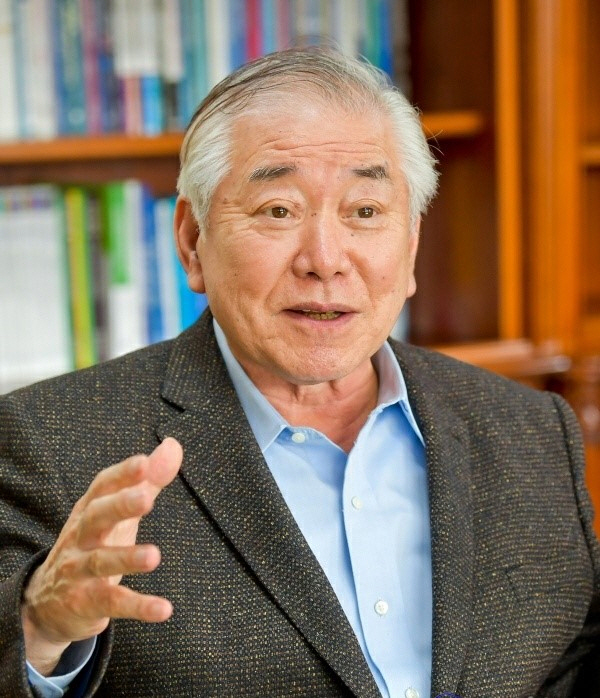 Chung-in Moon is a Vienna-based Global Neighbors fellow and James Laney Distinguished Professor at Yonsei University. He is Vice Chairman of APLN (Asia-Pacific Leadership Network for Nuclear Disarmament and Non-Proliferation). He is also Krause distinguished fellow at School of Global Policy and Strategy at the University of California, San Diego, and editor-in-chief of Global Asia, a quarterly journal in English. He was a special advisor to the ROK president for foreign affairs and national security (2017-2021). He was Chairman of the Sejong Institute (2021-2023) and dean of the Graduate School of International Studies, Yonsei Univ. and served as Ambassador for International Security Affairs of the Korean Ministry of Foreign Affairs and Trade and Chairman of the Presidential Committee on Northeast Asian Cooperation Initiative, a cabinet-level post. Dr. Moon was a special delegate to the first (2000), second (2007), third Korean summit (2018) held in Pyongyang. He has published over 60 books and 300 articles in edited volumes and scholarly journals.