


 Add to Google calendar
 Add to Outlook calendar
Abstract
The humanitarian sector is facing pressure from multiple fronts. A little over a year after the global humanitarian funding cuts, humanitarian actors are being expected to “do more with less”, amid rising crisis needs, constrained financing, and rapid technological change converging. Humanitarian organisations and agencies are confronted with difficult trade-offs between maintaining impact and sustaining operations, often resorting to contraction in personnel, reduced programming, or pressing forward despite uncertainty. Against this backdrop, technological innovation can be viewed as both a lifeline and a liability. The digitalisation of humanitarian response has allowed rapid and large-scale data collection without corresponding safeguards, raising questions on accountability, consent, and transparency. At the same time, generative AI has increasingly become part of the information landscape in crisis-affected environments, introducing risks like model drift and inconsistent or biased outputs that can influence risk perception and trust. Therefore, this webinar examines how the humanitarian sector, broadly understood, can harness innovation effectively under conditions of austerity. It also considers how to mitigate the governance, ethical, and operational risks that emerge from the widespread adoption of data-intensive and AI-enabled technologies in HADR and disaster management. Using recent disaster responses as reference points, it asks what “doing more with less” should mean in an era defined not only by resource scarcity brought about by the global humanitarian funding situation, but also by digital transformation shaped by AI and the increasingly complex, frequent, and severe humanitarian crises triggered by extreme weather events, conflicts, and/or climate change.
About Speakers

Miguel Laverde-Barajas is a geospatial and hydroinformatics scientist with over 15 years of experience developing physical/AI early warning and anticipatory action systems for climate-related disasters. He specialises in integrating satellite remote sensing, numerical modelling, and machine learning to strengthen anticipatory action and disaster risk reduction in Asia and the Pacific region. Miguel holds a Ph.D. in Water Resources and Engineering from the Technical University of Delft, Netherlands, an MSc with honours in Coastal and River Engineering from the National Autonomous University of Mexico, and a BSc in Environmental Management from the District University of Bogota, Colombia.
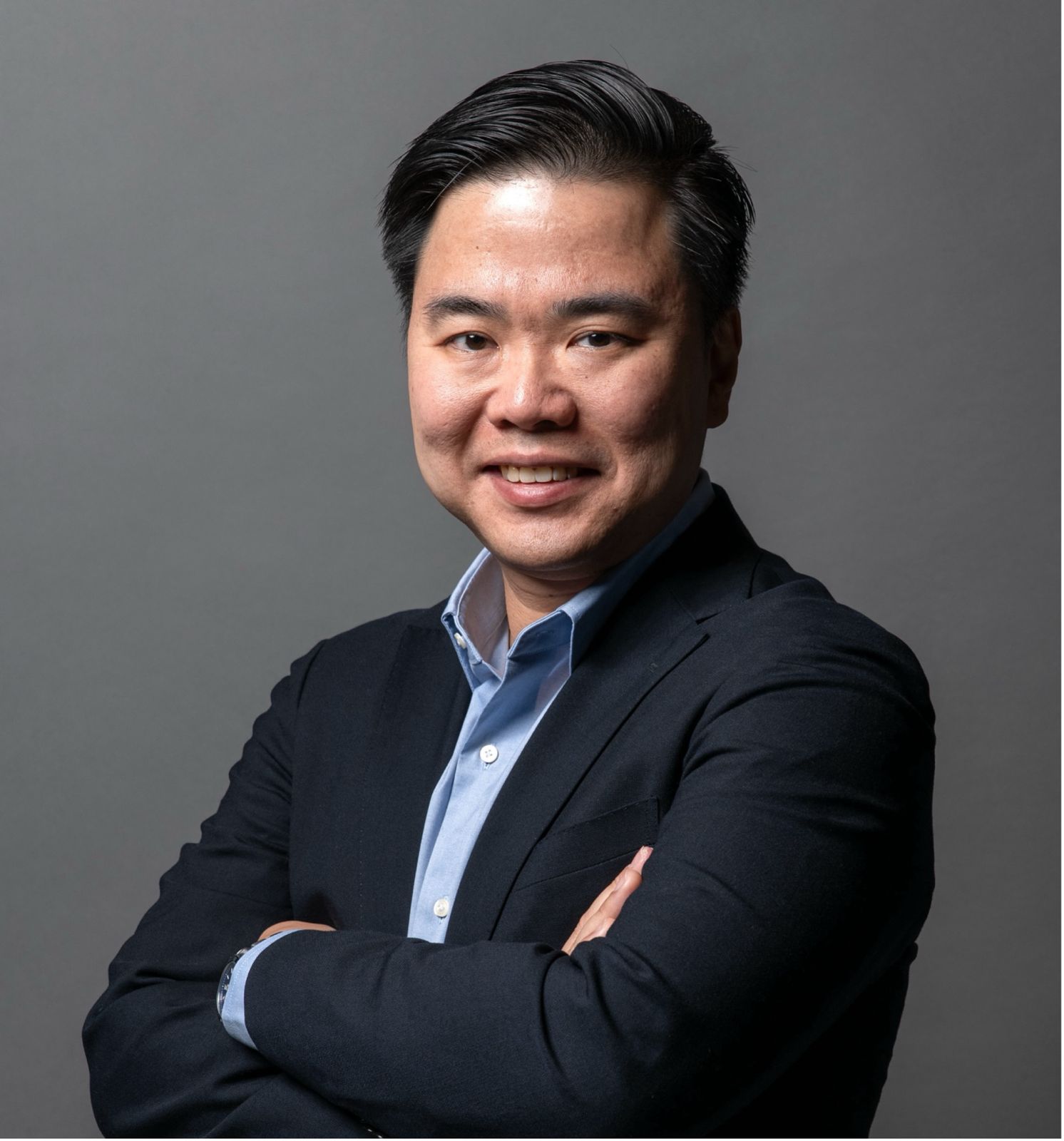 Vincent Kessler is the Chief Executive Officer of Synspective SG Pte. Ltd., where he oversees the company’s strategic direction and business activities across the Asia-Pacific region. Since leading the Singapore branch in 2021, Vincent has focused on expanding Synspective’s footprint in the Synthetic Aperture Radar (SAR) satellite market, fostering key partnerships for disaster management, environmental monitoring, and sustainable industry practices.
A veteran of the geospatial industry since 2006, Vincent began his career at CRISP, Singapore’s national remote sensing ground station. He has since held leadership roles driving sales and business development for high-profile global companies within the sector.
Vincent holds a degree from the National University of Singapore’s Geography Department and an MBA from the University of Birmingham, UK.
 Feye Andal is a geospatial professional and long-time volunteer with OpenStreetMap-Philippines since 2013. She currently leads the WebGIS team at the University of the Philippines Resilience Institute (UPRI) – NOAH Center, where she oversees the development of digital platforms for disaster resilience.
In parallel, she is a GIS consultant at the Asian Development Bank and a former Regional Ambassador for Asia-Pacific of YouthMappers (2020–2024), where she helped establish and grow open mapping communities across the region.
Her work has been recognised internationally, including being named one of Geospatial World’s 50 Rising Stars, and through major awards such as the UN World Food Programme PREP Innovation Challenge (2024) for NOAH’s Impact-Based Flood Forecasting System, and the UP Gawad Pangulo and Ignacio Gimenez Excellence Award for her leadership in UP Resilience Institute YouthMappers.