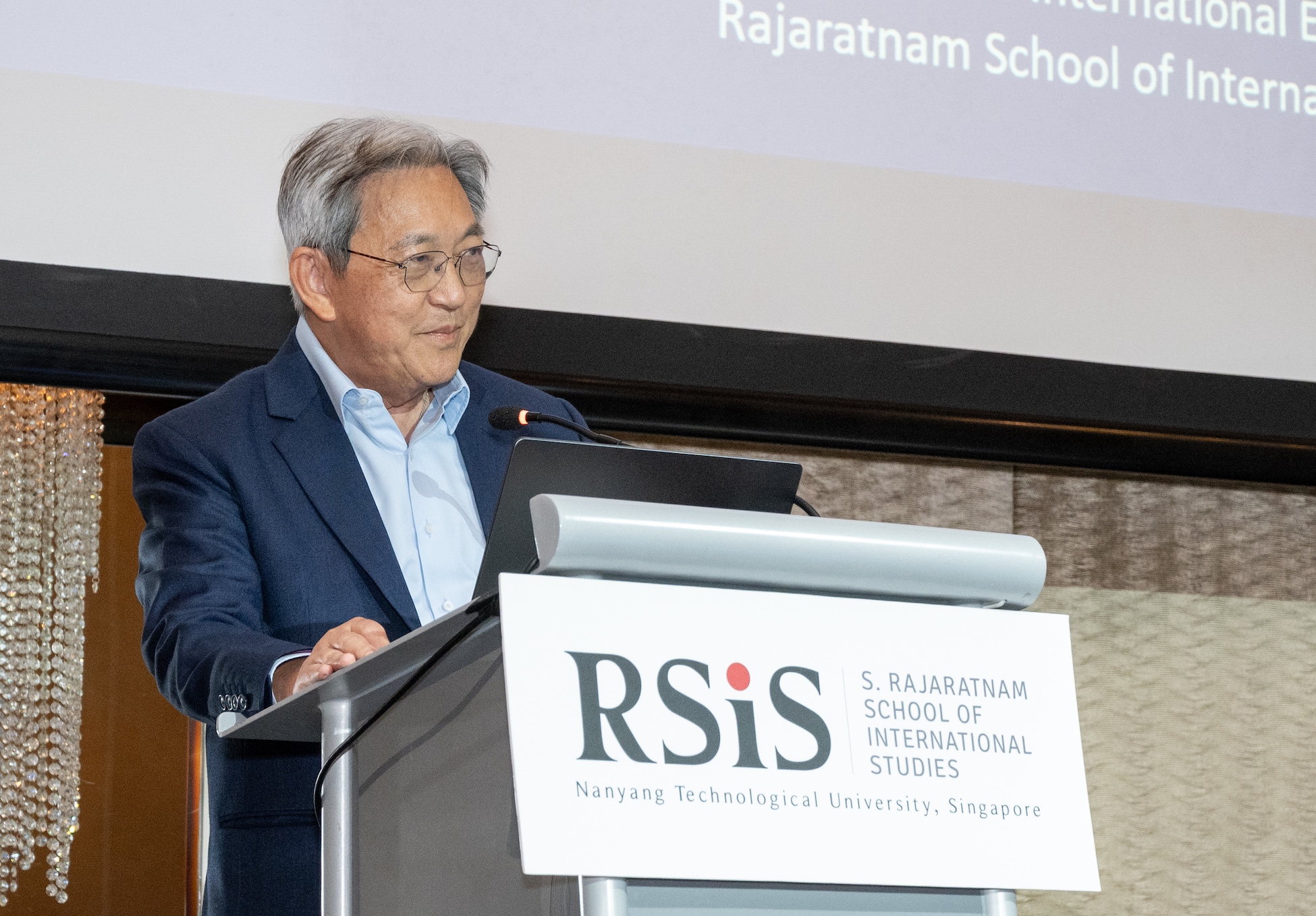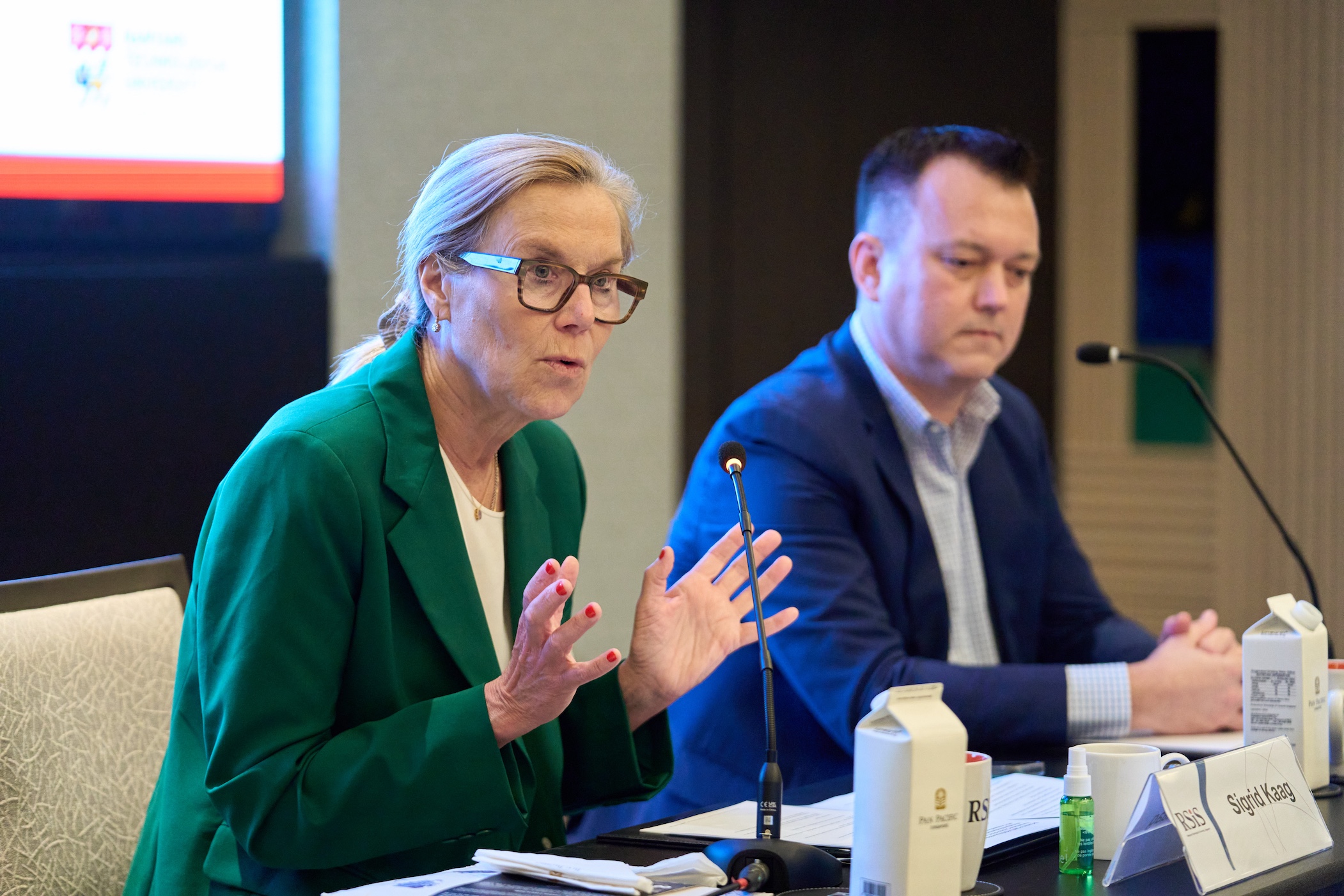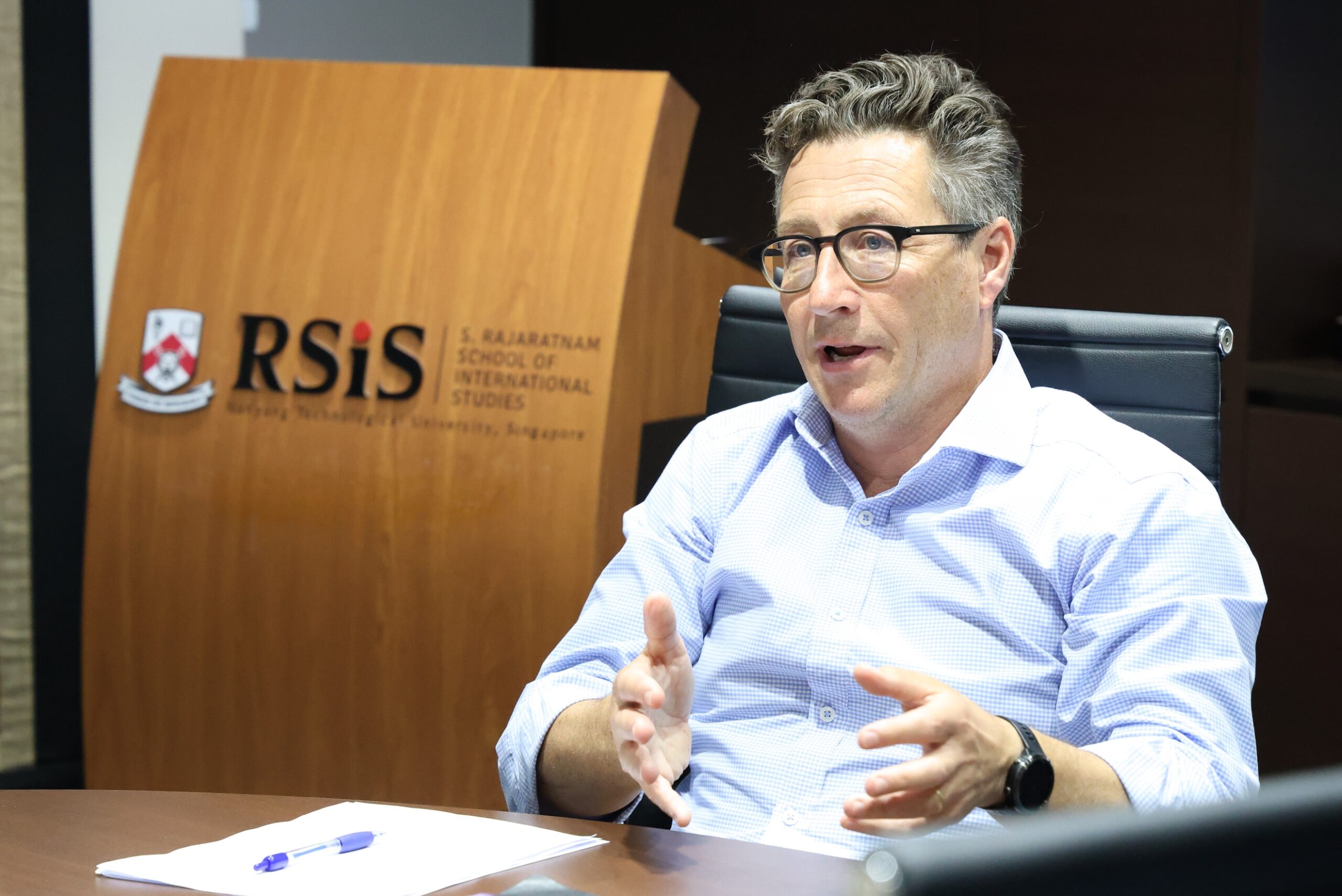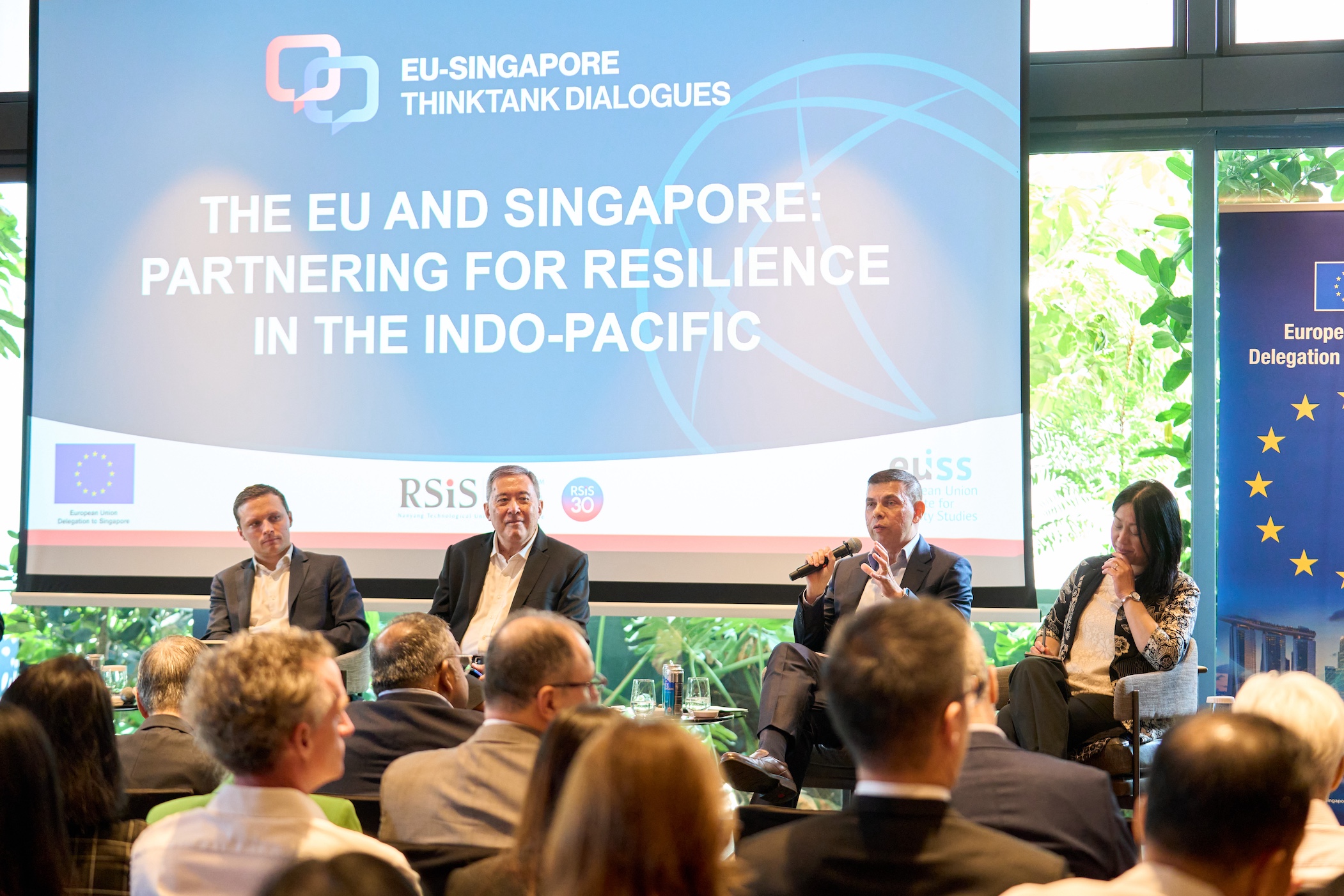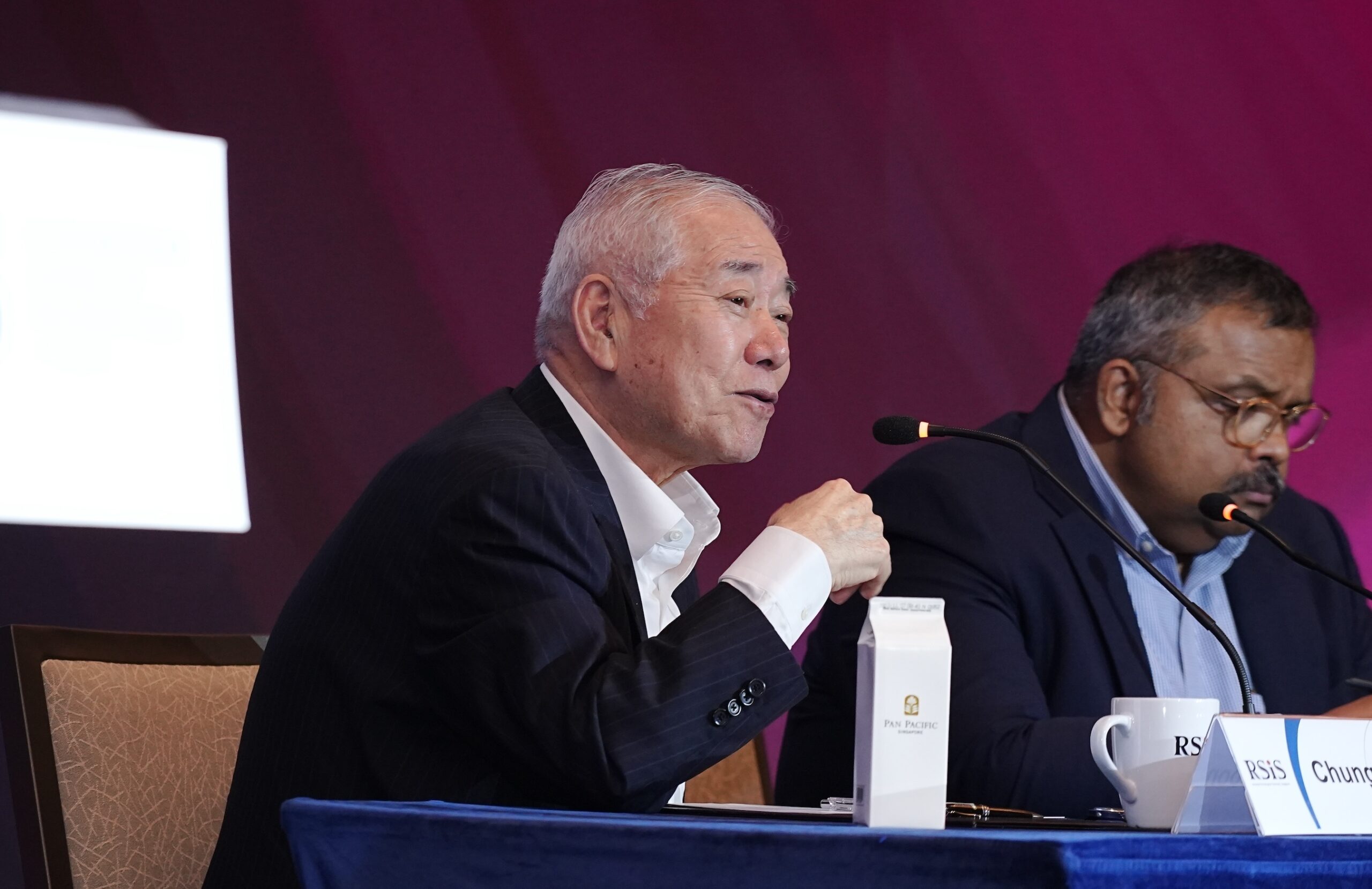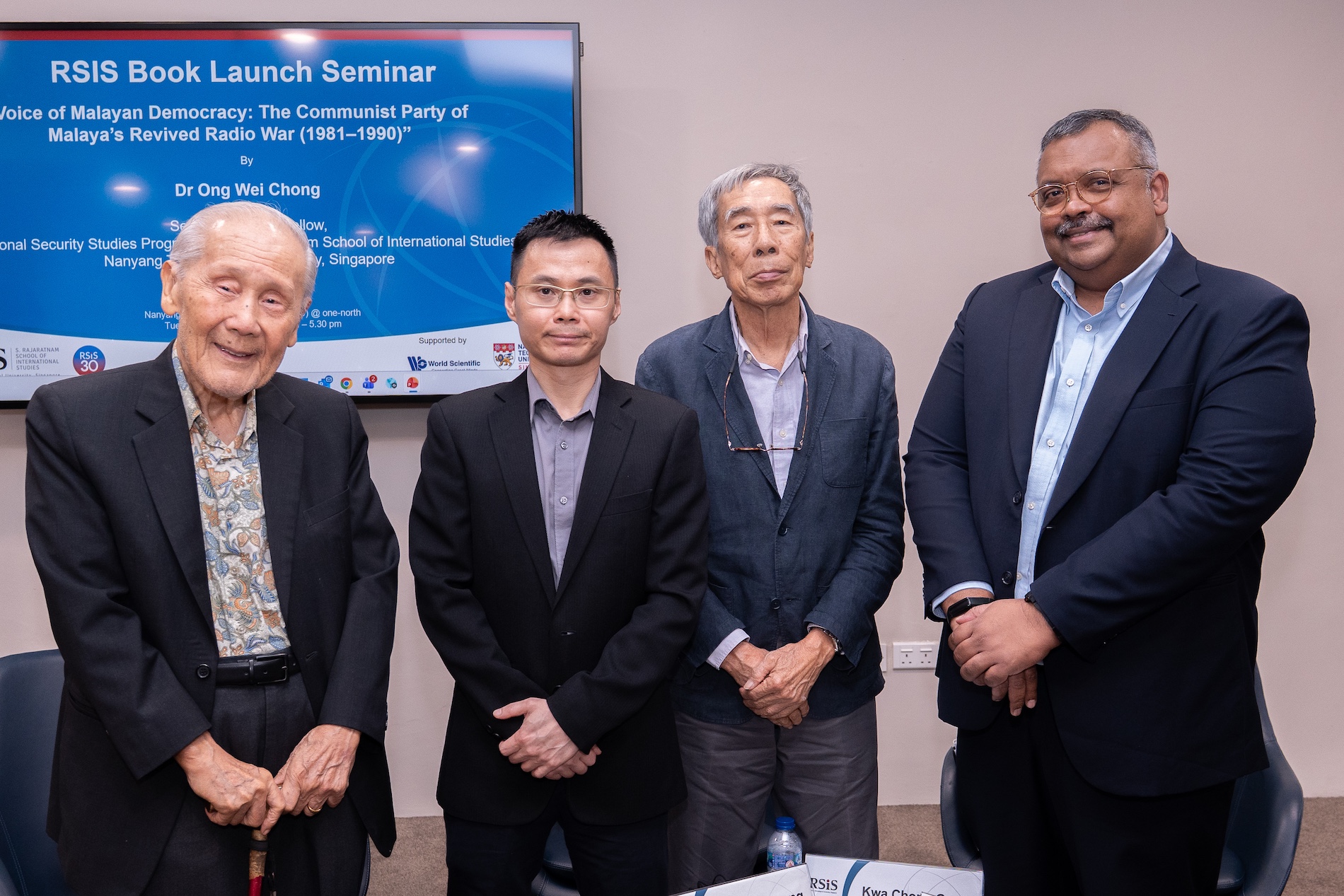

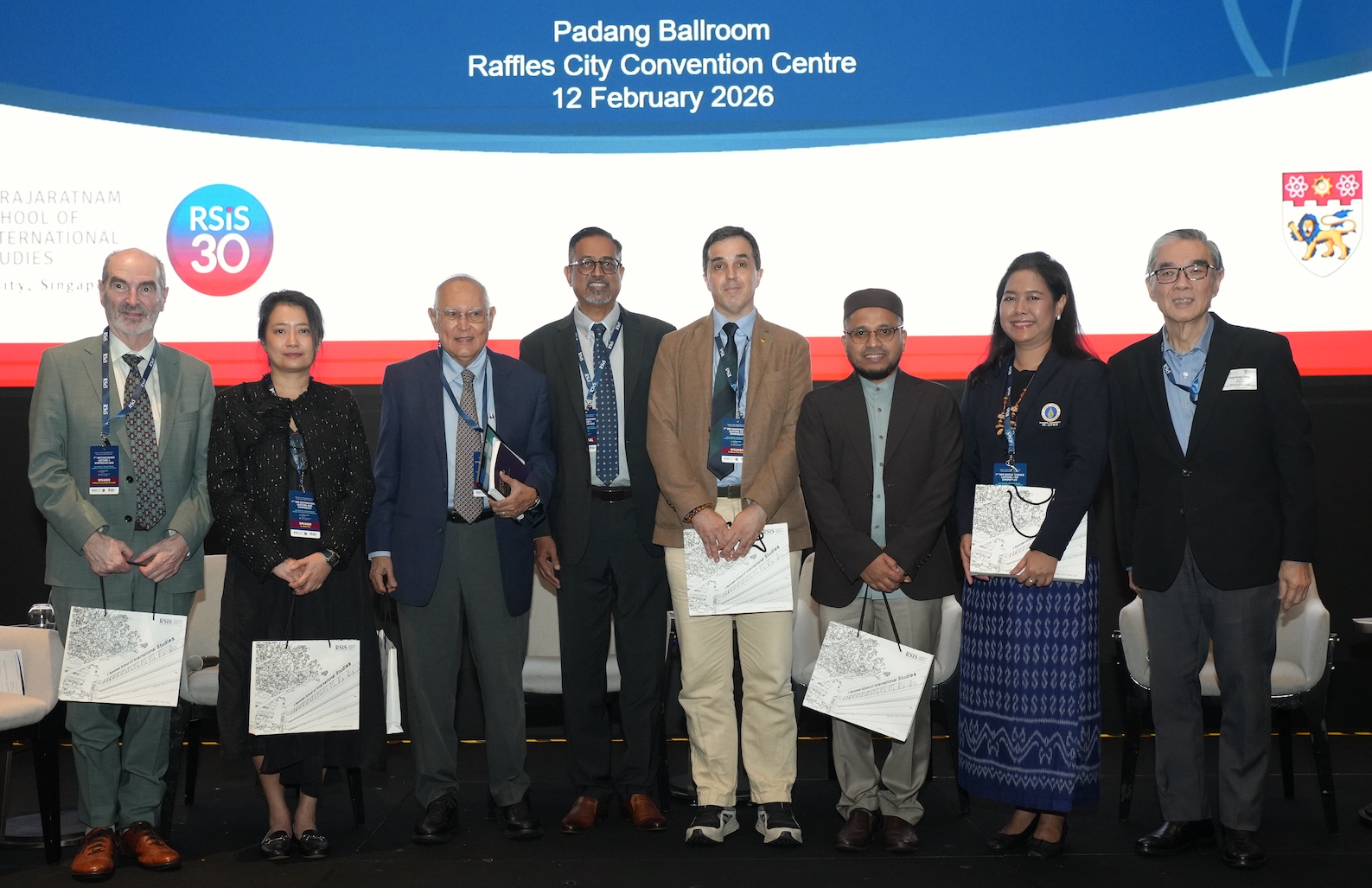
The 7th Distinguished Lecture and Symposium (DLS), convened by the Studies in Inter-religious Relations in Plural Societies (SRP) Programme, was held on 12 February 2026. Themed “Sacred Words, Contested Worlds: Religion, Pluralism and Social Resilience,” the symposium featured distinguished lecturer Professor Perry Schmidt-Leukel from the University of Muenster, as well as esteemed keynote speakers Dr Suphatmet Yunyasit of Mahidol University, Dr Nazirudin Mohd Nasir, Mufti of Singapore; Professor Paul Hedges, Associate Dean (Scholarly Ecosystems) of RSIS; and Dr Jaclyn Neo of the National University of Singapore. The event was attended by about 300 religious and community leaders, interfaith practitioners, public officials, academics, students, and other members of the public.
The symposium opened with an introduction delivered by Mr Mohamed Nassir, head of the SRP Programme. Introducing the theme of the DLS, he noted that sacred texts that teach mercy can also be read to justify cruelty. He argued that the solution to divisiveness in diverse societies is to engage religious texts more deeply, not to turn away from them. He suggested that societies should not suppress difference but should build resilience based on better readings of sacred texts.
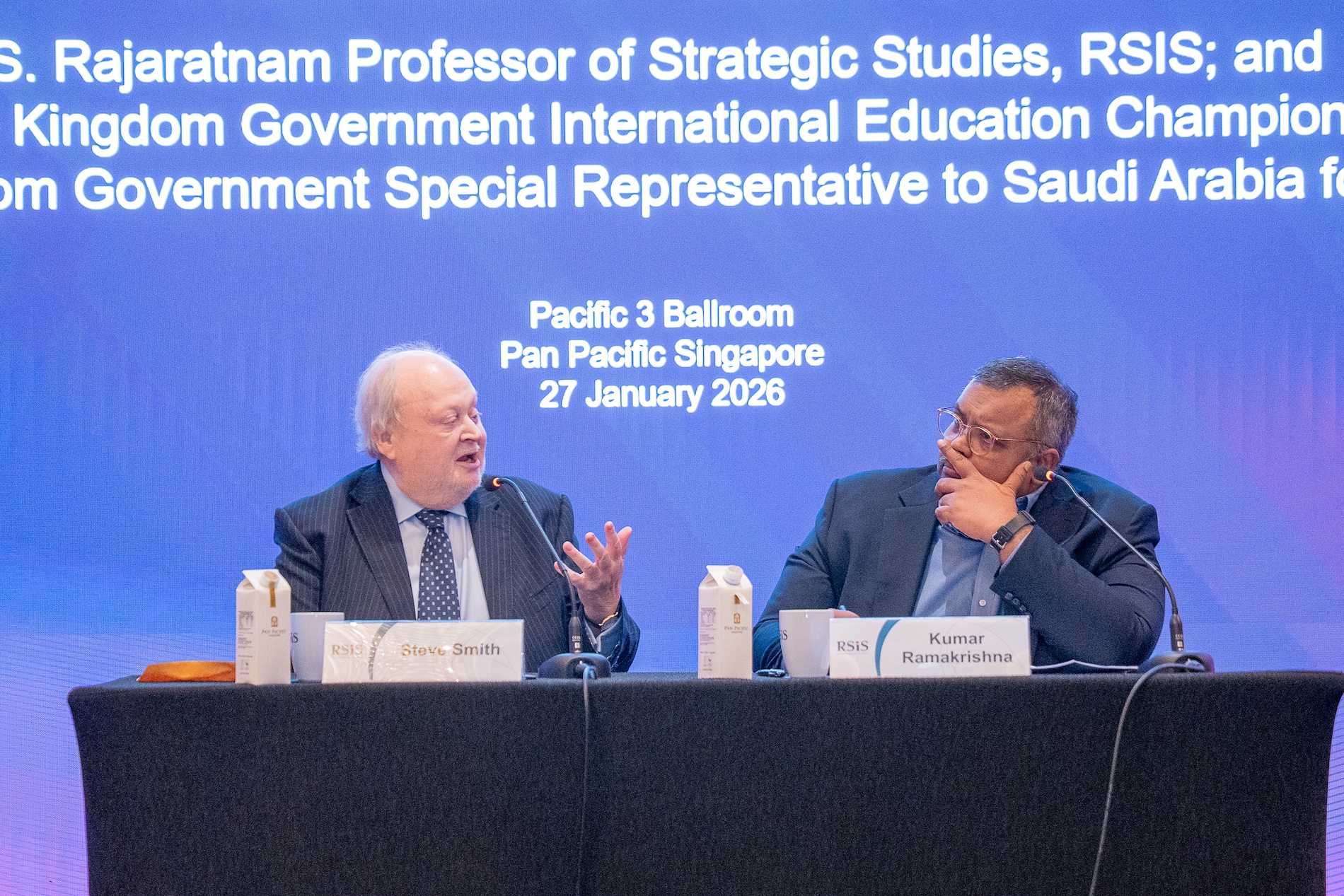
Professor Kumar Ramakrishna, Dean of RSIS, in his welcome remark spoke about global trends towards exclusivism and extremism and observed that we seem to be in an age of “religious fascism” involving violent, xenophobic and misogynistic strains of religion. He noted that this involves the weaponisation of sacred texts, stripping them of historical context and using specific verses as divine mandates for hatred. However, there are means to resist such trends, as demonstrated by the expertise of the symposium speakers.
Prof Perry Schmidt-Leukel then delivered his distinguished lecture titled “The Pluralistic Imperative: An Interreligious Theology for Truth and Peace”. He suggested that only a genuinely pluralistic reading of religious traditions can ground peace and solidarity on a solid basis. While theological, his distinguished lecture was simultaneously oriented towards practical coexistence, demonstrating how sophisticated textual interpretation can directly contribute to social harmony and resilience. Thereafter, Dr Lee Foong Ming of Singapore Buddhist College hosted an audience Q&A session with Professor Schmidt-Leukel.
Next, Dr Suphatmet Yunyasit spotlighted how women navigate and sustain peace in Thailand’s Deep South. Rather than framing women solely as victims of political violence, Dr Suphatmet traced how they absorb the consequences of conflict and, out of necessity, become its most consequential stabilisers at the community level. She noted that trusted faith leaders, dense religious networks, and shared communal spaces remain among the most accessible entry points for grassroots peacebuilding.
In his lecture, “Countering Religious Polarisation in Plural Societies”, Dr Nazirudin argued that while religious texts will continue to be interpreted differently, what is needed to counter exclusionary narratives is “a sacredness that resists contestation”, which goes beyond text and scripture but is instead found in the shared world that humanity inhabits.
Professor Paul Hedges explored how religions can teach both peace and conflict, pointing out examples in Buddhism, Christianity and Islam. He also discussed the way religion can play into the formation of in-groups and out-groups. Finally, he analysed the role of hermeneutics and noted that the decisions we make about the way we read texts are important.
Focusing on the management of religious tensions in Singapore, Dr Jaclyn Neo argued that social cohesion is not accidental but requires deliberate design and calibrated intervention. She outlined a multi-level regulatory ecosystem, including the Maintenance of Religious Harmony Act. Dr Neo identified emerging challenges including the digital amplification of religious speech, generational shifts toward expressive individualism, and even AI-mediated religiosity.
The distinguished lecturer and keynote speakers then gathered for a lively Q&A session moderated by RSIS Distinguished Fellow, Ambassador Barry Desker. RSIS Executive Deputy Chairman Ambassador Ong Keng Yong provided closing remarks to conclude the event.