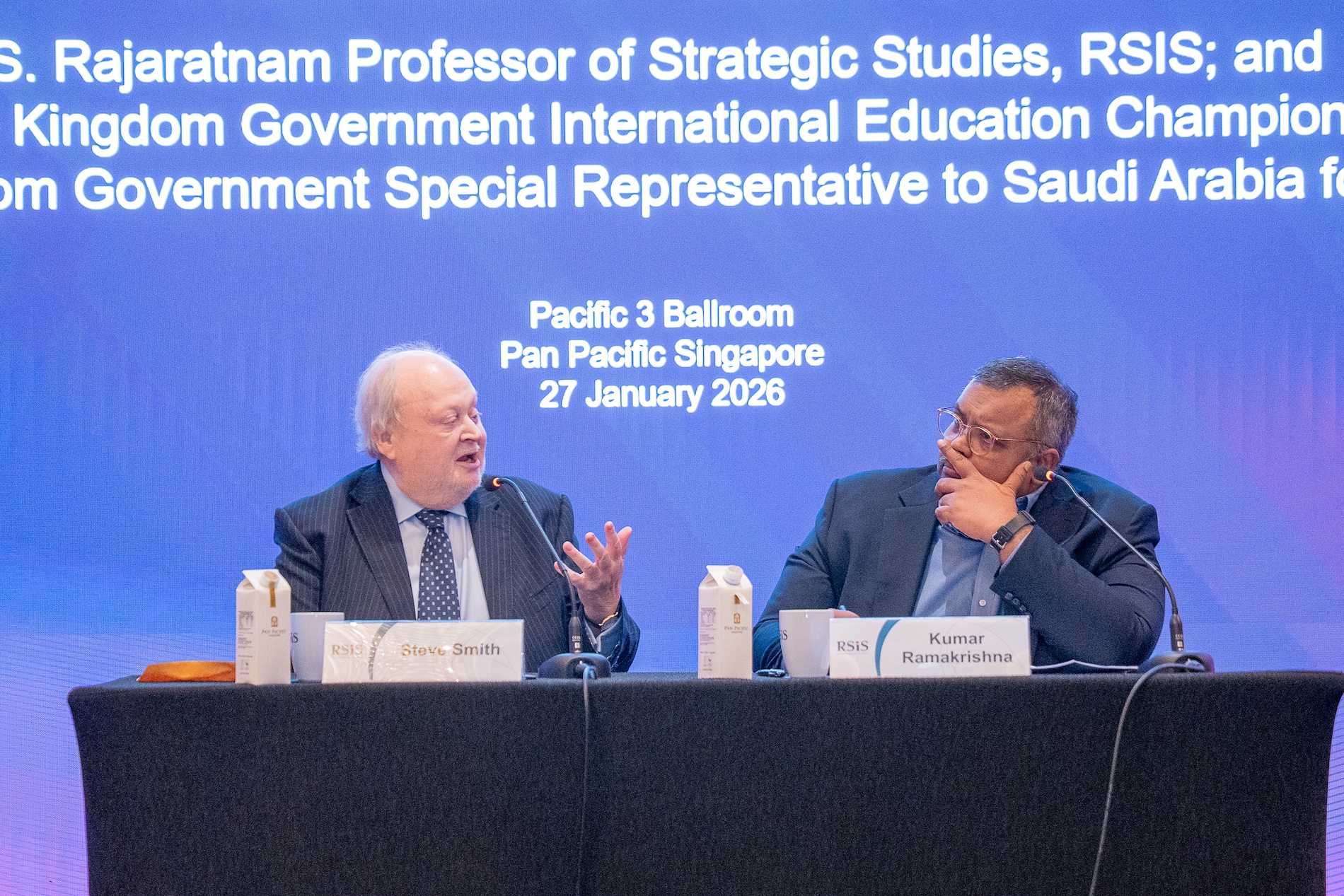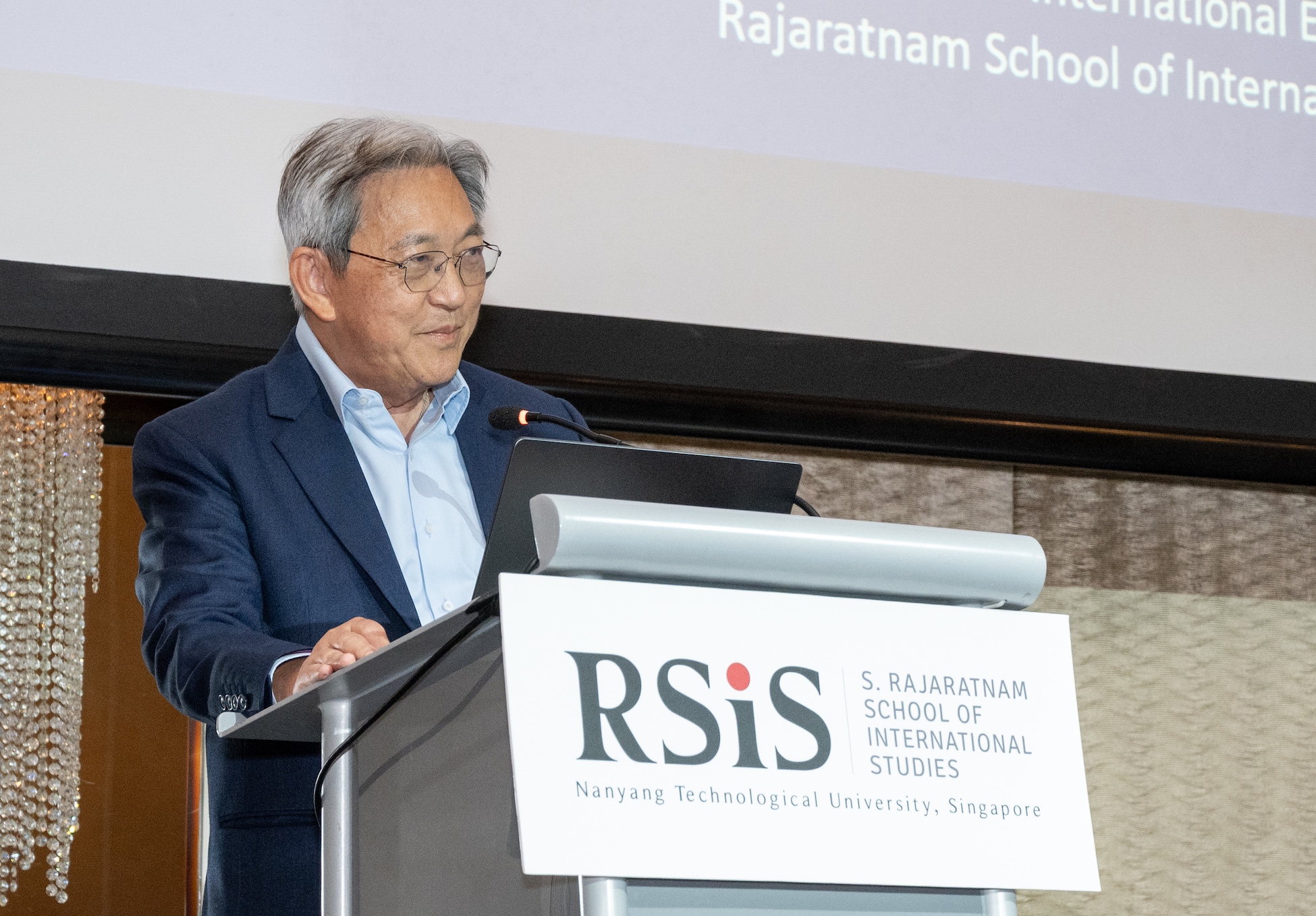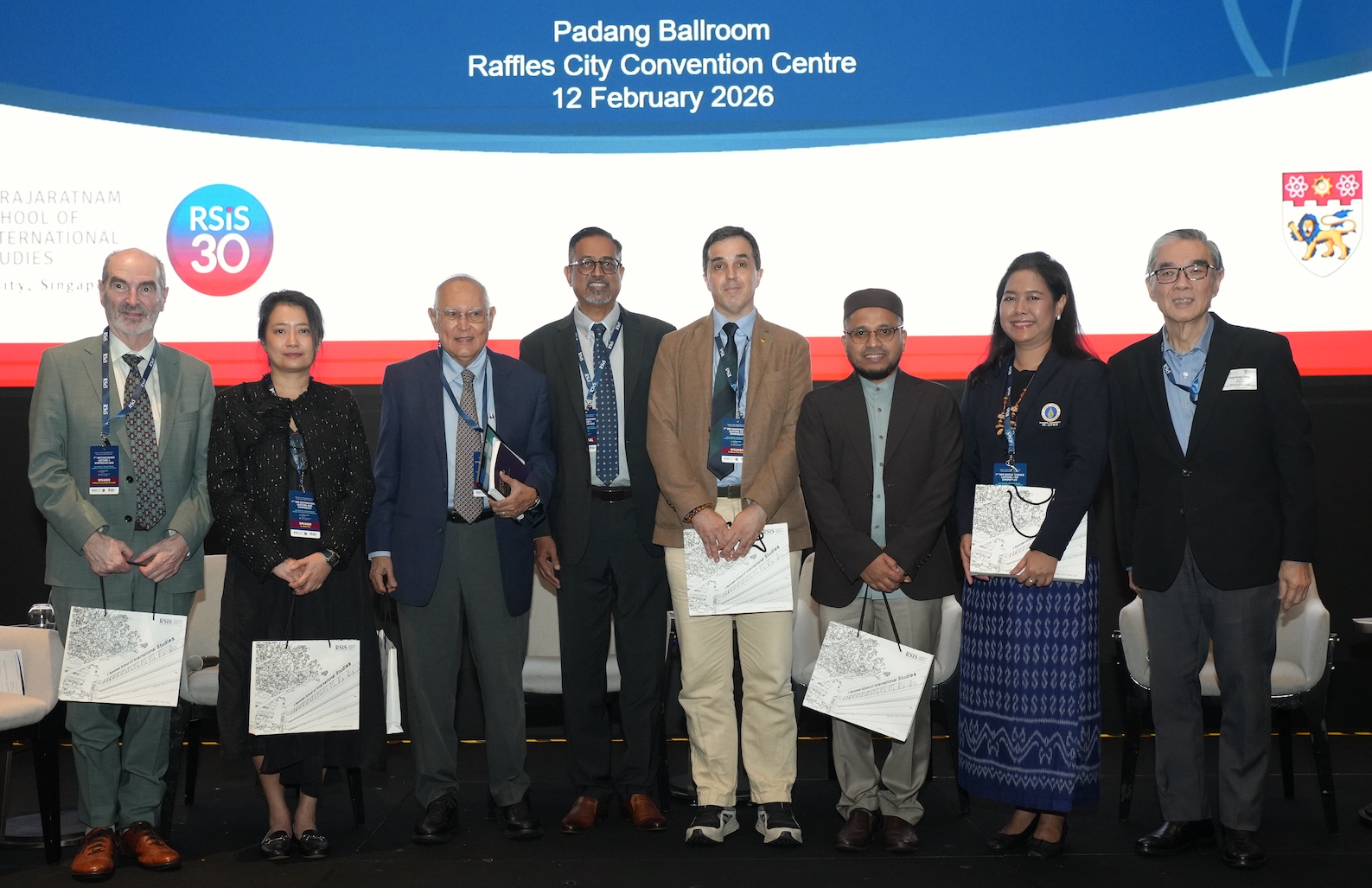



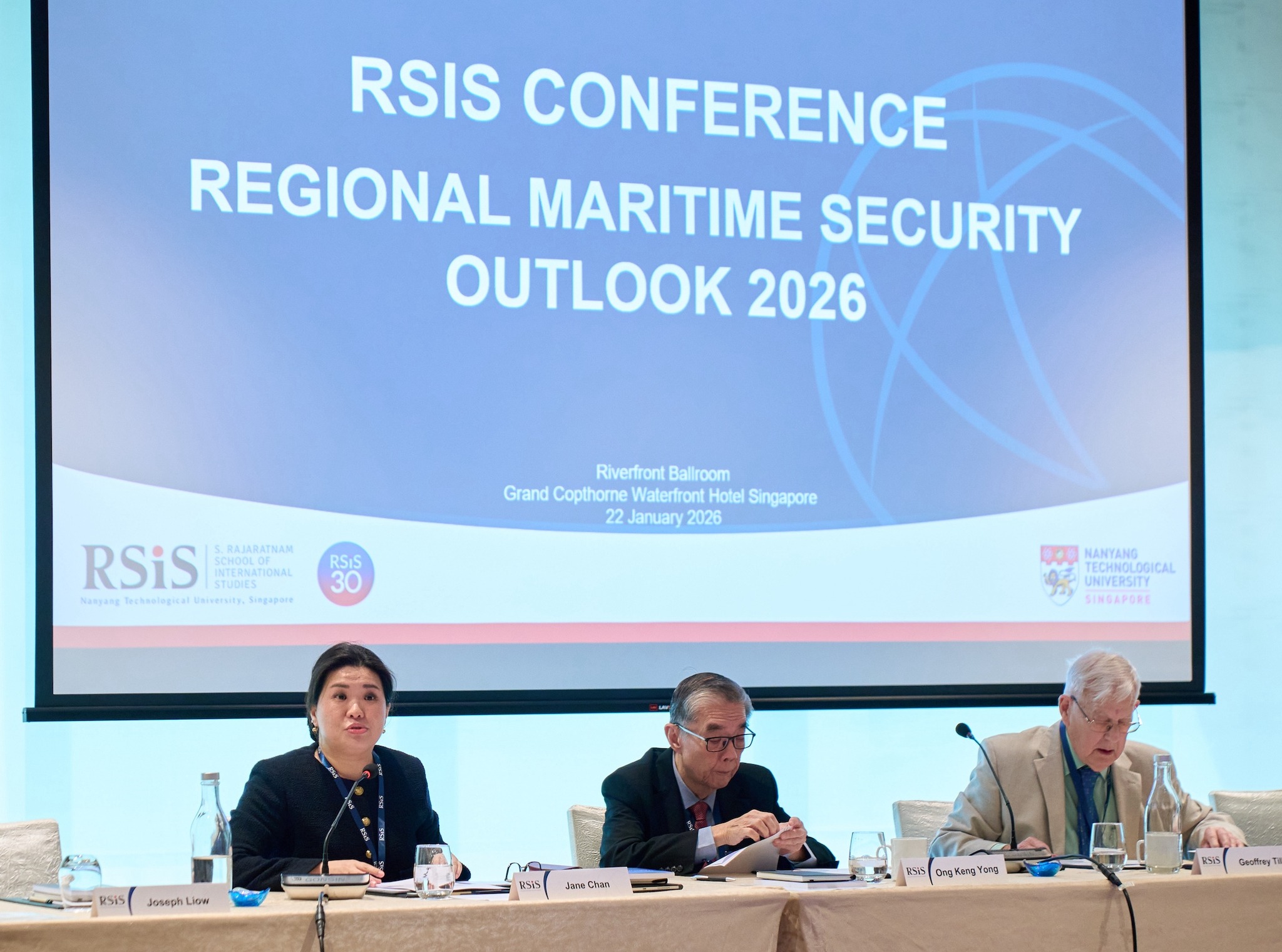
Held from 22 to 23 January, the 2026 Regional Maritime Security Outlook Conference brought together 20 invited experts and over 70 participants from around the world to examine regional changes arising from intensifying great-power rivalry, and how countries in the region are recalibrating their maritime strategies and reassessing the purpose of their alliances.
Organised by the Maritime Security Programme at RSIS, the annual conference is a signature event to discuss the impact of geopolitical dynamics on future maritime security issues and the responses needed to face these issues. This year’s conference convenes against a backdrop of growing strain at sea as strategic competition sharpens and states seek to protect their interests while keeping space for cooperation open.
Participants broadly agreed that the increasingly unrestrained display of power by major powers has compelled middle and smaller powers to re-evaluate their strategies and reassess the limits of tolerable hostile behaviour. Over time, this trend risks undermining the restraining power of international law, posing a dilemma for middle and smaller states as they confront the challenge of how best to maintain their agency under growing pressure.
In the South China Sea, while overall restraint and stability have largely been maintained, states continue to test one another’s limits and contest what constitutes acceptable behaviour. These contestations range from feature reclamation to the expansion of occupation in disputed areas.
The conference also addressed a range of pressing issues, including military modernisation, the growing use of “white hulls,” and the increasing demand for clearer rules of engagement in both peacetime and armed conflict. In peacetime, rules of engagement are increasingly necessary to respond to the expanded use of white hulls as tools for asserting sovereignty, particularly in sensitive areas such as the South China Sea.
Emerging rules and interpretations of international law are also required to secure critical underwater infrastructure against evolving threats. In anticipation of potential conflict escalation, countries such as Indonesia are beginning to reassess existing policy instruments and explore ways to adapt and shape them.