
04 December 2025
IP25113 | China’s Higher Education Initiatives in Indonesia: A Form of Soft Power

KEY TAKEAWAYS
• China has increased its soft power diplomacy in Indonesia over the past decade, notably through its higher education initiatives for Indonesian students.
• China’s higher education initiatives are largely aimed at students from Nahdlatul Ulama and Muhammadiyah – Indonesia’s two largest Islamic organisations.
• Such initiatives can be contrasted with the decisions of the Trump administration to defund or suspend multiple international higher education exchange programmes sponsored by the United States.
COMMENTARY
One of the ways the concept of “soft power” can be operationalised is through educational and cultural exchanges involving the offer of scholarships for tertiary and language studies.
China’s soft power diplomacy is grounded in President Xi Jinping’s vision of a global “community of shared future” – imagined as a human community that is fair and anti-hegemonic. China perceives Indonesia, as the largest state in Southeast Asia, to have an important role in upholding ASEAN Centrality, a view that China officially affirmed in its 2022 position paper on ASEAN. Hence, its people-to-people diplomatic strategy towards Indonesia is crafted with this role in mind.
China’s Higher Education Engagement with Indonesia
China’s soft power diplomacy in Indonesia is achieved increasingly through educational engagement with Indonesia’s largest Islamic organisations. This strategy is significant because academic networks operate across generations and can quietly shape policy preferences over an extended period of time. Over the past decade, educational and cultural cooperation between China and Indonesia has expanded rapidly. Two main channels are now being systematically pursued. The first channel reflects a deliberate effort to reach Indonesia’s most influential social organisations.
Firstly, China provides higher education through Chinese government scholarships for Indonesian students, especially those affiliated with Nahdlatul Ulama (NU) and Muhammadiyah, Indonesia’s two largest Islamic organisations. This approach is part of China’s strategy to maintain close cooperation with NU and Muhammadiyah to project an image of harmony between China’s rise and Islamic moderation. Since 2023, educational cooperation between China and the two Islamic organisations has intensified.
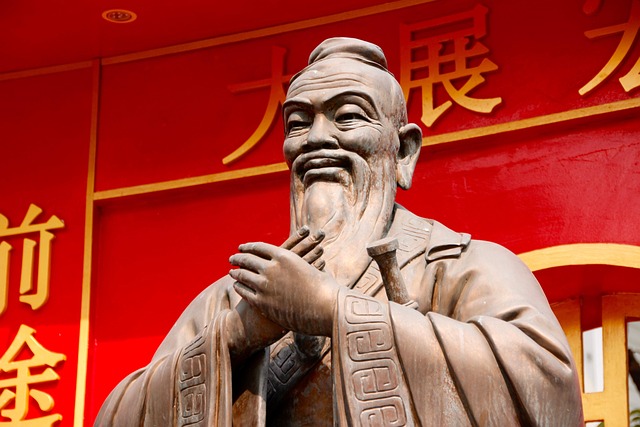
Secondly, China promotes cooperation in language and culture through its Confucius Institutes. By the end of 2023, six Confucius Institutes were operating at Indonesian universities, including the University of Indonesia, Gadjah Mada University and Surabaya State University. Most recently, in January 2024, the Balingkang Confucius Institute was inaugurated as a partnership between the Educational Ganesha University and Xinyang Normal University. The various Confucius Institutes continued to be active through 2024 and 2025: the Tourism Confucius Institute at Udayana University participated in global Chinese language and media programmes, while the Confucius Institute at the Sebelas Maret University organised cultural activities in early 2025. These examples demonstrate how Chinese soft diplomacy operates through academic and cultural networks.
By expanding the resources for local Mandarin language proficiency, Beijing is building a network of business, diplomacy and bureaucracy that will strengthen China’s position at the heart of Indonesian society. This soft power approach targets the younger generation and constitutes a long-term investment in shaping Indonesia’s geopolitical orientation.
The Gen-Z generation who bring home their educational experiences from China may move Indonesia in a different direction from the imagination of today’s political elite, who largely received their tertiary degrees from the United States, Australia and other Western nations. Mandarin proficiency also opens pathways into private sector roles, government posts and academic/research institutions, which could gradually embed Chinese educational networks within Indonesian society.
The Decline of US Higher Education Soft Power
The expanding reach of China’s soft power strategy in Indonesia can be contrasted with the decline of state support for international higher education initiatives in several Western countries, particularly the United States. The decline was particularly significant after a series of decisions made by the second Trump administration, within the first few months of assuming office, to defund or suspend government programmes that supported international education and brought international scholars to share their expertise in the United States.
In February 2025, the US State Department temporarily suspended funding for the Fulbright programme, America’s leading cultural exchange programme which not only supports thousands of domestic students and scholars heading overseas each year but also supports visiting students and scholars to study, teach or conduct research in the United States. This resulted in the cancellation of some awards for FY2025, while other students and scholars had their applications rejected or reassessed due to uncertainties regarding future funding for the programme.
Founded in 1946, the Fulbright Program is one of the most visible tools of American soft power, given that it operates in more than 160 partner countries worldwide, including Indonesia.
In the 2024–25 academic year, there were 1.1 million international students studying in the United States. However, this number has decreased by 17% in the Fall 2025 semester. This drop is due to several measures taken by the Trump administration to restrict new international student visas, including expanded screening and vetting procedures for social media accounts of visa applicants and a proposed new regulation that would scrap the rights of international student to remain in the United States during the entire duration of their study period. Lastly, the administration has issued full and partial travel bans on citizens from 19 countries – including Afghanistan, Myanmar, Iran, Yemen and Cuba – which effectively bar students from these countries from availing themselves of educational opportunities in the United States.
Altogether, these visa restrictions not only have significantly reduced the number of international students in the United States, they also have the potential to adversely affect American soft power in the long run, particularly in countries like Iran, Afghanistan and Cuba, which have long had difficult relations with the United States.
Analysts argue that by significantly restricting international student visas and threatening the long-term sustainability of programmes such as Fulbright, the United States not only risks undermining American soft power overseas, but also limits the administration’s understanding of the likely consequences of its foreign policy. Through such programmes, American students and scholars often learned about how their international counterparts perceived American policies, drawing insights that could have fed back into the American policymaking process.
Managing Educational Soft Power Initiatives
As some analysts have suggested, these two trends – China’s soft power diplomacy, particularly in higher education promotion, and the United States’ downgrading of its various programmes that helped to sustain its soft power – could shift both the elite and the general population’s perspectives of the two great power nations in the long run. Meanwhile, although such educational initiatives have benefited Indonesian students and universities, Indonesia has yet to establish a clear framework to shape the terms of engagement by these foreign players, instead absorbing international influences without scrutiny. To ensure that these exchanges are more balanced, Indonesia should pursue reciprocity by establishing Indonesian studies centres in Chinese, American and other nations’ universities, co-funding research chairs, and producing joint research and publications with host scholars.
In addition, Indonesia might want to consider enacting regulations that require the disclosure of international funding for Indonesian universities, research institutions and students. The regulations should include clear rules for academic cooperation, reciprocal institutional presence in partner nations, and transparent funding mechanisms. The goal of such regulations is not to resist these nations’ educational soft power diplomacy, but to manage it in a way that strengthens Indonesia’s non-alignment foreign policy at a time of continuing great power rivalry.
Alexander R. Arifianto is Senior Fellow and Coordinator of the Indonesia Programme at the Institute of Defence and Strategic Studies (IDSS), S. Rajaratnam School of International Studies (RSIS). Virdika Rizky Utama is Executive Director at PARA Syndicate in Jakarta, Indonesia. His research focuses on China’s foreign policy and China–Indonesia relations.
KEY TAKEAWAYS
• China has increased its soft power diplomacy in Indonesia over the past decade, notably through its higher education initiatives for Indonesian students.
• China’s higher education initiatives are largely aimed at students from Nahdlatul Ulama and Muhammadiyah – Indonesia’s two largest Islamic organisations.
• Such initiatives can be contrasted with the decisions of the Trump administration to defund or suspend multiple international higher education exchange programmes sponsored by the United States.
COMMENTARY
One of the ways the concept of “soft power” can be operationalised is through educational and cultural exchanges involving the offer of scholarships for tertiary and language studies.
China’s soft power diplomacy is grounded in President Xi Jinping’s vision of a global “community of shared future” – imagined as a human community that is fair and anti-hegemonic. China perceives Indonesia, as the largest state in Southeast Asia, to have an important role in upholding ASEAN Centrality, a view that China officially affirmed in its 2022 position paper on ASEAN. Hence, its people-to-people diplomatic strategy towards Indonesia is crafted with this role in mind.
China’s Higher Education Engagement with Indonesia
China’s soft power diplomacy in Indonesia is achieved increasingly through educational engagement with Indonesia’s largest Islamic organisations. This strategy is significant because academic networks operate across generations and can quietly shape policy preferences over an extended period of time. Over the past decade, educational and cultural cooperation between China and Indonesia has expanded rapidly. Two main channels are now being systematically pursued. The first channel reflects a deliberate effort to reach Indonesia’s most influential social organisations.
Firstly, China provides higher education through Chinese government scholarships for Indonesian students, especially those affiliated with Nahdlatul Ulama (NU) and Muhammadiyah, Indonesia’s two largest Islamic organisations. This approach is part of China’s strategy to maintain close cooperation with NU and Muhammadiyah to project an image of harmony between China’s rise and Islamic moderation. Since 2023, educational cooperation between China and the two Islamic organisations has intensified.
Secondly, China promotes cooperation in language and culture through its Confucius Institutes. By the end of 2023, six Confucius Institutes were operating at Indonesian universities, including the University of Indonesia, Gadjah Mada University and Surabaya State University. Most recently, in January 2024, the Balingkang Confucius Institute was inaugurated as a partnership between the Educational Ganesha University and Xinyang Normal University. The various Confucius Institutes continued to be active through 2024 and 2025: the Tourism Confucius Institute at Udayana University participated in global Chinese language and media programmes, while the Confucius Institute at the Sebelas Maret University organised cultural activities in early 2025. These examples demonstrate how Chinese soft diplomacy operates through academic and cultural networks.
By expanding the resources for local Mandarin language proficiency, Beijing is building a network of business, diplomacy and bureaucracy that will strengthen China’s position at the heart of Indonesian society. This soft power approach targets the younger generation and constitutes a long-term investment in shaping Indonesia’s geopolitical orientation.
The Gen-Z generation who bring home their educational experiences from China may move Indonesia in a different direction from the imagination of today’s political elite, who largely received their tertiary degrees from the United States, Australia and other Western nations. Mandarin proficiency also opens pathways into private sector roles, government posts and academic/research institutions, which could gradually embed Chinese educational networks within Indonesian society.
The Decline of US Higher Education Soft Power
The expanding reach of China’s soft power strategy in Indonesia can be contrasted with the decline of state support for international higher education initiatives in several Western countries, particularly the United States. The decline was particularly significant after a series of decisions made by the second Trump administration, within the first few months of assuming office, to defund or suspend government programmes that supported international education and brought international scholars to share their expertise in the United States.
In February 2025, the US State Department temporarily suspended funding for the Fulbright programme, America’s leading cultural exchange programme which not only supports thousands of domestic students and scholars heading overseas each year but also supports visiting students and scholars to study, teach or conduct research in the United States. This resulted in the cancellation of some awards for FY2025, while other students and scholars had their applications rejected or reassessed due to uncertainties regarding future funding for the programme.
Founded in 1946, the Fulbright Program is one of the most visible tools of American soft power, given that it operates in more than 160 partner countries worldwide, including Indonesia.
In the 2024–25 academic year, there were 1.1 million international students studying in the United States. However, this number has decreased by 17% in the Fall 2025 semester. This drop is due to several measures taken by the Trump administration to restrict new international student visas, including expanded screening and vetting procedures for social media accounts of visa applicants and a proposed new regulation that would scrap the rights of international student to remain in the United States during the entire duration of their study period. Lastly, the administration has issued full and partial travel bans on citizens from 19 countries – including Afghanistan, Myanmar, Iran, Yemen and Cuba – which effectively bar students from these countries from availing themselves of educational opportunities in the United States.
Altogether, these visa restrictions not only have significantly reduced the number of international students in the United States, they also have the potential to adversely affect American soft power in the long run, particularly in countries like Iran, Afghanistan and Cuba, which have long had difficult relations with the United States.
Analysts argue that by significantly restricting international student visas and threatening the long-term sustainability of programmes such as Fulbright, the United States not only risks undermining American soft power overseas, but also limits the administration’s understanding of the likely consequences of its foreign policy. Through such programmes, American students and scholars often learned about how their international counterparts perceived American policies, drawing insights that could have fed back into the American policymaking process.
Managing Educational Soft Power Initiatives
As some analysts have suggested, these two trends – China’s soft power diplomacy, particularly in higher education promotion, and the United States’ downgrading of its various programmes that helped to sustain its soft power – could shift both the elite and the general population’s perspectives of the two great power nations in the long run. Meanwhile, although such educational initiatives have benefited Indonesian students and universities, Indonesia has yet to establish a clear framework to shape the terms of engagement by these foreign players, instead absorbing international influences without scrutiny. To ensure that these exchanges are more balanced, Indonesia should pursue reciprocity by establishing Indonesian studies centres in Chinese, American and other nations’ universities, co-funding research chairs, and producing joint research and publications with host scholars.
In addition, Indonesia might want to consider enacting regulations that require the disclosure of international funding for Indonesian universities, research institutions and students. The regulations should include clear rules for academic cooperation, reciprocal institutional presence in partner nations, and transparent funding mechanisms. The goal of such regulations is not to resist these nations’ educational soft power diplomacy, but to manage it in a way that strengthens Indonesia’s non-alignment foreign policy at a time of continuing great power rivalry.
Alexander R. Arifianto is Senior Fellow and Coordinator of the Indonesia Programme at the Institute of Defence and Strategic Studies (IDSS), S. Rajaratnam School of International Studies (RSIS). Virdika Rizky Utama is Executive Director at PARA Syndicate in Jakarta, Indonesia. His research focuses on China’s foreign policy and China–Indonesia relations.