


09 December 2025
IP25116 | IDSS Paper 116/2025 | Rough Seas, Calm Waters: Understanding China’s Varied Approaches in the South China Sea

KEY TAKEAWAYS
• Although China is often portrayed as expansionist in the South China Sea, its behaviour towards different players shows significant variation. China has at times adopted accommodative approaches toward certain claimant states, reflecting its assessments of how their actions relate to China’s security interests and international reputation.
• China’s responses to South China Sea claimant states are often reactive rather than proactive, shaped by a mix of historical experiences – such as perceptions of vulnerability dating to the 1839 Opium War – and contemporary strategic challenges, such as the United States’ military presence in Southeast Asia.
• Public criticism of China’s actions in the South China Sea can be counterproductive as concerns about “losing face” may prompt China to adopt firmer positions rather than moderate its behaviour.
COMMENTARY
Since 2022, China and the Philippines have witnessed a re-emergence of territorial disputes in the South China Sea, leading to regular clashes between the coastguards of both countries and heightened military activities in the disputed waters. Conversely, China has remained relatively silent about Vietnam’s rapid island-building initiatives in the South China Sea.
Analysts writing about the South China Sea dispute predominantly focus on China’s actions and their implications for regional security. However, they often overlook how China’s behaviour is shaped by its perceptions of the other claimant states’ policies, which lead it to adopt different approaches towards them. This behaviour raises an important question: under what conditions does China choose to accommodate some claimant states in the South China Sea dispute?
China’s differing policies towards other South China Sea claimant states are driven by two key considerations grounded in its history and culture: (i) whether China perceives the claimant states as posing a threat to its security interests, and (ii) China’s cultural aversion to “losing face”, which makes it especially sensitive to public criticism. When China perceives claimant states as posing a challenge to its security interests or undermining its international image, it tends to adopt tougher measures. Conversely, when China views claimant states as posing limited security risks and not harming its reputation, it is more inclined to pursue accommodation.
Role of Security Concerns
China has long viewed the South China Sea as a strategic vulnerability, shaped in part by historical experiences of the 1839 Opium War, which reinforced fears of the possibility of that foreign powers could use the area as a staging ground against China. Today, China perceives the United States’ growing military presence in Southeast Asia as a threat to its security and continued economic development.
In this regard, China’s ongoing territorial disputes with the Philippines cannot be divorced from the latter’s strengthening military alliance with the United States in recent years.
Since taking office in 2022, Ferdinand Marcos Jr. diverged from his predecessor Rodrigo Duterte’s policy of engagement with China. To balance against China, Marcos accelerated the implementation of the Enhanced Defence Cooperation Agreement (EDCA) in 2023 and reopened Subic Bay Naval Base to provide logistics and repair facilities for the US Navy. Moreover, the Philippines began hosting the United States’ Typhon mid-range capability (MRC) missiles to deter a potential military contingency in the Taiwan Strait.
From China’s perspective, the deployment of the Typhon missile system poses a major challenge to its security and reunification with Taiwan because its range of 240–2,500 kilometres places much of the PLA’s Southern and Eastern Theatre Command (TC) naval infrastructure within striking distance. These TCs are critical for safeguarding China’s interests in the South China Sea and the Taiwan Strait, making any such strike capability particularly sensitive for Beijing.
Additionally, the reopening of Subic Bay has heightened China’s concerns about the proximity of US naval forces. The deployment of sensitive assets to the Subic Bay Naval Base, such as Ohio-class stealth submarines in September 2025, is seen as a threat due to Beijing’s current limitations in detecting, identifying and tracking US submarines.
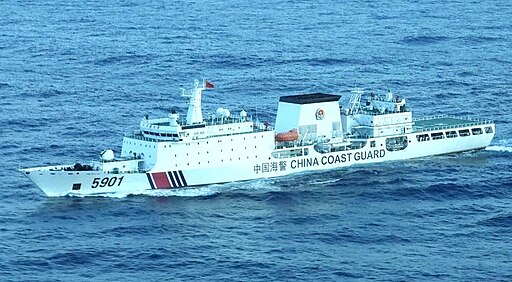
In response to these developments, China strengthened its claims in the South China Sea to act as a bulwark against the US military presence. In November 2024, China renewed calls on the Philippines to remove the BRP Sierra Madre from the Second Thomas Shoal and blocked resupply missions to the grounded warship. Additionally, in September 2025, China declared the Scarborough Shoal a nature reserve, which raised concerns about Beijing’s potential militarisation of the shoal.
Conversely, although Vietnam has accelerated its island-building efforts since 2021, China has remained relatively silent on Hanoi’s actions for two possible reasons. First, unlike the Philippines, Vietnam’s “Four Nos” defence policy suggests that it will not enter a military alliance with external powers that could be perceived as threatening to China’s security. Second, as China is preoccupied with dealing with the Philippines in the South China Sea, it is not in its interest to antagonise Vietnam, which could tie down additional Chinese naval resources.
Deep-Seated Cultural Sensitivities
Another explanation for China’s varied treatment of South China Sea claimants is its sensitivity to public criticism. Preserving face is central to Chinese diplomacy and tied to Beijing’s desire to be recognised as a respected power, so public criticism is perceived as harmful to its international standing. Consequently, instead of encouraging changes in its foreign policy behaviour, such criticism often triggers a stronger response from Beijing, aimed at defending its image and pressuring other states to comply with its stance.
For example, the Marcos administration implemented a strategy of “Assertive Transparency” to expose Beijing’s actions in the South China Sea with a view to garnering international support for Manila’s claims. However, such moves prompted China to intensify its enforcement efforts and military activities against the Philippines in the Second Thomas Shoal and the Scarborough Shoal since 2022. In doing so, China demonstrates that it is willing to continue imposing military and diplomatic costs on the Philippines until Manila minimises its criticism of China.
On the other hand, Vietnam and China have a tacit agreement to properly manage their outstanding territorial disputes following the Haiyang Shiyou-981 incident in 2014. As part of this understanding, both countries would refrain from publicly criticising each other in the South China Sea. For example, in May 2023, Vietnam protested both China’s and the Philippines’ actions of placing buoys on the Spratly Islands, which are also claimed by Hanoi. However, without naming China and the Philippines, Vietnam’s Foreign Ministry spokesperson requested “relevant parties” to respect Vietnam’s sovereignty and comply with international law in the South China Sea. Through such measures, Vietnam could avoid drawing flak from China while continuing its island-building initiatives in the South China Sea.
Implications for Regional Security
In the long run, China is using its different treatment of claimant states to discourage them from uniting against it. Recognising this, the Philippines has tried to deepen its defence relations with other claimant states, such as Vietnam, to build regional unity in addressing the South China Sea dispute. The Philippines had achieved some success in this regard, as seen in the Vietnam-Philippines Coast Guard Exercise in October 2025. Nevertheless, given Vietnam’s deepening economic ties with China and its island-building initiatives in the South China Sea, it is likely to continue keeping a low profile on its defence cooperation with the Philippines to avoid provoking China.
Moreover, as tensions between China and the Philippines intensify, the risks of an accident leading to a conflict are likely to increase. Given that Manila and Washington are treaty allies, how the United States and China respond to incidents in the South China Sea could ameliorate or aggravate tensions in the disputed waters. Ultimately, neither Beijing nor Washington would wish to risk an escalation in the South China Sea. Thus, ASEAN platforms, despite their weaknesses, remain crucial in bringing together China, the United States, and other claimant states in the South China Sea to ease regional tensions.
Ian Seow Cheng Wei is a Senior Analyst with the China Programme at the Institute of Defence and Strategic Studies, S. Rajaratnam School of International Studies (RSIS).
KEY TAKEAWAYS
• Although China is often portrayed as expansionist in the South China Sea, its behaviour towards different players shows significant variation. China has at times adopted accommodative approaches toward certain claimant states, reflecting its assessments of how their actions relate to China’s security interests and international reputation.
• China’s responses to South China Sea claimant states are often reactive rather than proactive, shaped by a mix of historical experiences – such as perceptions of vulnerability dating to the 1839 Opium War – and contemporary strategic challenges, such as the United States’ military presence in Southeast Asia.
• Public criticism of China’s actions in the South China Sea can be counterproductive as concerns about “losing face” may prompt China to adopt firmer positions rather than moderate its behaviour.
COMMENTARY
Since 2022, China and the Philippines have witnessed a re-emergence of territorial disputes in the South China Sea, leading to regular clashes between the coastguards of both countries and heightened military activities in the disputed waters. Conversely, China has remained relatively silent about Vietnam’s rapid island-building initiatives in the South China Sea.
Analysts writing about the South China Sea dispute predominantly focus on China’s actions and their implications for regional security. However, they often overlook how China’s behaviour is shaped by its perceptions of the other claimant states’ policies, which lead it to adopt different approaches towards them. This behaviour raises an important question: under what conditions does China choose to accommodate some claimant states in the South China Sea dispute?
China’s differing policies towards other South China Sea claimant states are driven by two key considerations grounded in its history and culture: (i) whether China perceives the claimant states as posing a threat to its security interests, and (ii) China’s cultural aversion to “losing face”, which makes it especially sensitive to public criticism. When China perceives claimant states as posing a challenge to its security interests or undermining its international image, it tends to adopt tougher measures. Conversely, when China views claimant states as posing limited security risks and not harming its reputation, it is more inclined to pursue accommodation.
Role of Security Concerns
China has long viewed the South China Sea as a strategic vulnerability, shaped in part by historical experiences of the 1839 Opium War, which reinforced fears of the possibility of that foreign powers could use the area as a staging ground against China. Today, China perceives the United States’ growing military presence in Southeast Asia as a threat to its security and continued economic development.
In this regard, China’s ongoing territorial disputes with the Philippines cannot be divorced from the latter’s strengthening military alliance with the United States in recent years.
Since taking office in 2022, Ferdinand Marcos Jr. diverged from his predecessor Rodrigo Duterte’s policy of engagement with China. To balance against China, Marcos accelerated the implementation of the Enhanced Defence Cooperation Agreement (EDCA) in 2023 and reopened Subic Bay Naval Base to provide logistics and repair facilities for the US Navy. Moreover, the Philippines began hosting the United States’ Typhon mid-range capability (MRC) missiles to deter a potential military contingency in the Taiwan Strait.
From China’s perspective, the deployment of the Typhon missile system poses a major challenge to its security and reunification with Taiwan because its range of 240–2,500 kilometres places much of the PLA’s Southern and Eastern Theatre Command (TC) naval infrastructure within striking distance. These TCs are critical for safeguarding China’s interests in the South China Sea and the Taiwan Strait, making any such strike capability particularly sensitive for Beijing.
Additionally, the reopening of Subic Bay has heightened China’s concerns about the proximity of US naval forces. The deployment of sensitive assets to the Subic Bay Naval Base, such as Ohio-class stealth submarines in September 2025, is seen as a threat due to Beijing’s current limitations in detecting, identifying and tracking US submarines.
In response to these developments, China strengthened its claims in the South China Sea to act as a bulwark against the US military presence. In November 2024, China renewed calls on the Philippines to remove the BRP Sierra Madre from the Second Thomas Shoal and blocked resupply missions to the grounded warship. Additionally, in September 2025, China declared the Scarborough Shoal a nature reserve, which raised concerns about Beijing’s potential militarisation of the shoal.
Conversely, although Vietnam has accelerated its island-building efforts since 2021, China has remained relatively silent on Hanoi’s actions for two possible reasons. First, unlike the Philippines, Vietnam’s “Four Nos” defence policy suggests that it will not enter a military alliance with external powers that could be perceived as threatening to China’s security. Second, as China is preoccupied with dealing with the Philippines in the South China Sea, it is not in its interest to antagonise Vietnam, which could tie down additional Chinese naval resources.
Deep-Seated Cultural Sensitivities
Another explanation for China’s varied treatment of South China Sea claimants is its sensitivity to public criticism. Preserving face is central to Chinese diplomacy and tied to Beijing’s desire to be recognised as a respected power, so public criticism is perceived as harmful to its international standing. Consequently, instead of encouraging changes in its foreign policy behaviour, such criticism often triggers a stronger response from Beijing, aimed at defending its image and pressuring other states to comply with its stance.
For example, the Marcos administration implemented a strategy of “Assertive Transparency” to expose Beijing’s actions in the South China Sea with a view to garnering international support for Manila’s claims. However, such moves prompted China to intensify its enforcement efforts and military activities against the Philippines in the Second Thomas Shoal and the Scarborough Shoal since 2022. In doing so, China demonstrates that it is willing to continue imposing military and diplomatic costs on the Philippines until Manila minimises its criticism of China.
On the other hand, Vietnam and China have a tacit agreement to properly manage their outstanding territorial disputes following the Haiyang Shiyou-981 incident in 2014. As part of this understanding, both countries would refrain from publicly criticising each other in the South China Sea. For example, in May 2023, Vietnam protested both China’s and the Philippines’ actions of placing buoys on the Spratly Islands, which are also claimed by Hanoi. However, without naming China and the Philippines, Vietnam’s Foreign Ministry spokesperson requested “relevant parties” to respect Vietnam’s sovereignty and comply with international law in the South China Sea. Through such measures, Vietnam could avoid drawing flak from China while continuing its island-building initiatives in the South China Sea.
Implications for Regional Security
In the long run, China is using its different treatment of claimant states to discourage them from uniting against it. Recognising this, the Philippines has tried to deepen its defence relations with other claimant states, such as Vietnam, to build regional unity in addressing the South China Sea dispute. The Philippines had achieved some success in this regard, as seen in the Vietnam-Philippines Coast Guard Exercise in October 2025. Nevertheless, given Vietnam’s deepening economic ties with China and its island-building initiatives in the South China Sea, it is likely to continue keeping a low profile on its defence cooperation with the Philippines to avoid provoking China.
Moreover, as tensions between China and the Philippines intensify, the risks of an accident leading to a conflict are likely to increase. Given that Manila and Washington are treaty allies, how the United States and China respond to incidents in the South China Sea could ameliorate or aggravate tensions in the disputed waters. Ultimately, neither Beijing nor Washington would wish to risk an escalation in the South China Sea. Thus, ASEAN platforms, despite their weaknesses, remain crucial in bringing together China, the United States, and other claimant states in the South China Sea to ease regional tensions.
Ian Seow Cheng Wei is a Senior Analyst with the China Programme at the Institute of Defence and Strategic Studies, S. Rajaratnam School of International Studies (RSIS).