


10 December 2025
IP25117 | The New Disaster Frontier: AI in Crises

KEY TAKEAWAYS
• Crises now unfold simultaneously in the physical and digital domains, making the management of information just as critical as managing the disaster itself.
• AI offers powerful opportunities, but without trust, transparency and regional cooperation, it risks undermining rather than strengthening crisis response.
• ASEAN’s focus on leveraging AI for enhancing predictive analytics for disasters is insufficient; the region must broaden its vision to address information threats as well.
COMMENTARY
The contemporary information environment is defined by the sheer velocity and volume of digital interactions during emergencies. Crises now unfold at digital speeds across social media, news sites and video platforms, creating a dynamic where public sentiment often solidifies before official statements are even drafted. This phenomenon creates a “double-edged sword” for humanitarian assistance and disaster relief (HADR). While social media provides critical real-time situational awareness, it simultaneously facilitates the rapid spread of unverified information.
In this environment, managing the information dimension of a crisis is no longer auxiliary to managing the physical dimension. The speed at which information grows and evolves can either support or undermine life-saving HADR. Disasters are becoming increasingly frequent and severe in the Southeast Asian region, while the scale and magnitude of available data (big data) and artificial intelligence (AI) applications and platforms continue to expand. Effective crisis management will depend on the ability of states, particularly national disaster management agencies and regional bodies like ASEAN, to navigate this volatile and contested information ecosystem.
The Information Threat Landscape
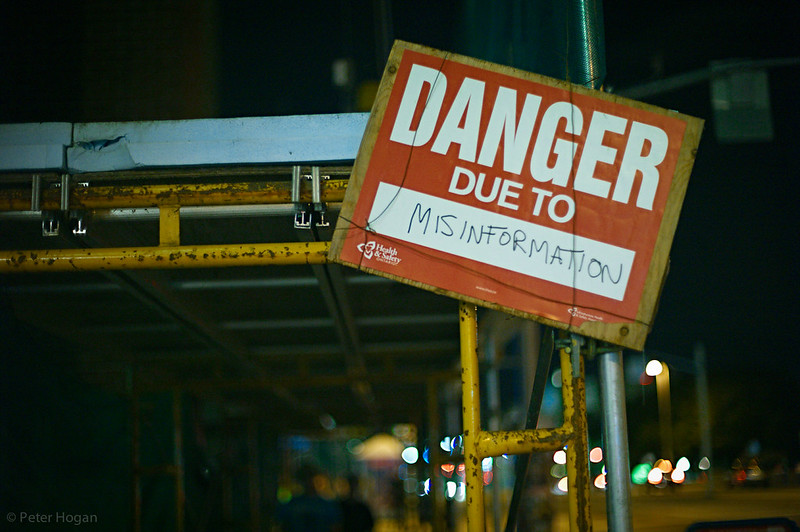
The central challenge is the formation of information vacuums – periods of high uncertainty immediately following a disaster. Research on the COVID-19 pandemic illustrates how these vacuums are quickly filled by “infodemics”, where a mix of facts, fears and fabrications affects risk mitigation behaviours, such as vaccine acceptance. Furthermore, automated accounts, or bots, exacerbate this volatility. An analysis of earthquake-related discourse revealed that while human accounts are numerous, bot-like accounts are disproportionately active in spreading disruptive conspiracy narratives, amplifying toxic content that distorts public perception.
Southeast Asia, a region frequently beset by disasters ranging from typhoons to seismic events, is particularly vulnerable to these dynamics. The proliferation of conspiracy theories following high-impact events is not merely a Western phenomenon but a global cognitive response to “dread risks” – low-probability, high-consequence events that generate fear and a demand for explanations.
For instance, following major seismic activities, online discourse often shifts towards technological conspiracy theories, such as the High-Frequency Active Auroral Research Program (HAARP) being used as a weather weapon. Studies indicate a positive correlation between the frequency of such conspiracy discussions and the magnitude of an earthquake, suggesting that the severity of the disaster directly drives the consumption of misinformation. For ASEAN member states, this implies that every disaster carries a secondary risk of reputational damage and social unrest driven by false narratives.
Risks and Opportunities of AI in Crisis Management
The strategic leveraging of AI offers a paradigm shift from a reactive posture to a proactive one. By utilising natural language processing (NLP) and machine learning, crisis managers can move from simply listening to social chatter to understanding the underlying sentiment and emotional intensity of the public in real-time. This capability allows for the detection of early warning signals in data, identifying spikes in misinformation before they become dominant narratives.
However, the deployment of these technologies introduces significant risks regarding sovereignty and trust. Public discourse during infrastructure failures, such as power blackouts, reveals a profound distrust in institutions. An analysis of YouTube comments during the 2025 Iberian Peninsula blackout demonstrated that citizens predominantly attributed the failure to political incompetence or malfeasance rather than technical causes. If AI monitoring tools are perceived as surveillance mechanisms rather than aids for public safety, they risk deepening this existing deficit of trust.
For ASEAN, the challenge lies in the mechanics of cooperation. Effective AI models require vast amounts of training data to accurately detect local dialects, cultural nuances and region-specific misinformation. Sharing this data across borders raises concerns about data sovereignty and national security. If member states are to collaborate on a regional AI-driven crisis coordination framework, they must establish protocols to ensure that data is used strictly for humanitarian and public safety purposes, transparency is maintained regarding how algorithms classify misinformation, and the privacy of citizens is preserved against the potential for misuse. Without these guarantees, the very tools designed to protect the information space could become sources of friction between states and their publics.
Beyond the Same Old Conversations
The ASEAN Agreement on Disaster Management and Emergency Response (AADMER) Work Programme 2026–2030, a regional action plan to reduce disaster losses and build resilience in the region, recognises AI as a tool for enhancing predictive analytics and multi-hazard monitoring. Although the desired outcome as stated in the work programme signals progress, it also reveals ASEAN’s narrow view of leveraging AI. The noticeable gap is its failure to recognise AI’s role in managing the broader information domain, which includes anticipating and detecting misinformation and mitigating distrust. While there exists an ASEAN Guideline on Management of Government Information in Combating Fake News and Disinformation in the Media, which aims “to improve coordination and collaboration between government agencies, particularly during times of crisis or emergency”, ASEAN should still be vigilant and adamant about AI-driven information threats specific to the disaster space. In its current form, ASEAN’s AI aspirations in the disaster domain remain confined to technical upgrades, leaving the information vulnerabilities that can erode public trust and impede effective disaster response unaddressed.
As crises unfold in parallel across the physical and digital domains, focusing solely on hazard modelling overlooks threats arising from infodemics, conspiracies and online manipulation by malicious actors. ASEAN’s current approach seeks to modernise its early warning tools for hazards and response, but strengthening its ability to navigate the volatile information ecosystem that now also defines emergencies seems to be an afterthought.
Beyond current conversations about the risks and governance of AI, what ultimately matters is building our collective ability to navigate the deluge of information and distinguish between truth and noise during crises. Every hour gained in clarity is an hour alleviated from suffering – an hour less in floods, an hour less displaced, and an hour less in dire need of life-saving HADR.
Dmitry Erokhin is a Research Scholar in the Cooperation and Transformative Governance (CAT) Research Group of the Advancing Systems Analysis Program at the International Institute for Applied Systems Analysis (IIASA), Laxenburg, Austria. Keith Paolo C. Landicho is an Associate Research Fellow with the Humanitarian Assistance and Disaster Relief (HADR) Programme at the Institute of Defence and Strategic Studies (IDSS), S. Rajaratnam School of International Studies (RSIS).
KEY TAKEAWAYS
• Crises now unfold simultaneously in the physical and digital domains, making the management of information just as critical as managing the disaster itself.
• AI offers powerful opportunities, but without trust, transparency and regional cooperation, it risks undermining rather than strengthening crisis response.
• ASEAN’s focus on leveraging AI for enhancing predictive analytics for disasters is insufficient; the region must broaden its vision to address information threats as well.
COMMENTARY
The contemporary information environment is defined by the sheer velocity and volume of digital interactions during emergencies. Crises now unfold at digital speeds across social media, news sites and video platforms, creating a dynamic where public sentiment often solidifies before official statements are even drafted. This phenomenon creates a “double-edged sword” for humanitarian assistance and disaster relief (HADR). While social media provides critical real-time situational awareness, it simultaneously facilitates the rapid spread of unverified information.
In this environment, managing the information dimension of a crisis is no longer auxiliary to managing the physical dimension. The speed at which information grows and evolves can either support or undermine life-saving HADR. Disasters are becoming increasingly frequent and severe in the Southeast Asian region, while the scale and magnitude of available data (big data) and artificial intelligence (AI) applications and platforms continue to expand. Effective crisis management will depend on the ability of states, particularly national disaster management agencies and regional bodies like ASEAN, to navigate this volatile and contested information ecosystem.
The Information Threat Landscape
The central challenge is the formation of information vacuums – periods of high uncertainty immediately following a disaster. Research on the COVID-19 pandemic illustrates how these vacuums are quickly filled by “infodemics”, where a mix of facts, fears and fabrications affects risk mitigation behaviours, such as vaccine acceptance. Furthermore, automated accounts, or bots, exacerbate this volatility. An analysis of earthquake-related discourse revealed that while human accounts are numerous, bot-like accounts are disproportionately active in spreading disruptive conspiracy narratives, amplifying toxic content that distorts public perception.
Southeast Asia, a region frequently beset by disasters ranging from typhoons to seismic events, is particularly vulnerable to these dynamics. The proliferation of conspiracy theories following high-impact events is not merely a Western phenomenon but a global cognitive response to “dread risks” – low-probability, high-consequence events that generate fear and a demand for explanations.
For instance, following major seismic activities, online discourse often shifts towards technological conspiracy theories, such as the High-Frequency Active Auroral Research Program (HAARP) being used as a weather weapon. Studies indicate a positive correlation between the frequency of such conspiracy discussions and the magnitude of an earthquake, suggesting that the severity of the disaster directly drives the consumption of misinformation. For ASEAN member states, this implies that every disaster carries a secondary risk of reputational damage and social unrest driven by false narratives.
Risks and Opportunities of AI in Crisis Management
The strategic leveraging of AI offers a paradigm shift from a reactive posture to a proactive one. By utilising natural language processing (NLP) and machine learning, crisis managers can move from simply listening to social chatter to understanding the underlying sentiment and emotional intensity of the public in real-time. This capability allows for the detection of early warning signals in data, identifying spikes in misinformation before they become dominant narratives.
However, the deployment of these technologies introduces significant risks regarding sovereignty and trust. Public discourse during infrastructure failures, such as power blackouts, reveals a profound distrust in institutions. An analysis of YouTube comments during the 2025 Iberian Peninsula blackout demonstrated that citizens predominantly attributed the failure to political incompetence or malfeasance rather than technical causes. If AI monitoring tools are perceived as surveillance mechanisms rather than aids for public safety, they risk deepening this existing deficit of trust.
For ASEAN, the challenge lies in the mechanics of cooperation. Effective AI models require vast amounts of training data to accurately detect local dialects, cultural nuances and region-specific misinformation. Sharing this data across borders raises concerns about data sovereignty and national security. If member states are to collaborate on a regional AI-driven crisis coordination framework, they must establish protocols to ensure that data is used strictly for humanitarian and public safety purposes, transparency is maintained regarding how algorithms classify misinformation, and the privacy of citizens is preserved against the potential for misuse. Without these guarantees, the very tools designed to protect the information space could become sources of friction between states and their publics.
Beyond the Same Old Conversations
The ASEAN Agreement on Disaster Management and Emergency Response (AADMER) Work Programme 2026–2030, a regional action plan to reduce disaster losses and build resilience in the region, recognises AI as a tool for enhancing predictive analytics and multi-hazard monitoring. Although the desired outcome as stated in the work programme signals progress, it also reveals ASEAN’s narrow view of leveraging AI. The noticeable gap is its failure to recognise AI’s role in managing the broader information domain, which includes anticipating and detecting misinformation and mitigating distrust. While there exists an ASEAN Guideline on Management of Government Information in Combating Fake News and Disinformation in the Media, which aims “to improve coordination and collaboration between government agencies, particularly during times of crisis or emergency”, ASEAN should still be vigilant and adamant about AI-driven information threats specific to the disaster space. In its current form, ASEAN’s AI aspirations in the disaster domain remain confined to technical upgrades, leaving the information vulnerabilities that can erode public trust and impede effective disaster response unaddressed.
As crises unfold in parallel across the physical and digital domains, focusing solely on hazard modelling overlooks threats arising from infodemics, conspiracies and online manipulation by malicious actors. ASEAN’s current approach seeks to modernise its early warning tools for hazards and response, but strengthening its ability to navigate the volatile information ecosystem that now also defines emergencies seems to be an afterthought.
Beyond current conversations about the risks and governance of AI, what ultimately matters is building our collective ability to navigate the deluge of information and distinguish between truth and noise during crises. Every hour gained in clarity is an hour alleviated from suffering – an hour less in floods, an hour less displaced, and an hour less in dire need of life-saving HADR.
Dmitry Erokhin is a Research Scholar in the Cooperation and Transformative Governance (CAT) Research Group of the Advancing Systems Analysis Program at the International Institute for Applied Systems Analysis (IIASA), Laxenburg, Austria. Keith Paolo C. Landicho is an Associate Research Fellow with the Humanitarian Assistance and Disaster Relief (HADR) Programme at the Institute of Defence and Strategic Studies (IDSS), S. Rajaratnam School of International Studies (RSIS).


