

11 December 2025
IP25119 | Building Regional Resilience and Stability in a Changing Global Order

KEY TAKEAWAYS
• A regional strategic response framework – anchored in vigilance, unity, consistency and agility – is essential for ASEAN to remain stable and influential in a volatile global security environment.
• ASEAN militaries must climate-proof their forces and embrace advanced technologies to stay ahead of increasingly extreme, complex, and frequent disasters.
• Civil–military coordination and regional information sharing need major upgrades so ASEAN can respond more effectively as one to crises inside and outside the region.
COMMENTARY
Southeast Asia sits at a crossroads of opportunity and risk. Our region, home to critical trade routes and rapidly growing economies, remains relatively peaceful. Yet, this peace is not guaranteed. Emerging threats – from terrorism and cyberattacks to climate-induced disasters – remind us that ASEAN must remain vigilant, united, consistent, adept, and adroit. This was the central theme of the keynote speech delivered by Singapore’s Defence Minister Chan Chun Sing at the recent ASEAN Chiefs of Army Multilateral Meeting (ACAMM-26), where delegates explored how militaries can enhance regional cooperation, strengthen resilience, and sustain ASEAN’s role as a stabilising force in an increasingly VUCA – volatile, uncertain, complex, and ambiguous – world.
The meeting reinforced the need for ASEAN armies to deepen cooperation in facing the evolving security challenges while maintaining regional stability. Singapore’s Defence Minister reinforced that while Southeast Asia may appear calm, complacency is dangerous. Vigilance, unity, consistency, adeptness, and adroitness are the foundation for preventing security gaps that adversaries could exploit, and for protecting trade routes and sustaining economic growth across the region.
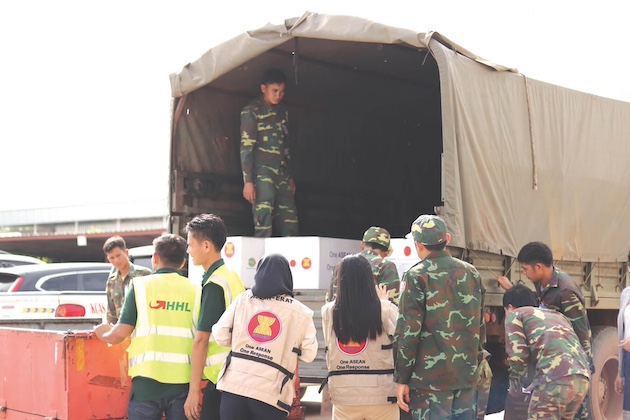
Beyond traditional defence roles, ASEAN militaries have a critical humanitarian dimension. The region is among the most disaster-prone in the world, making Humanitarian Assistance and Disaster Relief (HADR) a core security function. Over the last two decades, ASEAN has made great strides in building resilience. Initiatives, such as the ASEAN Vision 2045: Our Shared Future, the ASEAN Declaration on One ASEAN, One Response, the ASEAN Agreement on Disaster Management and Emergency Response (the world’s first legally-binding treaty on disasters), and the Standard Operating Procedure for Regional Standby Arrangements and Coordination of Joint Disaster Relief and Emergency Response Operations (SASOP), demonstrate long-term vision and tangible operational commitments to collaborative action in the region. Large-scale exercises, like the ASEAN Regional Disaster Response Emergency Simulation Exercise (ARDEX), have strengthened interoperability and operational readiness. This will be complemented by the ADMM-Plus Expert Working Groups Combined Field Training Exercise (Exercise Trident Resolve) that will be held in Banten, Indonesia in September 2026.
Yet, progress in HADR cannot be viewed in isolation. Southeast Asia faces a multifaceted risk environment, one in which disaster risk is outpacing resilience. According to the United Nations Office for Disaster Risk Reduction (UNDRR), disaster-related deaths may be declining, but the number of people affected continues to rise, and economic losses are growing. Climate change accelerates the emergence of new disaster hotspots and intensifies the severity of extreme weather events, from typhoons to floods and heatwaves. The implication is clear: ASEAN must transform its approach to resilience, integrating climate adaptation, new technologies, and civil–military coordination into both military and humanitarian planning.
Climate Adaptation in HADR Operations
Climate change directly impacts military operations. Rising sea levels threaten coastal military bases, extreme weather disrupts logistics, and heat stress affects troop readiness. Militaries are increasingly called upon to support civilian responses, amplifying the importance of civil–military coordination in operational planning. Two areas warrant particular attention. First, climate intelligence and information sharing. ASEAN Member States already maintain trusted lines of communication in the region. These relationships can support the sharing of climate data, risk assessments, and technologies. A regional climate intelligence framework would support ASEAN militaries in making informed decisions about force readiness, pre-positioning and resource allocation, and would provide an important avenue to build trust between civilians and military personnel.
Second, exercises and training. As the disaster “riskscape” evolves, militaries must continually re-examine their capabilities. Updated climate scenarios should be incorporated into bilateral and multilateral HADR exercises, ensuring militaries are ready for the scale and type of climate impacts that will hit Southeast Asia in the next decade – not the last one. This will necessarily include planning for converging, concurrent, and consecutive disasters. No longer are plans for one deadly typhoon sufficient. We must now plan for typhoons in quick succession; militaries will need to deploy plans for the next disaster response before an ongoing one is completed. Effective climate adaptation enhances civilian protection, safeguards livelihoods, and reinforces ASEAN’s credibility as a security bloc.
Integration of Advanced Technologies in HADR
New technologies are reshaping disaster response. Predictive AI can enhance flood-risk predictions and provide more accurate real-time evaluations to identify vulnerable communities. Drones and 3D printing support rapid deployment of medical and logistical resources to hard-to-reach areas. ASEAN should integrate new technologies to enhance operational efficiency and improve humanitarian outcomes. Investments in AI, unmanned aerial vehicles (UAVs), and big-data analytics allow forces to anticipate crises, improve situational awareness, and optimise resource mobilisation. These capabilities not only save lives, but also signal ASEAN’s capacity to external partners to turn words into action.
Enhancing Civil-Military Coordination
Disasters are complex and multi-sectoral. Effective response requires coordination between military forces, police, emergency services, NGOs, and civil society. Lessons from COVID-19 highlighted gaps in existing frameworks that operated on the presumption that each disaster occurs in isolation. Typhoons and cyclones did not stop because there was a global pandemic. The pandemic response did impact disaster response from social distancing in evacuation centres to customs and excise delays due to increased quarantine measures. These impacts were not adequately incorporated into contingency planning, and lives were lost.
Civil–military coordination must be continuously tested through diverse simulation exercises, while SOPs need regular review to remain fit for purpose in a “riskscape” defined by compounding, concurrent and cascading disasters. When militaries, civilian government agencies, NGOs and civil society work together as part of a “people-centred” approach to disaster response, more lives will be saved.
Strengthening Regional Cooperation and Synergy
The interpersonal relationships facilitated through ASEAN mechanisms are its strongest historical asset yet its most exposed contemporary risk. Today, too many officials see little benefit in regional gatherings, seeing them as a wasted opportunity to attend to other important work. Instead, these meetings should be seen as investments in interpersonal relationships where the hard graft is done before the meeting takes place, and the meeting itself serves to strengthen ties while participants are in the same physical space. Within the HADR sector, it is a mantra that you exchange name cards before disaster strikes, as exchanging them when a disaster happens is already too late. The same applies to other sectors, albeit in less striking terms.
Two practical steps can strengthen cooperation. First, ASEAN can move from a “need to know” to a “need to share” basis through a regional data hub for defence and disasters. The second is to expand joint training and exercises to include non-military partners. These initiatives build more trust, enhance interoperability, and demonstrate ASEAN’s capacity for coordinated action beyond traditional defence functions.
Cooperation through ASEAN has strengthened resilience and regional stability. Intensifying disaster risks due to climate change mean that risks are outpacing resilience. Through an improved regional HADR strategy, including climate adaptation, enhanced civil–military coordination, and the use of new technologies, ASEAN militaries will be better placed to respond to disasters ahead.
Alistair D. B. Cook is Coordinator of the Humanitarian Assistance and Disaster Relief (HADR) Programme and Senior Fellow, Institute of Defence and Strategic Studies.
KEY TAKEAWAYS
• A regional strategic response framework – anchored in vigilance, unity, consistency and agility – is essential for ASEAN to remain stable and influential in a volatile global security environment.
• ASEAN militaries must climate-proof their forces and embrace advanced technologies to stay ahead of increasingly extreme, complex, and frequent disasters.
• Civil–military coordination and regional information sharing need major upgrades so ASEAN can respond more effectively as one to crises inside and outside the region.
COMMENTARY
Southeast Asia sits at a crossroads of opportunity and risk. Our region, home to critical trade routes and rapidly growing economies, remains relatively peaceful. Yet, this peace is not guaranteed. Emerging threats – from terrorism and cyberattacks to climate-induced disasters – remind us that ASEAN must remain vigilant, united, consistent, adept, and adroit. This was the central theme of the keynote speech delivered by Singapore’s Defence Minister Chan Chun Sing at the recent ASEAN Chiefs of Army Multilateral Meeting (ACAMM-26), where delegates explored how militaries can enhance regional cooperation, strengthen resilience, and sustain ASEAN’s role as a stabilising force in an increasingly VUCA – volatile, uncertain, complex, and ambiguous – world.
The meeting reinforced the need for ASEAN armies to deepen cooperation in facing the evolving security challenges while maintaining regional stability. Singapore’s Defence Minister reinforced that while Southeast Asia may appear calm, complacency is dangerous. Vigilance, unity, consistency, adeptness, and adroitness are the foundation for preventing security gaps that adversaries could exploit, and for protecting trade routes and sustaining economic growth across the region.
Beyond traditional defence roles, ASEAN militaries have a critical humanitarian dimension. The region is among the most disaster-prone in the world, making Humanitarian Assistance and Disaster Relief (HADR) a core security function. Over the last two decades, ASEAN has made great strides in building resilience. Initiatives, such as the ASEAN Vision 2045: Our Shared Future, the ASEAN Declaration on One ASEAN, One Response, the ASEAN Agreement on Disaster Management and Emergency Response (the world’s first legally-binding treaty on disasters), and the Standard Operating Procedure for Regional Standby Arrangements and Coordination of Joint Disaster Relief and Emergency Response Operations (SASOP), demonstrate long-term vision and tangible operational commitments to collaborative action in the region. Large-scale exercises, like the ASEAN Regional Disaster Response Emergency Simulation Exercise (ARDEX), have strengthened interoperability and operational readiness. This will be complemented by the ADMM-Plus Expert Working Groups Combined Field Training Exercise (Exercise Trident Resolve) that will be held in Banten, Indonesia in September 2026.
Yet, progress in HADR cannot be viewed in isolation. Southeast Asia faces a multifaceted risk environment, one in which disaster risk is outpacing resilience. According to the United Nations Office for Disaster Risk Reduction (UNDRR), disaster-related deaths may be declining, but the number of people affected continues to rise, and economic losses are growing. Climate change accelerates the emergence of new disaster hotspots and intensifies the severity of extreme weather events, from typhoons to floods and heatwaves. The implication is clear: ASEAN must transform its approach to resilience, integrating climate adaptation, new technologies, and civil–military coordination into both military and humanitarian planning.
Climate Adaptation in HADR Operations
Climate change directly impacts military operations. Rising sea levels threaten coastal military bases, extreme weather disrupts logistics, and heat stress affects troop readiness. Militaries are increasingly called upon to support civilian responses, amplifying the importance of civil–military coordination in operational planning. Two areas warrant particular attention. First, climate intelligence and information sharing. ASEAN Member States already maintain trusted lines of communication in the region. These relationships can support the sharing of climate data, risk assessments, and technologies. A regional climate intelligence framework would support ASEAN militaries in making informed decisions about force readiness, pre-positioning and resource allocation, and would provide an important avenue to build trust between civilians and military personnel.
Second, exercises and training. As the disaster “riskscape” evolves, militaries must continually re-examine their capabilities. Updated climate scenarios should be incorporated into bilateral and multilateral HADR exercises, ensuring militaries are ready for the scale and type of climate impacts that will hit Southeast Asia in the next decade – not the last one. This will necessarily include planning for converging, concurrent, and consecutive disasters. No longer are plans for one deadly typhoon sufficient. We must now plan for typhoons in quick succession; militaries will need to deploy plans for the next disaster response before an ongoing one is completed. Effective climate adaptation enhances civilian protection, safeguards livelihoods, and reinforces ASEAN’s credibility as a security bloc.
Integration of Advanced Technologies in HADR
New technologies are reshaping disaster response. Predictive AI can enhance flood-risk predictions and provide more accurate real-time evaluations to identify vulnerable communities. Drones and 3D printing support rapid deployment of medical and logistical resources to hard-to-reach areas. ASEAN should integrate new technologies to enhance operational efficiency and improve humanitarian outcomes. Investments in AI, unmanned aerial vehicles (UAVs), and big-data analytics allow forces to anticipate crises, improve situational awareness, and optimise resource mobilisation. These capabilities not only save lives, but also signal ASEAN’s capacity to external partners to turn words into action.
Enhancing Civil-Military Coordination
Disasters are complex and multi-sectoral. Effective response requires coordination between military forces, police, emergency services, NGOs, and civil society. Lessons from COVID-19 highlighted gaps in existing frameworks that operated on the presumption that each disaster occurs in isolation. Typhoons and cyclones did not stop because there was a global pandemic. The pandemic response did impact disaster response from social distancing in evacuation centres to customs and excise delays due to increased quarantine measures. These impacts were not adequately incorporated into contingency planning, and lives were lost.
Civil–military coordination must be continuously tested through diverse simulation exercises, while SOPs need regular review to remain fit for purpose in a “riskscape” defined by compounding, concurrent and cascading disasters. When militaries, civilian government agencies, NGOs and civil society work together as part of a “people-centred” approach to disaster response, more lives will be saved.
Strengthening Regional Cooperation and Synergy
The interpersonal relationships facilitated through ASEAN mechanisms are its strongest historical asset yet its most exposed contemporary risk. Today, too many officials see little benefit in regional gatherings, seeing them as a wasted opportunity to attend to other important work. Instead, these meetings should be seen as investments in interpersonal relationships where the hard graft is done before the meeting takes place, and the meeting itself serves to strengthen ties while participants are in the same physical space. Within the HADR sector, it is a mantra that you exchange name cards before disaster strikes, as exchanging them when a disaster happens is already too late. The same applies to other sectors, albeit in less striking terms.
Two practical steps can strengthen cooperation. First, ASEAN can move from a “need to know” to a “need to share” basis through a regional data hub for defence and disasters. The second is to expand joint training and exercises to include non-military partners. These initiatives build more trust, enhance interoperability, and demonstrate ASEAN’s capacity for coordinated action beyond traditional defence functions.
Cooperation through ASEAN has strengthened resilience and regional stability. Intensifying disaster risks due to climate change mean that risks are outpacing resilience. Through an improved regional HADR strategy, including climate adaptation, enhanced civil–military coordination, and the use of new technologies, ASEAN militaries will be better placed to respond to disasters ahead.
Alistair D. B. Cook is Coordinator of the Humanitarian Assistance and Disaster Relief (HADR) Programme and Senior Fellow, Institute of Defence and Strategic Studies.