


15 December 2025
IP25122 | The 12th Malaysia-Singapore Leaders’ Retreat: A Fitting Conclusion to Bilateral Ties in 2025

KEY TAKEAWAYS
• The 12th Malaysia-Singapore Leaders’ Retreat delivered a timely affirmation of the progress achieved in 60 years of bilateral ties and diplomatic relations, and of what is needed going forward.
• The progress in bilateral ties indicates that focusing on opportunities emerging from the strong symbiotic relationship between Malaysia and Singapore is mutually beneficial, and this must continue.
• To maintain the positive momentum in bilateral ties, both sides need to emphasise pragmatism, constructive dialogue, goodwill and commitment to mutual cooperation even as the operating challenges intensify.
COMMENTARY
The 12th Malaysia-Singapore Leaders’ Retreat held in Singapore on 4 December 2025 reaffirmed the strong bilateral relationship. Both sides committed themselves to deepening the partnership across multiple arenas and to ensuring a positive trajectory in bilateral ties going forward.
The upbeat atmospherics of the retreat are a timely recognition of the progress in Malaysia-Singapore relations as the two countries mark 60 years of diplomatic ties. It is also a reminder that the gains in developing the close symbiotic relationship between both countries outweigh the cost of fixating on differences that have caused periodic strains in ties throughout the past six decades. More importantly, it is a reminder that there needs to be continued emphasis on pragmatism, constructive dialogue, goodwill and commitment to mutual cooperation if the ongoing progress in bilateral relations is to endure in the long term.
Progress in 60 years of Diplomatic Ties
The efforts of Malaysia and Singapore’s leaders at the retreat in advancing avenues of cooperation symbolise progressiveness and continuity in strengthening bilateral relations over the past year. The 12th leaders’ retreat reached agreements that built upon the 11th iteration of the summit in January 2025.
At these two retreats, the leaders of the two countries recognised the importance of advancing the wide-ranging areas of cooperation that point to the close symbiotic relationship between Malaysia and Singapore. These include: the Johor-Singapore Special Economic Zone (JS-SEZ); digital and green economies; transboundary environmental issues; the Johor Bahru–Singapore Rapid Transit System (RTS) that will be completed in December 2026; the Malaysia-Singapore English Volunteers Programme; tackling illicit drug trafficking; and health.
Such retreats have been supplemented with follow-up meetings throughout the year. A case in point was the 17th Joint Ministerial Committee for Iskandar Malaysia (JMCIM) meeting on 25 November, where Malaysia and Singapore ratified the JS-SEZ agreement signed during the 11th leaders’ retreat and agreed to set up frameworks for the zone.
An implication of the retreats is that when Malaysia and Singapore focus on the multifaceted opportunities for partnership emerging from the strong symbiotic relationship, both countries would be able to find more mutually beneficial areas of shared interests for cooperation than differences in shaping the development of bilateral ties.
Moreover, the wider regional and global contexts of the retreats have also formed an impetus for Malaysia and Singapore to advance bilateral ties. As Malaysia was the ASEAN chair for 2025, Malaysian Prime Minister Anwar Ibrahim had utilised this role to work more closely with ASEAN partners, including Singapore, to promote greater cooperation in areas such as intra-ASEAN trade and artificial intelligence, amid growing global uncertainty and contestation. Furthermore, in the face of global challenges such as the China-US rivalry and economic disruption that has intensified with the second Donald Trump administration, the leaders of both Malaysia and Singapore have acknowledged the importance of closer cooperation in meeting these external challenges.
The positive atmospherics of the retreat certainly did not hide the fact that there are still long-standing differences between Malaysia and Singapore. Indeed, Prime Ministers Anwar Ibrahim and Lawrence Wong acknowledged their differences over issues such as water, and air and maritime boundaries. Not surprisingly, because of the complexity of these issues, both leaders have called for more time and constructive dialogue conducted in an amicable fashion to find solutions to manage them.
Resting on Laurels Is Not an Option for Bilateral Relations
The oft-repeated emphasis on pragmatism, constructive dialogue, goodwill and commitment to maintaining positive relations may sound clichéd. But this emphasis is necessary as there is no guarantee that the current upward momentum in positive ties will become a routine and an expected outcome that will always continue unabated.
It must not be forgotten that the periodic strains in bilateral ties over the past 60 years were a result of salient and deep-seated differences between Malaysia and Singapore that are unlikely to be completely resolved soon. In addition to the complex issues in bilateral ties highlighted above, both countries continue to have ideological differences on the sensitive matters of race and religion.
Thus, the question is not whether there will be differences between both countries, but how these differences should be dealt with in a respectful and tactful manner. This requires open and continuous dialogue between both countries, fostering a clear understanding of each other’s positions and facilitating viable win-win solutions to manage long-standing differences.
So far, the Anwar administration has been able to exercise political will in strengthening ties with Singapore, while ensuring that long-standing disputes do not hamper this objective. Indeed, this objective has been part of Anwar’s wider focus on improving bilateral relations with regional and international partners, to draw in foreign investments and bolster trade to drive Malaysia’s economic growth.
Also, Anwar shares similarities with the late Abdullah Badawi in managing bilateral relations. This could be gleaned from remarks made by the latter 10 years ago during the launch of a book on Malaysia-Singapore relations authored by his former adviser on foreign affairs, Tan Sri Abdul Kadir Mohamad. That year, 2015, marked 50 years of diplomatic ties between the two countries. Abdullah was reported to have mentioned that when he was prime minister, he had insisted that bilateral relations “must be based on principles such as frankness and mutual respect, consistency and stability, reliability and predictability”.
It is such an approach – which Singapore strongly supports as well – that has allowed bilateral ties to move past the animosity embedded in historical baggage. This baggage had triggered significant periods of strain in diplomatic relations, such as during the first Mahathir Mohamad administration.
10 years after Abdullah highlighted his principles in approaching Malaysia-Singapore relations, his successors, including Anwar himself, have largely followed his footsteps. This is despite the collapse of the Najib Razak administration and changes in governments since 2018 that have ushered in uncertainty and some occasional disruption to bilateral relations. Not surprisingly, Anwar reportedly remarked at the press conference of the 12th leaders’ retreat that there is “no hostility” despite differences, even adding that “water is no longer a contentious issue”.
Nevertheless, various factors, such as major political instability, significant changes in governments, or undue fixation on differences for short-term political gains, could still undermine progress in bilateral ties that has been made in recent years. Thus, it behoves both countries’ leaders and officials to put in concerted efforts to prevent drastic events from unravelling bilateral ties.
Looking Ahead
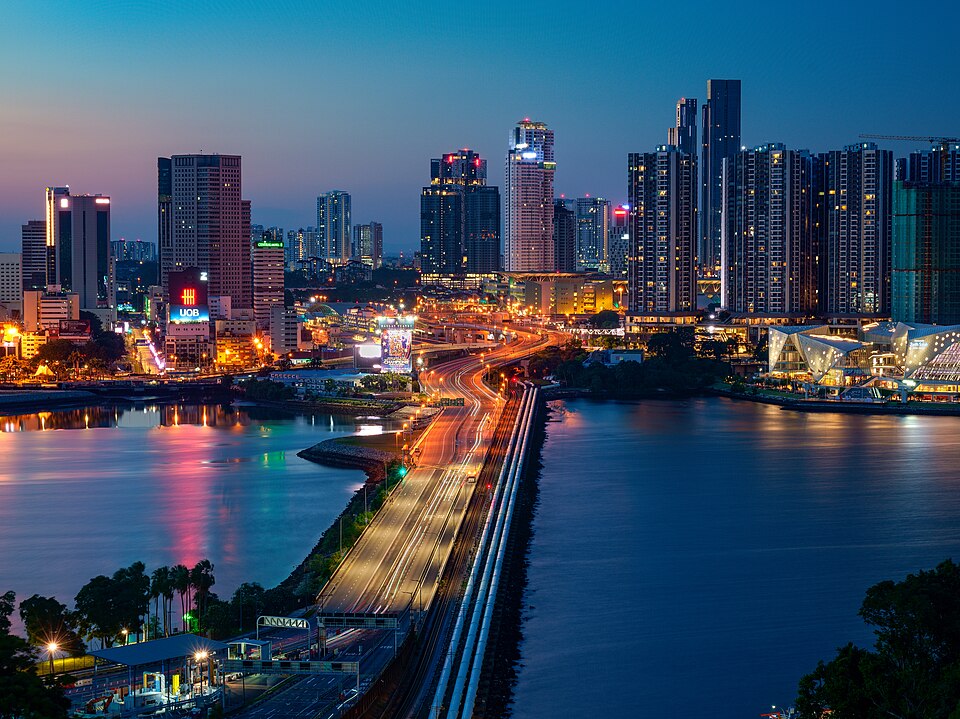
The 12th Malaysia-Singapore Leaders Retreat signifies that consistent positive relations require far-sighted leadership capitalising on new opportunities in diverse arenas for cooperation to maximise gains for both countries, while mitigating risks that could derail the realisation of a beneficial partnership. The current progressive momentum in bilateral ties is by no means a natural occurrence but can only be achieved through deliberative actions on both sides of the causeway. This has been the case not only for 2025, but will also be critical for bilateral relations to flourish in the coming year and beyond.
KEY TAKEAWAYS
• The 12th Malaysia-Singapore Leaders’ Retreat delivered a timely affirmation of the progress achieved in 60 years of bilateral ties and diplomatic relations, and of what is needed going forward.
• The progress in bilateral ties indicates that focusing on opportunities emerging from the strong symbiotic relationship between Malaysia and Singapore is mutually beneficial, and this must continue.
• To maintain the positive momentum in bilateral ties, both sides need to emphasise pragmatism, constructive dialogue, goodwill and commitment to mutual cooperation even as the operating challenges intensify.
COMMENTARY
The 12th Malaysia-Singapore Leaders’ Retreat held in Singapore on 4 December 2025 reaffirmed the strong bilateral relationship. Both sides committed themselves to deepening the partnership across multiple arenas and to ensuring a positive trajectory in bilateral ties going forward.
The upbeat atmospherics of the retreat are a timely recognition of the progress in Malaysia-Singapore relations as the two countries mark 60 years of diplomatic ties. It is also a reminder that the gains in developing the close symbiotic relationship between both countries outweigh the cost of fixating on differences that have caused periodic strains in ties throughout the past six decades. More importantly, it is a reminder that there needs to be continued emphasis on pragmatism, constructive dialogue, goodwill and commitment to mutual cooperation if the ongoing progress in bilateral relations is to endure in the long term.
Progress in 60 years of Diplomatic Ties
The efforts of Malaysia and Singapore’s leaders at the retreat in advancing avenues of cooperation symbolise progressiveness and continuity in strengthening bilateral relations over the past year. The 12th leaders’ retreat reached agreements that built upon the 11th iteration of the summit in January 2025.
At these two retreats, the leaders of the two countries recognised the importance of advancing the wide-ranging areas of cooperation that point to the close symbiotic relationship between Malaysia and Singapore. These include: the Johor-Singapore Special Economic Zone (JS-SEZ); digital and green economies; transboundary environmental issues; the Johor Bahru–Singapore Rapid Transit System (RTS) that will be completed in December 2026; the Malaysia-Singapore English Volunteers Programme; tackling illicit drug trafficking; and health.
Such retreats have been supplemented with follow-up meetings throughout the year. A case in point was the 17th Joint Ministerial Committee for Iskandar Malaysia (JMCIM) meeting on 25 November, where Malaysia and Singapore ratified the JS-SEZ agreement signed during the 11th leaders’ retreat and agreed to set up frameworks for the zone.
An implication of the retreats is that when Malaysia and Singapore focus on the multifaceted opportunities for partnership emerging from the strong symbiotic relationship, both countries would be able to find more mutually beneficial areas of shared interests for cooperation than differences in shaping the development of bilateral ties.
Moreover, the wider regional and global contexts of the retreats have also formed an impetus for Malaysia and Singapore to advance bilateral ties. As Malaysia was the ASEAN chair for 2025, Malaysian Prime Minister Anwar Ibrahim had utilised this role to work more closely with ASEAN partners, including Singapore, to promote greater cooperation in areas such as intra-ASEAN trade and artificial intelligence, amid growing global uncertainty and contestation. Furthermore, in the face of global challenges such as the China-US rivalry and economic disruption that has intensified with the second Donald Trump administration, the leaders of both Malaysia and Singapore have acknowledged the importance of closer cooperation in meeting these external challenges.
The positive atmospherics of the retreat certainly did not hide the fact that there are still long-standing differences between Malaysia and Singapore. Indeed, Prime Ministers Anwar Ibrahim and Lawrence Wong acknowledged their differences over issues such as water, and air and maritime boundaries. Not surprisingly, because of the complexity of these issues, both leaders have called for more time and constructive dialogue conducted in an amicable fashion to find solutions to manage them.
Resting on Laurels Is Not an Option for Bilateral Relations
The oft-repeated emphasis on pragmatism, constructive dialogue, goodwill and commitment to maintaining positive relations may sound clichéd. But this emphasis is necessary as there is no guarantee that the current upward momentum in positive ties will become a routine and an expected outcome that will always continue unabated.
It must not be forgotten that the periodic strains in bilateral ties over the past 60 years were a result of salient and deep-seated differences between Malaysia and Singapore that are unlikely to be completely resolved soon. In addition to the complex issues in bilateral ties highlighted above, both countries continue to have ideological differences on the sensitive matters of race and religion.
Thus, the question is not whether there will be differences between both countries, but how these differences should be dealt with in a respectful and tactful manner. This requires open and continuous dialogue between both countries, fostering a clear understanding of each other’s positions and facilitating viable win-win solutions to manage long-standing differences.
So far, the Anwar administration has been able to exercise political will in strengthening ties with Singapore, while ensuring that long-standing disputes do not hamper this objective. Indeed, this objective has been part of Anwar’s wider focus on improving bilateral relations with regional and international partners, to draw in foreign investments and bolster trade to drive Malaysia’s economic growth.
Also, Anwar shares similarities with the late Abdullah Badawi in managing bilateral relations. This could be gleaned from remarks made by the latter 10 years ago during the launch of a book on Malaysia-Singapore relations authored by his former adviser on foreign affairs, Tan Sri Abdul Kadir Mohamad. That year, 2015, marked 50 years of diplomatic ties between the two countries. Abdullah was reported to have mentioned that when he was prime minister, he had insisted that bilateral relations “must be based on principles such as frankness and mutual respect, consistency and stability, reliability and predictability”.
It is such an approach – which Singapore strongly supports as well – that has allowed bilateral ties to move past the animosity embedded in historical baggage. This baggage had triggered significant periods of strain in diplomatic relations, such as during the first Mahathir Mohamad administration.
10 years after Abdullah highlighted his principles in approaching Malaysia-Singapore relations, his successors, including Anwar himself, have largely followed his footsteps. This is despite the collapse of the Najib Razak administration and changes in governments since 2018 that have ushered in uncertainty and some occasional disruption to bilateral relations. Not surprisingly, Anwar reportedly remarked at the press conference of the 12th leaders’ retreat that there is “no hostility” despite differences, even adding that “water is no longer a contentious issue”.
Nevertheless, various factors, such as major political instability, significant changes in governments, or undue fixation on differences for short-term political gains, could still undermine progress in bilateral ties that has been made in recent years. Thus, it behoves both countries’ leaders and officials to put in concerted efforts to prevent drastic events from unravelling bilateral ties.
Looking Ahead
The 12th Malaysia-Singapore Leaders Retreat signifies that consistent positive relations require far-sighted leadership capitalising on new opportunities in diverse arenas for cooperation to maximise gains for both countries, while mitigating risks that could derail the realisation of a beneficial partnership. The current progressive momentum in bilateral ties is by no means a natural occurrence but can only be achieved through deliberative actions on both sides of the causeway. This has been the case not only for 2025, but will also be critical for bilateral relations to flourish in the coming year and beyond.