


17 December 2025
IP25123 | The Garuda Meets the Vigorous Dragon: The Significance of the Indonesia-China J-10 Deal

KEY TAKEAWAYS
• The Indonesia-China J-10 jet deal is significant more for its diplomatic symbolism rather than its operational value.
• For Indonesia, the J-10s serve as a stop-gap capability until its fifth-generation fighters become operational, while strengthening its ability to defend its vast archipelago, reinforcing its self-perception as a regional and international power, and supporting its longer-term defence-industrial ambitions.
• For China, the J-10 deal marks growing strategic trust with Indonesia, deepens their Comprehensive Strategic Partnership, and positions it as a credible alternative to Western defence suppliers while also contributing to broader regional stability.
COMMENTARY
“They will be flying over Jakarta soon,” Indonesia’s Defence Minister Sjafrie Sjamsoeddin announced on 15 October 2025, unveiling plans to purchase 42 J-10B Vigorous Dragon fighter jets from China for US$9 billion. Yet two weeks later, he clarified that Indonesia is still considering the J-10Bs, and no final agreement has been reached. If finalised, the J-10 jet deal would make Indonesia the second country in the world to operate the aircraft and marks Indonesia’s first acquisition of a non-Western fighter jet.
Analysts have offered several explanations for Indonesia’s potential purchase of the J-10 fighter jets, highlighting Indonesia’s Bebas Aktif (Free and Active) foreign policy and its broader strategy of diversifying defence suppliers. While much of the analysis has focused on Indonesia’s motivations for buying the J-10s, far less attention has been paid to what the deal signifies for China’s growing relations with Indonesia.
Moreover, the sale of fighter jets is generally considered highly sensitive, as it requires high levels of political trust. Thus, an important question arises: what does the J-10 jet deal signify for Indonesia and China?
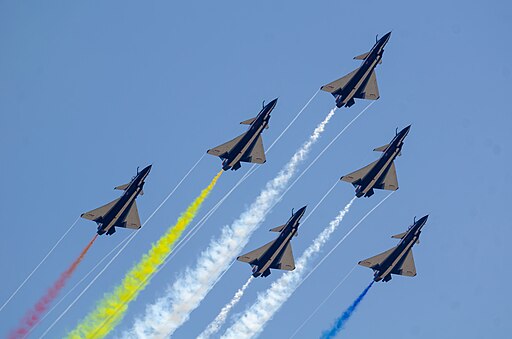
The significance of the J-10 deal lies more in its diplomatic symbolism than in its operational value. The prospective purchase of the J-10s positions China as a credible alternative supplier of advanced military technology at a time when Western systems may be unavailable, restricted, or subject to delays.
Further, the deal reinforces Indonesia’s self-image as an emerging regional power that possesses a strong military. For China, the sale of the J-10s to Indonesia signifies deepening political trust, which can contribute to a more predictable regional security environment for China.
China as a Credible Alternative Defence Supplier for Indonesia
One of Indonesia’s enduring security challenges since independence in 1949 has been safeguarding its vast archipelago. Yet, Indonesia’s air force (TNI-AU) remains underdeveloped, largely due to the army’s dominance in defence planning.
Currently, the 25 refurbished F-16s that Indonesia acquired from the United States in 2011 as part of its Minimum Essential Force (MEF) programme are approaching obsolescence and lack advanced radar, avionics, and missile systems typically found in modern fighter jets.
Indonesian President Prabowo Subianto aims to replace these ageing aircraft with fifth-generation fighters such as Turkey’s KAAN and South Korea’s KF-21 under the Nusantara Trident Shield programme. However, these jets will not be operational until the mid-2030s. Indonesia has also procured 42 Dassault Rafales for US$8 billion and is negotiating with the United States for the F-15EX. Nevertheless, the progress of acquiring these aircraft has remained slow as the full delivery of the Rafales is expected by 2030, and the F-15EX negotiations have stalled due to high financial costs. These delays have resulted in significant gaps in Indonesia’s air-defence capabilities.
Against this backdrop, China’s J-10s offer a timely and viable alternative for Indonesia. Firstly, the second-hand J-10Bs that Indonesia is procuring are already in China’s inventory and can be refurbished quickly before delivery, thereby enhancing Indonesia’s air-defence capabilities.
Secondly, the J-10s plug a critical gap in Indonesia’s strategic defence capabilities as they are well-suited for patrols over Indonesia’s vast archipelagic territory. China has deployed the J-10s for maritime patrols in the South and East China Seas, and around the Taiwan Strait, demonstrating their suitability for monitoring large maritime domains.
Thirdly, the J-10s have proven their effectiveness against Western fighter jets during the May 2025 India–Pakistan conflict.
Beyond the immediate operational benefits, the proposed acquisition of the Chinese J-10 Vigorous Dragon fighter jets signals how states can pursue strategic autonomy in an era of great-power competition. Critically, it enables the TNI-AU to achieve supply diversification when modernising its air force and acquire cost-effective, 4.5-generation fighters featuring advanced Active Electronically Scanned Array (AESA) radar and PL-15 missiles, thereby enabling Indonesian Air Force personnel to gain exposure to new technology.
Indonesia’s Reputation as a Regional Great Power
Other than defending Indonesia’s archipelago, the J-10 deal also serves as a visible symbol of Indonesia’s growing regional power, rather than as a tool for deterring external adversaries. A 2021 Lowy Institute poll showed that Indonesia’s top five security threats are largely domestic, such as separatism, economic downturns, pandemics, and natural disasters, while external challenges such as the US–China competition and the South China Sea dispute rank only 14th and 15th.
Given this context, the J-10s are unlikely to significantly address Indonesia’s most pressing security concerns. Instead, the prospective acquisition should be understood as part of Indonesia’s pursuit of great-power status. Throughout Indonesia’s history, the country has viewed itself as a great power with regional and international influence, from the Majapahit Empire (13th to 16th centuries) to Indonesia’s leadership of the Non-Aligned Movement during the Cold War.
Building a capable military remains central to Indonesia’s goal of achieving regional great-power status. In this context, the anticipated J-10 acquisition complements other high-profile procurements such as an Italian aircraft carrier, and the Turkish KHAN tactical ballistic missile system, the first of its kind in Southeast Asia. Collectively, these acquisitions showcase the country’s power-projection capabilities and strategic influence in Southeast Asia.
Significance for China
The pending J-10 deal represents the culmination of growing trust between China and Indonesia in the defence realm, which is a key pillar of their Comprehensive Strategic Partnership. Under China’s peripheral diplomacy strategy, Southeast Asia is a core region shaping its security environment, where developments, from territorial disputes to defence alignments, directly affect Beijing’s strategic posture. Indonesia is particularly important for China due to its size and regional influence, and strong defence ties with Indonesia can enhance regional stability that is conducive for China’s development.
Historically, defence cooperation has long been the weakest link in China-Indonesia relations due to Indonesia’s concerns about China’s actions in the North Natuna Sea and in the South China Sea. Nevertheless, since the signing of multiple cooperation deals in November 2024, Indonesia and China have witnessed a gradual improvement in their defence ties.
The resumption of joint military exercises between both countries in December 2024 after nearly a decade of suspension, and the establishment of the “2+2” foreign and defence ministers’ dialogue in April 2025, indicate growing trust in managing sensitive security issues.
Thus, Indonesia’s potential acquisition of the J-10 jets requires alignment in defence doctrines, confidence in maintenance and support, and above all, deepened strategic trust between Indonesia and China.
Future Implications
Indonesia’s potential purchase of the J-10 jets from China presents both opportunities and challenges. For China, the sale of J-10 jets positions the country as a credible supplier of advanced military technology, and could open the door for future defence acquisitions.
However, the purchase of J-10 jets also poses diplomatic and technical challenges for Indonesia. Integrating future Chinese-made aircraft into an already diverse fleet creates potential maintenance, logistics, and interoperability issues. Moreover, such acquisitions could be perceived by the United States as a shift in Indonesia’s strategic alignment, potentially drawing diplomatic or political pressure.
Therefore, the prospective Indonesia–China J-10 Vigorous Dragon deal extends beyond a purely commercial transaction, carrying significant diplomatic and symbolic significance for both countries, with the potential to influence strategic dynamics in Southeast Asia.
Ian Seow Cheng Wei is a Senior Analyst with the China Programme at the Institute of Defence and Strategic Studies, S. Rajaratnam School of International Studies (RSIS). Leonard C. Sebastian is a Senior Fellow with the Indonesia Programme, IDSS, RSIS and a co-editor with Muhamad Haripin and Adhi Priamarizki of the recently published book Military Modernisation and Civil-Military Relations in Indonesia (Palgrave Macmillan, 2025).
KEY TAKEAWAYS
• The Indonesia-China J-10 jet deal is significant more for its diplomatic symbolism rather than its operational value.
• For Indonesia, the J-10s serve as a stop-gap capability until its fifth-generation fighters become operational, while strengthening its ability to defend its vast archipelago, reinforcing its self-perception as a regional and international power, and supporting its longer-term defence-industrial ambitions.
• For China, the J-10 deal marks growing strategic trust with Indonesia, deepens their Comprehensive Strategic Partnership, and positions it as a credible alternative to Western defence suppliers while also contributing to broader regional stability.
COMMENTARY
“They will be flying over Jakarta soon,” Indonesia’s Defence Minister Sjafrie Sjamsoeddin announced on 15 October 2025, unveiling plans to purchase 42 J-10B Vigorous Dragon fighter jets from China for US$9 billion. Yet two weeks later, he clarified that Indonesia is still considering the J-10Bs, and no final agreement has been reached. If finalised, the J-10 jet deal would make Indonesia the second country in the world to operate the aircraft and marks Indonesia’s first acquisition of a non-Western fighter jet.
Analysts have offered several explanations for Indonesia’s potential purchase of the J-10 fighter jets, highlighting Indonesia’s Bebas Aktif (Free and Active) foreign policy and its broader strategy of diversifying defence suppliers. While much of the analysis has focused on Indonesia’s motivations for buying the J-10s, far less attention has been paid to what the deal signifies for China’s growing relations with Indonesia.
Moreover, the sale of fighter jets is generally considered highly sensitive, as it requires high levels of political trust. Thus, an important question arises: what does the J-10 jet deal signify for Indonesia and China?
The significance of the J-10 deal lies more in its diplomatic symbolism than in its operational value. The prospective purchase of the J-10s positions China as a credible alternative supplier of advanced military technology at a time when Western systems may be unavailable, restricted, or subject to delays.
Further, the deal reinforces Indonesia’s self-image as an emerging regional power that possesses a strong military. For China, the sale of the J-10s to Indonesia signifies deepening political trust, which can contribute to a more predictable regional security environment for China.
China as a Credible Alternative Defence Supplier for Indonesia
One of Indonesia’s enduring security challenges since independence in 1949 has been safeguarding its vast archipelago. Yet, Indonesia’s air force (TNI-AU) remains underdeveloped, largely due to the army’s dominance in defence planning.
Currently, the 25 refurbished F-16s that Indonesia acquired from the United States in 2011 as part of its Minimum Essential Force (MEF) programme are approaching obsolescence and lack advanced radar, avionics, and missile systems typically found in modern fighter jets.
Indonesian President Prabowo Subianto aims to replace these ageing aircraft with fifth-generation fighters such as Turkey’s KAAN and South Korea’s KF-21 under the Nusantara Trident Shield programme. However, these jets will not be operational until the mid-2030s. Indonesia has also procured 42 Dassault Rafales for US$8 billion and is negotiating with the United States for the F-15EX. Nevertheless, the progress of acquiring these aircraft has remained slow as the full delivery of the Rafales is expected by 2030, and the F-15EX negotiations have stalled due to high financial costs. These delays have resulted in significant gaps in Indonesia’s air-defence capabilities.
Against this backdrop, China’s J-10s offer a timely and viable alternative for Indonesia. Firstly, the second-hand J-10Bs that Indonesia is procuring are already in China’s inventory and can be refurbished quickly before delivery, thereby enhancing Indonesia’s air-defence capabilities.
Secondly, the J-10s plug a critical gap in Indonesia’s strategic defence capabilities as they are well-suited for patrols over Indonesia’s vast archipelagic territory. China has deployed the J-10s for maritime patrols in the South and East China Seas, and around the Taiwan Strait, demonstrating their suitability for monitoring large maritime domains.
Thirdly, the J-10s have proven their effectiveness against Western fighter jets during the May 2025 India–Pakistan conflict.
Beyond the immediate operational benefits, the proposed acquisition of the Chinese J-10 Vigorous Dragon fighter jets signals how states can pursue strategic autonomy in an era of great-power competition. Critically, it enables the TNI-AU to achieve supply diversification when modernising its air force and acquire cost-effective, 4.5-generation fighters featuring advanced Active Electronically Scanned Array (AESA) radar and PL-15 missiles, thereby enabling Indonesian Air Force personnel to gain exposure to new technology.
Indonesia’s Reputation as a Regional Great Power
Other than defending Indonesia’s archipelago, the J-10 deal also serves as a visible symbol of Indonesia’s growing regional power, rather than as a tool for deterring external adversaries. A 2021 Lowy Institute poll showed that Indonesia’s top five security threats are largely domestic, such as separatism, economic downturns, pandemics, and natural disasters, while external challenges such as the US–China competition and the South China Sea dispute rank only 14th and 15th.
Given this context, the J-10s are unlikely to significantly address Indonesia’s most pressing security concerns. Instead, the prospective acquisition should be understood as part of Indonesia’s pursuit of great-power status. Throughout Indonesia’s history, the country has viewed itself as a great power with regional and international influence, from the Majapahit Empire (13th to 16th centuries) to Indonesia’s leadership of the Non-Aligned Movement during the Cold War.
Building a capable military remains central to Indonesia’s goal of achieving regional great-power status. In this context, the anticipated J-10 acquisition complements other high-profile procurements such as an Italian aircraft carrier, and the Turkish KHAN tactical ballistic missile system, the first of its kind in Southeast Asia. Collectively, these acquisitions showcase the country’s power-projection capabilities and strategic influence in Southeast Asia.
Significance for China
The pending J-10 deal represents the culmination of growing trust between China and Indonesia in the defence realm, which is a key pillar of their Comprehensive Strategic Partnership. Under China’s peripheral diplomacy strategy, Southeast Asia is a core region shaping its security environment, where developments, from territorial disputes to defence alignments, directly affect Beijing’s strategic posture. Indonesia is particularly important for China due to its size and regional influence, and strong defence ties with Indonesia can enhance regional stability that is conducive for China’s development.
Historically, defence cooperation has long been the weakest link in China-Indonesia relations due to Indonesia’s concerns about China’s actions in the North Natuna Sea and in the South China Sea. Nevertheless, since the signing of multiple cooperation deals in November 2024, Indonesia and China have witnessed a gradual improvement in their defence ties.
The resumption of joint military exercises between both countries in December 2024 after nearly a decade of suspension, and the establishment of the “2+2” foreign and defence ministers’ dialogue in April 2025, indicate growing trust in managing sensitive security issues.
Thus, Indonesia’s potential acquisition of the J-10 jets requires alignment in defence doctrines, confidence in maintenance and support, and above all, deepened strategic trust between Indonesia and China.
Future Implications
Indonesia’s potential purchase of the J-10 jets from China presents both opportunities and challenges. For China, the sale of J-10 jets positions the country as a credible supplier of advanced military technology, and could open the door for future defence acquisitions.
However, the purchase of J-10 jets also poses diplomatic and technical challenges for Indonesia. Integrating future Chinese-made aircraft into an already diverse fleet creates potential maintenance, logistics, and interoperability issues. Moreover, such acquisitions could be perceived by the United States as a shift in Indonesia’s strategic alignment, potentially drawing diplomatic or political pressure.
Therefore, the prospective Indonesia–China J-10 Vigorous Dragon deal extends beyond a purely commercial transaction, carrying significant diplomatic and symbolic significance for both countries, with the potential to influence strategic dynamics in Southeast Asia.
Ian Seow Cheng Wei is a Senior Analyst with the China Programme at the Institute of Defence and Strategic Studies, S. Rajaratnam School of International Studies (RSIS). Leonard C. Sebastian is a Senior Fellow with the Indonesia Programme, IDSS, RSIS and a co-editor with Muhamad Haripin and Adhi Priamarizki of the recently published book Military Modernisation and Civil-Military Relations in Indonesia (Palgrave Macmillan, 2025).