


18 December 2025
IP25124 | India–US Relations: Shifts and Continuity under Trump 2.0

KEY TAKEAWAYS
• Structural pressures generated by China’s rise continue to underpin India’s strategic alignment with the United States.
• The convergence of bilateral economic and political interests that have also driven engagement between India and the United States is now under significant strain.
• Where a new consensus on expectations and interests between both sides lands will determine how far the relationship will go in the future.
COMMENTARY
The India–US bilateral relationship has grown considerably in the past 25 years. It has encompassed a broad geostrategic pillar that aims to balance China’s rise, and a convergence of bilateral economic and political interests. At first glance, US President Donald Trump’s foreign policy actions appear to have upended much of this cooperation. The possibility of a G2-style accommodation between the United States and China, Trump’s statements on Operation Sindoor, the recent upswing in US–Pakistan relations, and Trump’s imposition of tariffs on India have greatly damaged bilateral ties.
These developments have led to widespread speculation that India–US relations have reached a nadir. Some analysts note that India could be abandoned or relegated in Washington’s strategic priorities in Trump’s quest for accommodation with China. Others highlight that the Quadrilateral Security Dialogue (Quad) is being sidelined, if not already dead.
This piece argues that India’s relationship with the United States has not completely collapsed. The structural imperative for balancing China that underpins India’s engagement with the United States persists. Yet, beyond this baseline, new and unique challenges are emerging, and the two countries need to negotiate new understandings on a range of issues.
Continuity and Cooperation
India sees the United States as a key partner that can help balance the growing power asymmetry between itself and China. To this end, India’s engagement with the United States has two objectives. The first is to increase India’s domestic capabilities across all domains, with a priority on defence. The second is to counter China’s capabilities and influence across the Indo-Pacific region. The Quad has featured prominently in this line of effort.
As part of his Asia tour, Trump aspired to clinch a deal with Chinese President Xi Jinping on trade and arrive at a mutual understanding on the relationship. Thus, Indian leaders have had to contend with the possibility of a G2-style accommodation between the United States and China. If Trump’s diplomacy were to succeed, this would put the future of India’s balancing strategy with respect to China in jeopardy. The uncertainty created by Trump has forced India, Australia and, to a lesser extent, Japan to recalibrate their relations with China. In their bilateral summits with China, these countries have stressed the need for stability in their relationships.
Nevertheless, China’s rise still threatens core interests of both India and the United States. The incentive for alignment remains strong and the expansion of India–US defence cooperation has continued. Indian Defence Minister Rajnath Singh and US Secretary of War Pete Hegseth met on the sidelines of the ASEAN Defence Ministers’ Meeting-Plus (ADMM-Plus) summit in October. During the meeting, the two countries renewed their mutual defence agreement for another 10 years. Shortly thereafter, Hindustan Aeronautics Limited and General Electric concluded a US$1 billion deal to supply the former with 113 jet engines. The United States has also agreed to supply India with Javelin anti-tank missiles and Excalibur artillery shells.
The Quad also shows some continuity, although new challenges have emerged. The foreign ministers have already met twice this year, and have detailed an agenda that suggests some continuity from the previous administration (although the issue of climate change has been dropped). Indian Foreign Minister S. Jaishankar backed the new agenda of the Quad, stressing the need to develop partner capabilities.
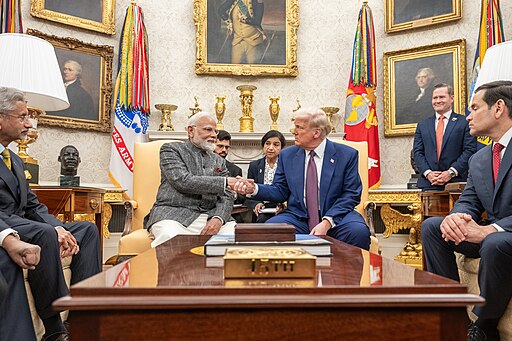
Even though the Quad summit itself has been delayed, the United States has continued to signal its commitment to the region. During Trump’s and Hegseth’s tours of Asia, the United States reaffirmed its alliances with Japan and South Korea. Earlier this year, Indian Prime Minister Narendra Modi and Trump agreed to continue several minilateral initiatives including the I2U2 and the India–Middle East–Europe Corridor.
Emerging Divergence
In parallel, India and the United States have shared common economic and even political interests that brought the two countries closer together. On the economic front, India–US bilateral trade stood at US$128.9 billion in 2024, with the United States remaining India’s largest bilateral trading partner. India also accounts for a significant number of high-skilled immigrants into the United States, contributing around US$86 billion to the economy and generating around US$35 billion in taxes.
At various times in the past two decades, India and the United States converged on several geopolitical issues as well (apart from the issue of China’s rise). The most prominent of these has been the “de-hyphenation” of India and Pakistan in US policy circles. This resulted in a shift to neutrality on the Kashmir issue and in US mediation of the India–Pakistan conflict from its previous tacit support for Pakistan’s position. This understanding has guided US policy towards South Asia since the turn of the century. In addition, the United States has also officially been accommodating of India’s relationship with Russia despite privately holding reservations.
Today, these pillars of cooperation are under strain. Trump’s tariffs have hit Indian exporters to the United States particularly hard. Changes in H-1B visa conditions, which have made it harder for skilled immigrants – particularly Indians – to acquire visas, have dampened people-to-people ties. Convergence, or at least the mutual understanding reached on geopolitical issues such as US–Pakistan and India–Russia relations, has also unravelled.
Looking Ahead
The current dynamics suggest several implications. First, India will continue to pursue a close relationship with the United States. Given that the strategic logic of balancing China remains relevant, India is expected to sustain its defence engagement with the United States. India–US disagreements on tariffs are also unlikely to derail cooperation within the Quad. While the grouping may face turbulence, it is also likely to endure, as its members’ interests and general outlooks remain broadly aligned.
However, the previous modus vivendi that Indian foreign policy had established with the United States on political issues has shifted, and India will likely have to make new trade-offs in its overall foreign relations. For instance, improved US–Russia relations under Trump 2.0 would allow India to continue its delicate balancing act between the United States and Russia. This is now unlikely to materialise unless a peace deal to end the war in Ukraine is reached. India is already recalibrating its relationship with Russia by cutting oil imports. Ultimately, the depth of the India–US partnership will be determined by how much Indian policymakers are willing to accommodate shifts in US interests and perceptions.
Thus, beyond the baseline of defence relations, issues are likely to get further interconnected, as Trump seeks to leverage the United States’ strengths and convert them into tangible outcomes. Under former US President Joe Biden, India did not face any repercussions from the United States for its relationship with Russia. However, Trump is more open to imposing tariffs on India for purchases of Russian oil or to pushing for negotiated settlements in bilateral conflicts. More importantly, however, Trump’s re-election has revealed a fractured foreign policy consensus within the Beltway. It is therefore imperative for India to negotiate a new consensus on the expectations from the relationship. Where this “new normal” lands will determine how far India and the United States can go in achieving their stated objectives for the relationship.
Nishant Rajeev is a Senior Analyst with the South Asia Programme at the S. Rajaratnam School of International Studies (RSIS), Nanyang Technological University, Singapore.
KEY TAKEAWAYS
• Structural pressures generated by China’s rise continue to underpin India’s strategic alignment with the United States.
• The convergence of bilateral economic and political interests that have also driven engagement between India and the United States is now under significant strain.
• Where a new consensus on expectations and interests between both sides lands will determine how far the relationship will go in the future.
COMMENTARY
The India–US bilateral relationship has grown considerably in the past 25 years. It has encompassed a broad geostrategic pillar that aims to balance China’s rise, and a convergence of bilateral economic and political interests. At first glance, US President Donald Trump’s foreign policy actions appear to have upended much of this cooperation. The possibility of a G2-style accommodation between the United States and China, Trump’s statements on Operation Sindoor, the recent upswing in US–Pakistan relations, and Trump’s imposition of tariffs on India have greatly damaged bilateral ties.
These developments have led to widespread speculation that India–US relations have reached a nadir. Some analysts note that India could be abandoned or relegated in Washington’s strategic priorities in Trump’s quest for accommodation with China. Others highlight that the Quadrilateral Security Dialogue (Quad) is being sidelined, if not already dead.
This piece argues that India’s relationship with the United States has not completely collapsed. The structural imperative for balancing China that underpins India’s engagement with the United States persists. Yet, beyond this baseline, new and unique challenges are emerging, and the two countries need to negotiate new understandings on a range of issues.
Continuity and Cooperation
India sees the United States as a key partner that can help balance the growing power asymmetry between itself and China. To this end, India’s engagement with the United States has two objectives. The first is to increase India’s domestic capabilities across all domains, with a priority on defence. The second is to counter China’s capabilities and influence across the Indo-Pacific region. The Quad has featured prominently in this line of effort.
As part of his Asia tour, Trump aspired to clinch a deal with Chinese President Xi Jinping on trade and arrive at a mutual understanding on the relationship. Thus, Indian leaders have had to contend with the possibility of a G2-style accommodation between the United States and China. If Trump’s diplomacy were to succeed, this would put the future of India’s balancing strategy with respect to China in jeopardy. The uncertainty created by Trump has forced India, Australia and, to a lesser extent, Japan to recalibrate their relations with China. In their bilateral summits with China, these countries have stressed the need for stability in their relationships.
Nevertheless, China’s rise still threatens core interests of both India and the United States. The incentive for alignment remains strong and the expansion of India–US defence cooperation has continued. Indian Defence Minister Rajnath Singh and US Secretary of War Pete Hegseth met on the sidelines of the ASEAN Defence Ministers’ Meeting-Plus (ADMM-Plus) summit in October. During the meeting, the two countries renewed their mutual defence agreement for another 10 years. Shortly thereafter, Hindustan Aeronautics Limited and General Electric concluded a US$1 billion deal to supply the former with 113 jet engines. The United States has also agreed to supply India with Javelin anti-tank missiles and Excalibur artillery shells.
The Quad also shows some continuity, although new challenges have emerged. The foreign ministers have already met twice this year, and have detailed an agenda that suggests some continuity from the previous administration (although the issue of climate change has been dropped). Indian Foreign Minister S. Jaishankar backed the new agenda of the Quad, stressing the need to develop partner capabilities.
Even though the Quad summit itself has been delayed, the United States has continued to signal its commitment to the region. During Trump’s and Hegseth’s tours of Asia, the United States reaffirmed its alliances with Japan and South Korea. Earlier this year, Indian Prime Minister Narendra Modi and Trump agreed to continue several minilateral initiatives including the I2U2 and the India–Middle East–Europe Corridor.
Emerging Divergence
In parallel, India and the United States have shared common economic and even political interests that brought the two countries closer together. On the economic front, India–US bilateral trade stood at US$128.9 billion in 2024, with the United States remaining India’s largest bilateral trading partner. India also accounts for a significant number of high-skilled immigrants into the United States, contributing around US$86 billion to the economy and generating around US$35 billion in taxes.
At various times in the past two decades, India and the United States converged on several geopolitical issues as well (apart from the issue of China’s rise). The most prominent of these has been the “de-hyphenation” of India and Pakistan in US policy circles. This resulted in a shift to neutrality on the Kashmir issue and in US mediation of the India–Pakistan conflict from its previous tacit support for Pakistan’s position. This understanding has guided US policy towards South Asia since the turn of the century. In addition, the United States has also officially been accommodating of India’s relationship with Russia despite privately holding reservations.
Today, these pillars of cooperation are under strain. Trump’s tariffs have hit Indian exporters to the United States particularly hard. Changes in H-1B visa conditions, which have made it harder for skilled immigrants – particularly Indians – to acquire visas, have dampened people-to-people ties. Convergence, or at least the mutual understanding reached on geopolitical issues such as US–Pakistan and India–Russia relations, has also unravelled.
Looking Ahead
The current dynamics suggest several implications. First, India will continue to pursue a close relationship with the United States. Given that the strategic logic of balancing China remains relevant, India is expected to sustain its defence engagement with the United States. India–US disagreements on tariffs are also unlikely to derail cooperation within the Quad. While the grouping may face turbulence, it is also likely to endure, as its members’ interests and general outlooks remain broadly aligned.
However, the previous modus vivendi that Indian foreign policy had established with the United States on political issues has shifted, and India will likely have to make new trade-offs in its overall foreign relations. For instance, improved US–Russia relations under Trump 2.0 would allow India to continue its delicate balancing act between the United States and Russia. This is now unlikely to materialise unless a peace deal to end the war in Ukraine is reached. India is already recalibrating its relationship with Russia by cutting oil imports. Ultimately, the depth of the India–US partnership will be determined by how much Indian policymakers are willing to accommodate shifts in US interests and perceptions.
Thus, beyond the baseline of defence relations, issues are likely to get further interconnected, as Trump seeks to leverage the United States’ strengths and convert them into tangible outcomes. Under former US President Joe Biden, India did not face any repercussions from the United States for its relationship with Russia. However, Trump is more open to imposing tariffs on India for purchases of Russian oil or to pushing for negotiated settlements in bilateral conflicts. More importantly, however, Trump’s re-election has revealed a fractured foreign policy consensus within the Beltway. It is therefore imperative for India to negotiate a new consensus on the expectations from the relationship. Where this “new normal” lands will determine how far India and the United States can go in achieving their stated objectives for the relationship.
Nishant Rajeev is a Senior Analyst with the South Asia Programme at the S. Rajaratnam School of International Studies (RSIS), Nanyang Technological University, Singapore.