


23 December 2025
IP25127 | Containing Maritime Spillover in the Thailand–Cambodia Conflict

KEY TAKEAWAYS
• The escalation of the land-based conflict between Thailand and Cambodia carries a growing risk of maritime spillover as naval actions and maritime risk signalling create conditions for the Gulf of Thailand to emerge as a potential secondary theatre.
• Even limited, temporary sea-denial measures and domestic signalling can harden sovereignty narratives, tighten leaders’ room for compromise, and narrow the post-crisis bargaining space for technical talks.
• The immediate priority is to reduce incident risk at sea while preserving post-crisis negotiability through basic deconfliction, disciplined rhetoric, and pragmatic use of available regional channels.
COMMENTARY
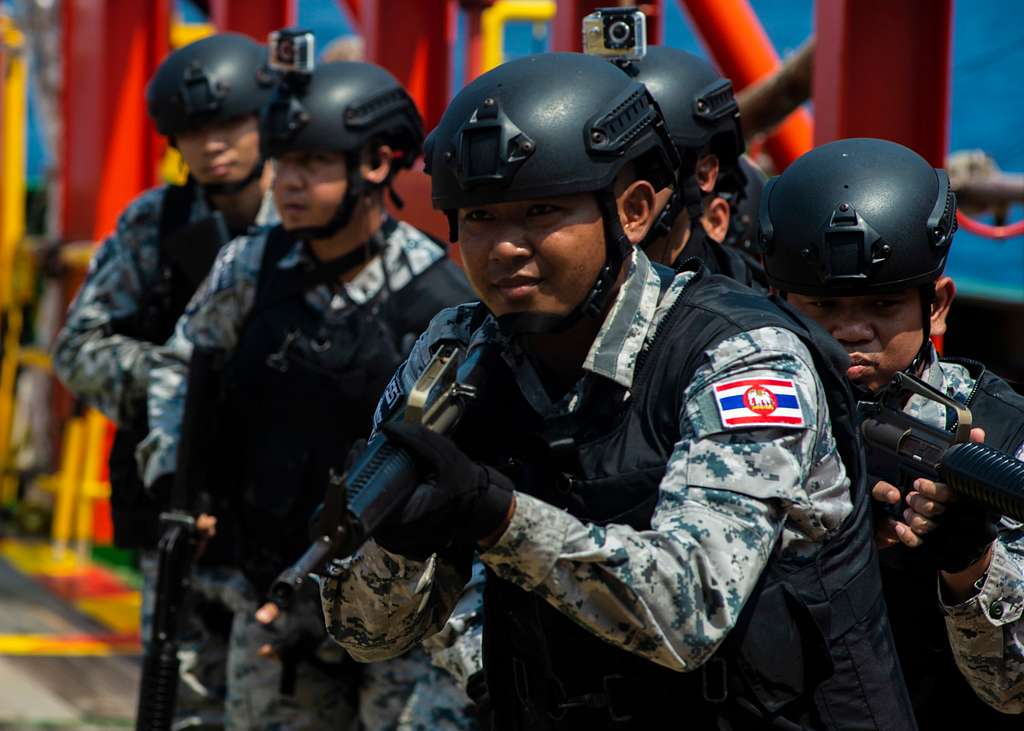
The outbreak of renewed hostilities along the Thai–Cambodian border has been driven largely by events on land, but its effects have not been confined there. As fighting intensifies along the land border, Thai authorities have signalled a willingness to apply maritime pressure through naval gunfire support, strikes on coastal artillery and shipping supply restrictions.
Thailand and Cambodia sit on an unresolved maritime dispute in the Gulf of Thailand that is politically sensitive, legally contested, and domestically combustible. Even if the current conflict remains fundamentally land-centric, the appearance of naval action and sea-denial manoeuvres risks activating the Gulf of Thailand as another front of the conflict. Such spillover risks hardening domestic positions and narrowing the space for future compromise on the maritime dispute. Cambodia is also embroiled in an ongoing maritime territorial dispute with neighbouring Vietnam, which in itself presents challenges for regional stability if mismanaged.
A Latent and Politically Sensitive Gulf Dispute
Thailand and Cambodia’s overlapping maritime claims are governed, at least procedurally, by a 2001 memorandum that explicitly links two tracks: joint development of hydrocarbon resources in a defined area, and maritime delimitation (territorial sea, continental shelf and exclusive economic zone) in an area “to be delimited”. Crucially, the document states that these tracks were intended to be treated as “an indivisible package. This structure created an inherent political trap: joint development could be framed as pragmatism, while delimitation touched sovereignty, making movement on either track vulnerable to nationalist backlash. Recent debates in Thailand have shown how readily the Gulf issue could be pulled into nationalist contestation, including critiques centred on suspicions of unfair negotiations and fears of territorial compromise. More recently, the Thai senate has indicated its support for repealing the 2001 memorandum. In this context, the land conflict has begun to change the atmosphere in which the maritime dispute must eventually be addressed.
Maritime Dimension of the Conflict and its Implications
Naval activity became a visible part of the escalation once fighting reached the coast. On 13 December, Thai naval forces conducted bombardments against Cambodian coastal artillery positions in Koh Kong, while clashes in Thailand’s Trat Province involved Thai marines and Cambodian forces along the narrow coastal strip. In parallel, maritime enforcement measures were tightened in the Gulf. The Thailand Maritime Enforcement Coordinating Center has stepped up efforts to restrict the movement of fuel and military-related supplies to Cambodia via sea routes, including restricting Thai-flagged vessel movements off Chanthaburi and Trat and extending controls to additional coastal provinces. Meanwhile, Thai media reported Cambodian drone activity near Thai offshore oil and gas platforms in the Gulf, potentially extending the conflict’s maritime dimension into offshore infrastructure.
Escalation ladders are compressed at sea: decision cycles are shorter, identification is harder, and civilian and military traffic can overlap. Even precautionary measures, like high-risk designations, can raise anxiety and prompt unpredictable reactions from commercial operators and local communities. Although Thai officials have emphasised that international shipping will be unaffected, risk signalling can still shape behaviour, insurance assumptions, and public perceptions of maritime insecurity. The American Chamber of Commerce has been quick to raise the alarm when reports initially spread of Thailand’s intention to step up enforcement action targeting strategic resource transportation to Cambodia. Although maritime control measures can be framed as regulatory or defensive, they may be interpreted as being coercive in an active conflict. That ambiguity increases the danger of misperception, especially if naval units are operating in close proximity to contested coastal areas.
It is also likely that the post-crisis space for negotiation has been damaged through the current escalation. Crisis-time measures often produce enduring after-effects that outlast the fighting: grievances and resentment over wartime losses or damage, hardening legal and diplomatic positions, and entrenched patterns of naval presence or enforcement will constrain compromise and weigh on negotiations as bargaining baggage. Even if the ruling elites on both sides privately view these measures as temporary, domestic audiences may treat them as markers of resolve that should not be walked back. As the conflict intensifies, security agencies have naturally gained prominence, while technical boundary negotiations, which are typically slow and detail-heavy, have been crowded out. Efforts at restarting them later will likely face much stronger headwinds, particularly if the dispute is linked to an “indivisible package” framework requiring simultaneous movement across politically sensitive tracks.
The Vietnamese Dimension
One will also have to keep in mind that the Gulf is not an enclosed bilateral arena. Cambodia’s border and maritime issues with Vietnam add another layer of volatility in the same geographic and political neighbourhood. Dialogue on land border demarcation between Vietnam and Cambodia has been stalled since 2018. Flare-ups have also been observed in the past due to fishing disputes within the contested waters. The relationship is compounded by enduring anti-Vietnam sentiment within Cambodia’s domestic political landscape, shaped by historical grievances and periodically activated by disputes framed as territorial encroachment and infringement on fish stocks. These unresolved disputes remain potentially incendiary during periods of instability.
Containing Maritime Risks amid Ongoing Hostilities
Crisis-time naval patterns, risk labels and sovereignty narratives can outlast the exchange of fire on the ground and become the new baseline in the Gulf as such dynamics will be difficult to reverse once they set in. The practical objective is to prevent maritime spillover from becoming entrenched while preserving a pathway back to technical maritime diplomacy when the immediate crisis subsides.
As such, the maritime dispute should be ring-fenced from wartime signalling where possible. Both sides ought to avoid crisis-time rhetoric or domestic signalling that turns the 2001 memorandum into a wartime litmus test since once the framework itself becomes politically charged, restarting technical talks in future becomes significantly harder. Both sides should also work on maritime deconfliction even if land de-escalation is slow. Even without broader trust, basic crisis management tools can reduce incident risk. These include a rapid clarification channel between designated operational commanders and clear encounter protocols for naval and coast guard units operating near contested coastal areas. ASEAN mechanisms for crisis management already exist and can be used pragmatically. With ASEAN observers already deployed on the ground, ASEAN’s immediate value lies in supporting de-escalation and keeping channels open through monitoring, liaison and quiet facilitation.
The unresolved Thai–Cambodian maritime dispute has created a latent, politically sensitive theatre in the Gulf of Thailand. Naval action and denial measures raise the risk of spillover into contested maritime space. The deeper risk of such developments is not just escalation at sea, but the constraints it may impose on future bargaining space. As nationalist sentiment and grievances accrue, leaders face tighter domestic constraints on compromise. For policymakers, the priority is straightforward: reduce incident risk at sea now, avoid turning temporary measures into permanent narratives and preserve the political space needed to return to technical maritime diplomacy when the guns fall silent.
Chong De Xian is an Associate Research Fellow in the Maritime Security Programme at the S. Rajaratnam School of International Studies (RSIS).
KEY TAKEAWAYS
• The escalation of the land-based conflict between Thailand and Cambodia carries a growing risk of maritime spillover as naval actions and maritime risk signalling create conditions for the Gulf of Thailand to emerge as a potential secondary theatre.
• Even limited, temporary sea-denial measures and domestic signalling can harden sovereignty narratives, tighten leaders’ room for compromise, and narrow the post-crisis bargaining space for technical talks.
• The immediate priority is to reduce incident risk at sea while preserving post-crisis negotiability through basic deconfliction, disciplined rhetoric, and pragmatic use of available regional channels.
COMMENTARY
The outbreak of renewed hostilities along the Thai–Cambodian border has been driven largely by events on land, but its effects have not been confined there. As fighting intensifies along the land border, Thai authorities have signalled a willingness to apply maritime pressure through naval gunfire support, strikes on coastal artillery and shipping supply restrictions.
Thailand and Cambodia sit on an unresolved maritime dispute in the Gulf of Thailand that is politically sensitive, legally contested, and domestically combustible. Even if the current conflict remains fundamentally land-centric, the appearance of naval action and sea-denial manoeuvres risks activating the Gulf of Thailand as another front of the conflict. Such spillover risks hardening domestic positions and narrowing the space for future compromise on the maritime dispute. Cambodia is also embroiled in an ongoing maritime territorial dispute with neighbouring Vietnam, which in itself presents challenges for regional stability if mismanaged.
A Latent and Politically Sensitive Gulf Dispute
Thailand and Cambodia’s overlapping maritime claims are governed, at least procedurally, by a 2001 memorandum that explicitly links two tracks: joint development of hydrocarbon resources in a defined area, and maritime delimitation (territorial sea, continental shelf and exclusive economic zone) in an area “to be delimited”. Crucially, the document states that these tracks were intended to be treated as “an indivisible package. This structure created an inherent political trap: joint development could be framed as pragmatism, while delimitation touched sovereignty, making movement on either track vulnerable to nationalist backlash. Recent debates in Thailand have shown how readily the Gulf issue could be pulled into nationalist contestation, including critiques centred on suspicions of unfair negotiations and fears of territorial compromise. More recently, the Thai senate has indicated its support for repealing the 2001 memorandum. In this context, the land conflict has begun to change the atmosphere in which the maritime dispute must eventually be addressed.
Maritime Dimension of the Conflict and its Implications
Naval activity became a visible part of the escalation once fighting reached the coast. On 13 December, Thai naval forces conducted bombardments against Cambodian coastal artillery positions in Koh Kong, while clashes in Thailand’s Trat Province involved Thai marines and Cambodian forces along the narrow coastal strip. In parallel, maritime enforcement measures were tightened in the Gulf. The Thailand Maritime Enforcement Coordinating Center has stepped up efforts to restrict the movement of fuel and military-related supplies to Cambodia via sea routes, including restricting Thai-flagged vessel movements off Chanthaburi and Trat and extending controls to additional coastal provinces. Meanwhile, Thai media reported Cambodian drone activity near Thai offshore oil and gas platforms in the Gulf, potentially extending the conflict’s maritime dimension into offshore infrastructure.
Escalation ladders are compressed at sea: decision cycles are shorter, identification is harder, and civilian and military traffic can overlap. Even precautionary measures, like high-risk designations, can raise anxiety and prompt unpredictable reactions from commercial operators and local communities. Although Thai officials have emphasised that international shipping will be unaffected, risk signalling can still shape behaviour, insurance assumptions, and public perceptions of maritime insecurity. The American Chamber of Commerce has been quick to raise the alarm when reports initially spread of Thailand’s intention to step up enforcement action targeting strategic resource transportation to Cambodia. Although maritime control measures can be framed as regulatory or defensive, they may be interpreted as being coercive in an active conflict. That ambiguity increases the danger of misperception, especially if naval units are operating in close proximity to contested coastal areas.
It is also likely that the post-crisis space for negotiation has been damaged through the current escalation. Crisis-time measures often produce enduring after-effects that outlast the fighting: grievances and resentment over wartime losses or damage, hardening legal and diplomatic positions, and entrenched patterns of naval presence or enforcement will constrain compromise and weigh on negotiations as bargaining baggage. Even if the ruling elites on both sides privately view these measures as temporary, domestic audiences may treat them as markers of resolve that should not be walked back. As the conflict intensifies, security agencies have naturally gained prominence, while technical boundary negotiations, which are typically slow and detail-heavy, have been crowded out. Efforts at restarting them later will likely face much stronger headwinds, particularly if the dispute is linked to an “indivisible package” framework requiring simultaneous movement across politically sensitive tracks.
The Vietnamese Dimension
One will also have to keep in mind that the Gulf is not an enclosed bilateral arena. Cambodia’s border and maritime issues with Vietnam add another layer of volatility in the same geographic and political neighbourhood. Dialogue on land border demarcation between Vietnam and Cambodia has been stalled since 2018. Flare-ups have also been observed in the past due to fishing disputes within the contested waters. The relationship is compounded by enduring anti-Vietnam sentiment within Cambodia’s domestic political landscape, shaped by historical grievances and periodically activated by disputes framed as territorial encroachment and infringement on fish stocks. These unresolved disputes remain potentially incendiary during periods of instability.
Containing Maritime Risks amid Ongoing Hostilities
Crisis-time naval patterns, risk labels and sovereignty narratives can outlast the exchange of fire on the ground and become the new baseline in the Gulf as such dynamics will be difficult to reverse once they set in. The practical objective is to prevent maritime spillover from becoming entrenched while preserving a pathway back to technical maritime diplomacy when the immediate crisis subsides.
As such, the maritime dispute should be ring-fenced from wartime signalling where possible. Both sides ought to avoid crisis-time rhetoric or domestic signalling that turns the 2001 memorandum into a wartime litmus test since once the framework itself becomes politically charged, restarting technical talks in future becomes significantly harder. Both sides should also work on maritime deconfliction even if land de-escalation is slow. Even without broader trust, basic crisis management tools can reduce incident risk. These include a rapid clarification channel between designated operational commanders and clear encounter protocols for naval and coast guard units operating near contested coastal areas. ASEAN mechanisms for crisis management already exist and can be used pragmatically. With ASEAN observers already deployed on the ground, ASEAN’s immediate value lies in supporting de-escalation and keeping channels open through monitoring, liaison and quiet facilitation.
The unresolved Thai–Cambodian maritime dispute has created a latent, politically sensitive theatre in the Gulf of Thailand. Naval action and denial measures raise the risk of spillover into contested maritime space. The deeper risk of such developments is not just escalation at sea, but the constraints it may impose on future bargaining space. As nationalist sentiment and grievances accrue, leaders face tighter domestic constraints on compromise. For policymakers, the priority is straightforward: reduce incident risk at sea now, avoid turning temporary measures into permanent narratives and preserve the political space needed to return to technical maritime diplomacy when the guns fall silent.
Chong De Xian is an Associate Research Fellow in the Maritime Security Programme at the S. Rajaratnam School of International Studies (RSIS).