


05 January 2026
IP26001 | A War of Two Worlds

KEY TAKEAWAYS
• Coercing Ukraine to accept an unjust deal that favours the aggressor will accelerate the implosion of the rules-based world order and the return of a normless world where small states are not safe from predatory powers.
• China has important geopolitical stakes in the Ukraine war such that it cannot allow a Russian collapse.
• Restoring international accountability is therefore as vital for Singapore as it is for the Baltic states, and this is impossible without making Russia suffer the full consequences of its war against Ukraine.
COMMENTARY
Russia justified its full-scale invasion of Ukraine with many false claims. It accused Ukrainian authorities of persecuting Russian speakers – especially in Donbas – and alleged that NATO planned to use Ukraine to encroach on Russia. Neither claim reflects reality. The Russian language was widely and freely used in Ukraine after the 2014 Maidan Revolution, and many Russian-speaking Ukrainians voluntarily joined or supported Ukraine’s defence. Civilians were not being massacred in Donbas; although the conflict between Moscow’s proxy forces and Ukraine’s military caused some civilian casualties, they fell close to zero by the end of 2020, according to the Organization for Security and Cooperation in Europe (OSCE).
NATO was not driving events either. The alliance does not have the unanimous consensus for Ukraine’s accession, which is required for new memberships. Its presence in Ukraine mostly consisted of instructors helping to train Ukrainian forces; it largely withheld supplying lethal weapons to Ukraine to avoid provoking Russia. Moscow’s opposition to NATO enlargement stems from its desire to preserve its ability to coerce neighbouring states militarily – which would be impossible when countries enjoy the protection of NATO’s collective defence commitment. Russian President Vladimir Putin’s ambition to restore Russian dominance over former imperial territories makes Ukrainian independence intolerable to him. As Zbigniew Brzezinski, former US National Security Advisor, aptly noted, “Russia cannot be an empire without controlling Ukraine.”
Russia’s ensuing colonial war of choice has featured atrocities typical of past Russian campaigns, yet it was strategically lost once Ukraine refused to yield. Ukraine’s resistance forced major Russian retreats in 2022 and produced a grinding stalemate continuing until now, with Russia controlling just around 18% of Ukrainian territory and completely losing naval dominance in the Black Sea. Still, Putin presses on: apart from escalating aerial bombardment of civilians in Ukraine, his government has been intensifying state-sponsored terrorism in Europe and conducting a propaganda campaign globally, seeking to achieve by other means what he has failed to secure on the battlefields, where he has already lost over one million soldiers.
China’s Gain
Despite its professed neutrality, China has become Russia’s most important source of strength. Russia’s economy is roughly the size of Italy’s, making it ill-suited for a long war without external support. China, along with India, is now the largest buyer of Russian oil, providing crucial revenue for the Kremlin’s war machine. China also supplies industrial machinery, spare parts and key components for Russia’s defence industry, including drones and key chemicals for missiles.
This support builds on the “no limits” partnership between the two countries and reflects China’s broader geopolitical goals. Chinese Foreign Minister Wang Yi has reportedly said that China cannot allow Russia to lose. Beijing views Russia’s success as strategically useful in its confrontation with the United States, though it has occasionally tried to restrain Russia’s most extreme threats, such as nuclear sabre-rattling in 2024, when the United States removed some restrictions on Ukraine’s use of long-range missiles against targets in Russia.
Putin’s Trump Card
US President Donald Trump is eager to end the war quickly, regardless of the consequences for Ukraine or Europe, and to reset relations with Russia. He has repeatedly sought to pressure Ukraine into making concessions favourable to Russia. Every time America cuts support for Ukraine, such as intelligence sharing, Russia escalated the war to take advantage of Ukraine’s vulnerability.
The latest example of siding with the aggressor – the so-called 28-point plan – would have rewarded Russian aggression with territorial gains, limited Ukraine’s sovereignty, lifted economic sanctions and granted amnesty for war crimes. Putin’s main path to victory appears to run through the corridors of power in Washington, and the Russians are vigorously cultivating it.
To many Europeans, the plan evoked the disastrous Munich Agreement of 1938, which taught an unequivocal lesson that totalitarian aggressors always come back for more. They fear that Trump’s transactional approach, combined with Putin’s neo-imperial ambitions, could push all of Europe to the brink of a major continent-wide war within a few years – one whose global consequences would be profound. It is no surprise that every such plan secretly developed between Moscow and Washington prompts resistance. The chief obstacle to a just and sustainable peace, however, sits in the Kremlin, not Kyiv or Brussels.
Small States’ Peril
Nowhere is the threat of Russian aggression felt more acutely than in the Baltic states – Estonia, Latvia and Lithuania. Having been invaded and annexed by the USSR in 1940, they view its successor as an urgent, existential danger. This fear has driven whole-of-society efforts to build total defence systems, raise defence spending above 5% of GDP, heavily invest in modern capabilities, and push for a much stronger NATO presence. The Baltics are also among Ukraine’s top donors.
These states once placed great faith in international law and the principles of the UN Charter and Helsinki Accords of 1975 to protect small nations from predation. Former Estonian President Lennart Meri called international law the “nuclear weapon of small states”. But law is only effective when enforced – as with the expulsion of Iraq from Kuwait in 1991.
Russia has never faced such accountability. Despite losing the Cold War, it never underwent a whole-of-society moral reckoning comparable to Germany or Japan after World War II. From the crime of aggression to violations of the Geneva Conventions, the Genocide Convention, and the Chemical Weapons Convention, Russia has repeatedly disregarded its legal obligations in the ongoing war. If it escapes responsibility through a deal pushed by Trump, its sense of impunity will grow and encourage further aggression.
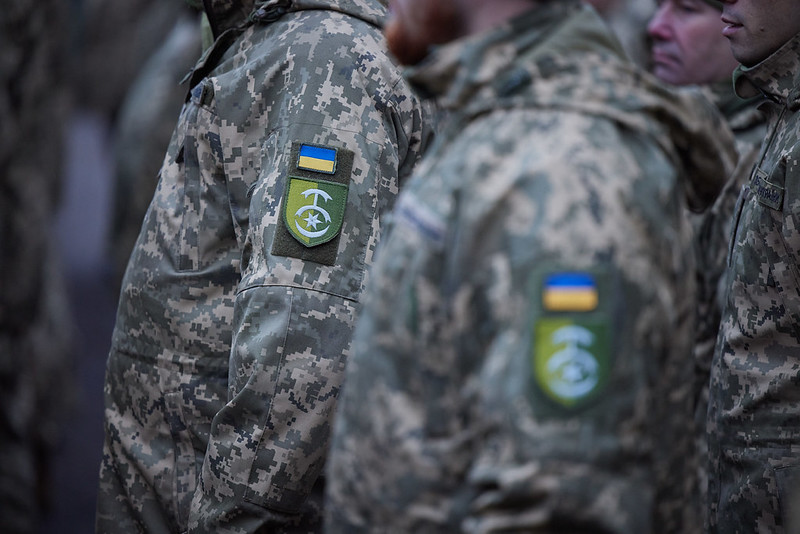
This would embolden revisionist powers elsewhere. Borders, territories and sovereignty will no longer be sacrosanct in a world where “the strong do what they can and the weak suffer what they must”. This is truly a war between two worlds – the world of a rules-based international order and a Hobbesian lawless world. Restoring international accountability is therefore as vital for the Baltic states as for Singapore, and this is impossible without making Russia suffer the full consequences of its war against Ukraine.
A Global Challenge
Russia’s aggression against Ukraine is a global test. It challenges the world’s commitment to the rules and norms designed to prevent major wars, genocide and war crimes. It also tests whether small states – like Estonia or Singapore – can remain safe from coercion and brutal violence by great powers to erase them as sovereign entities. Above all, it measures our willingness to help victims of aggression defend themselves in accordance with the UN Charter.
Some nations are failing this test, but many others understand the consequences and remain determined to resist Russia until its imperial ambitions collapse under internal strain and external pressure. Ukraine is pivotal – as both a firewall and a warning to future aggressors. As Kenya’s then-ambassador to the United Nations, Martin Kimani, told the emergency session of the Security Council, we must avoid sliding back into “new forms of domination and oppression”. Allowing Ukraine to fall, or accepting an unjust peace dictated by Russia and America, would do exactly that.
Tomas Jermalavičius is Head of Studies and Research Fellow at the International Centre for Defence and Security (ICDS) in Tallinn, Estonia. In November 2025, he was Visiting Senior Fellow of the Military Transformations Programme of the S. Rajaratnam School of International Studies (RSIS).
KEY TAKEAWAYS
• Coercing Ukraine to accept an unjust deal that favours the aggressor will accelerate the implosion of the rules-based world order and the return of a normless world where small states are not safe from predatory powers.
• China has important geopolitical stakes in the Ukraine war such that it cannot allow a Russian collapse.
• Restoring international accountability is therefore as vital for Singapore as it is for the Baltic states, and this is impossible without making Russia suffer the full consequences of its war against Ukraine.
COMMENTARY
Russia justified its full-scale invasion of Ukraine with many false claims. It accused Ukrainian authorities of persecuting Russian speakers – especially in Donbas – and alleged that NATO planned to use Ukraine to encroach on Russia. Neither claim reflects reality. The Russian language was widely and freely used in Ukraine after the 2014 Maidan Revolution, and many Russian-speaking Ukrainians voluntarily joined or supported Ukraine’s defence. Civilians were not being massacred in Donbas; although the conflict between Moscow’s proxy forces and Ukraine’s military caused some civilian casualties, they fell close to zero by the end of 2020, according to the Organization for Security and Cooperation in Europe (OSCE).
NATO was not driving events either. The alliance does not have the unanimous consensus for Ukraine’s accession, which is required for new memberships. Its presence in Ukraine mostly consisted of instructors helping to train Ukrainian forces; it largely withheld supplying lethal weapons to Ukraine to avoid provoking Russia. Moscow’s opposition to NATO enlargement stems from its desire to preserve its ability to coerce neighbouring states militarily – which would be impossible when countries enjoy the protection of NATO’s collective defence commitment. Russian President Vladimir Putin’s ambition to restore Russian dominance over former imperial territories makes Ukrainian independence intolerable to him. As Zbigniew Brzezinski, former US National Security Advisor, aptly noted, “Russia cannot be an empire without controlling Ukraine.”
Russia’s ensuing colonial war of choice has featured atrocities typical of past Russian campaigns, yet it was strategically lost once Ukraine refused to yield. Ukraine’s resistance forced major Russian retreats in 2022 and produced a grinding stalemate continuing until now, with Russia controlling just around 18% of Ukrainian territory and completely losing naval dominance in the Black Sea. Still, Putin presses on: apart from escalating aerial bombardment of civilians in Ukraine, his government has been intensifying state-sponsored terrorism in Europe and conducting a propaganda campaign globally, seeking to achieve by other means what he has failed to secure on the battlefields, where he has already lost over one million soldiers.
China’s Gain
Despite its professed neutrality, China has become Russia’s most important source of strength. Russia’s economy is roughly the size of Italy’s, making it ill-suited for a long war without external support. China, along with India, is now the largest buyer of Russian oil, providing crucial revenue for the Kremlin’s war machine. China also supplies industrial machinery, spare parts and key components for Russia’s defence industry, including drones and key chemicals for missiles.
This support builds on the “no limits” partnership between the two countries and reflects China’s broader geopolitical goals. Chinese Foreign Minister Wang Yi has reportedly said that China cannot allow Russia to lose. Beijing views Russia’s success as strategically useful in its confrontation with the United States, though it has occasionally tried to restrain Russia’s most extreme threats, such as nuclear sabre-rattling in 2024, when the United States removed some restrictions on Ukraine’s use of long-range missiles against targets in Russia.
Putin’s Trump Card
US President Donald Trump is eager to end the war quickly, regardless of the consequences for Ukraine or Europe, and to reset relations with Russia. He has repeatedly sought to pressure Ukraine into making concessions favourable to Russia. Every time America cuts support for Ukraine, such as intelligence sharing, Russia escalated the war to take advantage of Ukraine’s vulnerability.
The latest example of siding with the aggressor – the so-called 28-point plan – would have rewarded Russian aggression with territorial gains, limited Ukraine’s sovereignty, lifted economic sanctions and granted amnesty for war crimes. Putin’s main path to victory appears to run through the corridors of power in Washington, and the Russians are vigorously cultivating it.
To many Europeans, the plan evoked the disastrous Munich Agreement of 1938, which taught an unequivocal lesson that totalitarian aggressors always come back for more. They fear that Trump’s transactional approach, combined with Putin’s neo-imperial ambitions, could push all of Europe to the brink of a major continent-wide war within a few years – one whose global consequences would be profound. It is no surprise that every such plan secretly developed between Moscow and Washington prompts resistance. The chief obstacle to a just and sustainable peace, however, sits in the Kremlin, not Kyiv or Brussels.
Small States’ Peril
Nowhere is the threat of Russian aggression felt more acutely than in the Baltic states – Estonia, Latvia and Lithuania. Having been invaded and annexed by the USSR in 1940, they view its successor as an urgent, existential danger. This fear has driven whole-of-society efforts to build total defence systems, raise defence spending above 5% of GDP, heavily invest in modern capabilities, and push for a much stronger NATO presence. The Baltics are also among Ukraine’s top donors.
These states once placed great faith in international law and the principles of the UN Charter and Helsinki Accords of 1975 to protect small nations from predation. Former Estonian President Lennart Meri called international law the “nuclear weapon of small states”. But law is only effective when enforced – as with the expulsion of Iraq from Kuwait in 1991.
Russia has never faced such accountability. Despite losing the Cold War, it never underwent a whole-of-society moral reckoning comparable to Germany or Japan after World War II. From the crime of aggression to violations of the Geneva Conventions, the Genocide Convention, and the Chemical Weapons Convention, Russia has repeatedly disregarded its legal obligations in the ongoing war. If it escapes responsibility through a deal pushed by Trump, its sense of impunity will grow and encourage further aggression.
This would embolden revisionist powers elsewhere. Borders, territories and sovereignty will no longer be sacrosanct in a world where “the strong do what they can and the weak suffer what they must”. This is truly a war between two worlds – the world of a rules-based international order and a Hobbesian lawless world. Restoring international accountability is therefore as vital for the Baltic states as for Singapore, and this is impossible without making Russia suffer the full consequences of its war against Ukraine.
A Global Challenge
Russia’s aggression against Ukraine is a global test. It challenges the world’s commitment to the rules and norms designed to prevent major wars, genocide and war crimes. It also tests whether small states – like Estonia or Singapore – can remain safe from coercion and brutal violence by great powers to erase them as sovereign entities. Above all, it measures our willingness to help victims of aggression defend themselves in accordance with the UN Charter.
Some nations are failing this test, but many others understand the consequences and remain determined to resist Russia until its imperial ambitions collapse under internal strain and external pressure. Ukraine is pivotal – as both a firewall and a warning to future aggressors. As Kenya’s then-ambassador to the United Nations, Martin Kimani, told the emergency session of the Security Council, we must avoid sliding back into “new forms of domination and oppression”. Allowing Ukraine to fall, or accepting an unjust peace dictated by Russia and America, would do exactly that.
Tomas Jermalavičius is Head of Studies and Research Fellow at the International Centre for Defence and Security (ICDS) in Tallinn, Estonia. In November 2025, he was Visiting Senior Fellow of the Military Transformations Programme of the S. Rajaratnam School of International Studies (RSIS).