
13 January 2026
IP26007 | The Rise of Mutual Aid: Rethinking Humanitarian Frameworks and Transforming Humanitarian Practice

KEY TAKEAWAYS
• Amid soaring inflation, political uncertainty and cuts to humanitarian aid, more mutual aid groups and networks are emerging with vast influence.
• States, international non-governmental organisations (INGOs) and donors need to seriously consider developing frameworks that fruitfully engage with mutual aid groups, determining whether they play complementary, supplementary or adversarial roles to broader public and formal humanitarian efforts.
• The participatory, collective and inclusive nature of mutual aid groups, coupled with their accessibility, may contribute significantly to bridging the humanitarian–development–peace nexus towards more resilient communities.
COMMENTARY
The COVID-19 pandemic renewed interest in the study of mutual aid. Enthusiasm for mutual aid has gained more momentum amid soaring inflation, political uncertainty and cuts to humanitarian funding across the globe. Mutual aid is neither new nor novel, forming an essential element of human relationships across societies and time. As communications technology has advanced through the years, however, mutual aid groups and networks increasingly play a prominent role in crisis response, preparedness and community protection. Think, for example, about the ordinary citizens around the world who responded to Afghan calls for evacuation assistance in August 2021; or the “solidarity kitchens” that emerged following Cyclone Seroja in Timor-Leste, owing in no small part to the diaspora community. States, international non-governmental organisations (INGOs) and donors alike would be well served to seriously consider developing appropriate disaster governance policies that include mutual aid groups and networks, given their potentially vast influence on the ground. How mutual aid is approached may very well determine whether these groups and networks play complementary, supplementary or adversarial roles to broader public efforts.
What is Mutual Aid?
Mutual aid as a concept finds its origins in anarchism. Peter Kropotkin, a key proponent, argued in 1902 that cooperation rather than competition provides the basis for human evolution. Today, the term is used to refer to a diverse range of community initiatives – from addiction support groups such as Alcoholics Anonymous, to locally led and organised humanitarian efforts in armed conflicts such as the Emergency Response Rooms in Sudan.
Despite the seemingly wide array of situations in which the term and concept may be used, common characteristics bind them. Mutual aid groups are characterised by collective action from the ground that is typically localised across informal networks; organised towards shared objectives; and based on a “collective care” approach. Their strengths lie in possessing and drawing on local knowledge, tools and communities in an inclusive manner, weaved with a sense of solidarity and collective responsibility to one another.
Mutual aid groups and networks tend to arise when emergent needs are not met. Their role is thus frequently one of adaptive gap-filling in social and humanitarian vacuums, most ostensibly, when states fail to meet protection and welfare obligations. The informal and extremely flexible, non-hierarchical nature of mutual aid also means that these groups and networks possess unique capacity to access geographical areas and communities far more frequently and responsively than states and/or INGOs.
Mutual Aid in Southeast Asia: The Case of Myanmar
Within the humanitarian space, mutual aid has frequently been discussed in contexts of armed conflict and disasters. In Southeast Asia, the ongoing internal armed conflict in Myanmar since February 2021, coupled with disasters triggered by natural hazards, has presented numerous challenges for the formal delivery of humanitarian aid. These challenges have been compounded by President Donald Trump’s shutdown of USAID and the withdrawal or reduction of funds from other major donors to humanitarian organisations.
One of the primary lifelines of those affected by armed conflict or disasters in Myanmar remains mutual aid efforts. Assistance from a myriad of informal professional, religious or ethnic-based groups and communities continues to sustain livelihoods. Mutual aid groups and networks have provided welfare and social protection services including education, healthcare and safe shelter, among many others, leading to some observing that mutual aid has replaced the state in the provision of welfare or social protection.
Advances in financial and communications technology have no doubt boosted mutual aid efforts. Remittances from friends and family overseas can now be sent and received with the push of a button. The introduction of the satellite-based internet service Starlink has further enabled ease of communication not only between family members in remote parts of the country and beyond, but also between mutual aid members and groups. Instant coordination is now possible. This channel of communication, however, may inadvertently be affected by efforts to shut down criminal syndicates that operate scam centres.
In Myanmar, mutual aid has increasingly become associated with the notion of “resistance humanitarianism” – a corollary of the Spring Revolution, civil disobedience movement and persistent opposition to the military. Those involved in such mutual aid efforts are not politically neutral, but unite under a common opposition to military rule. Scholars and practitioners such as Adelina Kamal argue that mutual aid efforts, aligned with resistance humanitarianism in this specific context, may very well present a “new type of aid architecture” that not only bridges the humanitarian–development–peace nexus, but also builds community resilience towards a sustainable future. The case of Myanmar demonstrates the potential power of mutual aid groups that can galvanise action with, alongside, or in opposition to the state.
The Future of Mutual Aid: Frameworks for Engagement
As mutual aid groups gain ground in crises response, decision- and policy-makers would do well to develop frameworks that offer fruitful engagement with these groups. This would firstly include recognition of mutual aid groups and networks as legitimate humanitarian actors within a given crisis or disaster context. This means acknowledging the strengths that these groups bring, without demanding to change their form. Their successes in aid access, for instance, come directly from their informal and non-hierarchical structure that allows for flexibility and adaptability. The temptation to formalise and institutionalise these groups without forethought should therefore be resisted.
It follows that by recognising mutual aid groups as legitimate humanitarian actors, funding to these groups should be seriously considered. While many groups boast the potential for longer-term effectiveness in crisis and disaster response, their ability to deliver is often hindered by a lack of financial resources. Direct and flexible funding to mutual aid groups offers one of the most powerful forms of support. The lack of restrictions allows such groups to set their own agendas, determine boundaries of risk and safety, and respond adaptively to dynamics on the ground.
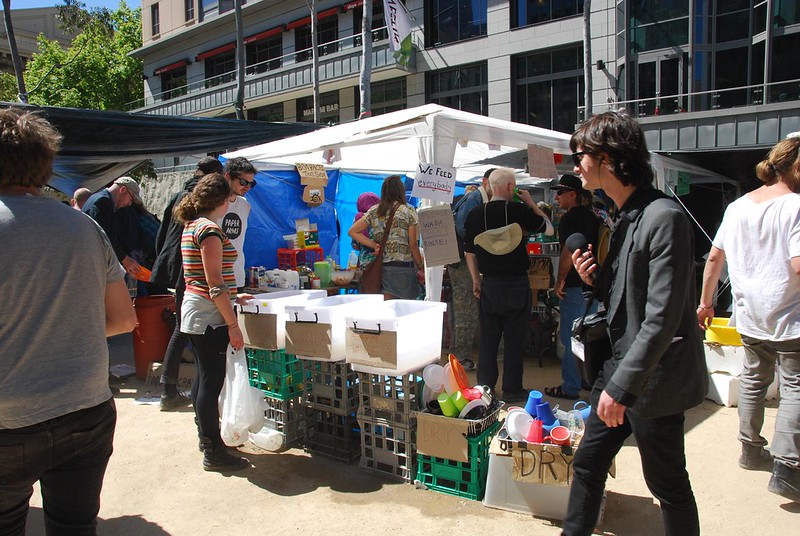
As mutual aid groups tend to either be composed of affected community members or those closely related to the affected, incorporating their viewpoints to inform broader public efforts in crisis and disaster response is crucial. Doing so would translate into developing directly relevant policies and action in the most effective and efficient ways. Direct feedback from affected communities avoids years of inefficient aid delivery that might overlook the most basic delivery infrastructure needs. The lack of roads and basic infrastructure to support aid distribution in the Democratic Republic of Congo, despite the country’s receipt of aid for decades, is a cautionary tale.
Constructive cooperation with mutual aid groups can not only ensure responsive humanitarian aid or disaster relief, but can also lead to building and strengthening community resilience. Mutual aid supported by broader public efforts is empowered self-reliance from the ground up. Perhaps, what localisation is meant to look like after all.
Junli Lim is a Research Fellow with the Humanitarian and Disaster Relief Programme, Institute of Defence and Strategic Studies (IDSS), S. Rajaratnam School of International Studies (RSIS).
KEY TAKEAWAYS
• Amid soaring inflation, political uncertainty and cuts to humanitarian aid, more mutual aid groups and networks are emerging with vast influence.
• States, international non-governmental organisations (INGOs) and donors need to seriously consider developing frameworks that fruitfully engage with mutual aid groups, determining whether they play complementary, supplementary or adversarial roles to broader public and formal humanitarian efforts.
• The participatory, collective and inclusive nature of mutual aid groups, coupled with their accessibility, may contribute significantly to bridging the humanitarian–development–peace nexus towards more resilient communities.
COMMENTARY
The COVID-19 pandemic renewed interest in the study of mutual aid. Enthusiasm for mutual aid has gained more momentum amid soaring inflation, political uncertainty and cuts to humanitarian funding across the globe. Mutual aid is neither new nor novel, forming an essential element of human relationships across societies and time. As communications technology has advanced through the years, however, mutual aid groups and networks increasingly play a prominent role in crisis response, preparedness and community protection. Think, for example, about the ordinary citizens around the world who responded to Afghan calls for evacuation assistance in August 2021; or the “solidarity kitchens” that emerged following Cyclone Seroja in Timor-Leste, owing in no small part to the diaspora community. States, international non-governmental organisations (INGOs) and donors alike would be well served to seriously consider developing appropriate disaster governance policies that include mutual aid groups and networks, given their potentially vast influence on the ground. How mutual aid is approached may very well determine whether these groups and networks play complementary, supplementary or adversarial roles to broader public efforts.
What is Mutual Aid?
Mutual aid as a concept finds its origins in anarchism. Peter Kropotkin, a key proponent, argued in 1902 that cooperation rather than competition provides the basis for human evolution. Today, the term is used to refer to a diverse range of community initiatives – from addiction support groups such as Alcoholics Anonymous, to locally led and organised humanitarian efforts in armed conflicts such as the Emergency Response Rooms in Sudan.
Despite the seemingly wide array of situations in which the term and concept may be used, common characteristics bind them. Mutual aid groups are characterised by collective action from the ground that is typically localised across informal networks; organised towards shared objectives; and based on a “collective care” approach. Their strengths lie in possessing and drawing on local knowledge, tools and communities in an inclusive manner, weaved with a sense of solidarity and collective responsibility to one another.
Mutual aid groups and networks tend to arise when emergent needs are not met. Their role is thus frequently one of adaptive gap-filling in social and humanitarian vacuums, most ostensibly, when states fail to meet protection and welfare obligations. The informal and extremely flexible, non-hierarchical nature of mutual aid also means that these groups and networks possess unique capacity to access geographical areas and communities far more frequently and responsively than states and/or INGOs.
Mutual Aid in Southeast Asia: The Case of Myanmar
Within the humanitarian space, mutual aid has frequently been discussed in contexts of armed conflict and disasters. In Southeast Asia, the ongoing internal armed conflict in Myanmar since February 2021, coupled with disasters triggered by natural hazards, has presented numerous challenges for the formal delivery of humanitarian aid. These challenges have been compounded by President Donald Trump’s shutdown of USAID and the withdrawal or reduction of funds from other major donors to humanitarian organisations.
One of the primary lifelines of those affected by armed conflict or disasters in Myanmar remains mutual aid efforts. Assistance from a myriad of informal professional, religious or ethnic-based groups and communities continues to sustain livelihoods. Mutual aid groups and networks have provided welfare and social protection services including education, healthcare and safe shelter, among many others, leading to some observing that mutual aid has replaced the state in the provision of welfare or social protection.
Advances in financial and communications technology have no doubt boosted mutual aid efforts. Remittances from friends and family overseas can now be sent and received with the push of a button. The introduction of the satellite-based internet service Starlink has further enabled ease of communication not only between family members in remote parts of the country and beyond, but also between mutual aid members and groups. Instant coordination is now possible. This channel of communication, however, may inadvertently be affected by efforts to shut down criminal syndicates that operate scam centres.
In Myanmar, mutual aid has increasingly become associated with the notion of “resistance humanitarianism” – a corollary of the Spring Revolution, civil disobedience movement and persistent opposition to the military. Those involved in such mutual aid efforts are not politically neutral, but unite under a common opposition to military rule. Scholars and practitioners such as Adelina Kamal argue that mutual aid efforts, aligned with resistance humanitarianism in this specific context, may very well present a “new type of aid architecture” that not only bridges the humanitarian–development–peace nexus, but also builds community resilience towards a sustainable future. The case of Myanmar demonstrates the potential power of mutual aid groups that can galvanise action with, alongside, or in opposition to the state.
The Future of Mutual Aid: Frameworks for Engagement
As mutual aid groups gain ground in crises response, decision- and policy-makers would do well to develop frameworks that offer fruitful engagement with these groups. This would firstly include recognition of mutual aid groups and networks as legitimate humanitarian actors within a given crisis or disaster context. This means acknowledging the strengths that these groups bring, without demanding to change their form. Their successes in aid access, for instance, come directly from their informal and non-hierarchical structure that allows for flexibility and adaptability. The temptation to formalise and institutionalise these groups without forethought should therefore be resisted.
It follows that by recognising mutual aid groups as legitimate humanitarian actors, funding to these groups should be seriously considered. While many groups boast the potential for longer-term effectiveness in crisis and disaster response, their ability to deliver is often hindered by a lack of financial resources. Direct and flexible funding to mutual aid groups offers one of the most powerful forms of support. The lack of restrictions allows such groups to set their own agendas, determine boundaries of risk and safety, and respond adaptively to dynamics on the ground.
As mutual aid groups tend to either be composed of affected community members or those closely related to the affected, incorporating their viewpoints to inform broader public efforts in crisis and disaster response is crucial. Doing so would translate into developing directly relevant policies and action in the most effective and efficient ways. Direct feedback from affected communities avoids years of inefficient aid delivery that might overlook the most basic delivery infrastructure needs. The lack of roads and basic infrastructure to support aid distribution in the Democratic Republic of Congo, despite the country’s receipt of aid for decades, is a cautionary tale.
Constructive cooperation with mutual aid groups can not only ensure responsive humanitarian aid or disaster relief, but can also lead to building and strengthening community resilience. Mutual aid supported by broader public efforts is empowered self-reliance from the ground up. Perhaps, what localisation is meant to look like after all.
Junli Lim is a Research Fellow with the Humanitarian and Disaster Relief Programme, Institute of Defence and Strategic Studies (IDSS), S. Rajaratnam School of International Studies (RSIS).