


19 January 2026
IP26011 | Trump’s Hemispheric Ambitions: Implications for Southeast Asia

KEY TAKEAWAYS
• US President Donald Trump’s hemispheric ambitions have created doubts among America’s security partners and allies over its unpredictability, especially within the context of the US–China competition.
• Concerns that China might exploit US strategic distraction to expand its military influence in Southeast Asia may be overstated. A more useful point of comparison is China–ASEAN relations during the period of 2001 to 2009, when the United States was heavily engaged in conflicts in the Middle East.
• Instead of expanding its influence through military means, China is likely to prioritise non-military engagements in Southeast Asia, such as deepening economic ties and cooperation on non-traditional security threats, to reassure regional states and minimise incentives for Southeast Asian countries to solicit greater US involvement.
COMMENTARY
The year 2026 began under extraordinary circumstances, as the US military struck targets in Venezuela and captured its president, Nicolás Maduro. Following the operation, the Trump administration announced that the United States would conduct strikes against drug cartels in Mexico, once again highlighting the president’s fixation with security issues in America’s near abroad. Two days later, he ordered special forces commanders to produce a plan to militarily take over Greenland.
These events indicate Trump’s clear ambitions to establish undisputed dominance over the Western hemisphere, which he proudly termed the “Donroe Doctrine”, a new geopolitical project that is likely to be the administration’s focus in the coming weeks.
In the immediate term, this renewed focus on the Americas could affect US security commitments in East Asia, particularly for traditional allies who may find US support uncertain and credible assurances harder to obtain. Simultaneously, Trump’s focus on the Western hemisphere may benefit China’s security, but it does not mean that China would be incentivised to expand its influence militarily in Southeast Asia. Instead, China is more likely to leverage non-military measures to its benefit.
Historical Precedents
Since the presidency of James Monroe (1817–1825), the United States has viewed the Americas as its sphere of influence, one that must be kept free from European colonial control. By the end of the 19th century, the United States had emerged as the unassailable hegemon in the region, leading numerous military interventions to safeguard its political and economic interests in Central America and the Caribbean, collectively known as the Banana Wars (1898–1934).
US interventionism reached new heights during the Cold War. Through both covert action and military means, the United States propped up or removed governments, with the aim of eliminating communist footholds within the Western hemisphere.
Following the end of the Cold War, the threat from communism decreased significantly, resulting in a sharp decline in US interventions across the Americas.
Although the return of such interventions in 2026 was a surprise, it is not unprecedented given the United States’ record over the last century. Nevertheless, what sets the current US actions apart from the previous iterations is that they are not only targeted at governments that are antagonistic towards the United States, but also steadfast NATO allies such as Denmark. Moreover, previous ideological justifications have been cast aside in favour of vague national security invocations or outright demands for resources.
The United States’ recent actions are likely to have far-reaching consequences for global security, including long-term damage to the US interests and credibility, and to the existing international order. Yet, these risks have not deterred the Trump administration from actively pursuing its hemispheric agenda.
Implications for East Asian Security
US–China relations have long shaped East Asian security dynamics. Competition, cooperation and periodic confrontation between Washington and Beijing create opportunities for East Asian states to strategise and adjust their positions in order to maximise gains and minimise costs. However, increasing unpredictability in US policy and shifting strategic priorities have consequences for the United States’ East Asian allies.
Emboldened by the success of the Venezuela operation, the Trump administration seems fixated on establishing undisguised US dominance over the Western hemisphere, largely dismissing the drawbacks. This obsession is likely to preoccupy the administration in the coming weeks and months. Yet, the Trump administration’s desire for hemispheric supremacy does not imply an immediate reduction in support for long-standing Asian allies. But there are visible signs that the needs of some allies are being deprioritised. For example, the lack of vocal US support for Tokyo during the recent China–Japan spat and Trump’s nonchalant views regarding Taiwan Strait security point to declining US interest in firmly backing established allies in ongoing disputes.
While US arms sales to the region are set to continue, doubts linger regarding the depth of Washington’s commitment. Should the United States become further embroiled in interventions across the Western hemisphere, East Asia risks being further sidelined on the administration’s security agenda – since resources are finite and attention is limited – especially in an administration where authority and decision-making are highly personalised. Given the inherent unpredictability of military conflicts, the United States might even find itself in a prolonged war that requires significantly more resources and military assets, further constraining its capacity to uphold commitments elsewhere in the world.
An Opportunity for Chinese Influence in Southeast Asia
China benefits from US distraction. Compared to East Asia, Southeast Asia – a region critical to China’s security – is where Beijing could make visible inroads in elevating its influence. China is unlikely to exploit the United States’ strategic distraction to expand its influence through military means, as doing so could incentivise Southeast Asian states to seek greater US involvement in the region, thereby undermining its security interests. Instead, China will use non-military means, such as non-traditional security cooperation and economics, to strengthen its influence in Southeast Asia.
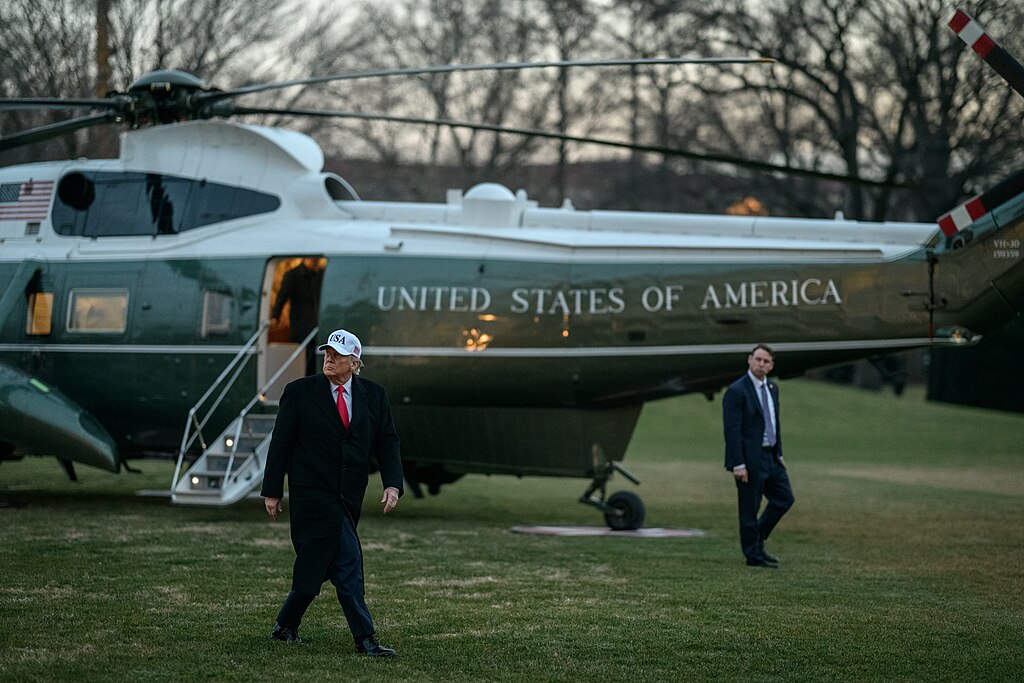
Image source: Wikimedia Commons.
A useful precedent was set during the period from 2001 to 2009, when the United States was preoccupied with wars in Afghanistan and Iraq. During this time, China viewed the US focus on the Middle East as a strategic distraction that reduced US attention to the Asia-Pacific and contributed to a security environment favourable to China’s interests.
Rather than adopting a more assertive posture in Southeast Asia, China pursued a range of economic, diplomatic and military measures aimed at building trust with regional states under its “good neighbour” policy. For instance, in 2002, China and ASEAN signed the ASEAN-China Free Trade Agreement (ACFTA) to deepen trade and investment links. Diplomatically, China became the first major power to accede to ASEAN’s Treaty of Amity and Cooperation in 2003, committing itself to the peaceful management of disputes.
This approach has largely continued despite China’s growing assertiveness in the South China Sea. As recently as April 2025, Chinese President Xi Jinping visited Malaysia, Cambodia and Vietnam, signing trade and investment agreements to deepen existing economic ties. In October 2025, ASEAN and China upgraded the ACFTA to expand cooperation in diverse economic sectors. On the military cooperation front, China has continued to conduct joint naval exercises and patrols with South China Sea claimant states, such as Vietnam and Malaysia, to address common non-traditional security challenges such as piracy and terrorism.
Through the use of non-military measures, China has cultivated positive relations with regional governments and mitigated threats to China’s security. US distraction is likely to make space for China to strengthen its influence in Southeast Asia through comparable methods.
Conclusion
A year after issuing threats against neighbouring states, Trump has finally acted to realise his hemispheric ambitions. The Venezuela operation has definitely emboldened Trump, who has since been pursuing objectives regarding Greenland and Mexico. It is possible that Cuba, long held in contempt by many US conservative leaders, could become the next target.
In the end, Trump’s dogged pursuit of hemispheric dominance is unravelling a relatively stable region and causing time-honoured alliances to fracture. Retreating from global leadership to reawaken strategic goals from a bygone era, such as dominating the near abroad, will inevitably generate reverberations in far abroad regions like Asia and, in turn, incentivise more allies to diversify their partnerships and even forge new alignments in the interest of self-preservation.
Yang Zi is a Research Fellow in the China Programme at the S. Rajaratnam School of International Studies (RSIS). Ian Seow Cheng Wei is a Senior Analyst in the China Programme at RSIS.
KEY TAKEAWAYS
• US President Donald Trump’s hemispheric ambitions have created doubts among America’s security partners and allies over its unpredictability, especially within the context of the US–China competition.
• Concerns that China might exploit US strategic distraction to expand its military influence in Southeast Asia may be overstated. A more useful point of comparison is China–ASEAN relations during the period of 2001 to 2009, when the United States was heavily engaged in conflicts in the Middle East.
• Instead of expanding its influence through military means, China is likely to prioritise non-military engagements in Southeast Asia, such as deepening economic ties and cooperation on non-traditional security threats, to reassure regional states and minimise incentives for Southeast Asian countries to solicit greater US involvement.
COMMENTARY
The year 2026 began under extraordinary circumstances, as the US military struck targets in Venezuela and captured its president, Nicolás Maduro. Following the operation, the Trump administration announced that the United States would conduct strikes against drug cartels in Mexico, once again highlighting the president’s fixation with security issues in America’s near abroad. Two days later, he ordered special forces commanders to produce a plan to militarily take over Greenland.
These events indicate Trump’s clear ambitions to establish undisputed dominance over the Western hemisphere, which he proudly termed the “Donroe Doctrine”, a new geopolitical project that is likely to be the administration’s focus in the coming weeks.
In the immediate term, this renewed focus on the Americas could affect US security commitments in East Asia, particularly for traditional allies who may find US support uncertain and credible assurances harder to obtain. Simultaneously, Trump’s focus on the Western hemisphere may benefit China’s security, but it does not mean that China would be incentivised to expand its influence militarily in Southeast Asia. Instead, China is more likely to leverage non-military measures to its benefit.
Historical Precedents
Since the presidency of James Monroe (1817–1825), the United States has viewed the Americas as its sphere of influence, one that must be kept free from European colonial control. By the end of the 19th century, the United States had emerged as the unassailable hegemon in the region, leading numerous military interventions to safeguard its political and economic interests in Central America and the Caribbean, collectively known as the Banana Wars (1898–1934).
US interventionism reached new heights during the Cold War. Through both covert action and military means, the United States propped up or removed governments, with the aim of eliminating communist footholds within the Western hemisphere.
Following the end of the Cold War, the threat from communism decreased significantly, resulting in a sharp decline in US interventions across the Americas.
Although the return of such interventions in 2026 was a surprise, it is not unprecedented given the United States’ record over the last century. Nevertheless, what sets the current US actions apart from the previous iterations is that they are not only targeted at governments that are antagonistic towards the United States, but also steadfast NATO allies such as Denmark. Moreover, previous ideological justifications have been cast aside in favour of vague national security invocations or outright demands for resources.
The United States’ recent actions are likely to have far-reaching consequences for global security, including long-term damage to the US interests and credibility, and to the existing international order. Yet, these risks have not deterred the Trump administration from actively pursuing its hemispheric agenda.
Implications for East Asian Security
US–China relations have long shaped East Asian security dynamics. Competition, cooperation and periodic confrontation between Washington and Beijing create opportunities for East Asian states to strategise and adjust their positions in order to maximise gains and minimise costs. However, increasing unpredictability in US policy and shifting strategic priorities have consequences for the United States’ East Asian allies.
Emboldened by the success of the Venezuela operation, the Trump administration seems fixated on establishing undisguised US dominance over the Western hemisphere, largely dismissing the drawbacks. This obsession is likely to preoccupy the administration in the coming weeks and months. Yet, the Trump administration’s desire for hemispheric supremacy does not imply an immediate reduction in support for long-standing Asian allies. But there are visible signs that the needs of some allies are being deprioritised. For example, the lack of vocal US support for Tokyo during the recent China–Japan spat and Trump’s nonchalant views regarding Taiwan Strait security point to declining US interest in firmly backing established allies in ongoing disputes.
While US arms sales to the region are set to continue, doubts linger regarding the depth of Washington’s commitment. Should the United States become further embroiled in interventions across the Western hemisphere, East Asia risks being further sidelined on the administration’s security agenda – since resources are finite and attention is limited – especially in an administration where authority and decision-making are highly personalised. Given the inherent unpredictability of military conflicts, the United States might even find itself in a prolonged war that requires significantly more resources and military assets, further constraining its capacity to uphold commitments elsewhere in the world.
An Opportunity for Chinese Influence in Southeast Asia
China benefits from US distraction. Compared to East Asia, Southeast Asia – a region critical to China’s security – is where Beijing could make visible inroads in elevating its influence. China is unlikely to exploit the United States’ strategic distraction to expand its influence through military means, as doing so could incentivise Southeast Asian states to seek greater US involvement in the region, thereby undermining its security interests. Instead, China will use non-military means, such as non-traditional security cooperation and economics, to strengthen its influence in Southeast Asia.
Image source: Wikimedia Commons.
A useful precedent was set during the period from 2001 to 2009, when the United States was preoccupied with wars in Afghanistan and Iraq. During this time, China viewed the US focus on the Middle East as a strategic distraction that reduced US attention to the Asia-Pacific and contributed to a security environment favourable to China’s interests.
Rather than adopting a more assertive posture in Southeast Asia, China pursued a range of economic, diplomatic and military measures aimed at building trust with regional states under its “good neighbour” policy. For instance, in 2002, China and ASEAN signed the ASEAN-China Free Trade Agreement (ACFTA) to deepen trade and investment links. Diplomatically, China became the first major power to accede to ASEAN’s Treaty of Amity and Cooperation in 2003, committing itself to the peaceful management of disputes.
This approach has largely continued despite China’s growing assertiveness in the South China Sea. As recently as April 2025, Chinese President Xi Jinping visited Malaysia, Cambodia and Vietnam, signing trade and investment agreements to deepen existing economic ties. In October 2025, ASEAN and China upgraded the ACFTA to expand cooperation in diverse economic sectors. On the military cooperation front, China has continued to conduct joint naval exercises and patrols with South China Sea claimant states, such as Vietnam and Malaysia, to address common non-traditional security challenges such as piracy and terrorism.
Through the use of non-military measures, China has cultivated positive relations with regional governments and mitigated threats to China’s security. US distraction is likely to make space for China to strengthen its influence in Southeast Asia through comparable methods.
Conclusion
A year after issuing threats against neighbouring states, Trump has finally acted to realise his hemispheric ambitions. The Venezuela operation has definitely emboldened Trump, who has since been pursuing objectives regarding Greenland and Mexico. It is possible that Cuba, long held in contempt by many US conservative leaders, could become the next target.
In the end, Trump’s dogged pursuit of hemispheric dominance is unravelling a relatively stable region and causing time-honoured alliances to fracture. Retreating from global leadership to reawaken strategic goals from a bygone era, such as dominating the near abroad, will inevitably generate reverberations in far abroad regions like Asia and, in turn, incentivise more allies to diversify their partnerships and even forge new alignments in the interest of self-preservation.
Yang Zi is a Research Fellow in the China Programme at the S. Rajaratnam School of International Studies (RSIS). Ian Seow Cheng Wei is a Senior Analyst in the China Programme at RSIS.