


20 January 2026
IP26013 | Orbiting Together: The Strategic Case for an Indonesia–Singapore Spaceport

KEY TAKEAWAYS
• Indonesia and Singapore, as neighbouring Southeast Asian nations, are actively advancing their respective space capabilities. Singapore possesses a burgeoning ecosystem of space start-ups, ranging from rocketry to satellite development. Indonesia, on the other hand, retains an established heritage in launch operations and is poised to recommence its ambitious spaceport initiative in Biak, Papua.
• Strategic collaboration between these two states could prove instrumental in establishing a formidable space powerhouse within the Asia-Pacific region. Through joint launch facility programmes, Indonesia could concentrate on operational launch assurance, while Singapore could drive technological acceleration, thereby yielding substantial mutual benefits.
COMMENTARY
The uncertain geopolitical dynamics between the United States and China have cast a shadow of uncertainty over the future trajectory of space activities in Asia. The spectre of great power competition in space now makes it imperative for like-minded states like Singapore and Indonesia to cooperate to set governance norms in space, prevent conflict, manage shared risks, reduce costs and ensure the stability and sustainability of space as a critical global domain for all nations. While great power tensions may not yet directly impede the space sectors of Indonesia and Singapore, they underscore a strategic imperative for both nations to develop indigenous launch capabilities.
Beyond the economic logic, a joint spaceport would offer ASEAN a degree of strategic autonomy. In an era where space access could be curtailed by great power rivalries, possessing an indigenous, non-aligned launch capability ensures that Southeast Asian nations maintain sovereign access to orbit for critical infrastructure, independent of external geopolitical pressures.
The Case for a Joint Singapore-Indonesia Spaceport
Currently, Singapore and Indonesia remain reliant on third-party facilities, such as Cape Canaveral, the Guiana Space Centre, the Baikonur Cosmodrome and the Wenchang Spacecraft Launch Site. With the notable exception of French Guiana, these sites are situated at significant distances from the equator. Consequently, launch operations from these locations are often less economically efficient, as the requisite fuel consumption to reach orbit is higher than that of equatorial launches.
Singapore is not seeking to construct a vertical launch site domestically owing to geographical limitations. Instead, Singapore’s strategy, led by the Office for Space Technology & Industry (OSTIn), focuses on securing launch assurance through international partnerships and supporting its private sector in identifying regional launch solutions, making it a prime prospective client for Indonesia’s Biak spaceport.
Singapore is actively acquiring equatorial data through its Near-Equatorial Orbit (NEqO) satellite initiatives, exemplified by the DS-SAR mission. This system aims to deliver critical data for diverse applications, including disaster management, urban planning and maritime surveillance. Concurrently, Indonesia gathers comparable data through its LAPAN-A2 system, now operated under the National Research and Innovation Agency (BRIN). The LAPAN-A2 satellite offers distinct advantages owing to its frequent passes over Indonesian territory. Given Singapore’s geographical proximity, it stands to benefit significantly from this equatorial data coverage, particularly in bridging gaps related to disaster management and regional monitoring.
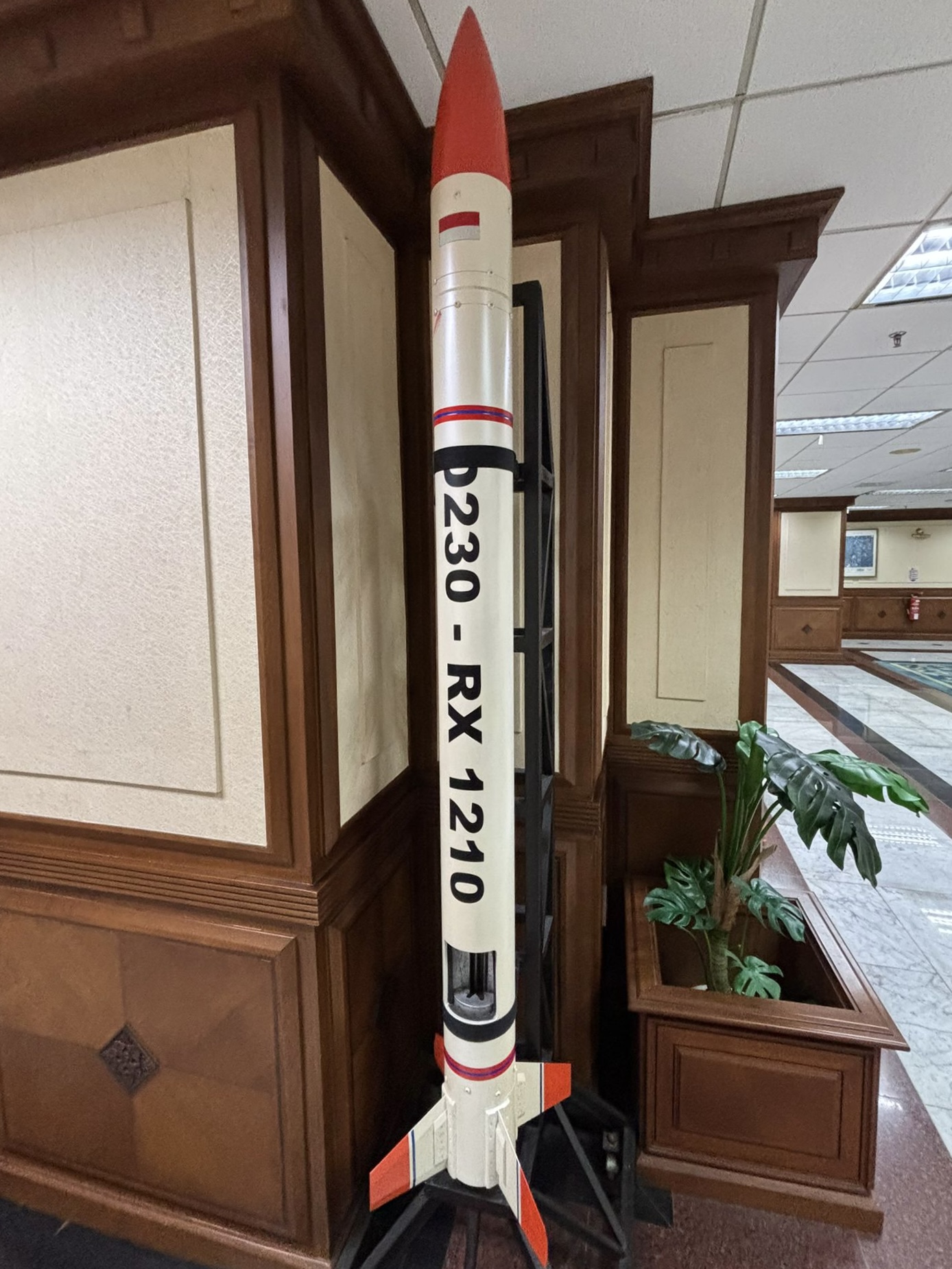
The full potential of these satellite constellations can only be realised if the region possesses independent access to orbit. To this end, Indonesia has harboured ambitions to establish a spaceport in Biak, Papua, since 2006, initially envisioning an Air-Launch System. This project was originally conceived in cooperation with Russia, a partnership formalised via a presidential gazette in 2010. However, the initiative stalled and was never realised, largely because of divergent interpretations between the Indonesian and Russian governments regarding the handling of sensitive equipment. According to estimates by Deloitte, a functional Biak spaceport could generate at least US$200 million annually from launch activities.
Potential for Public-Private Partnership
In 2016, under the Space Long-Term Development Plan (SLTDP) 2016–2040 or Rencana Induk Penyelenggaraan Keantariksaan Tahun 2016–2040, Indonesia projected that it would achieve the capability to launch satellites using indigenous rocket technologies from its own sovereign territory by the plan’s final phase in 2040. The plan now superseded by SLTDP 2020–2045 is currently being revisited and integrated into a broader “Indonesia 2045 Space Roadmap” by BRIN through various ongoing discussions and high-level meetings. Based on recent strategic meetings at the National Development Agency (Bappenas), the roadmap has adjusted its final target to 2045, aligning with the national “Indonesia Emas 2045” vision. This shift emphasises identifying suitable partners through public-private partnerships (PPP).
The PPP model introduces new opportunities for private entities to engage in Indonesia’s space sector. Crucially, Indonesia possesses a robust legal foundation for these activities: Law No. 21 of 2013 on Space Activities provides the necessary regulatory framework, indicating that, from a legal perspective, Indonesia is prepared for this expansion.
A critical determinant of future success lies in the extent to which these opportunities are operationalised. For tangible progress to occur, the Indonesian government must establish a precise and actionable strategic roadmap. As delineated in Article 30 of Law No. 21 of 2013 on Space Activities, Indonesia’s mandate encompasses both the indigenous mastery of satellite and launch technologies and the pursuit of these objectives through international cooperation. Furthermore, Presidential Regulation No. 45 of 2017 provides a robust mandate for the establishment of an Indonesian spaceport, explicitly endorsing opportunities for international and regional collaboration.
At this juncture, it is evident that Indonesia cannot rely exclusively on domestic capabilities to fulfil its space ambitions; Singapore is uniquely positioned to bridge this capability gap. A strategic partnership could see Singaporean enterprises collaborating with Indonesian firms to construct the Biak spaceport under the auspices of a joint consortium. Such a venture is likely to thrive within a burgeoning global space economy, driven by declining launch costs and rapid technological advancements.
The operationalisation of the Biak spaceport is not devoid of domestic challenges, however. Sociopolitical concerns regarding land rights and environmental impact in Papua necessitate a transparent and inclusive approach. A joint consortium could lend international credibility to the project, ensuring that global environmental, social and governance (ESG) standards are met to mitigate local resistance.
Conclusion
Space activities involve advanced technologies and are high cost and high risk. A joint space consortium would allow Singaporean and Indonesian government agencies and private companies to share the financial burden, infrastructure (such as launch sites and ground networks), and specialised equipment.
By collaborating, both countries can leverage a larger, international talent pool to tackle complex challenges more effectively and foster innovation that might not be possible independently. The high technical and financial risks associated with space exploration will be shared in a consortium. Collaboration may also speed up the pace of research and development where access to shared data repositories and the work of joint research teams lead to a more comprehensive understanding of space phenomena.
Additionally, working together allows the development of common standards, protocols and ethical guidelines. An established and credible consortium would have reputational benefits, making it easier to attract new investors, secure future grants and ultimately lead to the development of a highly skilled workforce. In the long run, a joint space venture can help deepen trust and understanding between Singapore and Indonesia.
Taufik R. Nugraha is Director and Research Fellow at the Centre for Air and Space Policy, Indonesia. Leonard C. Sebastian is Senior Fellow at the Institute of Defence and Strategic Studies, S. Rajaratnam School of International Studies (RSIS). Arfin Sudirman is Professor, International Relations Department, Padjadjaran University, Indonesia. Research funding for this paper was provided by the Ministry of Higher Education, Science and Technology, Indonesia, and Padjajaran University, under the auspices of its Faculty of Social Sciences and Political Sciences.
KEY TAKEAWAYS
• Indonesia and Singapore, as neighbouring Southeast Asian nations, are actively advancing their respective space capabilities. Singapore possesses a burgeoning ecosystem of space start-ups, ranging from rocketry to satellite development. Indonesia, on the other hand, retains an established heritage in launch operations and is poised to recommence its ambitious spaceport initiative in Biak, Papua.
• Strategic collaboration between these two states could prove instrumental in establishing a formidable space powerhouse within the Asia-Pacific region. Through joint launch facility programmes, Indonesia could concentrate on operational launch assurance, while Singapore could drive technological acceleration, thereby yielding substantial mutual benefits.
COMMENTARY
The uncertain geopolitical dynamics between the United States and China have cast a shadow of uncertainty over the future trajectory of space activities in Asia. The spectre of great power competition in space now makes it imperative for like-minded states like Singapore and Indonesia to cooperate to set governance norms in space, prevent conflict, manage shared risks, reduce costs and ensure the stability and sustainability of space as a critical global domain for all nations. While great power tensions may not yet directly impede the space sectors of Indonesia and Singapore, they underscore a strategic imperative for both nations to develop indigenous launch capabilities.
Beyond the economic logic, a joint spaceport would offer ASEAN a degree of strategic autonomy. In an era where space access could be curtailed by great power rivalries, possessing an indigenous, non-aligned launch capability ensures that Southeast Asian nations maintain sovereign access to orbit for critical infrastructure, independent of external geopolitical pressures.
The Case for a Joint Singapore-Indonesia Spaceport
Currently, Singapore and Indonesia remain reliant on third-party facilities, such as Cape Canaveral, the Guiana Space Centre, the Baikonur Cosmodrome and the Wenchang Spacecraft Launch Site. With the notable exception of French Guiana, these sites are situated at significant distances from the equator. Consequently, launch operations from these locations are often less economically efficient, as the requisite fuel consumption to reach orbit is higher than that of equatorial launches.
Singapore is not seeking to construct a vertical launch site domestically owing to geographical limitations. Instead, Singapore’s strategy, led by the Office for Space Technology & Industry (OSTIn), focuses on securing launch assurance through international partnerships and supporting its private sector in identifying regional launch solutions, making it a prime prospective client for Indonesia’s Biak spaceport.
Singapore is actively acquiring equatorial data through its Near-Equatorial Orbit (NEqO) satellite initiatives, exemplified by the DS-SAR mission. This system aims to deliver critical data for diverse applications, including disaster management, urban planning and maritime surveillance. Concurrently, Indonesia gathers comparable data through its LAPAN-A2 system, now operated under the National Research and Innovation Agency (BRIN). The LAPAN-A2 satellite offers distinct advantages owing to its frequent passes over Indonesian territory. Given Singapore’s geographical proximity, it stands to benefit significantly from this equatorial data coverage, particularly in bridging gaps related to disaster management and regional monitoring.
The full potential of these satellite constellations can only be realised if the region possesses independent access to orbit. To this end, Indonesia has harboured ambitions to establish a spaceport in Biak, Papua, since 2006, initially envisioning an Air-Launch System. This project was originally conceived in cooperation with Russia, a partnership formalised via a presidential gazette in 2010. However, the initiative stalled and was never realised, largely because of divergent interpretations between the Indonesian and Russian governments regarding the handling of sensitive equipment. According to estimates by Deloitte, a functional Biak spaceport could generate at least US$200 million annually from launch activities.
Potential for Public-Private Partnership
In 2016, under the Space Long-Term Development Plan (SLTDP) 2016–2040 or Rencana Induk Penyelenggaraan Keantariksaan Tahun 2016–2040, Indonesia projected that it would achieve the capability to launch satellites using indigenous rocket technologies from its own sovereign territory by the plan’s final phase in 2040. The plan now superseded by SLTDP 2020–2045 is currently being revisited and integrated into a broader “Indonesia 2045 Space Roadmap” by BRIN through various ongoing discussions and high-level meetings. Based on recent strategic meetings at the National Development Agency (Bappenas), the roadmap has adjusted its final target to 2045, aligning with the national “Indonesia Emas 2045” vision. This shift emphasises identifying suitable partners through public-private partnerships (PPP).
The PPP model introduces new opportunities for private entities to engage in Indonesia’s space sector. Crucially, Indonesia possesses a robust legal foundation for these activities: Law No. 21 of 2013 on Space Activities provides the necessary regulatory framework, indicating that, from a legal perspective, Indonesia is prepared for this expansion.
A critical determinant of future success lies in the extent to which these opportunities are operationalised. For tangible progress to occur, the Indonesian government must establish a precise and actionable strategic roadmap. As delineated in Article 30 of Law No. 21 of 2013 on Space Activities, Indonesia’s mandate encompasses both the indigenous mastery of satellite and launch technologies and the pursuit of these objectives through international cooperation. Furthermore, Presidential Regulation No. 45 of 2017 provides a robust mandate for the establishment of an Indonesian spaceport, explicitly endorsing opportunities for international and regional collaboration.
At this juncture, it is evident that Indonesia cannot rely exclusively on domestic capabilities to fulfil its space ambitions; Singapore is uniquely positioned to bridge this capability gap. A strategic partnership could see Singaporean enterprises collaborating with Indonesian firms to construct the Biak spaceport under the auspices of a joint consortium. Such a venture is likely to thrive within a burgeoning global space economy, driven by declining launch costs and rapid technological advancements.
The operationalisation of the Biak spaceport is not devoid of domestic challenges, however. Sociopolitical concerns regarding land rights and environmental impact in Papua necessitate a transparent and inclusive approach. A joint consortium could lend international credibility to the project, ensuring that global environmental, social and governance (ESG) standards are met to mitigate local resistance.
Conclusion
Space activities involve advanced technologies and are high cost and high risk. A joint space consortium would allow Singaporean and Indonesian government agencies and private companies to share the financial burden, infrastructure (such as launch sites and ground networks), and specialised equipment.
By collaborating, both countries can leverage a larger, international talent pool to tackle complex challenges more effectively and foster innovation that might not be possible independently. The high technical and financial risks associated with space exploration will be shared in a consortium. Collaboration may also speed up the pace of research and development where access to shared data repositories and the work of joint research teams lead to a more comprehensive understanding of space phenomena.
Additionally, working together allows the development of common standards, protocols and ethical guidelines. An established and credible consortium would have reputational benefits, making it easier to attract new investors, secure future grants and ultimately lead to the development of a highly skilled workforce. In the long run, a joint space venture can help deepen trust and understanding between Singapore and Indonesia.
Taufik R. Nugraha is Director and Research Fellow at the Centre for Air and Space Policy, Indonesia. Leonard C. Sebastian is Senior Fellow at the Institute of Defence and Strategic Studies, S. Rajaratnam School of International Studies (RSIS). Arfin Sudirman is Professor, International Relations Department, Padjadjaran University, Indonesia. Research funding for this paper was provided by the Ministry of Higher Education, Science and Technology, Indonesia, and Padjajaran University, under the auspices of its Faculty of Social Sciences and Political Sciences.