


28 January 2026
IP26017 | Beyond Strategic Autonomy: Why Indonesia Is Moving Closer to Russia

KEY TAKEAWAYS
• Indonesia’s growing closeness with Russia reflects narrative resonance, historical memory and patterns of personalised leadership more than economic or security integration.
• Russia’s influence in Indonesia flows through media, cultural diplomacy, education and elite engagement that shape interpretations of global issues.
• Jakarta’s external partners need to think beyond the usual economic and military means of engaging Indonesia; drawing a lesson from Russia’s example, they would be well advised to develop influence through presence in the information domain as well.
COMMENTARY
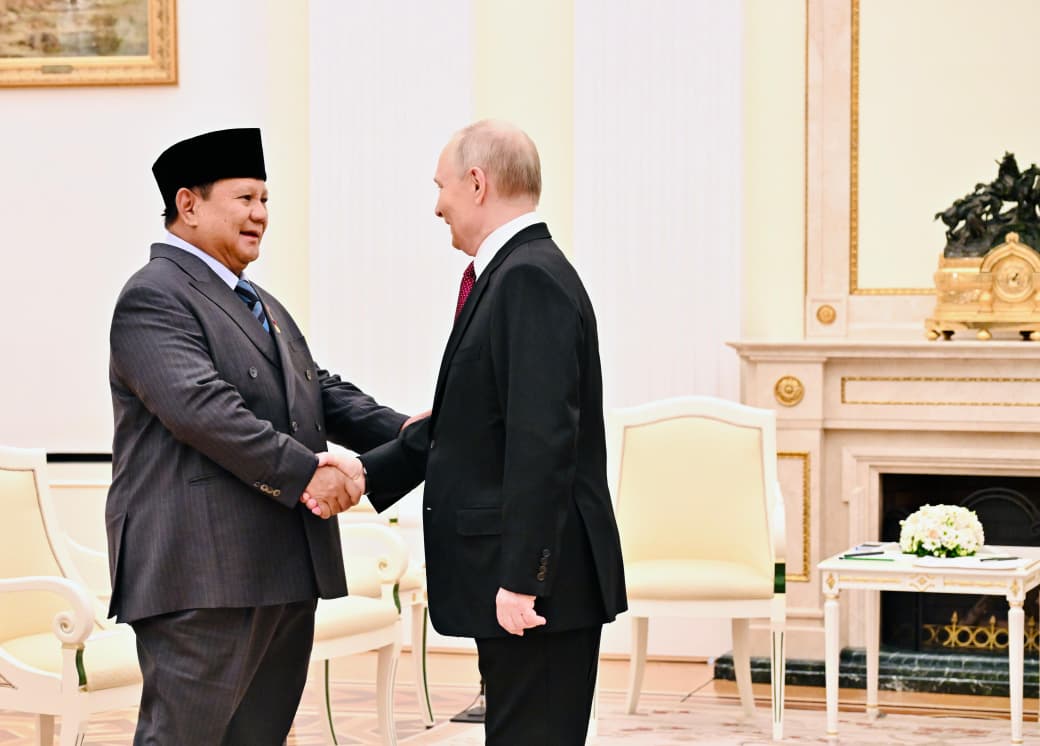
Russia’s expanding presence in Indonesia has become a visible feature of Jakarta’s external engagement in recent years. High-level visits to Russia in July 2024, during the transition period, and again in June and December 2025, followed by Indonesia’s decision to sign a free trade agreement with the Eurasian Economic Union (EAEU), have given Moscow a diplomatic and institutional foothold in Southeast Asia at a time when it remains constrained across much of the Western political and economic system.
These moves may appear to signal a strategic turn towards Moscow. Yet the material foundations of the relationship remain thin. Trade volumes are modest, investment projects limited, and defence cooperation largely symbolic. The puzzle, therefore, is why the relationship appears politically warm in the absence of clear economic or security payoffs.
It becomes clearer when set against Jakarta’s parallel engagement with Western-led initiatives, including its decision to join the US-backed “Board of Peace”. Rather than reflecting a carefully calibrated balancing strategy, these overlapping moves point to a foreign policy shaped by narrative appeal, leadership style and ideas about sovereignty, status and global order.
The Puzzle of Political Warmth and Material Thinness
Indonesia and Russia today display a level of diplomatic visibility that exceeds the depth of their economic and security ties. The EAEU agreement offers Moscow symbolic access to Southeast Asia’s largest economy, yet bilateral trade, while increasing, remains marginal compared to Indonesia’s relationships with China, the United States, Japan and the European Union. Flagship investment projects have either been cancelled or have struggled to move beyond announcements. Energy cooperation has generated high-level interest, particularly around liquefied natural gas and nuclear technology, but financing constraints and sanctions exposure limit their strategic value.
In the defence sector, historical familiarity continues to frame Russia as an important partner within segments of the Indonesian armed forces. Procurement patterns, however, point towards diversification rather than dependence, with Indonesia increasingly sourcing major platforms from European and other suppliers. Joint exercises like Orruda 2024 carry political visibility but limited operational significance.
If strategic alignment or material gain were the primary drivers, deeper institutional and economic integration would be expected. Instead, symbolism, rhetoric and high-level diplomacy dominate the relationship.
From Strategic Hedging to Narrative Hedging
Indonesia’s foreign policy is often described as strategic hedging – maintaining ties with competing major powers to preserve autonomy. This remains useful for understanding Jakarta’s engagement with the United States and China, but it is less effective in explaining Indonesia’s political visibility with Russia, a partner offering limited economic or security benefits.
What Indonesia appears to be managing instead is its discursive space. By engaging powers that have sharply different worldviews, Jakarta signals openness to competing narratives about sovereignty, hierarchy and international order. Joining US President Donald Trump’s Board of Peace, as domestically controversial as it is, while deepening ties with Russia reflects a willingness to operate across divergent political frames rather than pursue a coherent grand strategy.
This pattern is reinforced by a more personalised and less institutionally mediated foreign policy process. Traditional gatekeepers, particularly within the Ministry of Foreign Affairs, play a reduced role relative to top-level engagement. In this environment, foreign policy is shaped as much by symbolism, recognition and status signalling as by conventional strategic calculations
Russia has positioned itself effectively within this space by offering narratives that resonate with domestic political identities and historical experience rather than concrete policy incentives. In effect, Russia provides Indonesia with a “language” through which it can articulate a Global South identity while continuing to engage with Western-led initiatives.
Russia’s Discursive Supply Chain in Indonesia
A central source of Russia’s appeal lies in the legacy of Soviet support during Indonesia’s early post-independence period. In political and intellectual discourse, the Soviet Union is often remembered as an anti-imperialist partner that provided diplomatic backing, military assistance and symbolic infrastructure at a formative moment of Indonesian statehood.
Contemporary Russian diplomacy mobilises this memory through embassy programming, official speeches and cultural events that invoke Soviet-era solidarity as evidence of a long-standing and principled partnership. This framing presents Russia as a power that respects sovereignty and avoids conditional engagement, in contrast to Western norms-based diplomacy.
For audiences shaped by post-colonial narratives, this historical reference carries emotional and political weight. History thus becomes a source of contemporary legitimacy for Russia’s presence in Indonesia. By repeatedly invoking Soviet-era solidarity, Russian narratives are made to feel indigenous rather than imported.
This appeal is reinforced through Moscow’s growing engagement with Indonesian-language media and the tendency of some Indonesian news outlets to quote Russia-linked outlets and affiliated channels, which offer alternative interpretations of global events emphasising Western hypocrisy, the legitimacy of multipolarity and moral equivalence among major powers. Coverage of the war in Ukraine often shifts attention away from legal questions towards critiques of NATO expansion and Western interventionism, encouraging scepticism towards Western institutions rather than explicit support for Russia. These narratives circulate widely in Indonesia through social media and repackaged local content, contributing to a more fragmented interpretive environment.
Cultural and educational initiatives deepen this influence. The Russian embassy hosts seminars, exhibitions, academic exchanges, youth forums and visits to Russia and Russian-occupied territories that blend cultural outreach with geopolitical messaging. Scholarship schemes, particularly for Islamic students, and professional networks cultivate long-term relationships with students, journalists and policy-adjacent communities.
A revealing example is the expansion of journalism training initiatives organised by RT Academy in late 2025. Framed as professional development, these programmes portray Western media as structurally biased while presenting Russian outlets as alternative sources of “truth”, blurring the boundary between training and discursive influence.
Russia’s mobilisation of historical memory and information outreach does not pull Indonesia into formal alignment. Instead, it supplies a discursive repertoire that enables Jakarta to hedge at the level of identity, seeking recognition in Western-led initiatives while sustaining a Global South narrative of sovereignty and moral autonomy.
The Politics of Recognition
Russia’s narrative strategy has found a receptive environment in Indonesia. Unlike the more technocratic and institutionally mediated approach of previous administrations, Indonesian foreign policy in recent years emphasises personal diplomacy, symbolic recognition and direct engagement with major powers.
Public statements and high-profile appearances suggest a desire for status recognition and participation in elite global leadership circles. Russia offers a model of authority-centred governance and great-power assertiveness that aligns with this outlook.
At the same time, the weakening of institutional filtering has elevated the role of rhetoric and symbolism, evident in positions on the Russia–Ukraine war. More troubling is the occasional reliance on Russian-style conspiracy narratives about “foreign influence” to delegitimise domestic political opposition.
Implications
Indonesia’s apparent closeness to Russia is best understood as the product of narrative resonance, historical memory and personalised leadership rather than purely strategic or economic calculation. For Indonesia, this trajectory does not necessarily indicate formal alignment with Russia, but it does signal a gradual shift in discursive orientation. Greater tolerance for Russian geopolitical framing may complicate Jakarta’s ability to sustain its credibility as a neutral and principled actor, particularly in forums concerned with international law and conflict management.
For external partners, the Indonesian case highlights a changing terrain of engagement. Investment and security cooperation remain important but increasingly insufficient on their own. Influence now also depends on sustained presence in educational, media and intellectual spaces where ideas about legitimacy, sovereignty and global order are formed and contested.
Radityo Dharmaputra is a Lecturer at the Department of International Relations, Universitas Airlangga, and a Senior Researcher at the Airlangga Centre for European and Eurasian Studies. He was a Visiting Senior Fellow with the Indonesia Programme at the S. Rajaratnam School of International Studies (RSIS).
KEY TAKEAWAYS
• Indonesia’s growing closeness with Russia reflects narrative resonance, historical memory and patterns of personalised leadership more than economic or security integration.
• Russia’s influence in Indonesia flows through media, cultural diplomacy, education and elite engagement that shape interpretations of global issues.
• Jakarta’s external partners need to think beyond the usual economic and military means of engaging Indonesia; drawing a lesson from Russia’s example, they would be well advised to develop influence through presence in the information domain as well.
COMMENTARY
Russia’s expanding presence in Indonesia has become a visible feature of Jakarta’s external engagement in recent years. High-level visits to Russia in July 2024, during the transition period, and again in June and December 2025, followed by Indonesia’s decision to sign a free trade agreement with the Eurasian Economic Union (EAEU), have given Moscow a diplomatic and institutional foothold in Southeast Asia at a time when it remains constrained across much of the Western political and economic system.
These moves may appear to signal a strategic turn towards Moscow. Yet the material foundations of the relationship remain thin. Trade volumes are modest, investment projects limited, and defence cooperation largely symbolic. The puzzle, therefore, is why the relationship appears politically warm in the absence of clear economic or security payoffs.
It becomes clearer when set against Jakarta’s parallel engagement with Western-led initiatives, including its decision to join the US-backed “Board of Peace”. Rather than reflecting a carefully calibrated balancing strategy, these overlapping moves point to a foreign policy shaped by narrative appeal, leadership style and ideas about sovereignty, status and global order.
The Puzzle of Political Warmth and Material Thinness
Indonesia and Russia today display a level of diplomatic visibility that exceeds the depth of their economic and security ties. The EAEU agreement offers Moscow symbolic access to Southeast Asia’s largest economy, yet bilateral trade, while increasing, remains marginal compared to Indonesia’s relationships with China, the United States, Japan and the European Union. Flagship investment projects have either been cancelled or have struggled to move beyond announcements. Energy cooperation has generated high-level interest, particularly around liquefied natural gas and nuclear technology, but financing constraints and sanctions exposure limit their strategic value.
In the defence sector, historical familiarity continues to frame Russia as an important partner within segments of the Indonesian armed forces. Procurement patterns, however, point towards diversification rather than dependence, with Indonesia increasingly sourcing major platforms from European and other suppliers. Joint exercises like Orruda 2024 carry political visibility but limited operational significance.
If strategic alignment or material gain were the primary drivers, deeper institutional and economic integration would be expected. Instead, symbolism, rhetoric and high-level diplomacy dominate the relationship.
From Strategic Hedging to Narrative Hedging
Indonesia’s foreign policy is often described as strategic hedging – maintaining ties with competing major powers to preserve autonomy. This remains useful for understanding Jakarta’s engagement with the United States and China, but it is less effective in explaining Indonesia’s political visibility with Russia, a partner offering limited economic or security benefits.
What Indonesia appears to be managing instead is its discursive space. By engaging powers that have sharply different worldviews, Jakarta signals openness to competing narratives about sovereignty, hierarchy and international order. Joining US President Donald Trump’s Board of Peace, as domestically controversial as it is, while deepening ties with Russia reflects a willingness to operate across divergent political frames rather than pursue a coherent grand strategy.
This pattern is reinforced by a more personalised and less institutionally mediated foreign policy process. Traditional gatekeepers, particularly within the Ministry of Foreign Affairs, play a reduced role relative to top-level engagement. In this environment, foreign policy is shaped as much by symbolism, recognition and status signalling as by conventional strategic calculations
Russia has positioned itself effectively within this space by offering narratives that resonate with domestic political identities and historical experience rather than concrete policy incentives. In effect, Russia provides Indonesia with a “language” through which it can articulate a Global South identity while continuing to engage with Western-led initiatives.
Russia’s Discursive Supply Chain in Indonesia
A central source of Russia’s appeal lies in the legacy of Soviet support during Indonesia’s early post-independence period. In political and intellectual discourse, the Soviet Union is often remembered as an anti-imperialist partner that provided diplomatic backing, military assistance and symbolic infrastructure at a formative moment of Indonesian statehood.
Contemporary Russian diplomacy mobilises this memory through embassy programming, official speeches and cultural events that invoke Soviet-era solidarity as evidence of a long-standing and principled partnership. This framing presents Russia as a power that respects sovereignty and avoids conditional engagement, in contrast to Western norms-based diplomacy.
For audiences shaped by post-colonial narratives, this historical reference carries emotional and political weight. History thus becomes a source of contemporary legitimacy for Russia’s presence in Indonesia. By repeatedly invoking Soviet-era solidarity, Russian narratives are made to feel indigenous rather than imported.
This appeal is reinforced through Moscow’s growing engagement with Indonesian-language media and the tendency of some Indonesian news outlets to quote Russia-linked outlets and affiliated channels, which offer alternative interpretations of global events emphasising Western hypocrisy, the legitimacy of multipolarity and moral equivalence among major powers. Coverage of the war in Ukraine often shifts attention away from legal questions towards critiques of NATO expansion and Western interventionism, encouraging scepticism towards Western institutions rather than explicit support for Russia. These narratives circulate widely in Indonesia through social media and repackaged local content, contributing to a more fragmented interpretive environment.
Cultural and educational initiatives deepen this influence. The Russian embassy hosts seminars, exhibitions, academic exchanges, youth forums and visits to Russia and Russian-occupied territories that blend cultural outreach with geopolitical messaging. Scholarship schemes, particularly for Islamic students, and professional networks cultivate long-term relationships with students, journalists and policy-adjacent communities.
A revealing example is the expansion of journalism training initiatives organised by RT Academy in late 2025. Framed as professional development, these programmes portray Western media as structurally biased while presenting Russian outlets as alternative sources of “truth”, blurring the boundary between training and discursive influence.
Russia’s mobilisation of historical memory and information outreach does not pull Indonesia into formal alignment. Instead, it supplies a discursive repertoire that enables Jakarta to hedge at the level of identity, seeking recognition in Western-led initiatives while sustaining a Global South narrative of sovereignty and moral autonomy.
The Politics of Recognition
Russia’s narrative strategy has found a receptive environment in Indonesia. Unlike the more technocratic and institutionally mediated approach of previous administrations, Indonesian foreign policy in recent years emphasises personal diplomacy, symbolic recognition and direct engagement with major powers.
Public statements and high-profile appearances suggest a desire for status recognition and participation in elite global leadership circles. Russia offers a model of authority-centred governance and great-power assertiveness that aligns with this outlook.
At the same time, the weakening of institutional filtering has elevated the role of rhetoric and symbolism, evident in positions on the Russia–Ukraine war. More troubling is the occasional reliance on Russian-style conspiracy narratives about “foreign influence” to delegitimise domestic political opposition.
Implications
Indonesia’s apparent closeness to Russia is best understood as the product of narrative resonance, historical memory and personalised leadership rather than purely strategic or economic calculation. For Indonesia, this trajectory does not necessarily indicate formal alignment with Russia, but it does signal a gradual shift in discursive orientation. Greater tolerance for Russian geopolitical framing may complicate Jakarta’s ability to sustain its credibility as a neutral and principled actor, particularly in forums concerned with international law and conflict management.
For external partners, the Indonesian case highlights a changing terrain of engagement. Investment and security cooperation remain important but increasingly insufficient on their own. Influence now also depends on sustained presence in educational, media and intellectual spaces where ideas about legitimacy, sovereignty and global order are formed and contested.
Radityo Dharmaputra is a Lecturer at the Department of International Relations, Universitas Airlangga, and a Senior Researcher at the Airlangga Centre for European and Eurasian Studies. He was a Visiting Senior Fellow with the Indonesia Programme at the S. Rajaratnam School of International Studies (RSIS).