


24 February 2026
IP26026 | A Shifting Global Order: Can ASEAN Navigate Major Power Unilateralism?

KEY TAKEAWAYS
• The geopolitical landscape continues to evolve in ways that are making many across Southeast Asia increasingly nervous, especially given the recent actions of the two major powers, China and the United States.
• Such developments are inconsistent with ASEAN’s vision for an ideal international order, which is supposed to limit the influence of major power politics on the region and encourage states to pursue more cooperative outcomes.
• ASEAN could do more to address its institutional gaps, promote more functional cooperation with minilateral frameworks, continue to maintain its unity and prevent divisions caused by major powers.
COMMENTARY
The geopolitical landscape continues to evolve in ways that are making many across Southeast Asia increasingly nervous. On one hand, the Trump administration’s actions against Venezuela and the arrest of its president, Nicolás Maduro, along with its subsequent threats against Colombia, Iran and Greenland, have unsettled many in the region, with several Southeast Asian countries expressing misgivings about breaches of international law.
On the other hand, last year saw a sharp decline in China–Japan relations after Japanese Prime Minister Sanae Takaichi commented that the use of force in a Taiwan contingency might be a “survival-threatening” situation that would warrant limited military deployment by Japan. China responded stridently, including by conducting military drills around Taiwan. Beijing shows no intention of dialling back its pressure against Tokyo and Taipei, which is likely to continue, especially since Takaichi has just been re-elected and Lai Ching Te remains president of Taiwan.
Southeast Asia and ASEAN have observed these geopolitical developments with growing concern. This is clearly reflected in the Chair’s statement issued after the ASEAN Foreign Ministers’ Retreat (AMM Retreat) on 29 January, which emphasised ASEAN’s worries regarding unilateral actions that undermine the rules-based international order. The question then is what can ASEAN do to protect its interests as a viable regional organisation that has the capacity to influence the regional security order in Asia?
American Actions in Venezuela and Beyond
Since assuming office in January 2025, the second Trump administration has reshaped America’s approach to international relations. Based on the idea of achieving “peace through strength”, as outlined in the National Security and National Defense strategies, the United States has employed its political, military and economic power to safeguard its interests, often at the expense of shared rules, norms and institutions.
Central to this approach is the willingness to use or threaten to use force against any state or entity that endangers or is not aligned with American interests. Perhaps the most dramatic incident was the military operation that culminated in the capture of Venezuelan President Maduro on Venezuelan soil in January 2026. Many states, including American allies and partners in Southeast Asia, voiced concern that American actions violated the UN Charter and international law.
Moreover, this incident should be viewed alongside other American actions over the past year. These include the use of over 658 air and drone strikes across seven countries, multiple threats of using force (even against allies and partners), the undermining of established multilateral mechanisms through actions such as recent withdrawals from 31 UN entities and 35 non-UN organisations, the utilisation of tariffs (including on key allies and partners), and institutional creations like US President Donald Trump’s Board of Peace that bypassed established international processes for addressing conflictual issues.
In short, the United States has adopted a more muscular, transactional foreign policy based on narrowly defined national interests. This approach forces all states, including those in ASEAN, to rethink whether the United States can still be considered a reliable regional partner.
China’s Hardening Posture on “Core Interests”
The second issue of concern in ASEAN is the deterioration of Sino-Japanese relations owing to Takaichi’s remarks on Taiwan on 7 November 2025. Since then, China has ramped up pressure against Japan on multiple fronts, including live-fire exercises in the central Yellow Sea in mid-November 2025 and major exercises around Taiwan at the end of December. Many flights from China to Japan, as well as Chinese tourist groups to Japan, were cancelled.
Even more telling was a report that, shortly after Takaichi’s remarks, Beijing had called on Southeast Asian envoys to urge their countries to back China’s stance on Takaichi’s comments.
These steps follow a pattern of behaviour by Beijing in the region in recent times. Countries in the region, not just Japan but also South Korea and Southeast Asian states, have faced retaliation or threats from Beijing for perceived infractions of China’s “core interests” or “red lines”. On the other major flashpoint in the Indo-Pacific, the South China Sea, Beijing is guided by similar impulses. China views its claims over the “nine-dash line” as grounded in historical and even legal bases, and many in China believe that their country should defend those claims against Southeast Asian claimants.
Beyond its amicable-sounding slogans of “community of a shared future” and “win-win cooperation”, China is guided by a mission to protect what it sees are its core interests, particularly internal stability and territorial integrity, and to use force if necessary.
China has also demonstrated selective support for and interpretation of international law, given its refusal to recognise Southeast Asian claimants’ exclusive economic zones (EEZs) and dismissal of the 2016 ruling by the Permanent Court of Arbitration. Ultimately, China seeks a region in which countries respect its core interests, an objective it tries to achieve through a combination of friendship and rewards for compliance and penalties for infringement.
ASEAN’s Worldview
In their attempts to project their respective worldviews, both Chinese and American actions have contributed to what Canadian Prime Minister Mark Carney has described as the “rupturing” of the international order. These efforts are inconsistent with ASEAN’s vision for an ideal international order, which is defined by a commitment to rules-based, inclusive multilateral mechanisms, international law, emphasis on state sovereignty, non-interference in internal affairs, and continuous dialogue for the peaceful resolution of conflicts.
Furthermore, ASEAN’s aim of being central to the regional security architecture is to limit the influence of major power politics on the region and encourage states to pursue more cooperative outcomes. The expansion of ASEAN-led mechanisms such as the ASEAN Regional Forum (ARF), the East Asia Summit (EAS), and the ASEAN Defence Ministers’ Meeting Plus (ADMM-Plus) was intended to integrate major powers within ASEAN institutions as a way of familiarising them with regional norms and helping them gain a better understanding of Southeast Asian interests. It has, however, become apparent that America’s and China’s worldviews and behaviours have become increasingly incompatible with ASEAN’s vision, and could render these mechanisms less effective in ensuring regional stability.
What Can ASEAN Do?
Still, ASEAN is not without agency. It has already shown this in the aftermath of the China–Japan spat. When China called on ASEAN to side with it against Japan, it was notable that such pressure gained little traction. Also, despite the close partnership that several ASEAN countries maintain with the United States, they spoke out against America’s military operation in Venezuela. However, ASEAN can do more.
First, ASEAN should be more proactive in addressing its institutional gaps. It appears to have already made some progress as the press statement following the AMM Retreat in January 2026 welcomed the adoption and gradual implementation of the “Recommendations to Revitalise the ARF”. However, additional focus could be given to revitalise other ASEAN-led Track 1.5 and Track 2 institutions to test ideas for developing regional solutions. This process would enable practitioners and regional experts to discuss pressing issues and come up with potential solutions, away from domestic political pressure. Good ideas could then be advanced at the Track 1 level.
Second, while consensus is a fundamental concept within ASEAN, there must be a greater understanding that it can limit the organisation’s capacity to tackle regional issues. ASEAN states should be more willing to engage in functional cooperation with minilateral frameworks to address transnational challenges, including climate change as well as maritime security and safety. These efforts could serve as pathfinders, eventually involving other ASEAN states as they become more ready.
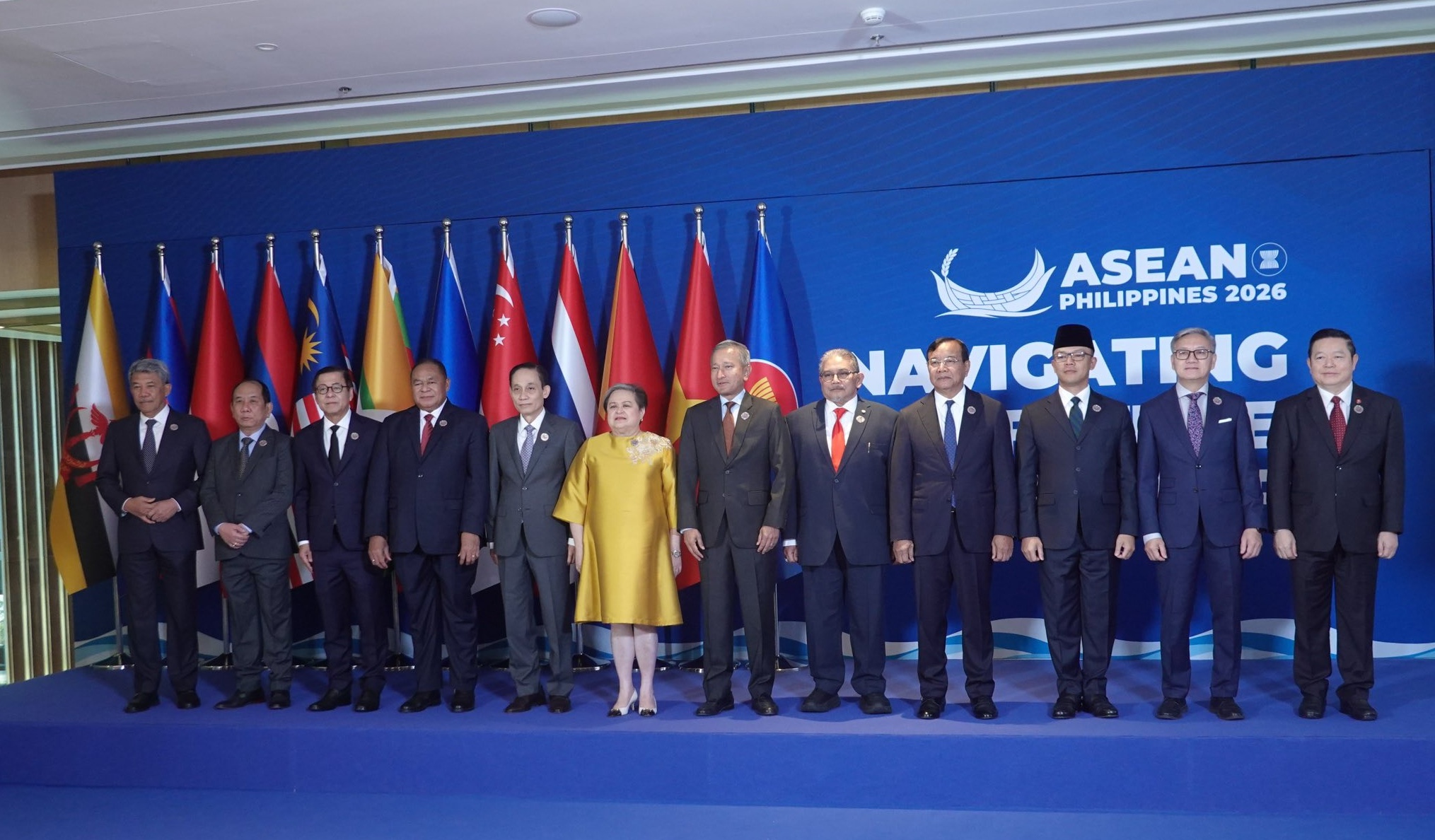
Last, and perhaps most important, ASEAN must recognise that its influence and voice as a regional bloc are contingent on its ability to remain united. The Myanmar crisis, the Thai–Cambodian conflict and slow progress in developing a code of conduct in the South China Sea are long-term issues that demand time to resolve. However, as they work to address these challenges, the ASEAN states should, in the words of Singapore’s first foreign minister, S. Rajaratnam, “marry” their respective national perspectives with regional interests to prevent major powers from dividing the group.
Henrick Tsjeng is Associate Research Fellow with the Regional Security Architecture Programme, Institute of Defence and Strategic Studies, S. Rajaratnam School of International Studies (RSIS). Arvind Raj is Associate Research Fellow with the Centre for Multilateralism Studies, RSIS.
KEY TAKEAWAYS
• The geopolitical landscape continues to evolve in ways that are making many across Southeast Asia increasingly nervous, especially given the recent actions of the two major powers, China and the United States.
• Such developments are inconsistent with ASEAN’s vision for an ideal international order, which is supposed to limit the influence of major power politics on the region and encourage states to pursue more cooperative outcomes.
• ASEAN could do more to address its institutional gaps, promote more functional cooperation with minilateral frameworks, continue to maintain its unity and prevent divisions caused by major powers.
COMMENTARY
The geopolitical landscape continues to evolve in ways that are making many across Southeast Asia increasingly nervous. On one hand, the Trump administration’s actions against Venezuela and the arrest of its president, Nicolás Maduro, along with its subsequent threats against Colombia, Iran and Greenland, have unsettled many in the region, with several Southeast Asian countries expressing misgivings about breaches of international law.
On the other hand, last year saw a sharp decline in China–Japan relations after Japanese Prime Minister Sanae Takaichi commented that the use of force in a Taiwan contingency might be a “survival-threatening” situation that would warrant limited military deployment by Japan. China responded stridently, including by conducting military drills around Taiwan. Beijing shows no intention of dialling back its pressure against Tokyo and Taipei, which is likely to continue, especially since Takaichi has just been re-elected and Lai Ching Te remains president of Taiwan.
Southeast Asia and ASEAN have observed these geopolitical developments with growing concern. This is clearly reflected in the Chair’s statement issued after the ASEAN Foreign Ministers’ Retreat (AMM Retreat) on 29 January, which emphasised ASEAN’s worries regarding unilateral actions that undermine the rules-based international order. The question then is what can ASEAN do to protect its interests as a viable regional organisation that has the capacity to influence the regional security order in Asia?
American Actions in Venezuela and Beyond
Since assuming office in January 2025, the second Trump administration has reshaped America’s approach to international relations. Based on the idea of achieving “peace through strength”, as outlined in the National Security and National Defense strategies, the United States has employed its political, military and economic power to safeguard its interests, often at the expense of shared rules, norms and institutions.
Central to this approach is the willingness to use or threaten to use force against any state or entity that endangers or is not aligned with American interests. Perhaps the most dramatic incident was the military operation that culminated in the capture of Venezuelan President Maduro on Venezuelan soil in January 2026. Many states, including American allies and partners in Southeast Asia, voiced concern that American actions violated the UN Charter and international law.
Moreover, this incident should be viewed alongside other American actions over the past year. These include the use of over 658 air and drone strikes across seven countries, multiple threats of using force (even against allies and partners), the undermining of established multilateral mechanisms through actions such as recent withdrawals from 31 UN entities and 35 non-UN organisations, the utilisation of tariffs (including on key allies and partners), and institutional creations like US President Donald Trump’s Board of Peace that bypassed established international processes for addressing conflictual issues.
In short, the United States has adopted a more muscular, transactional foreign policy based on narrowly defined national interests. This approach forces all states, including those in ASEAN, to rethink whether the United States can still be considered a reliable regional partner.
China’s Hardening Posture on “Core Interests”
The second issue of concern in ASEAN is the deterioration of Sino-Japanese relations owing to Takaichi’s remarks on Taiwan on 7 November 2025. Since then, China has ramped up pressure against Japan on multiple fronts, including live-fire exercises in the central Yellow Sea in mid-November 2025 and major exercises around Taiwan at the end of December. Many flights from China to Japan, as well as Chinese tourist groups to Japan, were cancelled.
Even more telling was a report that, shortly after Takaichi’s remarks, Beijing had called on Southeast Asian envoys to urge their countries to back China’s stance on Takaichi’s comments.
These steps follow a pattern of behaviour by Beijing in the region in recent times. Countries in the region, not just Japan but also South Korea and Southeast Asian states, have faced retaliation or threats from Beijing for perceived infractions of China’s “core interests” or “red lines”. On the other major flashpoint in the Indo-Pacific, the South China Sea, Beijing is guided by similar impulses. China views its claims over the “nine-dash line” as grounded in historical and even legal bases, and many in China believe that their country should defend those claims against Southeast Asian claimants.
Beyond its amicable-sounding slogans of “community of a shared future” and “win-win cooperation”, China is guided by a mission to protect what it sees are its core interests, particularly internal stability and territorial integrity, and to use force if necessary.
China has also demonstrated selective support for and interpretation of international law, given its refusal to recognise Southeast Asian claimants’ exclusive economic zones (EEZs) and dismissal of the 2016 ruling by the Permanent Court of Arbitration. Ultimately, China seeks a region in which countries respect its core interests, an objective it tries to achieve through a combination of friendship and rewards for compliance and penalties for infringement.
ASEAN’s Worldview
In their attempts to project their respective worldviews, both Chinese and American actions have contributed to what Canadian Prime Minister Mark Carney has described as the “rupturing” of the international order. These efforts are inconsistent with ASEAN’s vision for an ideal international order, which is defined by a commitment to rules-based, inclusive multilateral mechanisms, international law, emphasis on state sovereignty, non-interference in internal affairs, and continuous dialogue for the peaceful resolution of conflicts.
Furthermore, ASEAN’s aim of being central to the regional security architecture is to limit the influence of major power politics on the region and encourage states to pursue more cooperative outcomes. The expansion of ASEAN-led mechanisms such as the ASEAN Regional Forum (ARF), the East Asia Summit (EAS), and the ASEAN Defence Ministers’ Meeting Plus (ADMM-Plus) was intended to integrate major powers within ASEAN institutions as a way of familiarising them with regional norms and helping them gain a better understanding of Southeast Asian interests. It has, however, become apparent that America’s and China’s worldviews and behaviours have become increasingly incompatible with ASEAN’s vision, and could render these mechanisms less effective in ensuring regional stability.
What Can ASEAN Do?
Still, ASEAN is not without agency. It has already shown this in the aftermath of the China–Japan spat. When China called on ASEAN to side with it against Japan, it was notable that such pressure gained little traction. Also, despite the close partnership that several ASEAN countries maintain with the United States, they spoke out against America’s military operation in Venezuela. However, ASEAN can do more.
First, ASEAN should be more proactive in addressing its institutional gaps. It appears to have already made some progress as the press statement following the AMM Retreat in January 2026 welcomed the adoption and gradual implementation of the “Recommendations to Revitalise the ARF”. However, additional focus could be given to revitalise other ASEAN-led Track 1.5 and Track 2 institutions to test ideas for developing regional solutions. This process would enable practitioners and regional experts to discuss pressing issues and come up with potential solutions, away from domestic political pressure. Good ideas could then be advanced at the Track 1 level.
Second, while consensus is a fundamental concept within ASEAN, there must be a greater understanding that it can limit the organisation’s capacity to tackle regional issues. ASEAN states should be more willing to engage in functional cooperation with minilateral frameworks to address transnational challenges, including climate change as well as maritime security and safety. These efforts could serve as pathfinders, eventually involving other ASEAN states as they become more ready.
Last, and perhaps most important, ASEAN must recognise that its influence and voice as a regional bloc are contingent on its ability to remain united. The Myanmar crisis, the Thai–Cambodian conflict and slow progress in developing a code of conduct in the South China Sea are long-term issues that demand time to resolve. However, as they work to address these challenges, the ASEAN states should, in the words of Singapore’s first foreign minister, S. Rajaratnam, “marry” their respective national perspectives with regional interests to prevent major powers from dividing the group.
Henrick Tsjeng is Associate Research Fellow with the Regional Security Architecture Programme, Institute of Defence and Strategic Studies, S. Rajaratnam School of International Studies (RSIS). Arvind Raj is Associate Research Fellow with the Centre for Multilateralism Studies, RSIS.