


25 February 2026
IP26028 | Malaysia-China Joint Military Exercises: Significance and Limitations

KEY TAKEAWAYS
• Malaysia-China military exercises are typically less sophisticated than those between the United States and Malaysia. However, they play an important role in allowing Malaysia to uphold its non-aligned foreign policy.
• Malaysia wants to continue its strong security ties with the United States, which include complex military exercises, without compromising close relations with China.
• Taken together, this pattern of differentiated exercise participation allows Malaysia to reassure China of its commitment to close bilateral ties, while maintaining strong security relations with the United States.
COMMENTARY
Southeast Asian states are known to engage in hedging by maintaining close economic links with China alongside their strong security relations with the United States. In recent years, most Southeast Asian states have also begun engaging in joint military exercises with China despite concerns about China’s regional influence. For example, Malaysia has maintained a long-standing and extensive security cooperation with the United States, yet it has also since 2014 participated in joint military exercises with China, albeit on an infrequent basis. For instance, in October 2025, Malaysia and China conducted their fourth bilateral military exercise, Aman Youyi 2025, in the Strait of Malacca and on land in Puchong, Malaysia.
Although Malaysia-China exercises are typically less sophisticated than Malaysia-US manoeuvres, they play an important role in allowing Malaysia to uphold its non-aligned foreign policy. Malaysia wants to continue its strong security ties with the United States, which include complex military exercises, without compromising its close bilateral relations with China. Taken together, this pattern of differentiated exercise participation allows Malaysia to reassure China of its commitment to close bilateral ties, while maintaining strong security relations with the United States.
Utility of the Aman-Youyi Exercises
The Aman-Youyi exercises serve an important diplomatic signalling function by projecting Malaysia’s non-aligned foreign policy both to China and the United States, especially against the backdrop of US military engagement in Southeast Asia since 2010.
Following the end of the Cold War, Malaysia and China’s defence relations have grown steadily in tandem with their expanding economic ties. Between the late 1990s and early 2000s, defence relations between Malaysia and China were characterised by student exchanges between military academies and reciprocal visits by military and civilian defence officials. Subsequently, in 2005, the two countries signed a memorandum of understanding (MOU) on defence cooperation, which encompassed activities such as joint military exercises and defence-industrial cooperation.
Nevertheless, Malaysia’s joint military exercises with China did not materialise until 2014, following the United States’ “Pivot to Asia” strategy, which increased the US military presence in Southeast Asia. Between 2014 and 2018, the United States and Malaysia expanded their defence relations by inaugurating four new joint military exercises focused on special operations training, amphibious assault and cyberwarfare drills.
Against this backdrop, Malaysia conducted its first Aman-Youyi exercise with China, signalling both to China and the United States its intention to maintain a balanced approach amid intensifying Sino-US rivalry. Since then, Malaysia’s joint military exercises with China have symbolically added to the positive atmospherics of close bilateral relations, which have witnessed a significant upswing in recent years under the Anwar Ibrahim administration. They signal that Malaysia values its close bilateral ties with China, which have been largely defined by economic cooperation, notwithstanding the strong Malaysia-US security relationship.
For China, the Aman-Youyi exercises are significant in building trust with Malaysia, which occupies a strategic position along the Malacca Strait, through which 90% of Chinese trade and energy imports pass. By focusing on shared security challenges such as countering piracy and search and rescue (SAR), China can portray itself as a non-threatening power committed to regional peace and stability. Furthermore, the Aman-Youyi exercises provide both militaries with a practical avenue to better understand each other’s strategic concerns and maintain direct communication channels, which are vital for managing potential crises in the future.
Complexity of the Aman-Youyi Exercises
The complexity of a joint military exercise refers to the scale and types of activities conducted, and it often indicates the level of trust between participating states. More complex military exercises, such as live-firing drills, typically involve larger numbers of troops owing to the higher levels of coordination required. In contrast, less complex activities, such as counterterrorism or humanitarian assistance and disaster relief (HADR) drills, can be conducted with fewer troops as they involve fewer types of equipment or weapon systems.
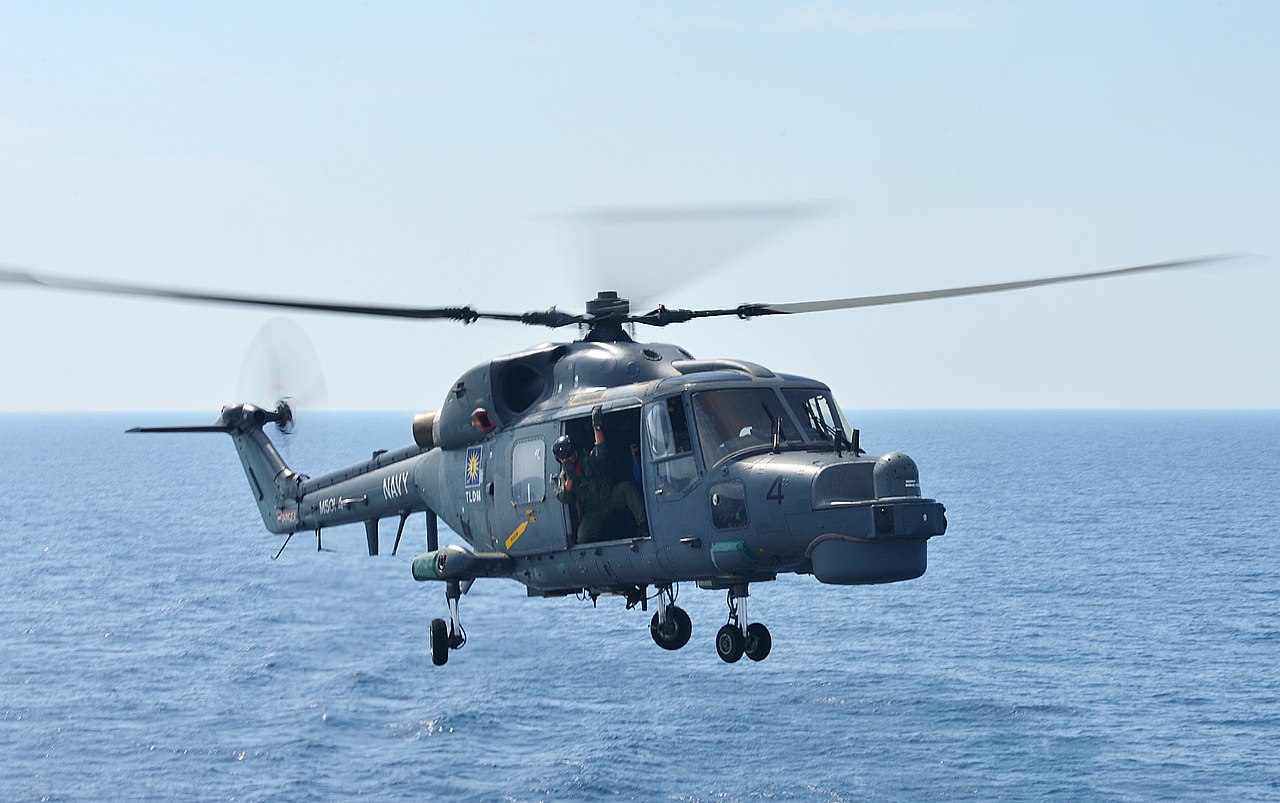
The Malaysia-China Aman-Youyi exercises tend to focus on less sophisticated activities such as HADR, counterpiracy, and counterterrorism. For instance, the recent Aman Youyi 2025 Exercise involved a land and sea phase. For the land phase, both Malaysia and China deployed almost 1,300 support units such as engineers, medics and disaster relief troops to participate in a simulated HADR exercise. During the sea phase, the two countries contributed five warships between them and special forces operators to conduct counterpiracy activities in the Strait of Malacca.
The relatively low level of sophistication in Malaysia-China military exercises can be largely attributed to limited interoperability between the two forces. According to SIPRI, between 2000 and 2024, almost 47% of Malaysia’s military equipment came from Western suppliers, including those from the United States. Such equipment is usually governed by end-user agreements that limit its use in training with US adversaries, such as China, thereby constraining the complexity of Malaysia’s exercises with China.
Furthermore, the lack of sophistication in Malaysia-China military exercises may reflect Malaysia’s security concerns about China. Malaysia’s defence establishment remains sceptical about deepening defence ties with China, given China’s increasing assertiveness in the South China Sea. Developing closer defence relations with China could also undermine Malaysia-US security ties. Such a scenario cannot be ruled out. For example, the United States has denied Thailand’s request to procure F-35 fighter jets, ostensibly because of Thailand’s growing defence ties with China.
US Defence Ties with Malaysia
Joint military exercises between Malaysia and the United States began much earlier in the 1990s. In contrast to Malaysia-China military exercises, the scale and complexity of Malaysia-US military exercises are far more substantial. For example, since 1994, the Malaysian and US armies have been participating in the Keris exercises, which are aimed at enhancing interoperability and large-scale combat readiness in diverse arenas, as well as training in live-firing.
Malaysia’s naval tactics, techniques and procedures (TTPs) have been shaped largely by its long-standing participation in the US-led Cooperation and Readiness Afloat Training (CARAT) exercises, which also began in 1994.
Additionally, since 2010, the Malaysian navy has participated in the US-led Rim of the Pacific (RIMPAC) exercise series, which is the world’s largest multinational maritime exercise. RIMPAC allows the Malaysian navy to train with other participating navies in areas such as executing complex naval operations, live-firing exercises, and refining strike capabilities and tactics.
The significant scale and sophistication of these exercises indicate a high level of trust between Malaysia and the United States in security cooperation. This trust has been strengthened with the Malaysia-US Defence Accord, which was signed in October 2025 to formalise and deepen security and defence cooperation. It represents a positive milestone in the Anwar government’s efforts, including through Malaysia’s 2025 ASEAN chairmanship, to improve strategically vital relations with the United States in recent years.
Conclusion
Malaysia’s joint military exercises with China demonstrate a cautious semblance of balance: gradual trust-building and the signalling of non-alignment with China while maintaining robust defence relations with the United States. However, these activities are expected to remain confined to less sophisticated areas such as HADR and SAR, reflecting lingering concerns over China’s growing assertiveness in the region as well as Malaysia’s close security ties with Washington.
As such, the growth of Malaysia’s defence ties with China is likely to be gradual and will continue to pale in comparison to the far more substantial economic dimension of bilateral relations. Nevertheless, Malaysia is likely to continue conducting exercises with both the United States and China to sustain cordial relations, even as great power competition intensifies.
Ian Seow Cheng Wei is a Senior Analyst in the China Programme at the S. Rajaratnam School of International Studies (RSIS). David Han Guo Xiong is a Research Fellow with the Malaysia Programme at RSIS.
KEY TAKEAWAYS
• Malaysia-China military exercises are typically less sophisticated than those between the United States and Malaysia. However, they play an important role in allowing Malaysia to uphold its non-aligned foreign policy.
• Malaysia wants to continue its strong security ties with the United States, which include complex military exercises, without compromising close relations with China.
• Taken together, this pattern of differentiated exercise participation allows Malaysia to reassure China of its commitment to close bilateral ties, while maintaining strong security relations with the United States.
COMMENTARY
Southeast Asian states are known to engage in hedging by maintaining close economic links with China alongside their strong security relations with the United States. In recent years, most Southeast Asian states have also begun engaging in joint military exercises with China despite concerns about China’s regional influence. For example, Malaysia has maintained a long-standing and extensive security cooperation with the United States, yet it has also since 2014 participated in joint military exercises with China, albeit on an infrequent basis. For instance, in October 2025, Malaysia and China conducted their fourth bilateral military exercise, Aman Youyi 2025, in the Strait of Malacca and on land in Puchong, Malaysia.
Although Malaysia-China exercises are typically less sophisticated than Malaysia-US manoeuvres, they play an important role in allowing Malaysia to uphold its non-aligned foreign policy. Malaysia wants to continue its strong security ties with the United States, which include complex military exercises, without compromising its close bilateral relations with China. Taken together, this pattern of differentiated exercise participation allows Malaysia to reassure China of its commitment to close bilateral ties, while maintaining strong security relations with the United States.
Utility of the Aman-Youyi Exercises
The Aman-Youyi exercises serve an important diplomatic signalling function by projecting Malaysia’s non-aligned foreign policy both to China and the United States, especially against the backdrop of US military engagement in Southeast Asia since 2010.
Following the end of the Cold War, Malaysia and China’s defence relations have grown steadily in tandem with their expanding economic ties. Between the late 1990s and early 2000s, defence relations between Malaysia and China were characterised by student exchanges between military academies and reciprocal visits by military and civilian defence officials. Subsequently, in 2005, the two countries signed a memorandum of understanding (MOU) on defence cooperation, which encompassed activities such as joint military exercises and defence-industrial cooperation.
Nevertheless, Malaysia’s joint military exercises with China did not materialise until 2014, following the United States’ “Pivot to Asia” strategy, which increased the US military presence in Southeast Asia. Between 2014 and 2018, the United States and Malaysia expanded their defence relations by inaugurating four new joint military exercises focused on special operations training, amphibious assault and cyberwarfare drills.
Against this backdrop, Malaysia conducted its first Aman-Youyi exercise with China, signalling both to China and the United States its intention to maintain a balanced approach amid intensifying Sino-US rivalry. Since then, Malaysia’s joint military exercises with China have symbolically added to the positive atmospherics of close bilateral relations, which have witnessed a significant upswing in recent years under the Anwar Ibrahim administration. They signal that Malaysia values its close bilateral ties with China, which have been largely defined by economic cooperation, notwithstanding the strong Malaysia-US security relationship.
For China, the Aman-Youyi exercises are significant in building trust with Malaysia, which occupies a strategic position along the Malacca Strait, through which 90% of Chinese trade and energy imports pass. By focusing on shared security challenges such as countering piracy and search and rescue (SAR), China can portray itself as a non-threatening power committed to regional peace and stability. Furthermore, the Aman-Youyi exercises provide both militaries with a practical avenue to better understand each other’s strategic concerns and maintain direct communication channels, which are vital for managing potential crises in the future.
Complexity of the Aman-Youyi Exercises
The complexity of a joint military exercise refers to the scale and types of activities conducted, and it often indicates the level of trust between participating states. More complex military exercises, such as live-firing drills, typically involve larger numbers of troops owing to the higher levels of coordination required. In contrast, less complex activities, such as counterterrorism or humanitarian assistance and disaster relief (HADR) drills, can be conducted with fewer troops as they involve fewer types of equipment or weapon systems.
The Malaysia-China Aman-Youyi exercises tend to focus on less sophisticated activities such as HADR, counterpiracy, and counterterrorism. For instance, the recent Aman Youyi 2025 Exercise involved a land and sea phase. For the land phase, both Malaysia and China deployed almost 1,300 support units such as engineers, medics and disaster relief troops to participate in a simulated HADR exercise. During the sea phase, the two countries contributed five warships between them and special forces operators to conduct counterpiracy activities in the Strait of Malacca.
The relatively low level of sophistication in Malaysia-China military exercises can be largely attributed to limited interoperability between the two forces. According to SIPRI, between 2000 and 2024, almost 47% of Malaysia’s military equipment came from Western suppliers, including those from the United States. Such equipment is usually governed by end-user agreements that limit its use in training with US adversaries, such as China, thereby constraining the complexity of Malaysia’s exercises with China.
Furthermore, the lack of sophistication in Malaysia-China military exercises may reflect Malaysia’s security concerns about China. Malaysia’s defence establishment remains sceptical about deepening defence ties with China, given China’s increasing assertiveness in the South China Sea. Developing closer defence relations with China could also undermine Malaysia-US security ties. Such a scenario cannot be ruled out. For example, the United States has denied Thailand’s request to procure F-35 fighter jets, ostensibly because of Thailand’s growing defence ties with China.
US Defence Ties with Malaysia
Joint military exercises between Malaysia and the United States began much earlier in the 1990s. In contrast to Malaysia-China military exercises, the scale and complexity of Malaysia-US military exercises are far more substantial. For example, since 1994, the Malaysian and US armies have been participating in the Keris exercises, which are aimed at enhancing interoperability and large-scale combat readiness in diverse arenas, as well as training in live-firing.
Malaysia’s naval tactics, techniques and procedures (TTPs) have been shaped largely by its long-standing participation in the US-led Cooperation and Readiness Afloat Training (CARAT) exercises, which also began in 1994.
Additionally, since 2010, the Malaysian navy has participated in the US-led Rim of the Pacific (RIMPAC) exercise series, which is the world’s largest multinational maritime exercise. RIMPAC allows the Malaysian navy to train with other participating navies in areas such as executing complex naval operations, live-firing exercises, and refining strike capabilities and tactics.
The significant scale and sophistication of these exercises indicate a high level of trust between Malaysia and the United States in security cooperation. This trust has been strengthened with the Malaysia-US Defence Accord, which was signed in October 2025 to formalise and deepen security and defence cooperation. It represents a positive milestone in the Anwar government’s efforts, including through Malaysia’s 2025 ASEAN chairmanship, to improve strategically vital relations with the United States in recent years.
Conclusion
Malaysia’s joint military exercises with China demonstrate a cautious semblance of balance: gradual trust-building and the signalling of non-alignment with China while maintaining robust defence relations with the United States. However, these activities are expected to remain confined to less sophisticated areas such as HADR and SAR, reflecting lingering concerns over China’s growing assertiveness in the region as well as Malaysia’s close security ties with Washington.
As such, the growth of Malaysia’s defence ties with China is likely to be gradual and will continue to pale in comparison to the far more substantial economic dimension of bilateral relations. Nevertheless, Malaysia is likely to continue conducting exercises with both the United States and China to sustain cordial relations, even as great power competition intensifies.
Ian Seow Cheng Wei is a Senior Analyst in the China Programme at the S. Rajaratnam School of International Studies (RSIS). David Han Guo Xiong is a Research Fellow with the Malaysia Programme at RSIS.