


27 February 2026
IP26030 | Charting Priorities for the Indonesian Navy

KEY TAKEAWAYS
• The Indonesian Navy’s increasing involvement in military operations other than war (MOOTW) may divert attention from its primary mission of defending Indonesia against conventional military threats.
• Prioritising MOOTW diminishes the navy’s combat readiness by shifting its force structure towards transport and amphibious capabilities. This reallocation potentially undermines the surface combatant fleet and constrains the navy’s effectiveness in modern, high-intensity maritime conflict.
• Strengthening civilian agencies and safeguarding the navy’s budgets and frontline units are essential to balancing peacetime contributions with the core responsibility of defending Indonesia’s maritime interests against military threats.
COMMENTARY
Indonesia has historically adopted a broad definition of national security. As a large archipelagic state with significant socio-economic disparities, Jakarta has securitised a wide range of issues beyond traditional security concerns, including natural disasters, availability of food, and other factors that could affect the quality of life of Indonesians.
In this context, and in the absence of an immediate conventional military threat, the Indonesian Navy (Tentara Nasional Indonesia–Angkatan Laut/TNI-AL) has increasingly engaged in military operations other than war (MOOTWs) to address societal needs. The lack of external military threats has justified assigning the TNI-AL to broader non-combat roles, which have gradually become central to its operational identity. Humanitarian assistance and disaster relief (HADR), support for food self-sufficiency programmes, and the transportation of civilians during the annual Eid al-Fitr homecoming now constitute a significant portion of its peacetime activities. Consequently, the TNI-AL is frequently regarded as a key provider of public goods rather than solely a warfighting force. However, this expanding non-combat role has raised concerns regarding its long-term strategic and developmental implications.
Although the strategic implications of this operational shift have been widely discussed, most analyses focus on personnel, institutional overstretch and blurred boundaries between civilian and military functions. However, the impact of this sustained emphasis on MOOTWs in shaping the TNI-AL’s fleet structure and composition has received little attention.
Fleet composition extends beyond technical or procurement considerations as the types of ships a navy prioritises, acquires and maintains directly reflect its operational priorities. In Indonesia’s case, the growing focus on MOOTWs has significantly altered the balance between transport and combat capabilities within the TNI-AL, thereby undermining its conventional warfighting readiness.
TNI-AL’s Historical Involvement in MOOTWs
Since the early years of the republic, the TNI-AL has assumed roles beyond traditional maritime warfare, including the delivery of supplies and construction materials to the outer islands. Initially considered temporary or ad hoc, these missions evolved into a broader, more enduring role. This evolution culminated in the TNI-AL’s large-scale deployment after the 2004 Indian Ocean tsunami, providing medical and logistical aid to isolated coastal communities in Aceh.
Although the TNI-AL responded rapidly to the 2004 tsunami, the scale, complexity and improvised nature of the HADR operation revealed both the strategic importance and operational limitations of its non-combat capabilities. This experience, combined with Jakarta’s broad definition of national security, prompted efforts to institutionalise MOOTWs within the TNI.
Such efforts ultimately led to the adoption of Law No. 03 of 2002 on National Defence and Law No. 34 of 2004 on the TNI, which mandated that the TNI conduct both war operations and MOOTWs to ensure Indonesia’s national security. For the TNI-AL, this meant that missions such as disaster response, maritime law enforcement and support for civilian agencies were no longer considered peripheral. Instead, they became a permanent part of TNI-AL’s mission set.
MOOTWs and TNI-AL’s Posture
Following the implementation of these laws, the TNI-AL has been routinely conducting MOOTWs under its expanded mandate. These operations mainly include HADR missions and delivering supplies to Indonesia’s outer islands. While allocating some resources to these missions is generally uncontroversial, from a force-development perspective, MOOTWs should complement, not redefine, a navy’s core warfighting function.
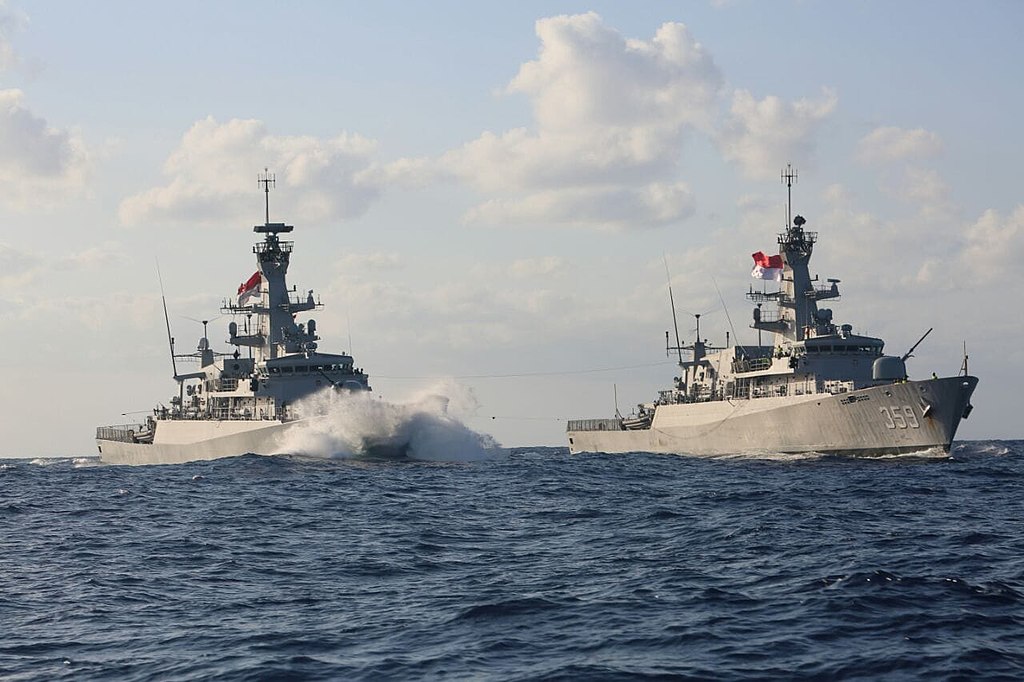
A primary concern regarding the continued expansion of TNI-AL’s involvement in MOOTWs is that these activities have shifted from a secondary role to a defining operational identity. As a result, resources and attention are frequently diverted from efforts to enhance combat readiness, such as conducting live-firing exercises or acquiring frontline units for high-threat environments.
Currently, the TNI-AL possesses only seven principal surface combatants and an assortment of smaller vessels, none of which provide the fleet with adequate air-defence or anti-submarine warfare capabilities required for 21st-century maritime warfare. Even with the recent addition of two multipurpose offshore patrol vessels acquired from Italy and the planned acquisition of another two locally built Red and White Frigates (Fregat Merah Putih/FMP) apart from the two already under construction, the fleet will remain insufficiently equipped to operate effectively in high-threat maritime environments.
The proposal to acquire an ex-Italian Navy aircraft carrier for disaster relief shows how procurement debates shift when MOOTW considerations predominate. Besides its symbolic value, maintaining the platform will divert resources from TNI-AL’s need for modern surface combatants and escort vessels, while offering little increase in HADR capabilities due to its unsuitability for such missions.
The TNI-AL’s current force structure, which prioritises transport and lift capabilities, illustrates the broader challenge of balancing peacetime operational demands with the requirements of high-end naval warfare. From a force protection standpoint, the increasing emphasis on transport and amphibious vessels raises concerns about the fleet’s survivability in high-threat scenarios, especially when these vessels lack support from escort ships equipped with effective air-defence and anti-submarine warfare capabilities.
Recent events in the Red Sea demonstrate that relatively low-cost anti-shipping capabilities can pose significant risks to surface vessels, even without the presence of a peer naval adversary. These developments highlight the growing importance of layered air and missile defence and the need for suitable escort platforms to ensure the survivability of surface fleets against enemy air attacks.
Together, these dynamics underscore the need to align fleet composition and capability development with the demands of contemporary maritime warfare, especially within the increasingly contested Indo-Pacific region.
Solutions?
As Indonesia navigates a more contested regional maritime environment, the main issue is not whether the TNI-AL should continue MOOTWs, but how to prioritise and manage these activities alongside its core warfighting responsibilities. A more deliberate calibration of roles and expectations is needed. MOOTWs should complement, not replace, naval combat capabilities, with their scope and frequency carefully coordinated with force development objectives.
Gradually strengthening civilian agencies responsible for food security and disaster management, such as the National Food Agency (Badan Pangan Nasional/Bapanas) and the National Agency for Disaster Countermeasures (Badan Nasional Penanggulangan Bencana/BNPB), could reduce the pressure on the TNI-AL to conduct MOOTWs. This approach would allow the TNI-AL to concentrate on warfighting capabilities rather than non-military contingencies. Simultaneously, the government should consider ring-fencing the TNI-AL’s budget and assets to prevent the diversion of frontline units and personnel from essential training, maintenance, and strategic exercises to recurring civilian tasks.
Taken together, these adjustments would support a more sustainable balance between the TNI-AL’s peacetime contributions and its core responsibility to defend Indonesia’s maritime interests. The country may not face an immediate military threat, but the absence of one today is no guarantee that there will be none tomorrow. Strategic environments can shift abruptly, and a navy that neglects its warfighting edge risks discovering this only when it is too late.
Joseph Kristanto is a Research Analyst with the Maritime Security Programme, S. Rajaratnam School of International Studies (RSIS).
KEY TAKEAWAYS
• The Indonesian Navy’s increasing involvement in military operations other than war (MOOTW) may divert attention from its primary mission of defending Indonesia against conventional military threats.
• Prioritising MOOTW diminishes the navy’s combat readiness by shifting its force structure towards transport and amphibious capabilities. This reallocation potentially undermines the surface combatant fleet and constrains the navy’s effectiveness in modern, high-intensity maritime conflict.
• Strengthening civilian agencies and safeguarding the navy’s budgets and frontline units are essential to balancing peacetime contributions with the core responsibility of defending Indonesia’s maritime interests against military threats.
COMMENTARY
Indonesia has historically adopted a broad definition of national security. As a large archipelagic state with significant socio-economic disparities, Jakarta has securitised a wide range of issues beyond traditional security concerns, including natural disasters, availability of food, and other factors that could affect the quality of life of Indonesians.
In this context, and in the absence of an immediate conventional military threat, the Indonesian Navy (Tentara Nasional Indonesia–Angkatan Laut/TNI-AL) has increasingly engaged in military operations other than war (MOOTWs) to address societal needs. The lack of external military threats has justified assigning the TNI-AL to broader non-combat roles, which have gradually become central to its operational identity. Humanitarian assistance and disaster relief (HADR), support for food self-sufficiency programmes, and the transportation of civilians during the annual Eid al-Fitr homecoming now constitute a significant portion of its peacetime activities. Consequently, the TNI-AL is frequently regarded as a key provider of public goods rather than solely a warfighting force. However, this expanding non-combat role has raised concerns regarding its long-term strategic and developmental implications.
Although the strategic implications of this operational shift have been widely discussed, most analyses focus on personnel, institutional overstretch and blurred boundaries between civilian and military functions. However, the impact of this sustained emphasis on MOOTWs in shaping the TNI-AL’s fleet structure and composition has received little attention.
Fleet composition extends beyond technical or procurement considerations as the types of ships a navy prioritises, acquires and maintains directly reflect its operational priorities. In Indonesia’s case, the growing focus on MOOTWs has significantly altered the balance between transport and combat capabilities within the TNI-AL, thereby undermining its conventional warfighting readiness.
TNI-AL’s Historical Involvement in MOOTWs
Since the early years of the republic, the TNI-AL has assumed roles beyond traditional maritime warfare, including the delivery of supplies and construction materials to the outer islands. Initially considered temporary or ad hoc, these missions evolved into a broader, more enduring role. This evolution culminated in the TNI-AL’s large-scale deployment after the 2004 Indian Ocean tsunami, providing medical and logistical aid to isolated coastal communities in Aceh.
Although the TNI-AL responded rapidly to the 2004 tsunami, the scale, complexity and improvised nature of the HADR operation revealed both the strategic importance and operational limitations of its non-combat capabilities. This experience, combined with Jakarta’s broad definition of national security, prompted efforts to institutionalise MOOTWs within the TNI.
Such efforts ultimately led to the adoption of Law No. 03 of 2002 on National Defence and Law No. 34 of 2004 on the TNI, which mandated that the TNI conduct both war operations and MOOTWs to ensure Indonesia’s national security. For the TNI-AL, this meant that missions such as disaster response, maritime law enforcement and support for civilian agencies were no longer considered peripheral. Instead, they became a permanent part of TNI-AL’s mission set.
MOOTWs and TNI-AL’s Posture
Following the implementation of these laws, the TNI-AL has been routinely conducting MOOTWs under its expanded mandate. These operations mainly include HADR missions and delivering supplies to Indonesia’s outer islands. While allocating some resources to these missions is generally uncontroversial, from a force-development perspective, MOOTWs should complement, not redefine, a navy’s core warfighting function.
A primary concern regarding the continued expansion of TNI-AL’s involvement in MOOTWs is that these activities have shifted from a secondary role to a defining operational identity. As a result, resources and attention are frequently diverted from efforts to enhance combat readiness, such as conducting live-firing exercises or acquiring frontline units for high-threat environments.
Currently, the TNI-AL possesses only seven principal surface combatants and an assortment of smaller vessels, none of which provide the fleet with adequate air-defence or anti-submarine warfare capabilities required for 21st-century maritime warfare. Even with the recent addition of two multipurpose offshore patrol vessels acquired from Italy and the planned acquisition of another two locally built Red and White Frigates (Fregat Merah Putih/FMP) apart from the two already under construction, the fleet will remain insufficiently equipped to operate effectively in high-threat maritime environments.
The proposal to acquire an ex-Italian Navy aircraft carrier for disaster relief shows how procurement debates shift when MOOTW considerations predominate. Besides its symbolic value, maintaining the platform will divert resources from TNI-AL’s need for modern surface combatants and escort vessels, while offering little increase in HADR capabilities due to its unsuitability for such missions.
The TNI-AL’s current force structure, which prioritises transport and lift capabilities, illustrates the broader challenge of balancing peacetime operational demands with the requirements of high-end naval warfare. From a force protection standpoint, the increasing emphasis on transport and amphibious vessels raises concerns about the fleet’s survivability in high-threat scenarios, especially when these vessels lack support from escort ships equipped with effective air-defence and anti-submarine warfare capabilities.
Recent events in the Red Sea demonstrate that relatively low-cost anti-shipping capabilities can pose significant risks to surface vessels, even without the presence of a peer naval adversary. These developments highlight the growing importance of layered air and missile defence and the need for suitable escort platforms to ensure the survivability of surface fleets against enemy air attacks.
Together, these dynamics underscore the need to align fleet composition and capability development with the demands of contemporary maritime warfare, especially within the increasingly contested Indo-Pacific region.
Solutions?
As Indonesia navigates a more contested regional maritime environment, the main issue is not whether the TNI-AL should continue MOOTWs, but how to prioritise and manage these activities alongside its core warfighting responsibilities. A more deliberate calibration of roles and expectations is needed. MOOTWs should complement, not replace, naval combat capabilities, with their scope and frequency carefully coordinated with force development objectives.
Gradually strengthening civilian agencies responsible for food security and disaster management, such as the National Food Agency (Badan Pangan Nasional/Bapanas) and the National Agency for Disaster Countermeasures (Badan Nasional Penanggulangan Bencana/BNPB), could reduce the pressure on the TNI-AL to conduct MOOTWs. This approach would allow the TNI-AL to concentrate on warfighting capabilities rather than non-military contingencies. Simultaneously, the government should consider ring-fencing the TNI-AL’s budget and assets to prevent the diversion of frontline units and personnel from essential training, maintenance, and strategic exercises to recurring civilian tasks.
Taken together, these adjustments would support a more sustainable balance between the TNI-AL’s peacetime contributions and its core responsibility to defend Indonesia’s maritime interests. The country may not face an immediate military threat, but the absence of one today is no guarantee that there will be none tomorrow. Strategic environments can shift abruptly, and a navy that neglects its warfighting edge risks discovering this only when it is too late.
Joseph Kristanto is a Research Analyst with the Maritime Security Programme, S. Rajaratnam School of International Studies (RSIS).