


02 March 2026
IP26031 | Doubling Down: The Supreme Court Defeat Only Hardened Trump’s Tariff Resolve

KEY TAKEAWAYS
• The US Supreme Court’s ruling in Learning Resources, Inc., v. Trump was a procedural speed bump and not a roadblock, leaving pathways open to future tariffs.
• The Trump administration’s use of Section 122 of the Trade Act of 1974 is a stopgap as it attempts to rebuild its tariff policy on a more “legally permissible” foundation.
• Countries should brace for Section 232 and Section 301 tariffs that may leave them even worse off than under “reciprocal” tariffs.
COMMENTARY
On 20 February, the US Supreme Court (SCOTUS) in a “splintered” 6–3 decision ruled President Donald Trump’s use of the 1977 International Emergency Economic Powers Act (IEEPA) to authorise sweeping tariffs on foreign imports to be unconstitutional. The majority held that the president did not have the authority to impose any tariffs under IEEPA but were divided on the legal rationale.
Learning Resources, Inc., v. Trump
Chief Justice John Roberts, joined by two of Trump’s nominees to the Court, Justices Neil Gorsuch and Amy Coney Barrett, argued that the president’s unilateral imposition of sweeping tariffs failed the major questions doctrine test, while the Court’s liberal wing – Justices Sonia Sotomayor, Elena Kagan and Ketanji Brown Jackson – argued that the ordinary tools of statutory interpretation sufficed to invalidate the president’s actions. Justice Brett Kavanaugh’s dissent, joined by the Court’s two most conservative justices, Clarence Thomas and Samuel Alito, offered the president alternative statutory pathways for imposing tariffs – the Trade Expansion Act of 1962 (Section 232); the Trade Act of 1974 (Sections 122, 201, 301); and the Tariff Act of 1930 (Section 338).
The Court’s ruling did not touch on the president’s power to declare or define a “national emergency” under IEEPA, nor did it affect the tariffs he imposed using different laws.
Doubling Down on Tariffs: Trump Turns to Section 122 for Now
The SCOTUS ruling came as Trump faces low approval ratings, with nearly two-thirds of the public having soured on his handling of tariffs. A YouGov poll found that 60% of Americans approved of the SCOTUS ruling.
However, rather than being chastened by the Court’s rebuke of his tariff gambit, the president announced a new 10% global tariff under Section 122 of the Trade Act of 1974, beginning on 24 February and to last for 150 days unless renewed by Congress. The president subsequently announced through a social media post his intention to increase the tariff rate to 15%.
The use of Section 122 to impose tariffs is unprecedented. The statute has lain dormant for the past five decades, having been intended to counter specific short-term emergencies – “large and serious balance-of-payments deficits” and “imminent and significant depreciation of the dollar in foreign exchange markets” – in the context of the United States moving off from the gold standard in 1971.
The president’s resort to Section 122 may be legally problematic. It does not appear that the statutory conditions for applying Section 122 tariffs have been met. The US dollar is not in danger of “imminent and significant depreciation”, and it is questionable whether balance-of-payments deficits are even possible in a free-floating international exchange rate system. Further, the administration’s lawyers had previously dismissed using Section 122 as an appropriate legal basis for imposing tariffs. More significantly, given that import taxes generally lack public support, Republican members of Congress will baulk at renewing the Section 122 tariffs when these expire in July while they are campaigning to maintain their control of Capitol Hill.
Is a Deal Still a Deal?
The SCOTUS ruling and the administration’s pivot to Section 122 tariffs have created confusion and uncertainty for US trade partners. Within hours of the new tariffs coming into effect, US Customs and Border Protection issued guidance that the effective rate is in fact 10%. The White House said that the president has not had a “change of heart” but provided no details on when he would sign a new executive order raising the tariff rate to 15%. US Trade Representative (USTR) Jamieson Greer now says that the tariff rate for some countries will rise to 15% or higher from the newly imposed 10% but did not provide any details.
Countries that concluded agreements with Washington to lower punitive IEEPA tariffs now find themselves in a bind. For example, just a day before the SCOTUS ruling, Indonesia finalised a trade deal that lowered US tariffs on most of its exports from 32% to 19%, placing it on par with other Southeast Asian countries that signed similar agreements, such as Cambodia and Malaysia. Thailand and Vietnam reached “framework” agreements with Washington last year agreeing to 19% and 20% tariffs respectively, but neither country has finalised its deal.
The fate of those deals is now unclear. Thailand and Vietnam should now be subject to the lower 10% tariffs. However, USTR has stated that the administration expects trade partners to honour their agreements. If the negotiated tariff rates are retained, it would ironically disadvantage Indonesia, Malaysia and Cambodia (and possibly Thailand and Vietnam) relative to their neighbours who did not strike deals with Washington. They could push hard to renegotiate their agreements but that strategy runs the risk of incurring Trump’s wrath and renegotiating hard-won exemptions for critical sectors of their economy.
Trump Rebuilding Tariff Walls on Firmer Foundations
In any case, the Trump administration’s use of Section 122 tariffs is a stopgap measure to prepare the groundwork for a more permanent and “legally permissible” foundation for its tariff policy. In his State of the Union address, Trump promised that the new tariffs would be “a little more complex, but they’re actually probably better – leading to a solution that will be even stronger than before. Congressional action will not be necessary. It’s already time tested and approved.”
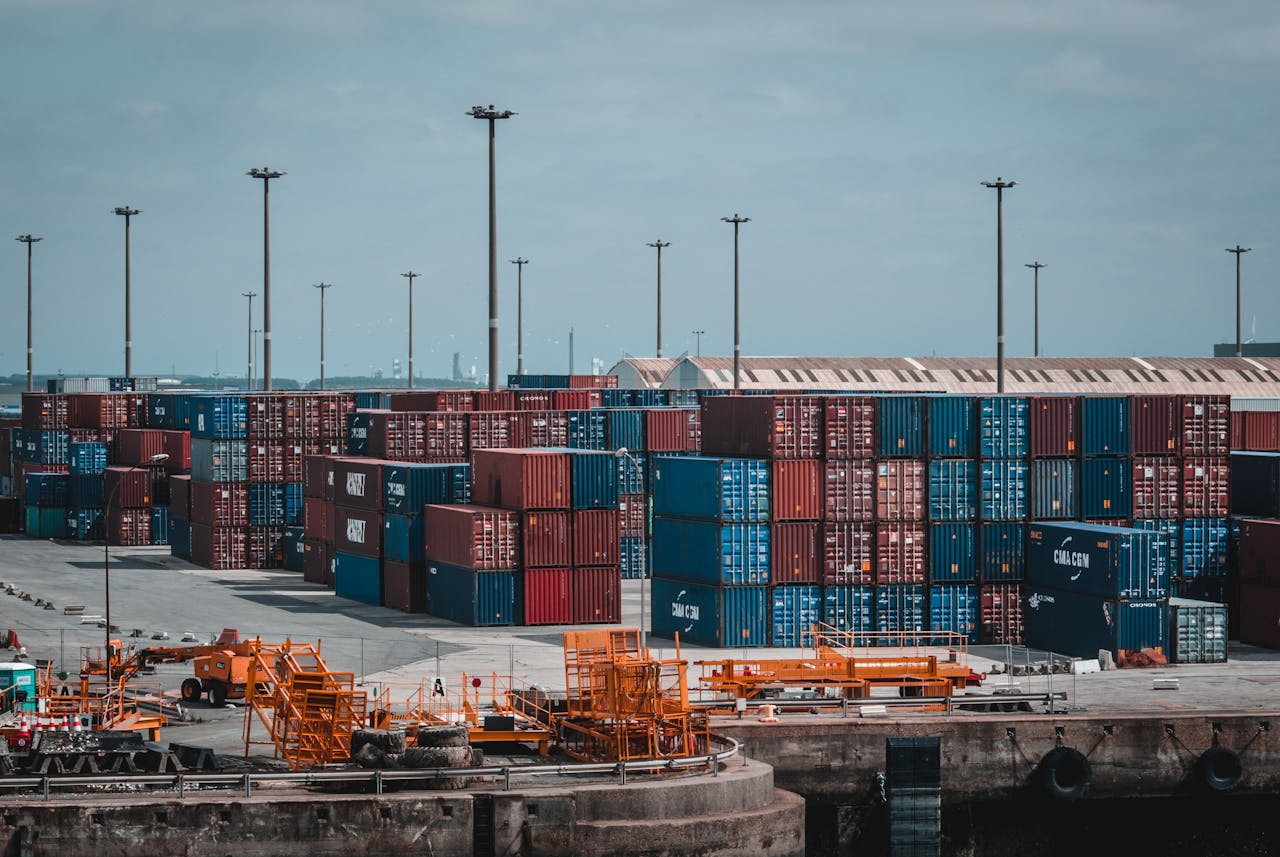
Image source: Pexels.
The president is most likely to turn to Section 232 and Section 301 (as suggested by Kavanaugh in his dissenting opinion) for tariff authority. Section 232 gives the president broad latitude to impose tariffs based on national security risks but requires lengthy investigations before they can be imposed. The administration is already considering new Section 232 tariffs on large-scale batteries, cast iron and iron fittings, plastic piping, industrial chemicals and power grid and telecom equipment, in addition to ongoing investigations into critical minerals, semiconductors and pharmaceuticals. Trump has already used Section 232 to impose tariffs on imports ranging from steel, copper and aluminium to trucks and furniture.
Section 301 provides the president with broad retaliatory authority to address foreign governments’ “unfair trade practices”. In the 1980s, then-President Ronald Reagan aggressively wielded the statute to combat what he deemed unfair trade practices by Japan and the European Community. USTR has already launched investigations into China’s implementation of its commitments under the Phase One trade agreement and Brazil’s digital trade policies.
Conclusion
The Learning Resources ruling will only provide temporary relief to US trade partners by depriving Trump of the ability to use tariffs as a tool of coercive diplomacy. However, with the ruling forcing him to construct his tariff policies on firmer legal foundations, we are very likely to witness their entrenchment as the key tool of US economic statecraft.
Countries should be in no doubt about Trump’s continued ardour for tariffs and should brace themselves for new sectoral tariffs based on Section 232 and accusations of “unfair trade practices” under Section 301. If the administration is scrupulous in following statutory requirements, the courts are unlikely to pose a stumbling block to his tariff policies. Unless the Democrats can retake both houses of Congress in November this year – an implausible scenario – SCOTUS’ invalidation of single-chamber “legislative vetoes” as unconstitutional in INS v. Chadha leaves them few options to rein in the president on tariffs. Thus, even a lame-duck Trump will have ample opportunities to permanently alter America’s economic relationship with the world.
Adrian Ang U-Jin is Research Fellow and Coordinator of the United States Programme at the S. Rajaratnam School of International Studies (RSIS).
KEY TAKEAWAYS
• The US Supreme Court’s ruling in Learning Resources, Inc., v. Trump was a procedural speed bump and not a roadblock, leaving pathways open to future tariffs.
• The Trump administration’s use of Section 122 of the Trade Act of 1974 is a stopgap as it attempts to rebuild its tariff policy on a more “legally permissible” foundation.
• Countries should brace for Section 232 and Section 301 tariffs that may leave them even worse off than under “reciprocal” tariffs.
COMMENTARY
On 20 February, the US Supreme Court (SCOTUS) in a “splintered” 6–3 decision ruled President Donald Trump’s use of the 1977 International Emergency Economic Powers Act (IEEPA) to authorise sweeping tariffs on foreign imports to be unconstitutional. The majority held that the president did not have the authority to impose any tariffs under IEEPA but were divided on the legal rationale.
Learning Resources, Inc., v. Trump
Chief Justice John Roberts, joined by two of Trump’s nominees to the Court, Justices Neil Gorsuch and Amy Coney Barrett, argued that the president’s unilateral imposition of sweeping tariffs failed the major questions doctrine test, while the Court’s liberal wing – Justices Sonia Sotomayor, Elena Kagan and Ketanji Brown Jackson – argued that the ordinary tools of statutory interpretation sufficed to invalidate the president’s actions. Justice Brett Kavanaugh’s dissent, joined by the Court’s two most conservative justices, Clarence Thomas and Samuel Alito, offered the president alternative statutory pathways for imposing tariffs – the Trade Expansion Act of 1962 (Section 232); the Trade Act of 1974 (Sections 122, 201, 301); and the Tariff Act of 1930 (Section 338).
The Court’s ruling did not touch on the president’s power to declare or define a “national emergency” under IEEPA, nor did it affect the tariffs he imposed using different laws.
Doubling Down on Tariffs: Trump Turns to Section 122 for Now
The SCOTUS ruling came as Trump faces low approval ratings, with nearly two-thirds of the public having soured on his handling of tariffs. A YouGov poll found that 60% of Americans approved of the SCOTUS ruling.
However, rather than being chastened by the Court’s rebuke of his tariff gambit, the president announced a new 10% global tariff under Section 122 of the Trade Act of 1974, beginning on 24 February and to last for 150 days unless renewed by Congress. The president subsequently announced through a social media post his intention to increase the tariff rate to 15%.
The use of Section 122 to impose tariffs is unprecedented. The statute has lain dormant for the past five decades, having been intended to counter specific short-term emergencies – “large and serious balance-of-payments deficits” and “imminent and significant depreciation of the dollar in foreign exchange markets” – in the context of the United States moving off from the gold standard in 1971.
The president’s resort to Section 122 may be legally problematic. It does not appear that the statutory conditions for applying Section 122 tariffs have been met. The US dollar is not in danger of “imminent and significant depreciation”, and it is questionable whether balance-of-payments deficits are even possible in a free-floating international exchange rate system. Further, the administration’s lawyers had previously dismissed using Section 122 as an appropriate legal basis for imposing tariffs. More significantly, given that import taxes generally lack public support, Republican members of Congress will baulk at renewing the Section 122 tariffs when these expire in July while they are campaigning to maintain their control of Capitol Hill.
Is a Deal Still a Deal?
The SCOTUS ruling and the administration’s pivot to Section 122 tariffs have created confusion and uncertainty for US trade partners. Within hours of the new tariffs coming into effect, US Customs and Border Protection issued guidance that the effective rate is in fact 10%. The White House said that the president has not had a “change of heart” but provided no details on when he would sign a new executive order raising the tariff rate to 15%. US Trade Representative (USTR) Jamieson Greer now says that the tariff rate for some countries will rise to 15% or higher from the newly imposed 10% but did not provide any details.
Countries that concluded agreements with Washington to lower punitive IEEPA tariffs now find themselves in a bind. For example, just a day before the SCOTUS ruling, Indonesia finalised a trade deal that lowered US tariffs on most of its exports from 32% to 19%, placing it on par with other Southeast Asian countries that signed similar agreements, such as Cambodia and Malaysia. Thailand and Vietnam reached “framework” agreements with Washington last year agreeing to 19% and 20% tariffs respectively, but neither country has finalised its deal.
The fate of those deals is now unclear. Thailand and Vietnam should now be subject to the lower 10% tariffs. However, USTR has stated that the administration expects trade partners to honour their agreements. If the negotiated tariff rates are retained, it would ironically disadvantage Indonesia, Malaysia and Cambodia (and possibly Thailand and Vietnam) relative to their neighbours who did not strike deals with Washington. They could push hard to renegotiate their agreements but that strategy runs the risk of incurring Trump’s wrath and renegotiating hard-won exemptions for critical sectors of their economy.
Trump Rebuilding Tariff Walls on Firmer Foundations
In any case, the Trump administration’s use of Section 122 tariffs is a stopgap measure to prepare the groundwork for a more permanent and “legally permissible” foundation for its tariff policy. In his State of the Union address, Trump promised that the new tariffs would be “a little more complex, but they’re actually probably better – leading to a solution that will be even stronger than before. Congressional action will not be necessary. It’s already time tested and approved.”
Image source: Pexels.
The president is most likely to turn to Section 232 and Section 301 (as suggested by Kavanaugh in his dissenting opinion) for tariff authority. Section 232 gives the president broad latitude to impose tariffs based on national security risks but requires lengthy investigations before they can be imposed. The administration is already considering new Section 232 tariffs on large-scale batteries, cast iron and iron fittings, plastic piping, industrial chemicals and power grid and telecom equipment, in addition to ongoing investigations into critical minerals, semiconductors and pharmaceuticals. Trump has already used Section 232 to impose tariffs on imports ranging from steel, copper and aluminium to trucks and furniture.
Section 301 provides the president with broad retaliatory authority to address foreign governments’ “unfair trade practices”. In the 1980s, then-President Ronald Reagan aggressively wielded the statute to combat what he deemed unfair trade practices by Japan and the European Community. USTR has already launched investigations into China’s implementation of its commitments under the Phase One trade agreement and Brazil’s digital trade policies.
Conclusion
The Learning Resources ruling will only provide temporary relief to US trade partners by depriving Trump of the ability to use tariffs as a tool of coercive diplomacy. However, with the ruling forcing him to construct his tariff policies on firmer legal foundations, we are very likely to witness their entrenchment as the key tool of US economic statecraft.
Countries should be in no doubt about Trump’s continued ardour for tariffs and should brace themselves for new sectoral tariffs based on Section 232 and accusations of “unfair trade practices” under Section 301. If the administration is scrupulous in following statutory requirements, the courts are unlikely to pose a stumbling block to his tariff policies. Unless the Democrats can retake both houses of Congress in November this year – an implausible scenario – SCOTUS’ invalidation of single-chamber “legislative vetoes” as unconstitutional in INS v. Chadha leaves them few options to rein in the president on tariffs. Thus, even a lame-duck Trump will have ample opportunities to permanently alter America’s economic relationship with the world.
Adrian Ang U-Jin is Research Fellow and Coordinator of the United States Programme at the S. Rajaratnam School of International Studies (RSIS).