


05 March 2026
IP26035 | From Bricks and Mortar to Equity, Finance and Capital: China’s Evolved Engagement in Southeast Asia

KEY TAKEAWAYS
• In an era of intensifying geoeconomic pressure, Beijing has shifted from quantity and scale to quality and targeted realms such as payment systems, liquidity arrangements and digital investments to embed itself in Southeast Asia’s economic architecture.
• This change reflects China’s adaptation to geopolitical constraints and domestic economic pressures.
COMMENTARY
Over the past decade, China’s economic engagement in Southeast Asia was mainly through the Belt and Road Initiative (BRI), which was defined by large-scale infrastructure financing. These projects, while addressing critical infrastructure gaps in Southeast Asia, also drew widespread criticism for fostering debt dependency, lacking transparency, and sometimes ignoring social and environmental safeguards. This scale- and quantity-driven approach has proved politically and financially costly. Debt distress in countries such as Laos and scrutiny in Malaysia and Indonesia exposed the vulnerabilities of state-to-state infrastructure financing. At home, China’s growth slowdown and property-sector challenges began to limit its appetite for large-scale overseas lending. Abroad, the US-China rivalry increased the geopolitical sensitivity of high-profile Chinese projects. Consequently, China’s economic engagement in Southeast Asia is facing mounting challenges that require Beijing to take adaptive actions.
Building the Plumbing for Power
Instead of prioritising large sovereign loans, China’s response now is to build the financial plumbing – the financial systems, networks and technical frameworks – through which its trade, investment and technology flow. China’s engagement with Southeast Asia is increasingly aligned with its efforts to build a global financial architecture, such as cross-border payment systems, currency settlement networks, central bank swap lines, investment funds and digital platforms that determine how its trade and investment actually move.
This shift is less dramatic than the inauguration of a railway through the BRI, but potentially more consequential. For instance, payment and settlement systems are now strategically used by Beijing to create options and alternative payment rails that reduce reliance on a single currency. Through its Cross-border Interbank Payment System (CIPS), a settlement system similar to the SWIFT network for international money transfers, the Chinese state hopes to expand financial connectivity and promote renminbi (RMB)-denominated services in trade and investment. In response, more banks in Southeast Asia are joining as participants, normalising RMB-denominated transactions alongside dollar flows.
Liquidity tools are also part of China’s evolving engagement in Southeast Asia. Over the past decade, China’s central bank – the People’s Bank of China (PBOC) – has established a network of bilateral currency swap agreements with central banks across the world. Southeast Asia features prominently in this architecture. The PBOC maintains sizeable swap arrangements with the central banks of countries in the region like Malaysia, Indonesia, Singapore, Thailand and Laos. In particular Singapore, as a regional financial hub, has long maintained a swap arrangement that positions it as an offshore RMB clearing centre.
Over the past decade, China has positioned itself as the dominant liquidity provider across Southeast Asia through initiatives like the Digital Silk Road. Initially presented to facilitate trade settlement in RMB, the currency swap agreements that the Digital Silk Road offers now serve as potential liquidity backstops in moments of geopolitical stress. In a world where access to dollar liquidity can be restricted due to sanctions, export controls or compliance enforcement, swap lines provide more choices.
The same logic extends to the wholesale digital settlement infrastructure developed by PBOC and its partners in Thailand, Hong Kong and the United Arab Emirates. Known as the mBridge project, it aims to provide alternatives to dollar-dependent global payment systems by serving as a cross-border central bank digital currency platform. China’s digital yuan, although primarily a domestic currency for citizens and large entities and for institutional use across borders, has been tested in Hong Kong and Thailand.
Digital initiatives at the retail and commercial level also reinforce the architecture that the Chinese state is building. More consequential in Southeast Asia has been the expansion of Chinese fintech ecosystems through equity investment and platform integration. For instance, Ant Group’s Alipay+ network has connected mainstream Southeast Asian e-wallets such as Malaysia’s Touch’n Go, Thailand’s TrueMoney and the Philippines’ GCash to a cross-border payment network that facilitates transactions for Chinese tourists. In Indonesia, Ant-backed Dana has become one of the country’s major digital payment providers. These partnerships embed Chinese technological standards into local financial ecosystems.
Moreover, China’s private fintech firms too have been extending into Southeast Asia’s digital economy, supported by cloud infrastructure and venture capital investments. For example, Alibaba Cloud operates data centres in Singapore, Indonesia and Malaysia, underpinning digital commerce and fintech services.
Strategic Drivers Behind the Shift
Three interconnected strategic drivers explain why Beijing has moved from infrastructure-heavy lending to liquidity tools, equity investment and payment architectures in Southeast Asia.
The first factor shaping China’s outreach is the rapid restructuring of global supply chains under the “China+N” production diversification trend, with “N” denoting alternative sourcing and manufacturing hubs elsewhere in Asia for multinational corporations. As these corporations relocate segments of their operations to Southeast Asia and other developing regions, Beijing has recognised that it cannot fully prevent this reconfiguration. Instead, it has also adopted a China+N strategy of its own by following, shaping and financing the change. By providing capital and facilitating payments for overseas investments and trade, China ensures that the firms moving out of China remain connected to Chinese supply networks. Through these efforts, China maintains influence over supply chains that are relocating geographically but remain dependent on Chinese technology, machinery, materials, innovation and finances.
The second driver is Beijing’s growing concerns about financial sanctions amid intensifying US-China great power rivalry. The past decade has demonstrated how financial chokepoints can be leveraged for strategic ends. Sanctions regimes, export controls and compliance enforcement have underscored the power embedded in global financial networks. For instance, the sanctions imposed on Russia after its annexation of the Crimea in 2014, and far more dramatically after the 2022 invasion of Ukraine, revealed the coercive power embedded in Western-dominated financial infrastructures. As Washington expands export controls, investment screening mechanisms and technological embargoes on China, such concern looms even larger. Therefore, Beijing has turned to financial tools as a means of embedding its companies within regional and global production networks in the hope that its technological and industrial capabilities remain connected to alternative markets even as Western ones become more restrictive.
The third critical driver of China’s evolving engagement in Southeast Asia is the diffusion of norms and standards through financial plumbing. Cooperation on RMB settlement, digital payment protocols and fintech platforms requires capacity building in data regulation, compliance and interoperability. Moreover, when Chinese private firms invest in fintech platforms or data centres, they introduce technological architectures that shape local industrial norms. The integration of payment platforms, data infrastructure and capital flows creates a layered financial ecosystem tied to Chinese networks, platform governance and credit scoring.
Implications for Southeast Asia
China’s evolving engagement through financial plumbing signals a broader shift in how power operates in the global economy. Influence can be increasingly exercised not only through visible assets but also through embedded financial systems. China’s financial architecture is now entering Southeast Asia as an instrument of influence and a means of risk management in a world where capital is increasingly subjected to geopolitics. Southeast Asia is central to this strategy by virtue of being China’s largest trading partner since 2020 and its relative receptiveness to Chinese economic engagement.
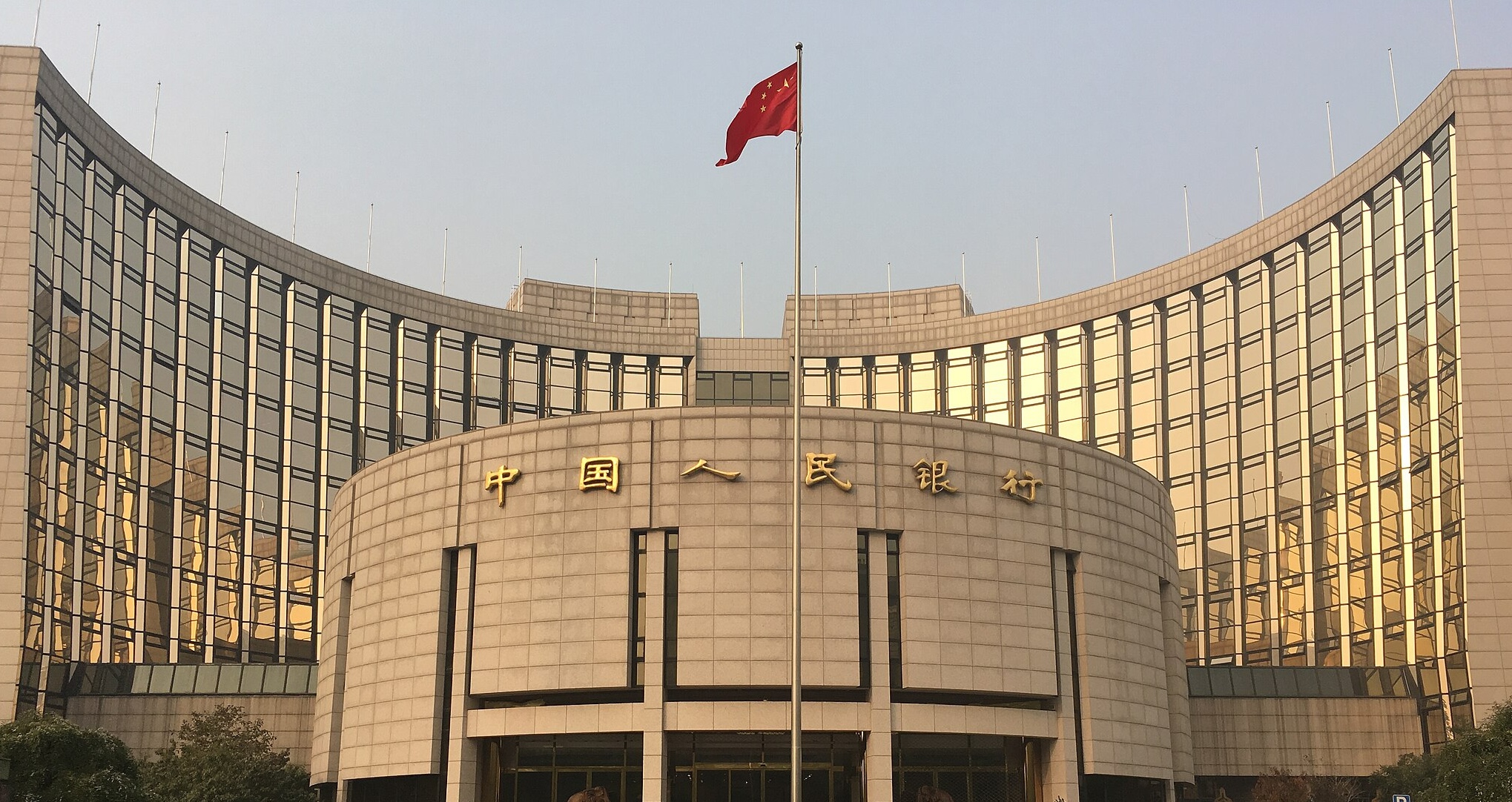
Image source: Max12Max, CC BY-SA 4.0, via Wikimedia Commons.
For Southeast Asia, China’s financial turn presents both opportunity and dependence. On the positive side, for instance, expanded settlement options and regional liquidity mechanisms can reduce transaction costs. However, these also entail dependence on China, for instance, through payment systems, digital platforms or technological standards. As Beijing is creating a parallel financial channel, maintaining credibility with multiple rule-making centres will require institutional sophistication on the part of Southeast Asian governments.
Southeast Asian regulators will have to navigate an increasingly complex compliance landscape as pressing regional governance issues such as money laundering, data governance and export controls increasingly intersect with financial operations that incrementally revolve around Beijing.
Xue Gong is Assistant Professor and Deputy Coordinator of the China Programme, S. Rajaratnam School of International Studies (RSIS).
KEY TAKEAWAYS
• In an era of intensifying geoeconomic pressure, Beijing has shifted from quantity and scale to quality and targeted realms such as payment systems, liquidity arrangements and digital investments to embed itself in Southeast Asia’s economic architecture.
• This change reflects China’s adaptation to geopolitical constraints and domestic economic pressures.
COMMENTARY
Over the past decade, China’s economic engagement in Southeast Asia was mainly through the Belt and Road Initiative (BRI), which was defined by large-scale infrastructure financing. These projects, while addressing critical infrastructure gaps in Southeast Asia, also drew widespread criticism for fostering debt dependency, lacking transparency, and sometimes ignoring social and environmental safeguards. This scale- and quantity-driven approach has proved politically and financially costly. Debt distress in countries such as Laos and scrutiny in Malaysia and Indonesia exposed the vulnerabilities of state-to-state infrastructure financing. At home, China’s growth slowdown and property-sector challenges began to limit its appetite for large-scale overseas lending. Abroad, the US-China rivalry increased the geopolitical sensitivity of high-profile Chinese projects. Consequently, China’s economic engagement in Southeast Asia is facing mounting challenges that require Beijing to take adaptive actions.
Building the Plumbing for Power
Instead of prioritising large sovereign loans, China’s response now is to build the financial plumbing – the financial systems, networks and technical frameworks – through which its trade, investment and technology flow. China’s engagement with Southeast Asia is increasingly aligned with its efforts to build a global financial architecture, such as cross-border payment systems, currency settlement networks, central bank swap lines, investment funds and digital platforms that determine how its trade and investment actually move.
This shift is less dramatic than the inauguration of a railway through the BRI, but potentially more consequential. For instance, payment and settlement systems are now strategically used by Beijing to create options and alternative payment rails that reduce reliance on a single currency. Through its Cross-border Interbank Payment System (CIPS), a settlement system similar to the SWIFT network for international money transfers, the Chinese state hopes to expand financial connectivity and promote renminbi (RMB)-denominated services in trade and investment. In response, more banks in Southeast Asia are joining as participants, normalising RMB-denominated transactions alongside dollar flows.
Liquidity tools are also part of China’s evolving engagement in Southeast Asia. Over the past decade, China’s central bank – the People’s Bank of China (PBOC) – has established a network of bilateral currency swap agreements with central banks across the world. Southeast Asia features prominently in this architecture. The PBOC maintains sizeable swap arrangements with the central banks of countries in the region like Malaysia, Indonesia, Singapore, Thailand and Laos. In particular Singapore, as a regional financial hub, has long maintained a swap arrangement that positions it as an offshore RMB clearing centre.
Over the past decade, China has positioned itself as the dominant liquidity provider across Southeast Asia through initiatives like the Digital Silk Road. Initially presented to facilitate trade settlement in RMB, the currency swap agreements that the Digital Silk Road offers now serve as potential liquidity backstops in moments of geopolitical stress. In a world where access to dollar liquidity can be restricted due to sanctions, export controls or compliance enforcement, swap lines provide more choices.
The same logic extends to the wholesale digital settlement infrastructure developed by PBOC and its partners in Thailand, Hong Kong and the United Arab Emirates. Known as the mBridge project, it aims to provide alternatives to dollar-dependent global payment systems by serving as a cross-border central bank digital currency platform. China’s digital yuan, although primarily a domestic currency for citizens and large entities and for institutional use across borders, has been tested in Hong Kong and Thailand.
Digital initiatives at the retail and commercial level also reinforce the architecture that the Chinese state is building. More consequential in Southeast Asia has been the expansion of Chinese fintech ecosystems through equity investment and platform integration. For instance, Ant Group’s Alipay+ network has connected mainstream Southeast Asian e-wallets such as Malaysia’s Touch’n Go, Thailand’s TrueMoney and the Philippines’ GCash to a cross-border payment network that facilitates transactions for Chinese tourists. In Indonesia, Ant-backed Dana has become one of the country’s major digital payment providers. These partnerships embed Chinese technological standards into local financial ecosystems.
Moreover, China’s private fintech firms too have been extending into Southeast Asia’s digital economy, supported by cloud infrastructure and venture capital investments. For example, Alibaba Cloud operates data centres in Singapore, Indonesia and Malaysia, underpinning digital commerce and fintech services.
Strategic Drivers Behind the Shift
Three interconnected strategic drivers explain why Beijing has moved from infrastructure-heavy lending to liquidity tools, equity investment and payment architectures in Southeast Asia.
The first factor shaping China’s outreach is the rapid restructuring of global supply chains under the “China+N” production diversification trend, with “N” denoting alternative sourcing and manufacturing hubs elsewhere in Asia for multinational corporations. As these corporations relocate segments of their operations to Southeast Asia and other developing regions, Beijing has recognised that it cannot fully prevent this reconfiguration. Instead, it has also adopted a China+N strategy of its own by following, shaping and financing the change. By providing capital and facilitating payments for overseas investments and trade, China ensures that the firms moving out of China remain connected to Chinese supply networks. Through these efforts, China maintains influence over supply chains that are relocating geographically but remain dependent on Chinese technology, machinery, materials, innovation and finances.
The second driver is Beijing’s growing concerns about financial sanctions amid intensifying US-China great power rivalry. The past decade has demonstrated how financial chokepoints can be leveraged for strategic ends. Sanctions regimes, export controls and compliance enforcement have underscored the power embedded in global financial networks. For instance, the sanctions imposed on Russia after its annexation of the Crimea in 2014, and far more dramatically after the 2022 invasion of Ukraine, revealed the coercive power embedded in Western-dominated financial infrastructures. As Washington expands export controls, investment screening mechanisms and technological embargoes on China, such concern looms even larger. Therefore, Beijing has turned to financial tools as a means of embedding its companies within regional and global production networks in the hope that its technological and industrial capabilities remain connected to alternative markets even as Western ones become more restrictive.
The third critical driver of China’s evolving engagement in Southeast Asia is the diffusion of norms and standards through financial plumbing. Cooperation on RMB settlement, digital payment protocols and fintech platforms requires capacity building in data regulation, compliance and interoperability. Moreover, when Chinese private firms invest in fintech platforms or data centres, they introduce technological architectures that shape local industrial norms. The integration of payment platforms, data infrastructure and capital flows creates a layered financial ecosystem tied to Chinese networks, platform governance and credit scoring.
Implications for Southeast Asia
China’s evolving engagement through financial plumbing signals a broader shift in how power operates in the global economy. Influence can be increasingly exercised not only through visible assets but also through embedded financial systems. China’s financial architecture is now entering Southeast Asia as an instrument of influence and a means of risk management in a world where capital is increasingly subjected to geopolitics. Southeast Asia is central to this strategy by virtue of being China’s largest trading partner since 2020 and its relative receptiveness to Chinese economic engagement.
Image source: Max12Max, CC BY-SA 4.0, via Wikimedia Commons.
For Southeast Asia, China’s financial turn presents both opportunity and dependence. On the positive side, for instance, expanded settlement options and regional liquidity mechanisms can reduce transaction costs. However, these also entail dependence on China, for instance, through payment systems, digital platforms or technological standards. As Beijing is creating a parallel financial channel, maintaining credibility with multiple rule-making centres will require institutional sophistication on the part of Southeast Asian governments.
Southeast Asian regulators will have to navigate an increasingly complex compliance landscape as pressing regional governance issues such as money laundering, data governance and export controls increasingly intersect with financial operations that incrementally revolve around Beijing.
Xue Gong is Assistant Professor and Deputy Coordinator of the China Programme, S. Rajaratnam School of International Studies (RSIS).