


06 March 2026
IP26036 | Beyond Domestic: China’s 2026 Two Sessions and Implications for Southeast Asia

KEY TAKEAWAYS
• China’s 2026 “Two Sessions” show its continuous yet consequential shift towards slower but more resilient and sustainable growth, technological self-reliance and stronger domestic demand.
• China is increasingly externalising parts of its industrial ecosystem to Southeast Asia, turning the region into a nearshore production platform.
COMMENTARY
China’s annual “Two Sessions” (Lianghui) meetings of the National People’s Congress and the Chinese People’s Political Consultative Conference are often viewed as highly significant political events that formalise decisions made by the leadership. Discussing the 15th Five-Year Plan (2026–2030) amid intensifying geopolitical tensions, followed by sanctions and economic fragmentation, the 2026 meetings signal a deeper transformation of China’s economic strategy. As the country restructures its growth model and recalibrates its external economic relations, Southeast Asia is likely to become an even more important arena for China’s geoeconomic plan.
China’s Domestic Focus
The main event at China’s Two Sessions typically is the Government Work Report (hereafter, “Report”) delivered by the prime minister, which presents a review of the preceding year’s performance and outlines the policy agenda and economic targets for the year ahead. One of the most notable messages from the 2026 Two Sessions is the government’s lower growth target of around 4.5–5%, the lowest target China has set in decades. This adjustment reflects structural changes in the Chinese economy to focus on “high-quality development” (gaozhiliang fazhan) due to the prolonged downturn in the property sector, demographic pressures and slowing productivity growth. Based on the Report presented by Prime Minister Li Qiang, this concept refers to building a more resilient and technologically advanced economy capable of withstanding external pressures.
The draft outline of China’s 15th Five-Year Plan reflects this strategic shift. The Chinese government has stipulated 20 key indicators for the new plan that prioritise strengthening domestic foundations in areas such as innovation capacity, social welfare, environmental sustainability and economic resilience.
As the Two Sessions press on, it is clear that Beijing continues to move towards high-quality, innovation-driven development that serves the goals of technological sovereignty, strengthening domestic demand, and geoeconomic resilience. Central to this strategy is the concept of “new quality productive forces”, first proposed by President Xi Jinping in 2023. The idea emphasises technological innovation, strategic emerging industries, and the development of new industrial ecosystems capable of driving long-term growth. The Report presented at this year’s Two Sessions emphasises industries such as advanced manufacturing, digital technologies, green energy and emerging industries, since these sectors are seen not only as engines of economic growth but also as critical components of national security in an era of technological competition.
A second key feature of the Report is the intensified focus on technological self-reliance. Over the past several years, export controls and technology restrictions imposed by the United States and its allies have exposed vulnerabilities in China’s technological ecosystem, particularly in semiconductors and advanced manufacturing equipment. As a result, Chinese policymakers have increasingly framed technological innovation as a strategic imperative.
The Report therefore prioritises continuous investments in areas such as artificial intelligence, quantum computing, advanced robotics, and next-generation telecommunications. State support for research and development, industrial policy initiatives, and government-backed investment funds are expected to continue expanding. For instance, the Report notes that the draft of the 15th Five-Year Plan proposes 109 major projects across six interlocked areas to advance strategic priorities, with new quality productive forces occupying 28 national projects. More importantly, the Report emphasises the alignment of talent cultivation with the needs of economic and social development and strengthening the cultivation of top-tier talent in innovation.
Another major theme of the 2026 Two Sessions Report is the effort to further strengthen domestic consumption or internal circulation. For decades, the Chinese state chose to integrate deeply into global supply chains, leveraged foreign technology and capital, and prioritised export-led growth. Over the past decades of geopolitical tensions and pushbacks revolving around the rise of China, Beijing has encountered numerous challenges in the form of sanctions, export controls and supply chain disruptions. The ongoing war involving Iran and the US operation to arrest Venezuelan President Nicolás Maduro in January 2026 have deepened China’s concerns over supply chain security. Against this background, it is not surprising that the strategy emerging from the Report emphasises resilience, in particular food, energy, cyber and finance security.
Beyond Domestic: Externalising China’s Economic System to Nearby Regions
A closer reading of the signals emerging from the 2026 Two Sessions suggests that China is not simply reforming and strengthening its domestic economy against global volatility. Instead, it is increasingly externalising parts of its economic ecosystem to nearby regions, through facilitation of financial, trade and technology diffusion. Southeast Asia appears particularly attractive for this strategy due to its geographic proximity, growing consumer markets and relatively deep integration with global trade networks. Moreover, for Beijing, the region offers both a buffer against geopolitical pressures and a platform for sustaining some level of export-oriented growth.
To support such a strategy, Beijing has doubled down on cultivating relations with Southeast Asia. The Report’s emphasis on “inclusive economic globalisation” and an “orderly multipolar world” signals the institutional and governance groundwork Beijing has laid to externalise parts of its domestic economic ecosystem to nearby regions, particularly Southeast Asia.
First, China has already built regional partnership frameworks that facilitate deeper economic integration with neighbouring economies. In addition to the Belt and Road Initiative, which forged infrastructure cooperation, industrial parks and cross-border investment platforms, Beijing has strengthened regional connectivity by signing the enhanced ASEAN-China Free Trade Area (ACFTA) and joining regional mega free trade agreements such as the Regional Comprehensive Economic Partnership (RCEP). Through this economic diplomacy, Chinese supply chains, firms and production networks are poised to expand into Southeast Asia.
Take the renewable energy industry, for instance. Chinese firms are relocating labour-intensive manufacturing and politically sensitive segments of green technology supply chains, such as electric vehicles, batteries and solar panels, to neighbouring countries including Vietnam, Thailand and Indonesia under the auspices of China’s active state-backed economic diplomacy. This emerging manufacturing and supply chain structure allows China to preserve industrial competitiveness while adapting to rising domestic labour costs and external trade barriers.
Second, China has promoted alternative financial infrastructures to support this outward expansion. The growing use of Chinese stablecoins, digital payment systems and cross-border RMB settlement mechanisms allows Chinese firms operating abroad to transact through financial channels less dependent on Western-dominated systems. This trend aligns with the 2026 Two Sessions’ emphasis on economic security and financial risk prevention. Chinese policymakers increasingly view the global financial system as a potential source of geopolitical vulnerability, particularly given the growing Western use of sanctions, export controls and financial restrictions in international disputes. The drive to expand RMB-based and digital financial networks is designed to reduce China’s exposure to sanctions, dollar-clearing restrictions and other financial pressures arising from geopolitical considerations.
At the same time, the expansion of these financial infrastructures supports China’s broader strategy of externalising parts of its economic ecosystem to nearby regions. As Chinese firms invest in the manufacturing and technology sectors across Southeast Asia, financial transactions increasingly flow through Chinese-linked banking systems, payment platforms and settlement channels. This trend enables firms operating abroad to remain embedded within Chinese financial networks even as production shifts geographically.
The third critical dimension emphasised in the Report is China’s technological self-reliance. The governance practices that Beijing has been developing to boost its technological self-reliance are aligned closely with the broader strategic language in the Report, which stresses support for reform of the global governance system.
For instance, over the past decade, China has actively promoted new governance frameworks in the digital domain, one of the important aspects of the new quality productive force. These include initiatives such as the Global Data Security Initiative and the Global AI Governance Initiative. By promoting these rules and norms internationally, China seeks to influence how technological standards evolve in emerging economies. This governance agenda also facilitates the outward expansion of China’s domestic digital and industrial ecosystems. Chinese firms exporting digital infrastructure, e-commerce platforms, cloud services, smart logistics systems and fintech often bring with them technical standards, regulatory practices and data infrastructure that reflect China’s domestic governance model. In Southeast Asia, where many countries are developing digital economies, Chinese platforms and technologies can shape operational norms in areas such as digital payments, data storage and platform governance.
Implications for Regional Policy
The 2026 Two Sessions marks an important moment in the evolution of China’s economic strategy. In this emerging Chinese domestic economic architecture, Southeast Asia functions as both a manufacturing platform and a strategic interface between China and the global economy. As China restructures its economic model and external economic engagement, the region is likely to become an increasingly important arena for Chinese investment, technological cooperation and geoeconomic influence.
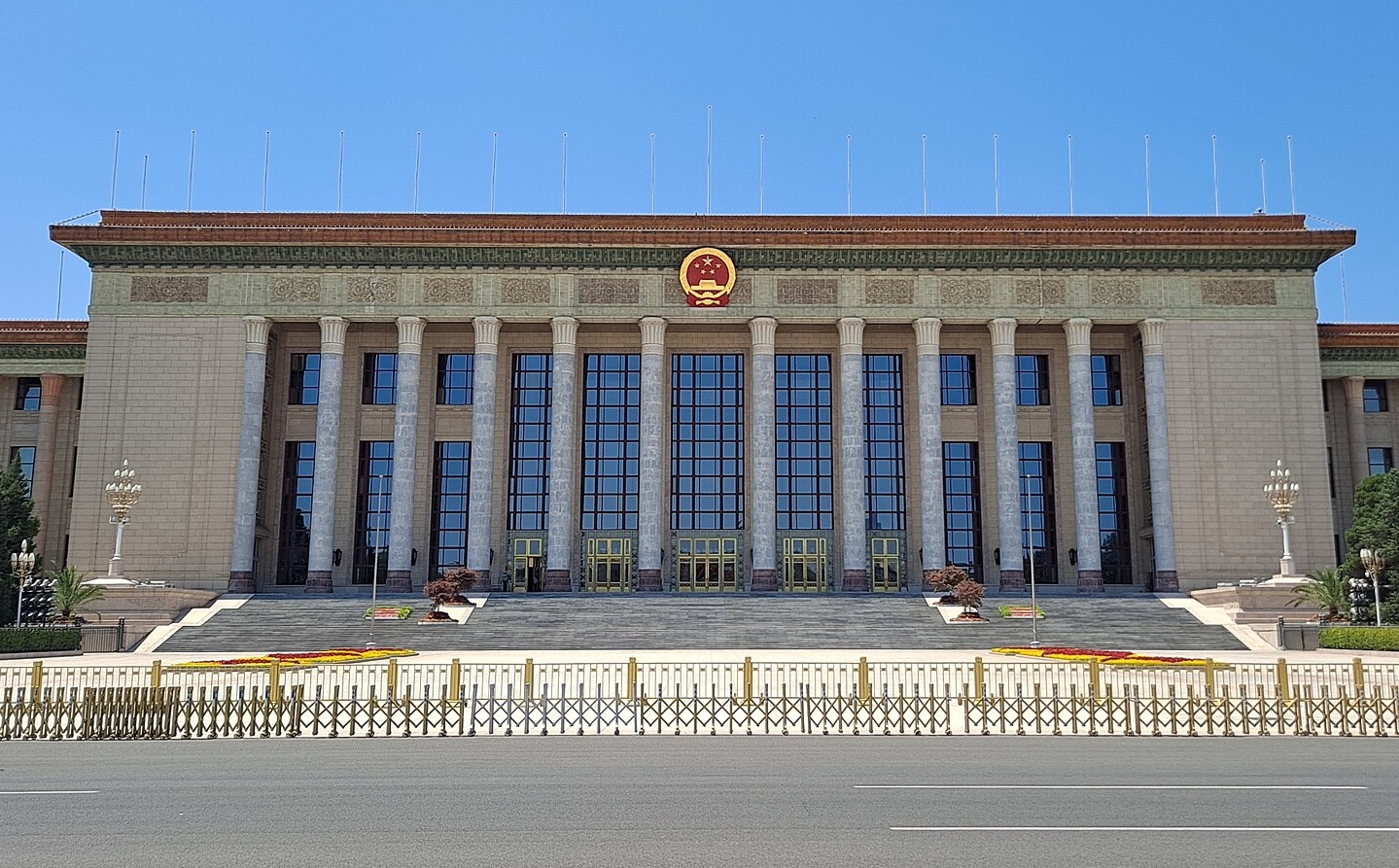
Image source: EditQ, CC BY-SA 4.0, via Wikimedia Commons.
For Southeast Asian governments, the evolving geoeconomic strategy emerging from China’s 2026 Two Sessions presents both opportunities and challenges. On the one hand, Chinese investment and technological partnerships can support industrial upgrading and infrastructure development. The relocation of manufacturing and the expansion of new industries such as electric vehicles and renewable energy could create significant economic opportunities for the region. On the other hand, deeper integration into Chinese economic networks may also increase dependence on Chinese technology, capital and markets. For Southeast Asia, navigating this evolving landscape will be one of the defining economic and strategic challenges of the coming decade.
Xue Gong is Assistant Professor and Deputy Coordinator of the China Programme, S. Rajaratnam School of International Studies (RSIS).
KEY TAKEAWAYS
• China’s 2026 “Two Sessions” show its continuous yet consequential shift towards slower but more resilient and sustainable growth, technological self-reliance and stronger domestic demand.
• China is increasingly externalising parts of its industrial ecosystem to Southeast Asia, turning the region into a nearshore production platform.
COMMENTARY
China’s annual “Two Sessions” (Lianghui) meetings of the National People’s Congress and the Chinese People’s Political Consultative Conference are often viewed as highly significant political events that formalise decisions made by the leadership. Discussing the 15th Five-Year Plan (2026–2030) amid intensifying geopolitical tensions, followed by sanctions and economic fragmentation, the 2026 meetings signal a deeper transformation of China’s economic strategy. As the country restructures its growth model and recalibrates its external economic relations, Southeast Asia is likely to become an even more important arena for China’s geoeconomic plan.
China’s Domestic Focus
The main event at China’s Two Sessions typically is the Government Work Report (hereafter, “Report”) delivered by the prime minister, which presents a review of the preceding year’s performance and outlines the policy agenda and economic targets for the year ahead. One of the most notable messages from the 2026 Two Sessions is the government’s lower growth target of around 4.5–5%, the lowest target China has set in decades. This adjustment reflects structural changes in the Chinese economy to focus on “high-quality development” (gaozhiliang fazhan) due to the prolonged downturn in the property sector, demographic pressures and slowing productivity growth. Based on the Report presented by Prime Minister Li Qiang, this concept refers to building a more resilient and technologically advanced economy capable of withstanding external pressures.
The draft outline of China’s 15th Five-Year Plan reflects this strategic shift. The Chinese government has stipulated 20 key indicators for the new plan that prioritise strengthening domestic foundations in areas such as innovation capacity, social welfare, environmental sustainability and economic resilience.
As the Two Sessions press on, it is clear that Beijing continues to move towards high-quality, innovation-driven development that serves the goals of technological sovereignty, strengthening domestic demand, and geoeconomic resilience. Central to this strategy is the concept of “new quality productive forces”, first proposed by President Xi Jinping in 2023. The idea emphasises technological innovation, strategic emerging industries, and the development of new industrial ecosystems capable of driving long-term growth. The Report presented at this year’s Two Sessions emphasises industries such as advanced manufacturing, digital technologies, green energy and emerging industries, since these sectors are seen not only as engines of economic growth but also as critical components of national security in an era of technological competition.
A second key feature of the Report is the intensified focus on technological self-reliance. Over the past several years, export controls and technology restrictions imposed by the United States and its allies have exposed vulnerabilities in China’s technological ecosystem, particularly in semiconductors and advanced manufacturing equipment. As a result, Chinese policymakers have increasingly framed technological innovation as a strategic imperative.
The Report therefore prioritises continuous investments in areas such as artificial intelligence, quantum computing, advanced robotics, and next-generation telecommunications. State support for research and development, industrial policy initiatives, and government-backed investment funds are expected to continue expanding. For instance, the Report notes that the draft of the 15th Five-Year Plan proposes 109 major projects across six interlocked areas to advance strategic priorities, with new quality productive forces occupying 28 national projects. More importantly, the Report emphasises the alignment of talent cultivation with the needs of economic and social development and strengthening the cultivation of top-tier talent in innovation.
Another major theme of the 2026 Two Sessions Report is the effort to further strengthen domestic consumption or internal circulation. For decades, the Chinese state chose to integrate deeply into global supply chains, leveraged foreign technology and capital, and prioritised export-led growth. Over the past decades of geopolitical tensions and pushbacks revolving around the rise of China, Beijing has encountered numerous challenges in the form of sanctions, export controls and supply chain disruptions. The ongoing war involving Iran and the US operation to arrest Venezuelan President Nicolás Maduro in January 2026 have deepened China’s concerns over supply chain security. Against this background, it is not surprising that the strategy emerging from the Report emphasises resilience, in particular food, energy, cyber and finance security.
Beyond Domestic: Externalising China’s Economic System to Nearby Regions
A closer reading of the signals emerging from the 2026 Two Sessions suggests that China is not simply reforming and strengthening its domestic economy against global volatility. Instead, it is increasingly externalising parts of its economic ecosystem to nearby regions, through facilitation of financial, trade and technology diffusion. Southeast Asia appears particularly attractive for this strategy due to its geographic proximity, growing consumer markets and relatively deep integration with global trade networks. Moreover, for Beijing, the region offers both a buffer against geopolitical pressures and a platform for sustaining some level of export-oriented growth.
To support such a strategy, Beijing has doubled down on cultivating relations with Southeast Asia. The Report’s emphasis on “inclusive economic globalisation” and an “orderly multipolar world” signals the institutional and governance groundwork Beijing has laid to externalise parts of its domestic economic ecosystem to nearby regions, particularly Southeast Asia.
First, China has already built regional partnership frameworks that facilitate deeper economic integration with neighbouring economies. In addition to the Belt and Road Initiative, which forged infrastructure cooperation, industrial parks and cross-border investment platforms, Beijing has strengthened regional connectivity by signing the enhanced ASEAN-China Free Trade Area (ACFTA) and joining regional mega free trade agreements such as the Regional Comprehensive Economic Partnership (RCEP). Through this economic diplomacy, Chinese supply chains, firms and production networks are poised to expand into Southeast Asia.
Take the renewable energy industry, for instance. Chinese firms are relocating labour-intensive manufacturing and politically sensitive segments of green technology supply chains, such as electric vehicles, batteries and solar panels, to neighbouring countries including Vietnam, Thailand and Indonesia under the auspices of China’s active state-backed economic diplomacy. This emerging manufacturing and supply chain structure allows China to preserve industrial competitiveness while adapting to rising domestic labour costs and external trade barriers.
Second, China has promoted alternative financial infrastructures to support this outward expansion. The growing use of Chinese stablecoins, digital payment systems and cross-border RMB settlement mechanisms allows Chinese firms operating abroad to transact through financial channels less dependent on Western-dominated systems. This trend aligns with the 2026 Two Sessions’ emphasis on economic security and financial risk prevention. Chinese policymakers increasingly view the global financial system as a potential source of geopolitical vulnerability, particularly given the growing Western use of sanctions, export controls and financial restrictions in international disputes. The drive to expand RMB-based and digital financial networks is designed to reduce China’s exposure to sanctions, dollar-clearing restrictions and other financial pressures arising from geopolitical considerations.
At the same time, the expansion of these financial infrastructures supports China’s broader strategy of externalising parts of its economic ecosystem to nearby regions. As Chinese firms invest in the manufacturing and technology sectors across Southeast Asia, financial transactions increasingly flow through Chinese-linked banking systems, payment platforms and settlement channels. This trend enables firms operating abroad to remain embedded within Chinese financial networks even as production shifts geographically.
The third critical dimension emphasised in the Report is China’s technological self-reliance. The governance practices that Beijing has been developing to boost its technological self-reliance are aligned closely with the broader strategic language in the Report, which stresses support for reform of the global governance system.
For instance, over the past decade, China has actively promoted new governance frameworks in the digital domain, one of the important aspects of the new quality productive force. These include initiatives such as the Global Data Security Initiative and the Global AI Governance Initiative. By promoting these rules and norms internationally, China seeks to influence how technological standards evolve in emerging economies. This governance agenda also facilitates the outward expansion of China’s domestic digital and industrial ecosystems. Chinese firms exporting digital infrastructure, e-commerce platforms, cloud services, smart logistics systems and fintech often bring with them technical standards, regulatory practices and data infrastructure that reflect China’s domestic governance model. In Southeast Asia, where many countries are developing digital economies, Chinese platforms and technologies can shape operational norms in areas such as digital payments, data storage and platform governance.
Implications for Regional Policy
The 2026 Two Sessions marks an important moment in the evolution of China’s economic strategy. In this emerging Chinese domestic economic architecture, Southeast Asia functions as both a manufacturing platform and a strategic interface between China and the global economy. As China restructures its economic model and external economic engagement, the region is likely to become an increasingly important arena for Chinese investment, technological cooperation and geoeconomic influence.
Image source: EditQ, CC BY-SA 4.0, via Wikimedia Commons.
For Southeast Asian governments, the evolving geoeconomic strategy emerging from China’s 2026 Two Sessions presents both opportunities and challenges. On the one hand, Chinese investment and technological partnerships can support industrial upgrading and infrastructure development. The relocation of manufacturing and the expansion of new industries such as electric vehicles and renewable energy could create significant economic opportunities for the region. On the other hand, deeper integration into Chinese economic networks may also increase dependence on Chinese technology, capital and markets. For Southeast Asia, navigating this evolving landscape will be one of the defining economic and strategic challenges of the coming decade.
Xue Gong is Assistant Professor and Deputy Coordinator of the China Programme, S. Rajaratnam School of International Studies (RSIS).