


11 March 2026
IP26040 | Beyond Building Ships: Lessons from the UK for Indonesia’s Naval Ambitions

KEY TAKEAWAYS
• The launch of Indonesia’s first Merah Putih-class frigate is a significant step towards strengthening domestic naval shipbuilding. However, maintaining these capabilities depends on long-term industrial continuity, not isolated, one-off successes.
• The United Kingdom’s experience suggests that irregular acquisition cycles and inconsistent industrial policy can, over time, weaken even established shipbuilding sectors. This highlights the importance of sustained demand and coordinated planning.
• To strengthen its naval-industrial ecosystem, Indonesia may benefit from reforms to its fragmented defence procurement process, improved inter-agency coordination, and the development of a more coherent long-term shipbuilding strategy.
COMMENTARY
The launch of Indonesia’s first domestically built Merah Putih-class frigate in late 2025 marks a notable achievement in revitalising the nation’s naval shipbuilding capabilities. Over the past decade, technology transfer initiatives involving naval craft such as submarines and landing platform docks (LPDs) have shown Indonesia’s strategic commitment to building a domestic naval-industrial ecosystem. The Merah Putih-class frigate forms part of a broader aspiration to gradually reduce reliance on foreign suppliers and establish a sovereign industrial base capable of producing advanced naval platforms.
However, Indonesia’s ambition to develop a robust national shipbuilding capacity raises a critical question: to what extent can Indonesia build the sustained industrial foundations needed for long-term viability and avoid some of the pitfalls that have undermined other countries? Experiences elsewhere, particularly in the United Kingdom, suggest that a healthy naval shipbuilding ecosystem benefits from sustained industrial investment and a long-term commitment to ensuring a predictable procurement cycle and retaining expertise. In the absence of these core elements, initial successes risk fading as capabilities decline and progress stalls over time. This concern appears particularly relevant for Indonesia, where fragmented procurement processes and inconsistent acquisition patterns have at times complicated efforts to develop and sustain domestic shipbuilding capacity.
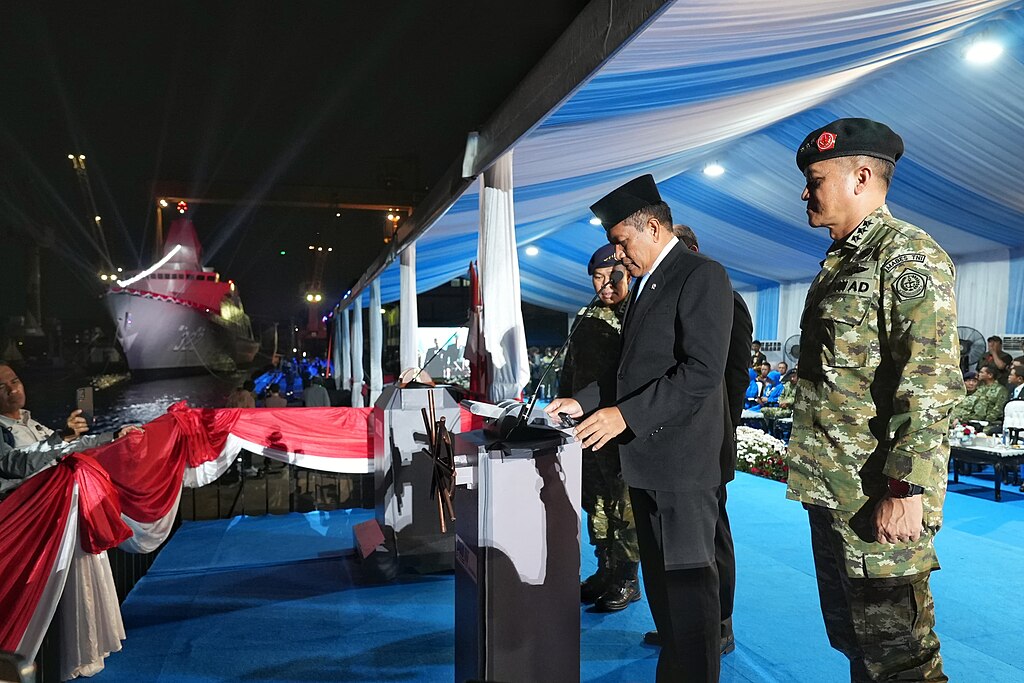
Image source: Wikimedia Commons.
The UK Experience
The United Kingdom’s recent experience serves as a cautionary example of the consequences of failing to support naval ambition with consistent, long-term industrial policy. Despite its longstanding expertise in warship and submarine construction, the United Kingdom has struggled to deliver new surface combatants and submarines for the Royal Navy on schedule. These delays have contributed to capability gaps and increased strain on the ageing fleet, with some ships remaining in service beyond their intended lifespans and overall force availability being affected.
These challenges are the cumulative result of decades of underinvestment in the United Kingdom’s shipbuilding base since the end of the Cold War, exacerbated by irregular procurement cycles and a lack of long-term production certainty. As orders became more sporadic, shipyards could not sustain skilled workforces or invest in critical infrastructure, including new dry docks, covered building halls and modern production facilities.
This prolonged underinvestment seems to have eroded both the physical capacity to build the required ships and the institutional knowledge necessary for warship design. As experienced engineers, naval architects and specialist trades left the sector due to a lack of new orders, the broader shipbuilding ecosystem became weakened. This was particularly evident during the early stages of the Astute-class submarine programme, when the depletion of the design workforce at BAE Systems’ manufacturing hub in the town of Barrow-in-Furness meant that the company had to relearn essential integration and design skills, contributing to significant delays and cost overruns. These challenges were exacerbated by the Royal Navy’s demand for highly advanced, bespoke platforms, which increased design complexity and intensified workforce pressures.
The strategic consequences of this industrial decline have been considerable. Delays in both the Type 26 and Type 31 frigate programmes are projected to create a “frigate gap” extending beyond the 2030s, as the ageing Type 23s are retired. This will place additional strain on the remaining fleet, accelerate wear and tear, and reduce overall readiness. Concurrently, limited dock availability and shortages of skilled maintenance personnel have further undermined force readiness. Collectively, these constraints have diminished the Royal Navy’s ability to generate sea power and sustain a consistent overseas presence, thereby increasing reliance on allied navies to address operational gaps.
Indonesia’s Structural Constraints
Despite Indonesia’s substantial industrial ambitions, institutional and structural factors related to defence procurement have continued to hinder the development of a sovereign naval-industrial base. The main challenge is the lack of a coherent, long-term naval acquisition strategy – especially after the expiry of the Minimum Essential Force (MEF) – which has contributed to irregular procurement cycles. Without such strategic plans in place, arms procurement decisions are often shaped by annual budget constraints and shifting government priorities instead. As a result, ship orders are often placed in small, irregular batches, sometimes creating “mini-classes” of a small number of vessels.
This intermittent procurement pattern complicates Indonesia’s efforts to strengthen its naval shipbuilding capabilities. In the absence of a sustained and predictable flow of orders, domestic shipyards may find it difficult to justify major capital investments or modernise production lines. In the face of such uncertain job prospects, skilled welders, engineers, and naval architects could then choose to seek employment in other sectors, which contributes to the decline of the shipbuilding industry, as has been observed in the United Kingdom.
These patterns reflect not only technical limitations but also the fragmented structure of Indonesia’s defence procurement system. Acquisition authority is spread among ministries, military services, state-owned enterprises and political actors, each with its own interests and preferred suppliers. The Ministry of Defence, the Ministry of State-Owned Enterprises, armed services, parliamentary commissions, and other agencies involved in procurement processes may at times pursue different agendas, while each service maintains its own procurement preferences and international partnerships.
This fragmentation tends to create a procurement environment shaped by bureaucratic negotiation and sectoral competition. Political and organisational incentives can prioritise short-term visibility over sustained industrial planning. As a result, Indonesia faces significant challenges in aligning what the navy needs for its fleet modernisation with the industrial strategies and policies to support them. In this context, achieving and maintaining continuity becomes especially difficult.
Learning from the UK experience
To avoid repeating the United Kingdom’s experience, Indonesia needs to treat naval shipbuilding as a long-term national effort rather than merely a series of isolated projects negotiated through fragmented channels. Developing sovereign capability requires more than symbolic achievements or procurement-driven technology transfer. It also benefits from strategic coherence, which is more likely to be achieved through a consistent naval shipbuilding and procurement strategy and an industrial roadmap spanning decades rather than just electoral cycles.
A credible long-term shipbuilding strategy would help shipyards invest in infrastructure, retain skilled personnel, strengthen domestic supply chains, and build expertise across multiple programmes. Such a strategy could also help mitigate the political and bureaucratic fragmentation that currently shapes procurement decisions, creating a more stable environment for industrial development.
The construction of Indonesia’s first Merah Putih-class frigate demonstrates the nation’s capacity to undertake complex naval projects. Whether this becomes the foundation for a sovereign naval-industrial ecosystem or remains an isolated success will depend on Indonesia’s ability to maintain continuity, coordination and long-term planning. If Jakarta can align its ambitious goals with a more disciplined industrial strategy, it may be well placed to build not just ships but an enduring national capability. Without such alignment, however, there is a risk that progress could slip back into the kind of intermittent momentum that has hindered other nations.
Joseph Kristanto is a Research Analyst with the Maritime Security Programme, S. Rajaratnam School of International Studies (RSIS).
KEY TAKEAWAYS
• The launch of Indonesia’s first Merah Putih-class frigate is a significant step towards strengthening domestic naval shipbuilding. However, maintaining these capabilities depends on long-term industrial continuity, not isolated, one-off successes.
• The United Kingdom’s experience suggests that irregular acquisition cycles and inconsistent industrial policy can, over time, weaken even established shipbuilding sectors. This highlights the importance of sustained demand and coordinated planning.
• To strengthen its naval-industrial ecosystem, Indonesia may benefit from reforms to its fragmented defence procurement process, improved inter-agency coordination, and the development of a more coherent long-term shipbuilding strategy.
COMMENTARY
The launch of Indonesia’s first domestically built Merah Putih-class frigate in late 2025 marks a notable achievement in revitalising the nation’s naval shipbuilding capabilities. Over the past decade, technology transfer initiatives involving naval craft such as submarines and landing platform docks (LPDs) have shown Indonesia’s strategic commitment to building a domestic naval-industrial ecosystem. The Merah Putih-class frigate forms part of a broader aspiration to gradually reduce reliance on foreign suppliers and establish a sovereign industrial base capable of producing advanced naval platforms.
However, Indonesia’s ambition to develop a robust national shipbuilding capacity raises a critical question: to what extent can Indonesia build the sustained industrial foundations needed for long-term viability and avoid some of the pitfalls that have undermined other countries? Experiences elsewhere, particularly in the United Kingdom, suggest that a healthy naval shipbuilding ecosystem benefits from sustained industrial investment and a long-term commitment to ensuring a predictable procurement cycle and retaining expertise. In the absence of these core elements, initial successes risk fading as capabilities decline and progress stalls over time. This concern appears particularly relevant for Indonesia, where fragmented procurement processes and inconsistent acquisition patterns have at times complicated efforts to develop and sustain domestic shipbuilding capacity.
Image source: Wikimedia Commons.
The UK Experience
The United Kingdom’s recent experience serves as a cautionary example of the consequences of failing to support naval ambition with consistent, long-term industrial policy. Despite its longstanding expertise in warship and submarine construction, the United Kingdom has struggled to deliver new surface combatants and submarines for the Royal Navy on schedule. These delays have contributed to capability gaps and increased strain on the ageing fleet, with some ships remaining in service beyond their intended lifespans and overall force availability being affected.
These challenges are the cumulative result of decades of underinvestment in the United Kingdom’s shipbuilding base since the end of the Cold War, exacerbated by irregular procurement cycles and a lack of long-term production certainty. As orders became more sporadic, shipyards could not sustain skilled workforces or invest in critical infrastructure, including new dry docks, covered building halls and modern production facilities.
This prolonged underinvestment seems to have eroded both the physical capacity to build the required ships and the institutional knowledge necessary for warship design. As experienced engineers, naval architects and specialist trades left the sector due to a lack of new orders, the broader shipbuilding ecosystem became weakened. This was particularly evident during the early stages of the Astute-class submarine programme, when the depletion of the design workforce at BAE Systems’ manufacturing hub in the town of Barrow-in-Furness meant that the company had to relearn essential integration and design skills, contributing to significant delays and cost overruns. These challenges were exacerbated by the Royal Navy’s demand for highly advanced, bespoke platforms, which increased design complexity and intensified workforce pressures.
The strategic consequences of this industrial decline have been considerable. Delays in both the Type 26 and Type 31 frigate programmes are projected to create a “frigate gap” extending beyond the 2030s, as the ageing Type 23s are retired. This will place additional strain on the remaining fleet, accelerate wear and tear, and reduce overall readiness. Concurrently, limited dock availability and shortages of skilled maintenance personnel have further undermined force readiness. Collectively, these constraints have diminished the Royal Navy’s ability to generate sea power and sustain a consistent overseas presence, thereby increasing reliance on allied navies to address operational gaps.
Indonesia’s Structural Constraints
Despite Indonesia’s substantial industrial ambitions, institutional and structural factors related to defence procurement have continued to hinder the development of a sovereign naval-industrial base. The main challenge is the lack of a coherent, long-term naval acquisition strategy – especially after the expiry of the Minimum Essential Force (MEF) – which has contributed to irregular procurement cycles. Without such strategic plans in place, arms procurement decisions are often shaped by annual budget constraints and shifting government priorities instead. As a result, ship orders are often placed in small, irregular batches, sometimes creating “mini-classes” of a small number of vessels.
This intermittent procurement pattern complicates Indonesia’s efforts to strengthen its naval shipbuilding capabilities. In the absence of a sustained and predictable flow of orders, domestic shipyards may find it difficult to justify major capital investments or modernise production lines. In the face of such uncertain job prospects, skilled welders, engineers, and naval architects could then choose to seek employment in other sectors, which contributes to the decline of the shipbuilding industry, as has been observed in the United Kingdom.
These patterns reflect not only technical limitations but also the fragmented structure of Indonesia’s defence procurement system. Acquisition authority is spread among ministries, military services, state-owned enterprises and political actors, each with its own interests and preferred suppliers. The Ministry of Defence, the Ministry of State-Owned Enterprises, armed services, parliamentary commissions, and other agencies involved in procurement processes may at times pursue different agendas, while each service maintains its own procurement preferences and international partnerships.
This fragmentation tends to create a procurement environment shaped by bureaucratic negotiation and sectoral competition. Political and organisational incentives can prioritise short-term visibility over sustained industrial planning. As a result, Indonesia faces significant challenges in aligning what the navy needs for its fleet modernisation with the industrial strategies and policies to support them. In this context, achieving and maintaining continuity becomes especially difficult.
Learning from the UK experience
To avoid repeating the United Kingdom’s experience, Indonesia needs to treat naval shipbuilding as a long-term national effort rather than merely a series of isolated projects negotiated through fragmented channels. Developing sovereign capability requires more than symbolic achievements or procurement-driven technology transfer. It also benefits from strategic coherence, which is more likely to be achieved through a consistent naval shipbuilding and procurement strategy and an industrial roadmap spanning decades rather than just electoral cycles.
A credible long-term shipbuilding strategy would help shipyards invest in infrastructure, retain skilled personnel, strengthen domestic supply chains, and build expertise across multiple programmes. Such a strategy could also help mitigate the political and bureaucratic fragmentation that currently shapes procurement decisions, creating a more stable environment for industrial development.
The construction of Indonesia’s first Merah Putih-class frigate demonstrates the nation’s capacity to undertake complex naval projects. Whether this becomes the foundation for a sovereign naval-industrial ecosystem or remains an isolated success will depend on Indonesia’s ability to maintain continuity, coordination and long-term planning. If Jakarta can align its ambitious goals with a more disciplined industrial strategy, it may be well placed to build not just ships but an enduring national capability. Without such alignment, however, there is a risk that progress could slip back into the kind of intermittent momentum that has hindered other nations.
Joseph Kristanto is a Research Analyst with the Maritime Security Programme, S. Rajaratnam School of International Studies (RSIS).