


12 March 2026
IP26041 | Beyond Food Resilience: The Indonesian Army’s Territorial Development Battalions

KEY TAKEAWAYS
• The establishment of Territorial Development Battalions in the Indonesian Army underscores the military’s role not only as a defender of Indonesia, but also as a collaborative partner in developing the country.
• The battalions ensure the Indonesian military’s consistent presence and outreach across the Indonesian archipelago, aiming to reduce response time to both traditional and non-traditional threats.
• The establishment of the battalions faces potential challenges, namely inadequate infrastructure, unmet personnel requirements, and the need for operational guidelines.
COMMENTARY
On 10 August 2025, Indonesian President Prabowo Subianto launched 100 Territorial Development Battalions (Batalyon Teritorial Pembangunan, BTP), alongside six new military regional commands (Kodams), 20 territorial development brigades, five navy marine corps battalions, and five commando battalions of the air force’s Rapid Response Force Corps (Kopasgat). Subsequently, Defence Minister Sjafrie Sjamsoeddin outlined the government’s intention to establish 750 BTPs in the next five years, with 150 new battalions to be set up each year. Sjafrie indicated that the aim was to have at least one BTP for each of Indonesia’s 514 regencies. The formation of BTPs in each regency is in line with the Indonesian Army (TNI-AD)’s plan to establish one Kodam for each province.
Prabowo mandated the BTP for handling a wide range of duties, ranging from supporting the food resilience programme to providing health services for the population. The president has repeatedly voiced the importance of self-sufficiency, notably in food and energy. This ambition of attaining self-sufficiency was highlighted in his inaugural presidential speech to the Indonesian parliament on 20 October 2024. TNI itself has been playing an important role in supporting Prabowo’s domestic agenda. One notable example is its role in his signature Free Nutritious Meal Programme (MBG).
From a Defender to a Collaborative Partner in Development
The BTP underscores TNI’s role not only as a defender of Indonesia, but also as a collaborative partner in developing Indonesia. Hence, the BTP reinforces TNI’s identity as a “people’s army”. The Indonesian military is no stranger to non-combat roles. TNI emphasises the importance of the synergy between the military and the population, which is reflected in the Kemanunggalan TNI dan Rakyat (the unity between TNI and the people) slogan. Here, the BTP serves as a tool to support this ideal. Each BTP comprises a number of companies that handle not only food production-related matters, but also health services, engineering and combat. The existence of these various military sub-units showcases the all-encompassing nature of the BTP.
Including a health services company in each BTP is in line with the Indonesian government’s plan to involve TNI in its efforts to strengthen the national health system, particularly in times of a pandemic and in the border areas. Meanwhile, the inclusion of a company for engineering (or zeni, a Bahasa Indonesia term derived from genie, the idiomatic Dutch expression for elite army engineers) is intended to cater to the needs of rural populations facing underdevelopment challenges, notably connectivity.
Sjafrie outlined the role of the BTP as a symbol of the state’s presence across the archipelago. Beyond the aforesaid civic responsibilities, the BTP is also positioned as a tool to enhance security and stability, particularly in remote regions such as Papua. The Indonesian army itself has been employing a “smart approach” in dealing with instability in Papua, combining security operations with community engagement to counter security threats. In this context, the BTP will play a pivotal role in ensuring operational efficacy. The BTP’s ability to implement a two-pronged strategy of security and civic operations will come in handy. In times of active security operations, the BTP can serve either as a supporting or front-line unit.
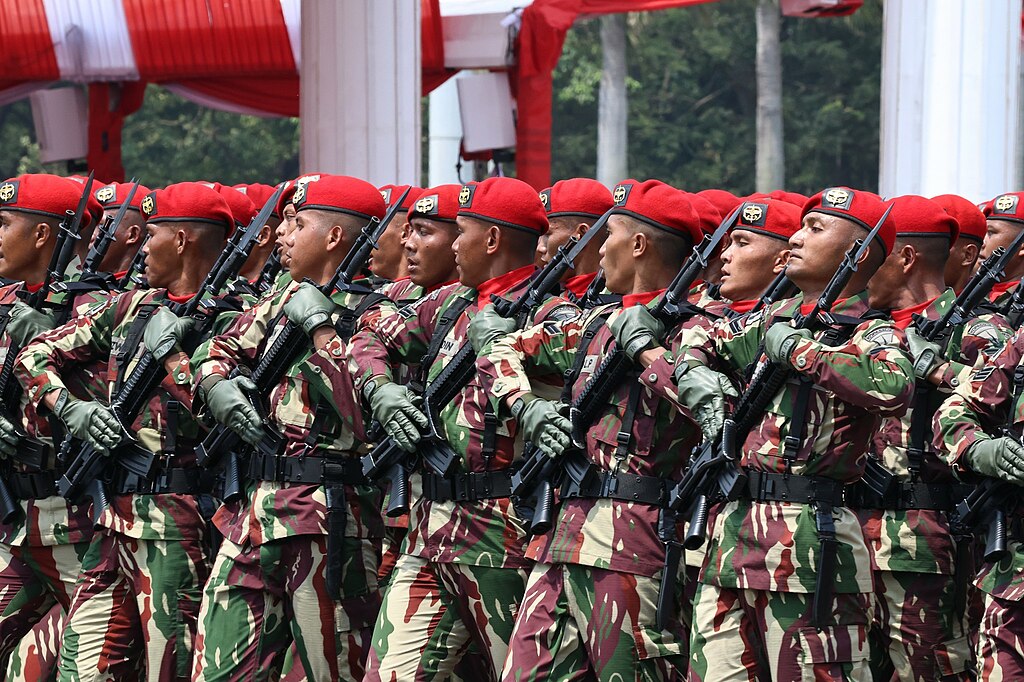
Image source: Wikimedia Commons.
The deployment of BTPs across the Indonesian archipelago is intended to bolster the readiness of TNI, particularly the army, with a view to reducing response times to both traditional and non-traditional threats and ensuring that no area is left exposed. This aim aligns with an ideal in Prabowo’s Nusantara Trident Shield strategy, which envisions a flexible and agile military capable of addressing a wide range of threats, including terrorism and climate-related crises.
Challenges for BTP: Infrastructure, Personnel and Operational Guidelines
Despite the potential usefulness of the BTP, its realisation is an ambitious plan entailing a number of challenges. First and foremost, the establishment of new military units requires infrastructural support. The plan to establish BTPs across all regencies in Indonesia would require installing the necessary infrastructure across an immense land area. Moreover, building a new military compound necessitates good communication with the local population. Failure to engage with the people might undermine the plan, as had happened in Biak, Papua Province.
Fulfilling the manpower requirements for the BTPs presents another significant challenge. The number of BTP companies, as well as the placement of the battalions in each of Indonesia’s regencies, signals the need for a large workforce. Meeting this substantial personnel requirement entails not only filling quotas but also finding individuals with the right talents for the necessary duties.
The next task for the authorities is the formulation of proper operational guidelines for the deployment of BTPs. Given the all-encompassing capabilities and nationwide presence of BTPs, there could be a risk of their being overused. Thus, laying down proper guidance for the utilisation of BTPs is paramount. Proper operational guidelines might mitigate the risk of falling into a “when you have a hammer, everything looks like a nail” situation, in which the battalion is deployed reflexively rather than strategically. TNI itself already faces a potential defence overstretch dilemma as the Prabowo administration has been deploying the military in a wide range of situations. Hence, the risk of overusing the BTP is a real challenge.
The existence of the BTP must also be synchronised with TNI’s progress in arms modernisation. Under the Minimum Essential Force (MEF) programme, the Indonesian Army has acquired a number of cutting-edge military platforms, such as Leopard main battle tanks, Harimau medium tanks and AH-64E Apache helicopters. The existence of BTPs should not detract from the army’s readiness and mastery of its newly procured armament. Budgeting for the BTPs should also be carefully calibrated with spending on arms modernisation in order to ensure effective utilisation of state resources. Such synchronisation will ensure the operational capabilities and readiness of the BTPs while at the same time reducing any negative impact on TNI’s arms modernisation process.
Rodon Pedrason is an Associate Professor with the Defence Strategic Study Program at Republic of Indonesia Defence University (RIDU). He was a Visiting Senior Fellow with the Indonesia Programme at the S. Rajaratnam School of International Studies (RSIS). Adhi Priamarizki is a Research Fellow with the Indonesia Programme, RSIS.
KEY TAKEAWAYS
• The establishment of Territorial Development Battalions in the Indonesian Army underscores the military’s role not only as a defender of Indonesia, but also as a collaborative partner in developing the country.
• The battalions ensure the Indonesian military’s consistent presence and outreach across the Indonesian archipelago, aiming to reduce response time to both traditional and non-traditional threats.
• The establishment of the battalions faces potential challenges, namely inadequate infrastructure, unmet personnel requirements, and the need for operational guidelines.
COMMENTARY
On 10 August 2025, Indonesian President Prabowo Subianto launched 100 Territorial Development Battalions (Batalyon Teritorial Pembangunan, BTP), alongside six new military regional commands (Kodams), 20 territorial development brigades, five navy marine corps battalions, and five commando battalions of the air force’s Rapid Response Force Corps (Kopasgat). Subsequently, Defence Minister Sjafrie Sjamsoeddin outlined the government’s intention to establish 750 BTPs in the next five years, with 150 new battalions to be set up each year. Sjafrie indicated that the aim was to have at least one BTP for each of Indonesia’s 514 regencies. The formation of BTPs in each regency is in line with the Indonesian Army (TNI-AD)’s plan to establish one Kodam for each province.
Prabowo mandated the BTP for handling a wide range of duties, ranging from supporting the food resilience programme to providing health services for the population. The president has repeatedly voiced the importance of self-sufficiency, notably in food and energy. This ambition of attaining self-sufficiency was highlighted in his inaugural presidential speech to the Indonesian parliament on 20 October 2024. TNI itself has been playing an important role in supporting Prabowo’s domestic agenda. One notable example is its role in his signature Free Nutritious Meal Programme (MBG).
From a Defender to a Collaborative Partner in Development
The BTP underscores TNI’s role not only as a defender of Indonesia, but also as a collaborative partner in developing Indonesia. Hence, the BTP reinforces TNI’s identity as a “people’s army”. The Indonesian military is no stranger to non-combat roles. TNI emphasises the importance of the synergy between the military and the population, which is reflected in the Kemanunggalan TNI dan Rakyat (the unity between TNI and the people) slogan. Here, the BTP serves as a tool to support this ideal. Each BTP comprises a number of companies that handle not only food production-related matters, but also health services, engineering and combat. The existence of these various military sub-units showcases the all-encompassing nature of the BTP.
Including a health services company in each BTP is in line with the Indonesian government’s plan to involve TNI in its efforts to strengthen the national health system, particularly in times of a pandemic and in the border areas. Meanwhile, the inclusion of a company for engineering (or zeni, a Bahasa Indonesia term derived from genie, the idiomatic Dutch expression for elite army engineers) is intended to cater to the needs of rural populations facing underdevelopment challenges, notably connectivity.
Sjafrie outlined the role of the BTP as a symbol of the state’s presence across the archipelago. Beyond the aforesaid civic responsibilities, the BTP is also positioned as a tool to enhance security and stability, particularly in remote regions such as Papua. The Indonesian army itself has been employing a “smart approach” in dealing with instability in Papua, combining security operations with community engagement to counter security threats. In this context, the BTP will play a pivotal role in ensuring operational efficacy. The BTP’s ability to implement a two-pronged strategy of security and civic operations will come in handy. In times of active security operations, the BTP can serve either as a supporting or front-line unit.
Image source: Wikimedia Commons.
The deployment of BTPs across the Indonesian archipelago is intended to bolster the readiness of TNI, particularly the army, with a view to reducing response times to both traditional and non-traditional threats and ensuring that no area is left exposed. This aim aligns with an ideal in Prabowo’s Nusantara Trident Shield strategy, which envisions a flexible and agile military capable of addressing a wide range of threats, including terrorism and climate-related crises.
Challenges for BTP: Infrastructure, Personnel and Operational Guidelines
Despite the potential usefulness of the BTP, its realisation is an ambitious plan entailing a number of challenges. First and foremost, the establishment of new military units requires infrastructural support. The plan to establish BTPs across all regencies in Indonesia would require installing the necessary infrastructure across an immense land area. Moreover, building a new military compound necessitates good communication with the local population. Failure to engage with the people might undermine the plan, as had happened in Biak, Papua Province.
Fulfilling the manpower requirements for the BTPs presents another significant challenge. The number of BTP companies, as well as the placement of the battalions in each of Indonesia’s regencies, signals the need for a large workforce. Meeting this substantial personnel requirement entails not only filling quotas but also finding individuals with the right talents for the necessary duties.
The next task for the authorities is the formulation of proper operational guidelines for the deployment of BTPs. Given the all-encompassing capabilities and nationwide presence of BTPs, there could be a risk of their being overused. Thus, laying down proper guidance for the utilisation of BTPs is paramount. Proper operational guidelines might mitigate the risk of falling into a “when you have a hammer, everything looks like a nail” situation, in which the battalion is deployed reflexively rather than strategically. TNI itself already faces a potential defence overstretch dilemma as the Prabowo administration has been deploying the military in a wide range of situations. Hence, the risk of overusing the BTP is a real challenge.
The existence of the BTP must also be synchronised with TNI’s progress in arms modernisation. Under the Minimum Essential Force (MEF) programme, the Indonesian Army has acquired a number of cutting-edge military platforms, such as Leopard main battle tanks, Harimau medium tanks and AH-64E Apache helicopters. The existence of BTPs should not detract from the army’s readiness and mastery of its newly procured armament. Budgeting for the BTPs should also be carefully calibrated with spending on arms modernisation in order to ensure effective utilisation of state resources. Such synchronisation will ensure the operational capabilities and readiness of the BTPs while at the same time reducing any negative impact on TNI’s arms modernisation process.
Rodon Pedrason is an Associate Professor with the Defence Strategic Study Program at Republic of Indonesia Defence University (RIDU). He was a Visiting Senior Fellow with the Indonesia Programme at the S. Rajaratnam School of International Studies (RSIS). Adhi Priamarizki is a Research Fellow with the Indonesia Programme, RSIS.