


17 March 2026
IP26045 | Southeast Asia amid China-Japan Tensions: A Difficult Path Ahead

KEY TAKEAWAYS
• Southeast Asia enjoys long-standing warm relations with Japan. However, with rising tensions in China-Japan relations, Beijing has begun pressuring the region to support its position against Tokyo, mostly using back-channel engagements rather than open demands.
• To secure the support of ASEAN countries, China has evoked historical memories of Japan’s wartime conduct. It has also tried to appeal to the value that ASEAN places on adherence to international law.
• ASEAN countries largely appear unreceptive to Chinese pressures as they maintain high levels of trust in Japan and have largely put historical grievances aside. However, China can be expected to continue to pressure these countries. Such pressures will continue to weigh heavily on the ASEAN countries’ strategic calculus.
COMMENTARY
In February 2026, a news report highlighted that, in the days following Japanese Prime Minister Sanae Takaichi’s controversial remarks regarding a possible Taiwan contingency, Beijing had convened a rare meeting with Southeast Asian envoys to urge support for its strident position against the Japanese premier’s comments. Takaichi had implied in a comment in parliament on 7 November 2025 that a Chinese attack on Taiwan could constitute a contingency necessitating a military response from Japan. However, the report noted that the meeting appeared to have had little impact on Southeast Asia’s interactions with Japan.
It is unknown which Southeast Asian envoys attended the meeting convened by Beijing. What is clear, however, is that only Myanmar has condemned Takaichi’s statement. No other Southeast Asian country is known to have directly criticised Takaichi or Japan.
What this episode demonstrated was China’s concerted effort to persuade ASEAN countries not only to refrain from crossing Beijing’s red lines, but also to support Beijing against those countries that do so.
Sharp Rise in China-Japan Tensions
Since Takaichi’s remarks addressed Taiwan, which Beijing considers to be at the “core of China’s core interests”, Beijing’s response has been strident and wide-ranging, including cancelling flights to Japan, suspending seafood imports from Japan and banning exports of dual-use items to Japan. Meanwhile, China conducted military exercises in the Yellow Sea in mid-November 2025 and around Taiwan at the end of December.
As a result of the freefall in China-Japan relations, the ASEAN countries’ room for manoeuvre between the two regional powers will be even more constrained. With Takaichi’s subsequent electoral victory and her refusal to retract her Taiwan statements as demanded by Beijing, China has shown little willingness to dial back its campaign to isolate Japan. For as long as Takaichi remains prime minister, China is likely to continue to pressure Japan, including by persuading other countries – such as those in Southeast Asia – to back its position against Japan. The Beijing meeting with Southeast Asian envoys highlights this campaign.
Southeast Asia-Japan Ties: Long-standing Friendship
Such pressures may complicate ASEAN countries’ long-standing friendly relations with Japan. After World War 2, Japan began paying reparations, mostly in the form of loans and grants, to Southeast Asian countries affected by its invasions. ASEAN and Japan first established informal dialogue relations as far back as in 1973. However, these interactions were initially strained by lingering memories of Japan’s wartime atrocities, even as ASEAN governments at the time sought to forge economic ties with Tokyo.
Relations, however, have improved over the decades, owing to Japan’s post-war overseas development aid (ODA) to Southeast Asia, as well as its efforts at peacebuilding in the region, including playing a key role in conflict resolution in Cambodia in the 1990s. By 2024, Japan was ASEAN’s fourth-largest trading partner and fifth-largest source of foreign direct investment.
Even in more sensitive areas such as defence cooperation, Japan has been an active partner, with the first ASEAN-Japan Defence Ministers Informal Meeting held in November 2014, and with Tokyo establishing the Japan-ASEAN Ministerial Initiative for Enhanced Defense Cooperation in 2023. Japan’s relevance as a defence partner for ASEAN countries has risen in recent years, with its provision of military equipment increasing, facilitated in part by the Official Security Assistance (OSA) scheme.
Nonetheless, Japan’s defence cooperation with ASEAN countries has remained at modest levels compared to that with its other strategic partners, owing to some ASEAN countries being less willing to engage in activities that Beijing may deem provocative.
Chinese Pressures on ASEAN Countries: Have They Worked?
How has China pushed Southeast Asia to support its stance against Japan? First, it has used historical memory as a rallying point – rhetoric that Beijing has often deployed to censure Japan. During China’s Victory Day Parade in September 2025, China’s ambassador to ASEAN, Hou Yanqi, wrote an article that invoked China and the ASEAN countries’ shared struggle against Japanese imperialism. With China-Japan tensions now high, China has also insisted that “Japanese militarism” was rising. During the Beijing meeting, Southeast Asian envoys were reportedly told that they should back China’s stance as their countries were all victims of Imperial Japan during World War 2.
Second, China has also appealed to the value that ASEAN places on adherence to international law and maintenance of regional peace. At a press conference on the sidelines of the Fourth Session of the 14th National People’s Congress on 8 March, Chinese Foreign Minister Wang Yi reaffirmed that Beijing’s proposed Global Governance Initiative (GGI) advocates international rule of law and multilateralism, among other principles. He also invoked Japanese wartime militarism when asked about China-Japan relations. China hopes to impress upon the international community, including Southeast Asian states, that Japan is likely to be a major player in disrupting the post-war global order.
However, with the exception of Myanmar’s military government, ASEAN countries have proven largely unreceptive to Chinese efforts to isolate Japan. This is mostly thanks to the significant goodwill that Japan has fostered in Southeast Asia. It is further aided by Tokyo’s tendency to avoid using coercive methods in engaging with ASEAN countries, as well as the lack of territorial disputes between Japan and ASEAN countries.
A 2025 survey by the ISEAS-Yusof Ishak Institute indicated that over 60% of Southeast Asian respondents expressed confidence in Japan “‘[doing] the right thing’ to contribute to global peace, security, prosperity, and governance”. The comparative figures for their confidence in China were not as rosy, standing at below 40%.
Moreover, most Southeast Asian governments have not actively inculcated anti-Japanese sentiments in their publics through their education systems and media. As Singapore’s Prime Minister, Lawrence Wong, highlighted during a public dialogue in November 2025, Southeast Asia has “put the history issue aside” with Japan and is focused on “moving forward”.
Implications for Southeast Asia and ASEAN
Warm relations between Japan and Southeast Asia will continue regardless of Chinese pressure. However, as Southeast Asia begins to feel the strains arising from the challenges to the international system wrought by the second Trump administration and diminishing trust in the United States due to Washington’s attacks on Venezuela and Iran, the pressure to accommodate Chinese interests could increase.
Any kind of cooperation with Japan, especially defence and security cooperation, would be viewed with suspicion by China as long as bilateral tensions continue and Taiwan remains a major flashpoint. China could use its mounting power and influence in the region to complicate cooperation with any country deemed to have crossed Beijing’s red lines. For example, Beijing has criticised the recent Acquisition and Cross-Servicing Agreement between the Philippines and Japan that allows for “reciprocal provision of supplies and services” between their militaries.
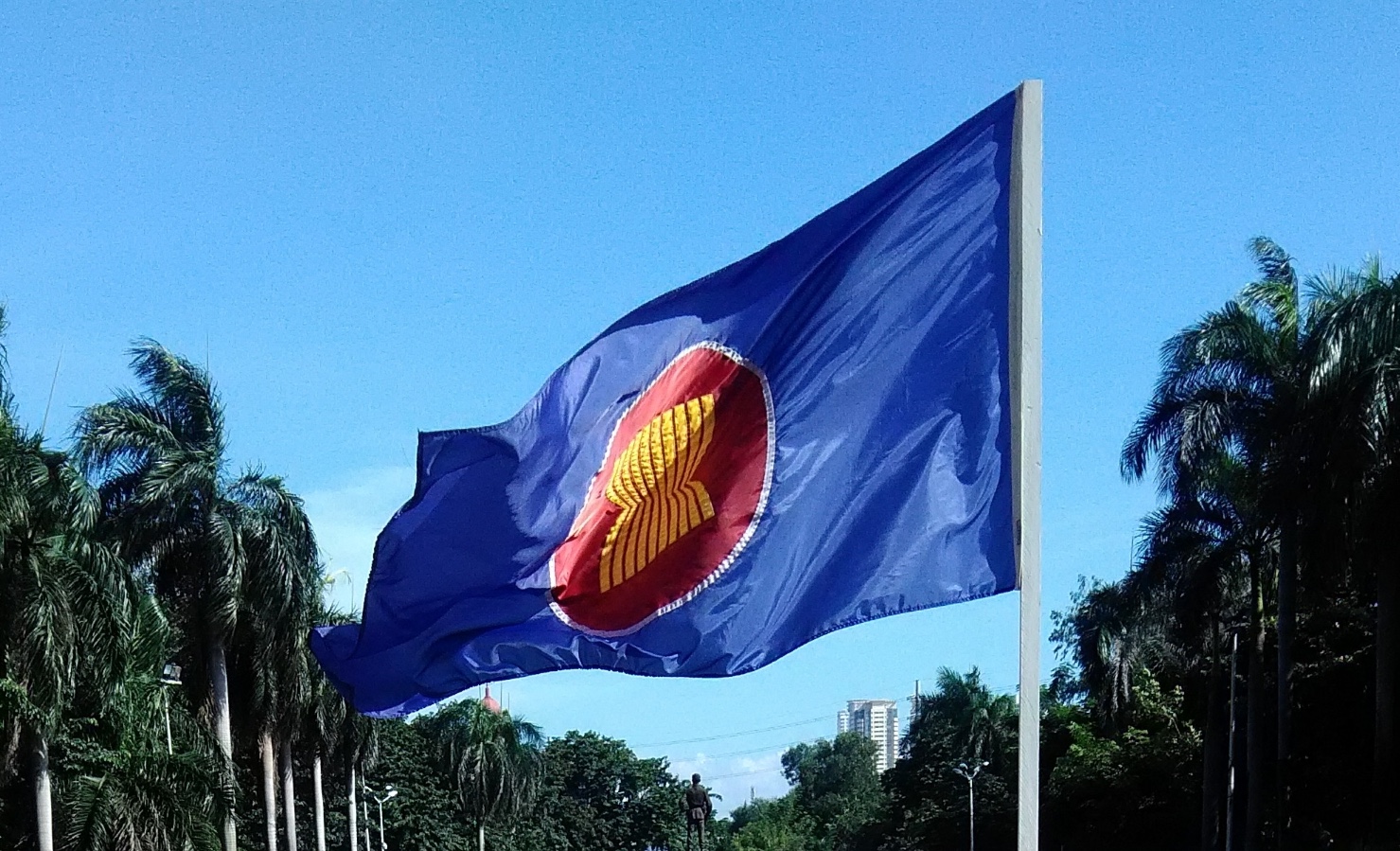
Image credit: Hariboneagle927, CC BY-SA 4.0, via Wikimedia Commons.
The potential for further fissures within an already divided ASEAN will also increase. It has been reported that China has repeatedly attempted to sow divisions within ASEAN over the South China Sea, complicating the grouping’s efforts to present a united position when negotiating with China, including over the long-delayed Code of Conduct. When it comes to Taiwan, or defence cooperation with Japan, China could do the same.
While ASEAN countries prefer to engage both China and Japan equally, tensions between Tokyo and Beijing will continue to weigh heavily on their strategic calculus. ASEAN’s key principle of taking no sides will be put to the test in the years to come.
Henrick Tsjeng is Associate Research Fellow with the Regional Security Architecture Programme, Institute of Defence and Strategic Studies, S. Rajaratnam School of International Studies (RSIS).
KEY TAKEAWAYS
• Southeast Asia enjoys long-standing warm relations with Japan. However, with rising tensions in China-Japan relations, Beijing has begun pressuring the region to support its position against Tokyo, mostly using back-channel engagements rather than open demands.
• To secure the support of ASEAN countries, China has evoked historical memories of Japan’s wartime conduct. It has also tried to appeal to the value that ASEAN places on adherence to international law.
• ASEAN countries largely appear unreceptive to Chinese pressures as they maintain high levels of trust in Japan and have largely put historical grievances aside. However, China can be expected to continue to pressure these countries. Such pressures will continue to weigh heavily on the ASEAN countries’ strategic calculus.
COMMENTARY
In February 2026, a news report highlighted that, in the days following Japanese Prime Minister Sanae Takaichi’s controversial remarks regarding a possible Taiwan contingency, Beijing had convened a rare meeting with Southeast Asian envoys to urge support for its strident position against the Japanese premier’s comments. Takaichi had implied in a comment in parliament on 7 November 2025 that a Chinese attack on Taiwan could constitute a contingency necessitating a military response from Japan. However, the report noted that the meeting appeared to have had little impact on Southeast Asia’s interactions with Japan.
It is unknown which Southeast Asian envoys attended the meeting convened by Beijing. What is clear, however, is that only Myanmar has condemned Takaichi’s statement. No other Southeast Asian country is known to have directly criticised Takaichi or Japan.
What this episode demonstrated was China’s concerted effort to persuade ASEAN countries not only to refrain from crossing Beijing’s red lines, but also to support Beijing against those countries that do so.
Sharp Rise in China-Japan Tensions
Since Takaichi’s remarks addressed Taiwan, which Beijing considers to be at the “core of China’s core interests”, Beijing’s response has been strident and wide-ranging, including cancelling flights to Japan, suspending seafood imports from Japan and banning exports of dual-use items to Japan. Meanwhile, China conducted military exercises in the Yellow Sea in mid-November 2025 and around Taiwan at the end of December.
As a result of the freefall in China-Japan relations, the ASEAN countries’ room for manoeuvre between the two regional powers will be even more constrained. With Takaichi’s subsequent electoral victory and her refusal to retract her Taiwan statements as demanded by Beijing, China has shown little willingness to dial back its campaign to isolate Japan. For as long as Takaichi remains prime minister, China is likely to continue to pressure Japan, including by persuading other countries – such as those in Southeast Asia – to back its position against Japan. The Beijing meeting with Southeast Asian envoys highlights this campaign.
Southeast Asia-Japan Ties: Long-standing Friendship
Such pressures may complicate ASEAN countries’ long-standing friendly relations with Japan. After World War 2, Japan began paying reparations, mostly in the form of loans and grants, to Southeast Asian countries affected by its invasions. ASEAN and Japan first established informal dialogue relations as far back as in 1973. However, these interactions were initially strained by lingering memories of Japan’s wartime atrocities, even as ASEAN governments at the time sought to forge economic ties with Tokyo.
Relations, however, have improved over the decades, owing to Japan’s post-war overseas development aid (ODA) to Southeast Asia, as well as its efforts at peacebuilding in the region, including playing a key role in conflict resolution in Cambodia in the 1990s. By 2024, Japan was ASEAN’s fourth-largest trading partner and fifth-largest source of foreign direct investment.
Even in more sensitive areas such as defence cooperation, Japan has been an active partner, with the first ASEAN-Japan Defence Ministers Informal Meeting held in November 2014, and with Tokyo establishing the Japan-ASEAN Ministerial Initiative for Enhanced Defense Cooperation in 2023. Japan’s relevance as a defence partner for ASEAN countries has risen in recent years, with its provision of military equipment increasing, facilitated in part by the Official Security Assistance (OSA) scheme.
Nonetheless, Japan’s defence cooperation with ASEAN countries has remained at modest levels compared to that with its other strategic partners, owing to some ASEAN countries being less willing to engage in activities that Beijing may deem provocative.
Chinese Pressures on ASEAN Countries: Have They Worked?
How has China pushed Southeast Asia to support its stance against Japan? First, it has used historical memory as a rallying point – rhetoric that Beijing has often deployed to censure Japan. During China’s Victory Day Parade in September 2025, China’s ambassador to ASEAN, Hou Yanqi, wrote an article that invoked China and the ASEAN countries’ shared struggle against Japanese imperialism. With China-Japan tensions now high, China has also insisted that “Japanese militarism” was rising. During the Beijing meeting, Southeast Asian envoys were reportedly told that they should back China’s stance as their countries were all victims of Imperial Japan during World War 2.
Second, China has also appealed to the value that ASEAN places on adherence to international law and maintenance of regional peace. At a press conference on the sidelines of the Fourth Session of the 14th National People’s Congress on 8 March, Chinese Foreign Minister Wang Yi reaffirmed that Beijing’s proposed Global Governance Initiative (GGI) advocates international rule of law and multilateralism, among other principles. He also invoked Japanese wartime militarism when asked about China-Japan relations. China hopes to impress upon the international community, including Southeast Asian states, that Japan is likely to be a major player in disrupting the post-war global order.
However, with the exception of Myanmar’s military government, ASEAN countries have proven largely unreceptive to Chinese efforts to isolate Japan. This is mostly thanks to the significant goodwill that Japan has fostered in Southeast Asia. It is further aided by Tokyo’s tendency to avoid using coercive methods in engaging with ASEAN countries, as well as the lack of territorial disputes between Japan and ASEAN countries.
A 2025 survey by the ISEAS-Yusof Ishak Institute indicated that over 60% of Southeast Asian respondents expressed confidence in Japan “‘[doing] the right thing’ to contribute to global peace, security, prosperity, and governance”. The comparative figures for their confidence in China were not as rosy, standing at below 40%.
Moreover, most Southeast Asian governments have not actively inculcated anti-Japanese sentiments in their publics through their education systems and media. As Singapore’s Prime Minister, Lawrence Wong, highlighted during a public dialogue in November 2025, Southeast Asia has “put the history issue aside” with Japan and is focused on “moving forward”.
Implications for Southeast Asia and ASEAN
Warm relations between Japan and Southeast Asia will continue regardless of Chinese pressure. However, as Southeast Asia begins to feel the strains arising from the challenges to the international system wrought by the second Trump administration and diminishing trust in the United States due to Washington’s attacks on Venezuela and Iran, the pressure to accommodate Chinese interests could increase.
Any kind of cooperation with Japan, especially defence and security cooperation, would be viewed with suspicion by China as long as bilateral tensions continue and Taiwan remains a major flashpoint. China could use its mounting power and influence in the region to complicate cooperation with any country deemed to have crossed Beijing’s red lines. For example, Beijing has criticised the recent Acquisition and Cross-Servicing Agreement between the Philippines and Japan that allows for “reciprocal provision of supplies and services” between their militaries.
Image credit: Hariboneagle927, CC BY-SA 4.0, via Wikimedia Commons.
The potential for further fissures within an already divided ASEAN will also increase. It has been reported that China has repeatedly attempted to sow divisions within ASEAN over the South China Sea, complicating the grouping’s efforts to present a united position when negotiating with China, including over the long-delayed Code of Conduct. When it comes to Taiwan, or defence cooperation with Japan, China could do the same.
While ASEAN countries prefer to engage both China and Japan equally, tensions between Tokyo and Beijing will continue to weigh heavily on their strategic calculus. ASEAN’s key principle of taking no sides will be put to the test in the years to come.
Henrick Tsjeng is Associate Research Fellow with the Regional Security Architecture Programme, Institute of Defence and Strategic Studies, S. Rajaratnam School of International Studies (RSIS).