


18 March 2026
IP26046 | Japan’s Balancing Act in the Iran War

KEY TAKEAWAYS
• Japan is treading carefully between its alliance with the United States and its ties with Iran in the ongoing conflict.
• Tokyo has kept its distance from military involvement, though US pressure may test this position.
• The conflict signals deeper dilemmas ahead for Japan as it seeks to reconcile alliance loyalty with diplomatic independence.
COMMENTARY
A day after meeting Japanese Foreign Minister Toshimitsu Motegi, Iran’s ambassador to Japan, Peiman Seadat, called on Japan to “decisively confront” the United States and Israel over their joint strikes on Iran, emphasising these acts as “egregious violations of international law and the UN Charter”. At a news conference, Seadat described Japan as a “peace-loving country” with a “strong voice for peace” that “cares about” international rules and norms. He also referred to then-Japanese Prime Minister Shinzo Abe’s visit to Iran in 2019, lauding his efforts to “pioneer a peaceful solution” between Iran and the United States. Abe had sought to mediate rising tensions after the first Trump administration unilaterally withdrew from the Joint Comprehensive Plan of Action (JCPOA), the 2015 international Iran nuclear deal, and adopted a “maximum pressure” strategy, prompting Iran to resume aspects of its nuclear programme. Although the visit produced no major breakthrough, it highlighted Japan’s attempts at playing peace broker.
While Seadat’s comments have drawn attention to Japan’s reputation as a peaceful international actor, Japan is unlikely to take on an active peacemaking role in the Iran conflict. Instead, Tokyo’s priority will be to navigate its interests with caution.
Walking a Tight Rope
Foremost among Japan’s concerns is maintaining its alliance with the United States. To this end, Tokyo has steered clear of explicitly endorsing or condemning the US-Israeli operations. Following the launch of the military campaign, Motegi issued a statement confirming that the government was monitoring the situation closely and would work to ensure the safety of Japanese nationals in the Middle East. The statement zeroed in on the nuclear issue, invoking the international non-proliferation regime to stress that “Iran’s development of nuclear weapons must never be allowed”. It called for a diplomatic path forward, describing dialogue between the United States and Iran as “extremely important for resolving this issue”. At a parliamentary session the following day, Prime Minister Sanae Takaichi echoed this position, reaffirming that Iran’s pursuit of nuclear weapons was “absolutely unacceptable”. She indicated that her government would withhold making a “definitive legal assessment” of the military strikes, citing the lack of “detailed information”. Taken together, Tokyo’s cautious messaging reflects a deliberate effort to signal its alignment with Washington without being drawn deeper into the conflict.
At the same time, Japan has kept open its lines of communication with Iran. Despite US sanctions against Iran, Japan has maintained cordial relations with Tehran over the years, a rapport Tokyo is keen to preserve. In a Japanese readout of the phone call between Motegi and his Iranian counterpart, Abbas Araghchi, Tokyo expressed “grave concern” over the “deterioration of the regional situation”, voiced its objections to Iran’s attacks on the Gulf states and shipping in the Strait of Hormuz, and reiterated its opposition to Iran’s nuclear arms development, but also stressed Japan’s commitment to “resolve issues surrounding Iran, including the nuclear issue” through diplomacy. The Iranian readout acknowledged Japan’s concern over escalating tensions and its call for restraint, but omitted any mention of Tokyo’s objections, highlighting instead Japan’s “condolences and sympathy with the Iranian people”. The divergence between the readouts encapsulates Japan’s juggling act – maintaining enough goodwill with Tehran to keep diplomatic channels open, while ensuring its public posture remains consistent with Washington’s position.
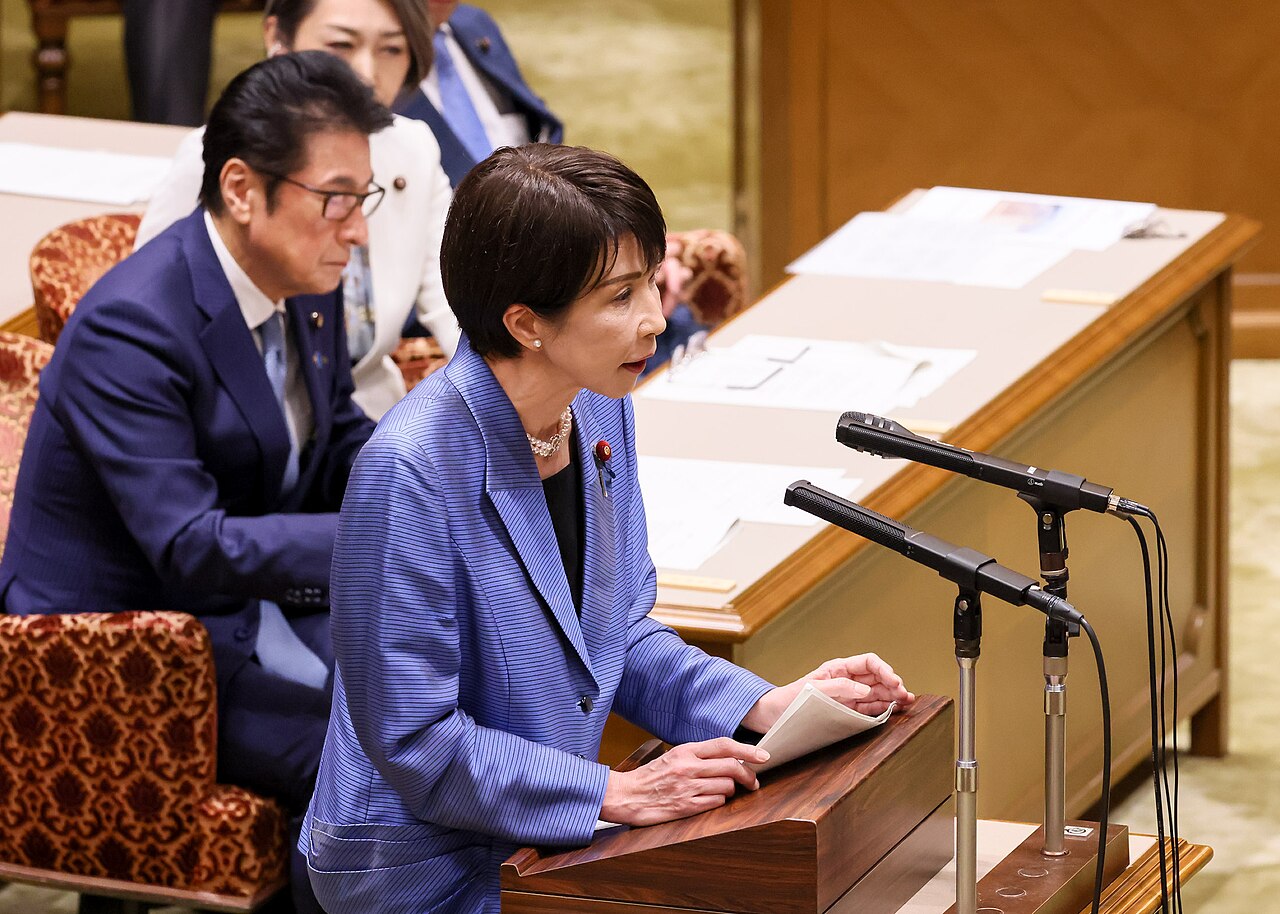
Image credit: Prime Minister’s Office of Japan, CC BY 4.0, via Wikimedia Commons.
Avoiding Entanglement
Another key concern for Japan is the prospect of military involvement. Under the Peace and Security Legislation enacted in 2015, Japan may exercise the right of collective self-defence (with limited use of force) if an attack on a country with which it has close ties poses an existential threat to Japan itself, a condition referred to as a “survival-threatening situation”. In practical terms, this means Japan’s Self-Defence Forces could be called upon to support US military operations should that threshold be met. Japanese officials have thus far been guarded in their assessments of the Iran war. When asked at a press conference whether a blockade of the Strait of Hormuz would qualify as a survival-threatening situation, Chief Cabinet Secretary Minoru Kihara sidestepped the question, stating only that “the government will make a decision based on “individual circumstances and all available information”. Takaichi was more direct, categorically ruling out the Iran war as a survival-threatening situation when pressed by opposition leader Junya Ogawa at a Lower House Budget Committee session. Her stance affords Japan the political pretext to stand by the United States diplomatically without committing troops or military assets.
However, this calculus may soon be tested. US President Donald Trump has called on countries – Japan among them – to deploy warships to the Strait of Hormuz to protect shipping, and the issue will feature prominently when Takaichi makes her anticipated visit to the White House on 19 March. Japan has never invoked a survival-threatening situation since the legislation came into force, and Tokyo will have to carefully weigh its alliance commitments against the political and legal constraints on its involvement. If Trump’s sharp rebukes of NATO allies Britain and Spain for declining to support US operations in Iran are any indication, Japan can expect the White House to apply considerable pressure on this front.
Preserving Identity
Japan has carved out an international identity as a peaceful, responsible and rule-abiding actor committed to multilateral norms and institutions. This image resonates particularly well in the Middle East, where it is viewed more favourably than many Western powers as a trusted partner that has stayed above the region’s conflicts and contributed meaningfully to development through foreign aid and infrastructural investment.
The ongoing conflict in Iran, however, has placed Japan in an uncomfortable bind. As a close US ally, Tokyo faces pressure to take sides – a position that sits uneasily with its identity as an honest broker in the Middle East. Failing to demonstrate any independent agency risks damaging its standing in Tehran, while any move towards military involvement, however limited, would invite scrutiny and undermine its pacifist image. Japan’s international standing will ultimately depend on how skilfully it reconciles its alliance loyalty with its broader diplomatic interests.
More Dilemmas Ahead?
The Iran conflict is not an isolated episode. The Trump administration’s increasing willingness to unilaterally employ force to alter the status quo – as seen earlier this year in the capture and removal of the Venezuelan president – points to a broader pattern of behaviour that Tokyo must reckon with. Japan may find itself increasingly caught between the demands of its alliance and the imperatives of its national interests. As US unilateralism deepens, Tokyo will need to harness all its statecraft to navigate the volatilities ahead.
Sarah Soh is an Associate Research Fellow in the Regional Security Architecture Programme at the Institute of Defence and Strategic Studies (IDSS), S Rajaratnam School of International Studies (RSIS).
KEY TAKEAWAYS
• Japan is treading carefully between its alliance with the United States and its ties with Iran in the ongoing conflict.
• Tokyo has kept its distance from military involvement, though US pressure may test this position.
• The conflict signals deeper dilemmas ahead for Japan as it seeks to reconcile alliance loyalty with diplomatic independence.
COMMENTARY
A day after meeting Japanese Foreign Minister Toshimitsu Motegi, Iran’s ambassador to Japan, Peiman Seadat, called on Japan to “decisively confront” the United States and Israel over their joint strikes on Iran, emphasising these acts as “egregious violations of international law and the UN Charter”. At a news conference, Seadat described Japan as a “peace-loving country” with a “strong voice for peace” that “cares about” international rules and norms. He also referred to then-Japanese Prime Minister Shinzo Abe’s visit to Iran in 2019, lauding his efforts to “pioneer a peaceful solution” between Iran and the United States. Abe had sought to mediate rising tensions after the first Trump administration unilaterally withdrew from the Joint Comprehensive Plan of Action (JCPOA), the 2015 international Iran nuclear deal, and adopted a “maximum pressure” strategy, prompting Iran to resume aspects of its nuclear programme. Although the visit produced no major breakthrough, it highlighted Japan’s attempts at playing peace broker.
While Seadat’s comments have drawn attention to Japan’s reputation as a peaceful international actor, Japan is unlikely to take on an active peacemaking role in the Iran conflict. Instead, Tokyo’s priority will be to navigate its interests with caution.
Walking a Tight Rope
Foremost among Japan’s concerns is maintaining its alliance with the United States. To this end, Tokyo has steered clear of explicitly endorsing or condemning the US-Israeli operations. Following the launch of the military campaign, Motegi issued a statement confirming that the government was monitoring the situation closely and would work to ensure the safety of Japanese nationals in the Middle East. The statement zeroed in on the nuclear issue, invoking the international non-proliferation regime to stress that “Iran’s development of nuclear weapons must never be allowed”. It called for a diplomatic path forward, describing dialogue between the United States and Iran as “extremely important for resolving this issue”. At a parliamentary session the following day, Prime Minister Sanae Takaichi echoed this position, reaffirming that Iran’s pursuit of nuclear weapons was “absolutely unacceptable”. She indicated that her government would withhold making a “definitive legal assessment” of the military strikes, citing the lack of “detailed information”. Taken together, Tokyo’s cautious messaging reflects a deliberate effort to signal its alignment with Washington without being drawn deeper into the conflict.
At the same time, Japan has kept open its lines of communication with Iran. Despite US sanctions against Iran, Japan has maintained cordial relations with Tehran over the years, a rapport Tokyo is keen to preserve. In a Japanese readout of the phone call between Motegi and his Iranian counterpart, Abbas Araghchi, Tokyo expressed “grave concern” over the “deterioration of the regional situation”, voiced its objections to Iran’s attacks on the Gulf states and shipping in the Strait of Hormuz, and reiterated its opposition to Iran’s nuclear arms development, but also stressed Japan’s commitment to “resolve issues surrounding Iran, including the nuclear issue” through diplomacy. The Iranian readout acknowledged Japan’s concern over escalating tensions and its call for restraint, but omitted any mention of Tokyo’s objections, highlighting instead Japan’s “condolences and sympathy with the Iranian people”. The divergence between the readouts encapsulates Japan’s juggling act – maintaining enough goodwill with Tehran to keep diplomatic channels open, while ensuring its public posture remains consistent with Washington’s position.
Image credit: Prime Minister’s Office of Japan, CC BY 4.0, via Wikimedia Commons.
Avoiding Entanglement
Another key concern for Japan is the prospect of military involvement. Under the Peace and Security Legislation enacted in 2015, Japan may exercise the right of collective self-defence (with limited use of force) if an attack on a country with which it has close ties poses an existential threat to Japan itself, a condition referred to as a “survival-threatening situation”. In practical terms, this means Japan’s Self-Defence Forces could be called upon to support US military operations should that threshold be met. Japanese officials have thus far been guarded in their assessments of the Iran war. When asked at a press conference whether a blockade of the Strait of Hormuz would qualify as a survival-threatening situation, Chief Cabinet Secretary Minoru Kihara sidestepped the question, stating only that “the government will make a decision based on “individual circumstances and all available information”. Takaichi was more direct, categorically ruling out the Iran war as a survival-threatening situation when pressed by opposition leader Junya Ogawa at a Lower House Budget Committee session. Her stance affords Japan the political pretext to stand by the United States diplomatically without committing troops or military assets.
However, this calculus may soon be tested. US President Donald Trump has called on countries – Japan among them – to deploy warships to the Strait of Hormuz to protect shipping, and the issue will feature prominently when Takaichi makes her anticipated visit to the White House on 19 March. Japan has never invoked a survival-threatening situation since the legislation came into force, and Tokyo will have to carefully weigh its alliance commitments against the political and legal constraints on its involvement. If Trump’s sharp rebukes of NATO allies Britain and Spain for declining to support US operations in Iran are any indication, Japan can expect the White House to apply considerable pressure on this front.
Preserving Identity
Japan has carved out an international identity as a peaceful, responsible and rule-abiding actor committed to multilateral norms and institutions. This image resonates particularly well in the Middle East, where it is viewed more favourably than many Western powers as a trusted partner that has stayed above the region’s conflicts and contributed meaningfully to development through foreign aid and infrastructural investment.
The ongoing conflict in Iran, however, has placed Japan in an uncomfortable bind. As a close US ally, Tokyo faces pressure to take sides – a position that sits uneasily with its identity as an honest broker in the Middle East. Failing to demonstrate any independent agency risks damaging its standing in Tehran, while any move towards military involvement, however limited, would invite scrutiny and undermine its pacifist image. Japan’s international standing will ultimately depend on how skilfully it reconciles its alliance loyalty with its broader diplomatic interests.
More Dilemmas Ahead?
The Iran conflict is not an isolated episode. The Trump administration’s increasing willingness to unilaterally employ force to alter the status quo – as seen earlier this year in the capture and removal of the Venezuelan president – points to a broader pattern of behaviour that Tokyo must reckon with. Japan may find itself increasingly caught between the demands of its alliance and the imperatives of its national interests. As US unilateralism deepens, Tokyo will need to harness all its statecraft to navigate the volatilities ahead.
Sarah Soh is an Associate Research Fellow in the Regional Security Architecture Programme at the Institute of Defence and Strategic Studies (IDSS), S Rajaratnam School of International Studies (RSIS).