


19 March 2026
IP26047 | The Fate of the Iranian Navy in the Indian Ocean Foreshadows Dilemmas for Asia’s Neutral States

KEY TAKEAWAYS
• The sinking of the Iranian frigate Dena and internment of Iranian naval ships in Sri Lanka and India set 21st-century precedents for blue water naval warfare.
• These cases must be understood and studied by Southeast Asian governments to avoid costly mistakes should a similar scenario develop in future naval wars.
COMMENTARY
When the United States and Israel launched joint military strikes against Iran on 28 February 2026, the Iranian navy had three ships deployed across the Indian Ocean. On 4 March, the frigate IRIS Dena was sunk by the USS Charlotte in the Sri Lankan exclusive economic zone (EEZ). The two other ships found refuge in neutral ports, IRIS Lavan in India and IRIS Bushehr in Sri Lanka.
These events captured headlines and trended on social media because the sinking represents a sort of brutal, no-holds-barred blue water naval warfare that the world has hardly seen since 1945. Historians and warfare scholars have been busy interpreting the events, assessing their legality and considering the morality.
This is important work, but for many governments, particularly the coastal states of Southeast Asia, there are essential strategic lessons that must be captured. These events set new precedents and provide fresh case studies to inform decisions that will have to be made swiftly and decisively, especially by neutral states, during future naval conflicts.
The Sinking of IRIS Dena
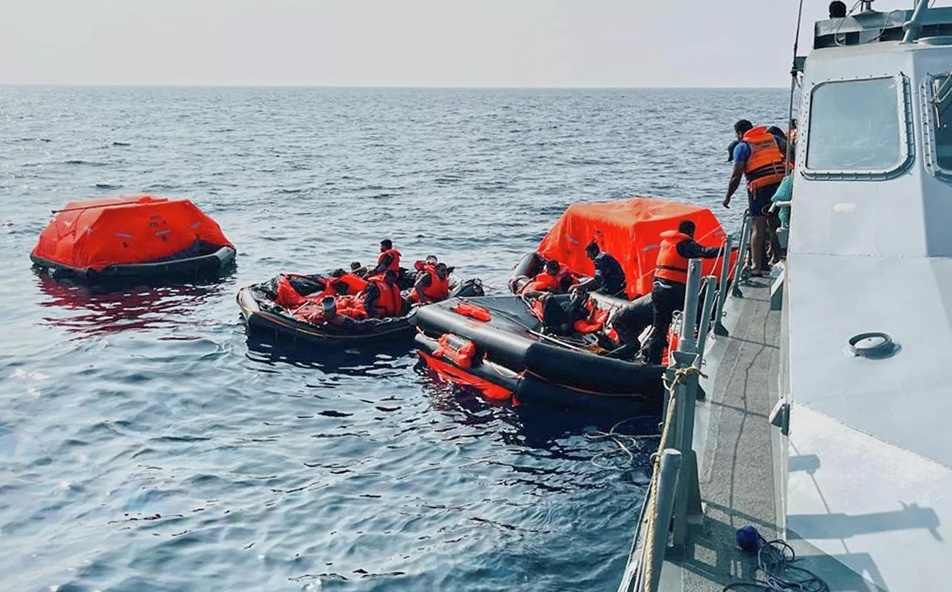
When Charlotte’s torpedo struck Dena, the frigate sank almost immediately. War is hell. Yet, war also reveals heroes. In this case, the Sri Lankan Navy quickly arrived to conduct search-and-rescue operations. The crew – 32 survivors and 87 bodies – were recovered from the sea.
The US military’s Indo-Pacific Command stated that the US Navy planned for and assisted with the coordination of the rescue operations. This is uncorroborated but makes sense. Any navy would be challenged to perform as admirably as the Sri Lankan Navy had done, unless its vessels were already in the immediate area at the time of the sinking or their efforts were enabled by excellent on-scene information.
The Internment of IRIS Lavan and IRIS Bushehr
Sri Lankan President Anura Kumara Dissanayake shared that the Iranian government requested permission on 26 February for Dena, Bushehr and Lava to visit Sri Lanka for recreation and goodwill activities between 9 and 13 March. The president explained that the request was still being considered when the Israeli-American attacks began.
In a 9 March briefing to parliament, Indian External Affairs Minister S. Jaishankar revealed that shortly after the US-Israeli strikes began on 28 February, Iran requested permission for the three ships to enter Indian ports. That permission was granted the following day. Lavan, an amphibious landing ship, arrived in the port of Kochi on 4 March. With the ship interned under the control of India, Lavan’s crew disembarked to stay ashore in Indian Navy facilities. “We believe that this was the right thing to do”, said Jaishankar.
It is unclear why Dena and Bushehr did not also make it to Kochi. When Jaishankar discussed these ships during a 7 March presentation at the Raisina Dialogue, he said that India had granted one of the ships permission to dock because it was experiencing engineering difficulties. He did not elaborate on the other vessels. One could speculate that differences in the three vessels’ material readiness may have been the factor. Another idea is that the three commanding officers disagreed on whether their higher duty was to protect their crew or to remain at sea where they could fight.
In any case, on 4 March, Dena was sunk, and Bushehr received permission to enter port in Sri Lanka. It arrived in Colombo on 5 March. After negotiations with the ship’s captain and the Iranian embassy in Colombo, Dissanayake decided to intern the vessel and transfer it to the port of Trincomalee. He explained that the decision represents the humanitarian answer that also upholds the country’s neutrality.
Though there has not been an example of warship internment since World War 2, the decisions of India and Sri Lanka are consistent with the rights and duties of neutral powers in naval war. While the warships of belligerent states cannot use the territorial seas of neutral states to “hide out” from the fight, they may surrender to neutral authorities to essentially remove themselves from the war. The neutral state is expected to disable the vessel and hold the crew.
This turn of events puts the two neutral powers in an uncomfortable position that was not at all of their making. Despite apparent US pressure on the host nations to prevent the repatriation of the crew members to Iran, media reports indicated that the recovered bodies and many of the surviving crew members departed by air on 13 May, around the same time that India and Iran reached a deal for safe passage of some Indian shipping through the Strait of Hormuz.
Questions to Ponder
For other neutral powers arrayed along Asia’s coasts, these events in the Indian Ocean are of great relevance. Given the region’s position astride busy sea lanes, fondness for multinational naval events, and preference for foreign policies centred on non-alignment, multi-alignment or the maintenance of strategic autonomy, it is not difficult to imagine these states facing similar situations.
Combat in the EEZ of a non-belligerent, the need to rescue and host combat survivors, and requests for refuge and internment are all scenarios likely to emerge during the naval wars that many fear to be brewing in Western Pacific waters.
Thus, now is the time to think through critical questions, some hypothetical and others less so. It will not be enough to rely on historical precedent; governments must also consider contemporary international standards and power dynamics.
Is the sinking of Dena a sign of Indian or Sri Lankan weakness? The sinking sparked significant controversy within India. For example, opposition leader Rahul Gandhi declared, “India has a compromised PM who has surrendered our strategic autonomy”, and Member of Parliament Jairam Ramesh wrote, “Never before has the Indian government looked so timid and fearful.”
Others have pointed out that Exercise MILAN, the 13th edition of the multinational naval exercise hosted by India in which Dena had participated, was complete by the time the vessel was struck. Dena was by then beyond the territorial waters of any state. Thus, the responsibility lay with no one other than the ship’s commanding officer and his Iranian chain of command. While those absolving the South Asian nations are certainly right, the lesson is that quick policy decisions and proactive state-led communications will be required to get ahead of critical narratives and maintain national unity in a time of crisis.
What if the Iranian ships had asked for internment by a neutral state immediately after hostilities broke out on 28 February? Unverified reports have suggested that Dena’s commanding officer declined an Indian offer of temporary refuge and that Dena requested internment in Sri Lanka but did not receive a positive response from Colombo. Neither of these narratives matches the official reports, but, as hypotheticals, both illustrate a coastal state’s dilemmas. Both offering or declining haven to belligerent ships will create the perception that a neutral state is giving preference to one side or the other. Are Asian governments ready to make timely decisions that both serve humanitarian interests and preserve their strategic autonomy? Have they thought through the diplomatic positions and legal arguments to deploy?
How should neutral states coordinate? Lavan entered Kochi on 1 March, but this information was not publicly disclosed until one or two days later. The Indian government did not reveal that the other Iranian vessels had made similar requests until five days after the sinking of Dena. Perhaps, they shared more information with Sri Lanka privately via diplomatic channels. If they did not, this put Sri Lanka at a real disadvantage as it had to navigate the tricky diplomatic situation without knowledge of the precedents being set by its larger neighbour. Are Southeast Asian governments more or less prepared to coordinate quickly among themselves if faced with a similar scenario?
John Bradford is a lecturer at the S. Rajaratnam School of International Studies (RSIS) and the Executive Director of the Yokosuka Council on Asia-Pacific Studies (www.YCAPS.org). His research focuses on Indo-Pacific maritime security and regional security cooperation.
KEY TAKEAWAYS
• The sinking of the Iranian frigate Dena and internment of Iranian naval ships in Sri Lanka and India set 21st-century precedents for blue water naval warfare.
• These cases must be understood and studied by Southeast Asian governments to avoid costly mistakes should a similar scenario develop in future naval wars.
COMMENTARY
When the United States and Israel launched joint military strikes against Iran on 28 February 2026, the Iranian navy had three ships deployed across the Indian Ocean. On 4 March, the frigate IRIS Dena was sunk by the USS Charlotte in the Sri Lankan exclusive economic zone (EEZ). The two other ships found refuge in neutral ports, IRIS Lavan in India and IRIS Bushehr in Sri Lanka.
These events captured headlines and trended on social media because the sinking represents a sort of brutal, no-holds-barred blue water naval warfare that the world has hardly seen since 1945. Historians and warfare scholars have been busy interpreting the events, assessing their legality and considering the morality.
This is important work, but for many governments, particularly the coastal states of Southeast Asia, there are essential strategic lessons that must be captured. These events set new precedents and provide fresh case studies to inform decisions that will have to be made swiftly and decisively, especially by neutral states, during future naval conflicts.
The Sinking of IRIS Dena
When Charlotte’s torpedo struck Dena, the frigate sank almost immediately. War is hell. Yet, war also reveals heroes. In this case, the Sri Lankan Navy quickly arrived to conduct search-and-rescue operations. The crew – 32 survivors and 87 bodies – were recovered from the sea.
The US military’s Indo-Pacific Command stated that the US Navy planned for and assisted with the coordination of the rescue operations. This is uncorroborated but makes sense. Any navy would be challenged to perform as admirably as the Sri Lankan Navy had done, unless its vessels were already in the immediate area at the time of the sinking or their efforts were enabled by excellent on-scene information.
The Internment of IRIS Lavan and IRIS Bushehr
Sri Lankan President Anura Kumara Dissanayake shared that the Iranian government requested permission on 26 February for Dena, Bushehr and Lava to visit Sri Lanka for recreation and goodwill activities between 9 and 13 March. The president explained that the request was still being considered when the Israeli-American attacks began.
In a 9 March briefing to parliament, Indian External Affairs Minister S. Jaishankar revealed that shortly after the US-Israeli strikes began on 28 February, Iran requested permission for the three ships to enter Indian ports. That permission was granted the following day. Lavan, an amphibious landing ship, arrived in the port of Kochi on 4 March. With the ship interned under the control of India, Lavan’s crew disembarked to stay ashore in Indian Navy facilities. “We believe that this was the right thing to do”, said Jaishankar.
It is unclear why Dena and Bushehr did not also make it to Kochi. When Jaishankar discussed these ships during a 7 March presentation at the Raisina Dialogue, he said that India had granted one of the ships permission to dock because it was experiencing engineering difficulties. He did not elaborate on the other vessels. One could speculate that differences in the three vessels’ material readiness may have been the factor. Another idea is that the three commanding officers disagreed on whether their higher duty was to protect their crew or to remain at sea where they could fight.
In any case, on 4 March, Dena was sunk, and Bushehr received permission to enter port in Sri Lanka. It arrived in Colombo on 5 March. After negotiations with the ship’s captain and the Iranian embassy in Colombo, Dissanayake decided to intern the vessel and transfer it to the port of Trincomalee. He explained that the decision represents the humanitarian answer that also upholds the country’s neutrality.
Though there has not been an example of warship internment since World War 2, the decisions of India and Sri Lanka are consistent with the rights and duties of neutral powers in naval war. While the warships of belligerent states cannot use the territorial seas of neutral states to “hide out” from the fight, they may surrender to neutral authorities to essentially remove themselves from the war. The neutral state is expected to disable the vessel and hold the crew.
This turn of events puts the two neutral powers in an uncomfortable position that was not at all of their making. Despite apparent US pressure on the host nations to prevent the repatriation of the crew members to Iran, media reports indicated that the recovered bodies and many of the surviving crew members departed by air on 13 May, around the same time that India and Iran reached a deal for safe passage of some Indian shipping through the Strait of Hormuz.
Questions to Ponder
For other neutral powers arrayed along Asia’s coasts, these events in the Indian Ocean are of great relevance. Given the region’s position astride busy sea lanes, fondness for multinational naval events, and preference for foreign policies centred on non-alignment, multi-alignment or the maintenance of strategic autonomy, it is not difficult to imagine these states facing similar situations.
Combat in the EEZ of a non-belligerent, the need to rescue and host combat survivors, and requests for refuge and internment are all scenarios likely to emerge during the naval wars that many fear to be brewing in Western Pacific waters.
Thus, now is the time to think through critical questions, some hypothetical and others less so. It will not be enough to rely on historical precedent; governments must also consider contemporary international standards and power dynamics.
Is the sinking of Dena a sign of Indian or Sri Lankan weakness? The sinking sparked significant controversy within India. For example, opposition leader Rahul Gandhi declared, “India has a compromised PM who has surrendered our strategic autonomy”, and Member of Parliament Jairam Ramesh wrote, “Never before has the Indian government looked so timid and fearful.”
Others have pointed out that Exercise MILAN, the 13th edition of the multinational naval exercise hosted by India in which Dena had participated, was complete by the time the vessel was struck. Dena was by then beyond the territorial waters of any state. Thus, the responsibility lay with no one other than the ship’s commanding officer and his Iranian chain of command. While those absolving the South Asian nations are certainly right, the lesson is that quick policy decisions and proactive state-led communications will be required to get ahead of critical narratives and maintain national unity in a time of crisis.
What if the Iranian ships had asked for internment by a neutral state immediately after hostilities broke out on 28 February? Unverified reports have suggested that Dena’s commanding officer declined an Indian offer of temporary refuge and that Dena requested internment in Sri Lanka but did not receive a positive response from Colombo. Neither of these narratives matches the official reports, but, as hypotheticals, both illustrate a coastal state’s dilemmas. Both offering or declining haven to belligerent ships will create the perception that a neutral state is giving preference to one side or the other. Are Asian governments ready to make timely decisions that both serve humanitarian interests and preserve their strategic autonomy? Have they thought through the diplomatic positions and legal arguments to deploy?
How should neutral states coordinate? Lavan entered Kochi on 1 March, but this information was not publicly disclosed until one or two days later. The Indian government did not reveal that the other Iranian vessels had made similar requests until five days after the sinking of Dena. Perhaps, they shared more information with Sri Lanka privately via diplomatic channels. If they did not, this put Sri Lanka at a real disadvantage as it had to navigate the tricky diplomatic situation without knowledge of the precedents being set by its larger neighbour. Are Southeast Asian governments more or less prepared to coordinate quickly among themselves if faced with a similar scenario?
John Bradford is a lecturer at the S. Rajaratnam School of International Studies (RSIS) and the Executive Director of the Yokosuka Council on Asia-Pacific Studies (www.YCAPS.org). His research focuses on Indo-Pacific maritime security and regional security cooperation.