


20 March 2026

IP26048 | India-US Defence Partnership: Moving Away from the Buyer-Seller Model?

KEY TAKEAWAYS
• India-US defence cooperation is aimed at moving India away from a simple buyer-seller dynamic with the United States to one where both countries co-develop technology.
• Early efforts towards this end broadly failed because of mismatched expectations and misaligned priorities.
• While progress has been made in recent years, structural aspects of India’s R&D ecosystem continue to hamper India’s efforts to create an “innovation bridge” with the United States.
COMMENTARY
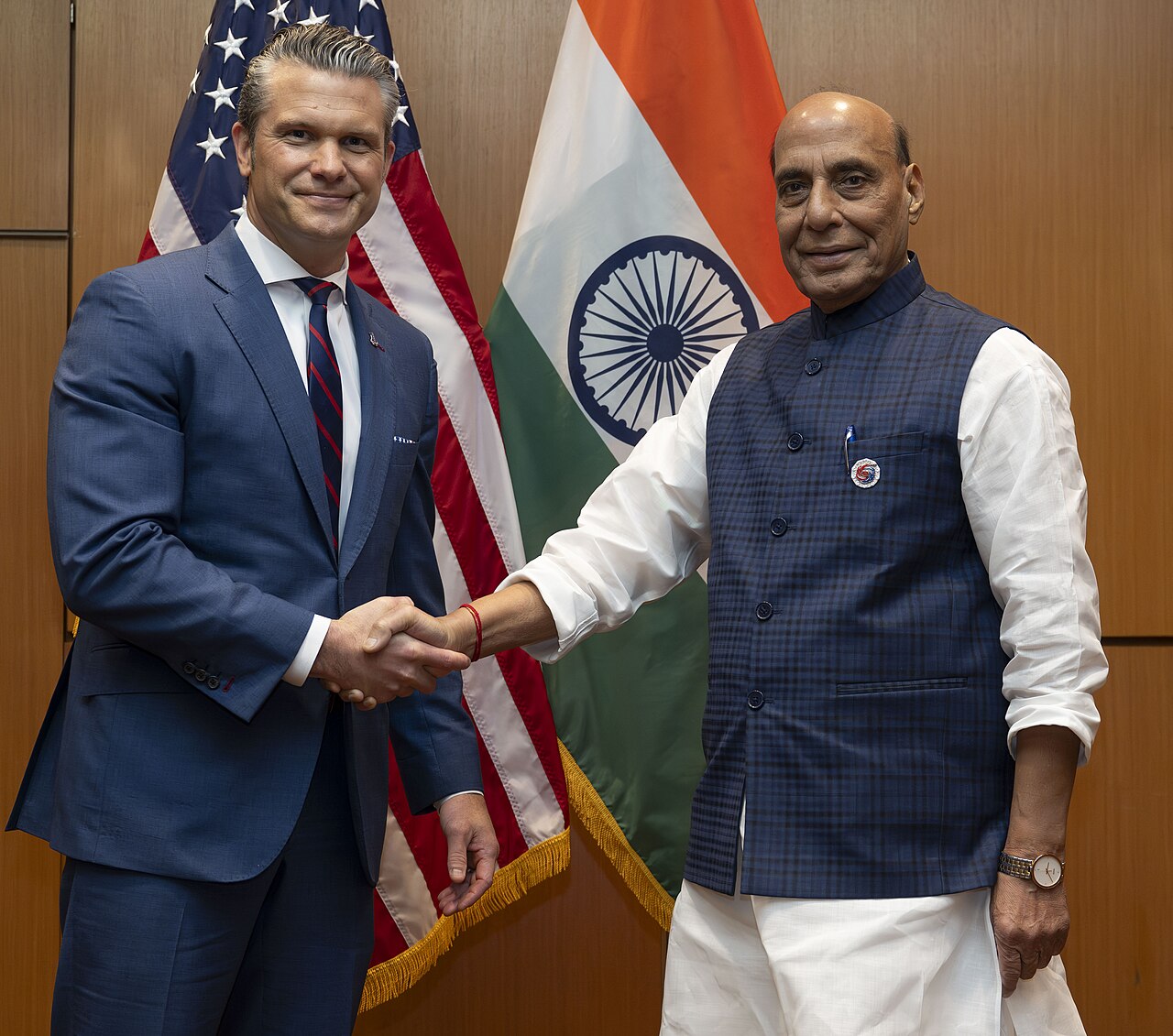
India and the United States renewed their defence partnership for another 10 years on 31 October 2025, when US Secretary of War Pete Hegseth and Indian Defence Minister Rajnath Singh signed the “2025 Framework for the US-India Major Defence Partnership”. The first such agreement was signed in 2005.
Since the signing of the 2005 agreement, the India-US defence partnership has deepened and become multi-faceted. Defence sales have grown from almost zero in 2008 to more than US$20 billion in 2020. Interoperability between the two militaries has also improved through their participation in a variety of joint exercises, both bilateral and multilateral.
The partnership was also aimed at fostering robust defence technological cooperation. The idea was for India and the United States to eventually move away from a simple buyer-seller relationship and begin jointly developing and producing military technologies and platforms.
However, the partnership has dithered on this objective. India continues to depend on foreign weapons systems and is the second-largest importer of weapons in the world. Moreover, despite several initiatives, India and the United States have failed to move away from the buyer-seller relationship. What then, are the challenges and constraints that India faced and continues to face in pursuing this objective?
History of India-US Defence Technology Cooperation
The first attempt at defence technological cooperation between the two countries was through the Defence Technology and Trade Initiative (DTTI) launched in 2012. Under the DTTI, the two established working groups on air, land, naval and aircraft carrier systems, among others, to explore cooperation in these domains. But most of these working groups and their intended projects have languished. For instance, cooperation under a working group on jet engine technology was suspended in 2019. Multiple other projects discussed in the 2010s met a similar fate without even getting off the drawing board.
The most promising progress was initially registered in the domain of aircraft carrier systems, where India and the United States discussed the possibility of sharing technology for carrier-based aircraft launch mechanisms. It was reported that the United States had agreed to release General Atomics’ electromagnetic aircraft launch system (EMALS) technology for India’s second indigenous carrier. However, nearly 10 years on, there has been limited progress and the United States has agreed to share only the technology for older, catapult-based aircraft launch mechanisms (CATOBAR).
Although the DTTI is still active, its key challenge was a lack of strategic direction. Several proposed projects in fact clashed with India’s indigenous efforts to develop similar platforms. These include cooperation on vertical-lift aircraft and ground combat vehicles. Moreover, India’s second indigenous aircraft carrier was still in its design phase, with several key questions over the feasibility and capabilities of the carrier yet to be decided by India. Most of the projects envisaged also tended to be quite ambitious in scope. Indian requests for cooperation were focused on technologies deemed highly sensitive by the United States. Private US companies driven by commercial considerations had little incentive to release such technologies in the first instance.
The DTTI was revamped in 2019, with new key deliverables identified in 2021. However, five years on, there has been little progress.
Renewed Focus
In another attempt at revamping defence technology cooperation, India and the United States adopted the “Roadmap for India-US Defence Industrial Cooperation” in 2023 and launched the India-US Defence Acceleration Ecosystem initiative (INDUS-X). INDUS-X has been positioned to act as an “innovation bridge” between the two countries. The two initiatives expand cooperation from a strictly government-to-government model previously to now include commercial entities and academic institutions, especially from the Indian side. They have created a structural change within the India-US defence cooperation framework.
Since then, India and the United States have established joint ventures to produce jet engines, Stryker infantry combat vehicles, Predator drones, Javelin missiles and a variety of maritime domain awareness sensors. In addition to production joint ventures, US venture capital firms are also investing in Indian defence start-ups, such as IdeaForge and Tunbo Imaging.
The INDUS-X initiative has seen some progress. The initiative hosts technological challenges for start-ups, awarding cash prizes for successful products that address the challenge. Almost US$1.2 million has been disbursed under the challenge to Indian start-ups within the first year. The initiative also looks to foster links between American and Indian research institutes as well as investors and start-ups to collaborate on joint defence projects. Under its aegis, several networking sessions have been conducted.
The two initiatives have seen better success partly because the strategic priorities underpinning the effort have been better defined and aligned. The respective national security establishments have recognised that the notion of short and swift wars is no longer valid, leading to an alignment of threat perceptions. Thus, both India and the United States acknowledge the need to develop robust industrial bases and secure defence supply chains, catalysing policies for industrial production that support long, drawn-out military campaigns.
But establishing production facilities is a low-hanging fruit. Apart from fulfilling national security objectives, it also supports India’s domestic agenda of creating employment, giving it the political impetus required for successful implementation. Yet, the production agreements rarely are accompanied by robust technology transfers. As Admiral Arun Prakash notes, “while the public is led to believe that these platforms [i.e., domestically manufactured foreign defence equipment] are ‘indigenous’, many of the critical components are imported and spares continue to come from abroad.”
Part of India’s challenge in developing robust cooperation is the poor state of research and development (R&D). While exact figures for the defence sector are not available, R&D figures for the entire economy can help gauge the paltry nature of India’s efforts. The Economic Survey of India (2025–26) noted that India spends only 0.64% of GDP on R&D, far below the United States, at 3.48%, and China, at 2.43%. Moreover, only 41% of R&D expenditure in India comes from the private sector. In the United States and China, the figure stands at 75% and 77%, respectively. The quality of higher education, especially doctoral research programmes in India, is undermined by inefficiencies and apathy. Practices in these programmes – such as treating PhD scholars like labour, prolonged bureaucratic procedures and encouraging “superficial research” – stymie Indian research capabilities. Furthermore, even though India has seen a surge in patent filings in recent years, the number of patents actually granted is abysmal, with even fewer resulting in licensing agreements that generate revenue.
Such practices will no doubt have knock-on effects for R&D in the defence sector as well. They constrain India’s ability to jointly develop advanced military technologies with the United States owing to a disparity in capabilities. US companies and institutions may not have incentives to genuinely cooperate with Indian counterparts, hampering the objective of creating an “innovation bridge”. For India and the United States to cooperate effectively, India needs to overcome these structural issues.
Nishant Rajeev is a Senior Analyst with the South Asia Programme at the S. Rajaratnam School of International Studies (RSIS).
KEY TAKEAWAYS
• India-US defence cooperation is aimed at moving India away from a simple buyer-seller dynamic with the United States to one where both countries co-develop technology.
• Early efforts towards this end broadly failed because of mismatched expectations and misaligned priorities.
• While progress has been made in recent years, structural aspects of India’s R&D ecosystem continue to hamper India’s efforts to create an “innovation bridge” with the United States.
COMMENTARY
India and the United States renewed their defence partnership for another 10 years on 31 October 2025, when US Secretary of War Pete Hegseth and Indian Defence Minister Rajnath Singh signed the “2025 Framework for the US-India Major Defence Partnership”. The first such agreement was signed in 2005.
Since the signing of the 2005 agreement, the India-US defence partnership has deepened and become multi-faceted. Defence sales have grown from almost zero in 2008 to more than US$20 billion in 2020. Interoperability between the two militaries has also improved through their participation in a variety of joint exercises, both bilateral and multilateral.
The partnership was also aimed at fostering robust defence technological cooperation. The idea was for India and the United States to eventually move away from a simple buyer-seller relationship and begin jointly developing and producing military technologies and platforms.
However, the partnership has dithered on this objective. India continues to depend on foreign weapons systems and is the second-largest importer of weapons in the world. Moreover, despite several initiatives, India and the United States have failed to move away from the buyer-seller relationship. What then, are the challenges and constraints that India faced and continues to face in pursuing this objective?
History of India-US Defence Technology Cooperation
The first attempt at defence technological cooperation between the two countries was through the Defence Technology and Trade Initiative (DTTI) launched in 2012. Under the DTTI, the two established working groups on air, land, naval and aircraft carrier systems, among others, to explore cooperation in these domains. But most of these working groups and their intended projects have languished. For instance, cooperation under a working group on jet engine technology was suspended in 2019. Multiple other projects discussed in the 2010s met a similar fate without even getting off the drawing board.
The most promising progress was initially registered in the domain of aircraft carrier systems, where India and the United States discussed the possibility of sharing technology for carrier-based aircraft launch mechanisms. It was reported that the United States had agreed to release General Atomics’ electromagnetic aircraft launch system (EMALS) technology for India’s second indigenous carrier. However, nearly 10 years on, there has been limited progress and the United States has agreed to share only the technology for older, catapult-based aircraft launch mechanisms (CATOBAR).
Although the DTTI is still active, its key challenge was a lack of strategic direction. Several proposed projects in fact clashed with India’s indigenous efforts to develop similar platforms. These include cooperation on vertical-lift aircraft and ground combat vehicles. Moreover, India’s second indigenous aircraft carrier was still in its design phase, with several key questions over the feasibility and capabilities of the carrier yet to be decided by India. Most of the projects envisaged also tended to be quite ambitious in scope. Indian requests for cooperation were focused on technologies deemed highly sensitive by the United States. Private US companies driven by commercial considerations had little incentive to release such technologies in the first instance.
The DTTI was revamped in 2019, with new key deliverables identified in 2021. However, five years on, there has been little progress.
Renewed Focus
In another attempt at revamping defence technology cooperation, India and the United States adopted the “Roadmap for India-US Defence Industrial Cooperation” in 2023 and launched the India-US Defence Acceleration Ecosystem initiative (INDUS-X). INDUS-X has been positioned to act as an “innovation bridge” between the two countries. The two initiatives expand cooperation from a strictly government-to-government model previously to now include commercial entities and academic institutions, especially from the Indian side. They have created a structural change within the India-US defence cooperation framework.
Since then, India and the United States have established joint ventures to produce jet engines, Stryker infantry combat vehicles, Predator drones, Javelin missiles and a variety of maritime domain awareness sensors. In addition to production joint ventures, US venture capital firms are also investing in Indian defence start-ups, such as IdeaForge and Tunbo Imaging.
The INDUS-X initiative has seen some progress. The initiative hosts technological challenges for start-ups, awarding cash prizes for successful products that address the challenge. Almost US$1.2 million has been disbursed under the challenge to Indian start-ups within the first year. The initiative also looks to foster links between American and Indian research institutes as well as investors and start-ups to collaborate on joint defence projects. Under its aegis, several networking sessions have been conducted.
The two initiatives have seen better success partly because the strategic priorities underpinning the effort have been better defined and aligned. The respective national security establishments have recognised that the notion of short and swift wars is no longer valid, leading to an alignment of threat perceptions. Thus, both India and the United States acknowledge the need to develop robust industrial bases and secure defence supply chains, catalysing policies for industrial production that support long, drawn-out military campaigns.
But establishing production facilities is a low-hanging fruit. Apart from fulfilling national security objectives, it also supports India’s domestic agenda of creating employment, giving it the political impetus required for successful implementation. Yet, the production agreements rarely are accompanied by robust technology transfers. As Admiral Arun Prakash notes, “while the public is led to believe that these platforms [i.e., domestically manufactured foreign defence equipment] are ‘indigenous’, many of the critical components are imported and spares continue to come from abroad.”
Part of India’s challenge in developing robust cooperation is the poor state of research and development (R&D). While exact figures for the defence sector are not available, R&D figures for the entire economy can help gauge the paltry nature of India’s efforts. The Economic Survey of India (2025–26) noted that India spends only 0.64% of GDP on R&D, far below the United States, at 3.48%, and China, at 2.43%. Moreover, only 41% of R&D expenditure in India comes from the private sector. In the United States and China, the figure stands at 75% and 77%, respectively. The quality of higher education, especially doctoral research programmes in India, is undermined by inefficiencies and apathy. Practices in these programmes – such as treating PhD scholars like labour, prolonged bureaucratic procedures and encouraging “superficial research” – stymie Indian research capabilities. Furthermore, even though India has seen a surge in patent filings in recent years, the number of patents actually granted is abysmal, with even fewer resulting in licensing agreements that generate revenue.
Such practices will no doubt have knock-on effects for R&D in the defence sector as well. They constrain India’s ability to jointly develop advanced military technologies with the United States owing to a disparity in capabilities. US companies and institutions may not have incentives to genuinely cooperate with Indian counterparts, hampering the objective of creating an “innovation bridge”. For India and the United States to cooperate effectively, India needs to overcome these structural issues.
Nishant Rajeev is a Senior Analyst with the South Asia Programme at the S. Rajaratnam School of International Studies (RSIS).