


30 March 2026
IP26055 | India and the Middle East Conflict: Options and Responses

KEY TAKEAWAYS
• The conflict in the Middle East has had significant economic costs for India, given its dependence on energy supplies from the region and the huge number of Indian nationals who live and work there.
• While the United States has temporarily lifted sanctions on Iranian oil exports and India has been able to negotiate safe passage with Iran for Indian-flagged vessels carrying energy supplies through the Strait of Hormuz, this arrangement seems to involve India having to accede to certain Iranian demands.
• Diplomatically, India will have to delicately balance its relationships with Iran, the United States, Israel and the Gulf states, which prior to the conflict had been insulated from one another to some degree.
• One concern for India is the prospect of Pakistan successfully mediating between the United States and Iran in the current conflict, and whether Pakistan can leverage such a role to increase its influence with the Gulf states.
COMMENTARY
On 4 March, the USS Charlotte sank the Iranian frigate IRIS Dena as the latter was heading back to Iran after having taken part in an international fleet review hosted by India. This was the most public implication of India in the conflict since the attacks on Iran by the United States and Israel began on 28 February. It led to an intense debate within India on New Delhi’s interests in the conflict and its appropriate responses. The Indian government refused to condemn the US and Israeli bombing. It also refused to publicly protest the sinking of the IRIS Dena. This silence drew significant domestic criticism, especially given India’s long history of friendly relations with Iran.
What are the possible implications of this conflict for India? And what are the viable options for India in this context?
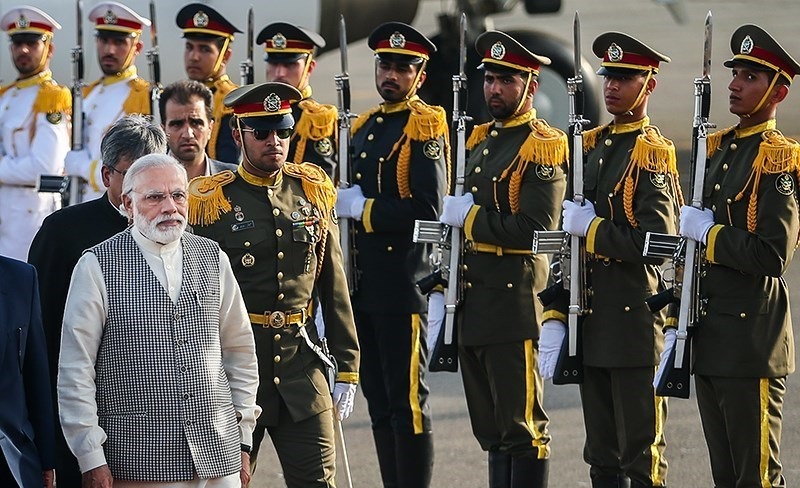
Image credit: Tasnim News Agency, CC BY 4.0, via Wikimedia Commons.
The first implication relates to the immediate economic costs, given India’s heavy dependence on imported energy supplies that traverse the Strait of Hormuz. The shortage of cooking gas for Indian households is a looming policy challenge for the Indian government, which has begun channelling supplies away from commercial use to households, with attendant knock-on effects for the economy. In addition, a huge number of Indian nationals live and work in the Gulf, remitting significant sums to India, accounting for about 38% of its total incoming remittances. The possibility of the conflict dragging on for months will affect the safety of Indian nationals in the Gulf states; their possible return will have negative impacts on remittance inflows into India.
Initially, following discussions with the Iranian government, India managed to secure the passage of three Indian-flagged vessels carrying energy supplies through the Strait of Hormuz. This, however, was a one-off arrangement – reportedly a transactional deal involving the return of seized Iranian tankers that India had deemed to be “dark ships” – while India continues to try to negotiate a wider-ranging deal for the safe passage of Indian-flagged vessels through the Strait.
On the issue of safe passage for Indian vessels, there are few downsides for India. The US government is concerned about the rising price of oil and has in fact announced a short-term lifting of the sanctions on Iranian energy exports. India thus is unlikely to draw criticism or punishment from the United States for securing access to the Strait of Hormuz or even buying Iranian oil and gas at this point. Indian policymakers are probably aware that the US desire to end the war is no guarantee that Iran will not continue to block energy supplies through the Strait, so negotiating passage for Indian ships may have to be a medium- to long-term arrangement. The key issue will be the nature of Iranian demands in return for letting Indian vessels through the Strait. The Indian government could offer to provide additional medical supplies as well as buy more Iranian oil and gas, now that US sanctions have been temporarily lifted.
The second, related implication for India is managing its delicate relationship with Iran, Israel and the Gulf states at the same time. Before the conflict, insulating these relationships from one another was a key aim in India’s approach to the Middle East. Iran was important as both a historical ally against Pakistan and the Taliban, as well as for connecting India to the Middle East and Central Asia through the ambitious India-led Chabahar port project. Israel has increasingly become a key technology partner for India over the past decade. It also sits well with the core domestic constituency of India’s ruling Bharatiya Janata Party (BJP). The Gulf states have been a key source of supply for India’s expanding energy needs, a growing market for Indian exports and a burgeoning source of investment flows into India. In the case of Iran, India has had to consistently balance its ties against US pressure, both when it came to purchasing Iranian oil as well as sanctions on the Chabahar port project.
The current conflict could lead to a reconfiguration of Indian interests in the Middle East. The Indian government’s silence on the US and Israeli actions is the first possible sign of such reconfiguration. That silence came in the wake of Prime Minister Narendra Modi’s visit to Israel that ended just two days before the attacks on Iran began. The United States is and will continue to be a key partner for India across all domains, and a weakened Iran, even with the regime intact, will increasingly have less to offer India, especially in the face of US pressure on India. India’s government will not cut ties with Iran but will increasingly look to tilt towards the United States, specifically when it calculates that deeper engagement with Iran involves sizeable trade-offs. The challenge will be managing domestic pressures as there are significant sections of the population which view New Delhi’s silence on the US and Israeli actions as a sign of India succumbing to US pressure to abandon an old ally.
The third possible implication is Pakistan’s possible role in the ongoing conflict and its wider role in the Middle East in the aftermath of the conflict. There are growing reports that Pakistan is positioning itself as a mediator in the conflict. Coming in the context of President Donald Trump’s growing praise for Pakistan and its leaders, especially in the aftermath of the most recent India-Pakistan conflict in May 2025, such reports cannot be welcome news to India. One of India’s consistent goals has been to reduce Pakistan’s role in the Middle East through its own active diplomacy in this region. Pakistan’s role as a possible mediator will increase its visibility and broader role in the region, especially coupled with the September 2025 Strategic Mutual Defence Agreement between Pakistan and Saudi Arabia, which commits both sides to assist each other in the event of an attack on either. Pakistan did not come to the aid of Saudi Arabia when it was subjected to Iranian attacks recently, but growing insecurity among the Gulf states about the value of the US military presence in their countries may prompt them to look for other ways of buttressing their security. If Pakistan successfully plays the role of mediator in this conflict, it may be able to leverage its heightened visibility in the region to play a larger role in the years to come, to India’s detriment, especially if the Gulf states view Pakistan as a potential defence partner. For India, such an eventuality will undo more than a decade of progress with the Gulf countries.
Sinderpal Singh is Senior Fellow and Assistant Director of the Institute of Defence and Strategic Studies (IDSS), S Rajaratnam School of International Studies (RSIS). He is also Coordinator of the institute’s Regional Security Architecture Programme and of the South Asia Programme.
KEY TAKEAWAYS
• The conflict in the Middle East has had significant economic costs for India, given its dependence on energy supplies from the region and the huge number of Indian nationals who live and work there.
• While the United States has temporarily lifted sanctions on Iranian oil exports and India has been able to negotiate safe passage with Iran for Indian-flagged vessels carrying energy supplies through the Strait of Hormuz, this arrangement seems to involve India having to accede to certain Iranian demands.
• Diplomatically, India will have to delicately balance its relationships with Iran, the United States, Israel and the Gulf states, which prior to the conflict had been insulated from one another to some degree.
• One concern for India is the prospect of Pakistan successfully mediating between the United States and Iran in the current conflict, and whether Pakistan can leverage such a role to increase its influence with the Gulf states.
COMMENTARY
On 4 March, the USS Charlotte sank the Iranian frigate IRIS Dena as the latter was heading back to Iran after having taken part in an international fleet review hosted by India. This was the most public implication of India in the conflict since the attacks on Iran by the United States and Israel began on 28 February. It led to an intense debate within India on New Delhi’s interests in the conflict and its appropriate responses. The Indian government refused to condemn the US and Israeli bombing. It also refused to publicly protest the sinking of the IRIS Dena. This silence drew significant domestic criticism, especially given India’s long history of friendly relations with Iran.
What are the possible implications of this conflict for India? And what are the viable options for India in this context?
Image credit: Tasnim News Agency, CC BY 4.0, via Wikimedia Commons.
The first implication relates to the immediate economic costs, given India’s heavy dependence on imported energy supplies that traverse the Strait of Hormuz. The shortage of cooking gas for Indian households is a looming policy challenge for the Indian government, which has begun channelling supplies away from commercial use to households, with attendant knock-on effects for the economy. In addition, a huge number of Indian nationals live and work in the Gulf, remitting significant sums to India, accounting for about 38% of its total incoming remittances. The possibility of the conflict dragging on for months will affect the safety of Indian nationals in the Gulf states; their possible return will have negative impacts on remittance inflows into India.
Initially, following discussions with the Iranian government, India managed to secure the passage of three Indian-flagged vessels carrying energy supplies through the Strait of Hormuz. This, however, was a one-off arrangement – reportedly a transactional deal involving the return of seized Iranian tankers that India had deemed to be “dark ships” – while India continues to try to negotiate a wider-ranging deal for the safe passage of Indian-flagged vessels through the Strait.
On the issue of safe passage for Indian vessels, there are few downsides for India. The US government is concerned about the rising price of oil and has in fact announced a short-term lifting of the sanctions on Iranian energy exports. India thus is unlikely to draw criticism or punishment from the United States for securing access to the Strait of Hormuz or even buying Iranian oil and gas at this point. Indian policymakers are probably aware that the US desire to end the war is no guarantee that Iran will not continue to block energy supplies through the Strait, so negotiating passage for Indian ships may have to be a medium- to long-term arrangement. The key issue will be the nature of Iranian demands in return for letting Indian vessels through the Strait. The Indian government could offer to provide additional medical supplies as well as buy more Iranian oil and gas, now that US sanctions have been temporarily lifted.
The second, related implication for India is managing its delicate relationship with Iran, Israel and the Gulf states at the same time. Before the conflict, insulating these relationships from one another was a key aim in India’s approach to the Middle East. Iran was important as both a historical ally against Pakistan and the Taliban, as well as for connecting India to the Middle East and Central Asia through the ambitious India-led Chabahar port project. Israel has increasingly become a key technology partner for India over the past decade. It also sits well with the core domestic constituency of India’s ruling Bharatiya Janata Party (BJP). The Gulf states have been a key source of supply for India’s expanding energy needs, a growing market for Indian exports and a burgeoning source of investment flows into India. In the case of Iran, India has had to consistently balance its ties against US pressure, both when it came to purchasing Iranian oil as well as sanctions on the Chabahar port project.
The current conflict could lead to a reconfiguration of Indian interests in the Middle East. The Indian government’s silence on the US and Israeli actions is the first possible sign of such reconfiguration. That silence came in the wake of Prime Minister Narendra Modi’s visit to Israel that ended just two days before the attacks on Iran began. The United States is and will continue to be a key partner for India across all domains, and a weakened Iran, even with the regime intact, will increasingly have less to offer India, especially in the face of US pressure on India. India’s government will not cut ties with Iran but will increasingly look to tilt towards the United States, specifically when it calculates that deeper engagement with Iran involves sizeable trade-offs. The challenge will be managing domestic pressures as there are significant sections of the population which view New Delhi’s silence on the US and Israeli actions as a sign of India succumbing to US pressure to abandon an old ally.
The third possible implication is Pakistan’s possible role in the ongoing conflict and its wider role in the Middle East in the aftermath of the conflict. There are growing reports that Pakistan is positioning itself as a mediator in the conflict. Coming in the context of President Donald Trump’s growing praise for Pakistan and its leaders, especially in the aftermath of the most recent India-Pakistan conflict in May 2025, such reports cannot be welcome news to India. One of India’s consistent goals has been to reduce Pakistan’s role in the Middle East through its own active diplomacy in this region. Pakistan’s role as a possible mediator will increase its visibility and broader role in the region, especially coupled with the September 2025 Strategic Mutual Defence Agreement between Pakistan and Saudi Arabia, which commits both sides to assist each other in the event of an attack on either. Pakistan did not come to the aid of Saudi Arabia when it was subjected to Iranian attacks recently, but growing insecurity among the Gulf states about the value of the US military presence in their countries may prompt them to look for other ways of buttressing their security. If Pakistan successfully plays the role of mediator in this conflict, it may be able to leverage its heightened visibility in the region to play a larger role in the years to come, to India’s detriment, especially if the Gulf states view Pakistan as a potential defence partner. For India, such an eventuality will undo more than a decade of progress with the Gulf countries.
Sinderpal Singh is Senior Fellow and Assistant Director of the Institute of Defence and Strategic Studies (IDSS), S Rajaratnam School of International Studies (RSIS). He is also Coordinator of the institute’s Regional Security Architecture Programme and of the South Asia Programme.