


13 April 2026
IP26059 | Iran’s Sea Control Does Much More than “Close” the Strait of Hormuz

KEY TAKEAWAYS
• Since the start of the Israel-United States-Iran War, Iran has targeted commercial shipping not just in the Strait of Hormuz but throughout the Persian Gulf and into the Gulf of Oman.
• Iran’s anti-access strategy has earned it “sea control” over a vast maritime space, and it has exercised that power to control the movement of shipping throughout that area.
• In the wake of the 8 April 2026 ceasefire, Iran is focusing that sea control on the Strait of Hormuz, thereby maintaining its control over the flow of the region’s exports to international markets.
COMMENTARY
“The Strait of Hormuz is closed.” This sentence seemed to find its way into every report and analysis related to the six weeks of active war against Iran, the knock-on impacts on trade, and the developing energy crisis. It was pithy and easily splices into a headline. However, it was also incorrect. The formulation misrepresented what Iran was doing and the geographic scope of its actions. Ironically, it has become more accurate since the 8 April US-Iranian ceasefire as Iran has shifted from targeting a wide variety of vessels across a vast expanse to denying access to the Strait of Hormuz to all but a limited number of vessels .
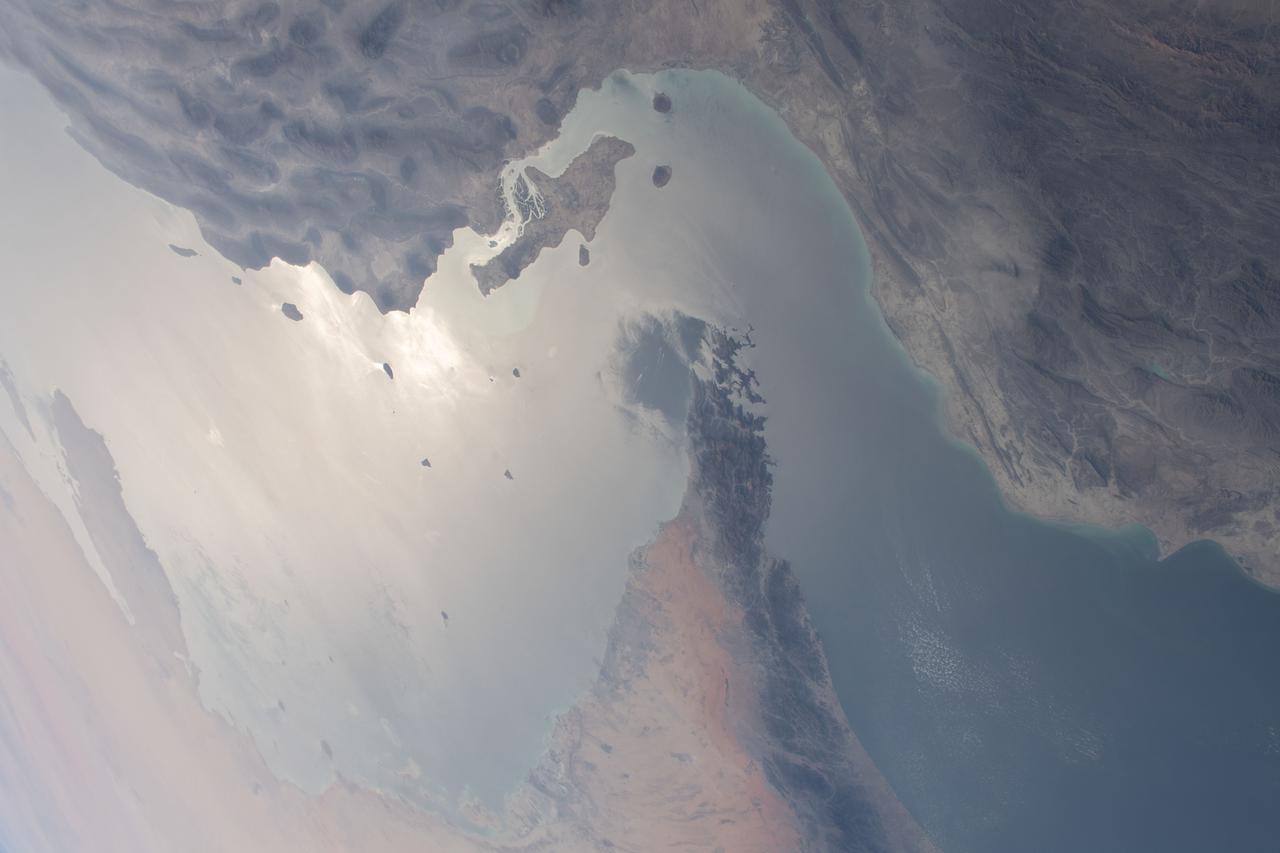
Iran has used what naval strategists call “anti-access” weapons to seize “sea control” of an area that stretches from north to south, west to east, across the Persian Gulf, beyond the Strait of Hormuz and well out into the Gulf of Oman. This strategy did not merely “close the Strait”. Instead, it has delivered to Iran substantial control over which ships enter and leave the ports of eight nations, and which vessels move and which do not throughout more than 300,000 square kilometres of maritime space. Under the ceasefire, Iran has indicated that it will limit the geographic scope of its threat to shipping only to vessels seeking to transit the Strait without first paying a toll in cryptocurrency or Chinese yuan.
Anti-access strategies are designed to keep a superior military away from one’s region. In this case, Iran’s layered mosaic of anti-ship weapons – missiles, surface and air drones, fast attack craft, unmanned submarines, sea mines, etc. – forced the United States to flush its surface forces from nearby waters even before the strikes began.
The US Navy carriers and destroyers that have assembled for the war operate well offshore. They launched their strikes from positions beyond the ranges of most Iranian weapons. The distances that Iran’s longer-range missiles must fly provide the Americans with a comfortable time to react.
By virtue of this sea control, Iran can threaten any ships in the area, regardless of their specific locations or operational status. Iran has attacked at least 25 commercial vessels and 10 energy and port infrastructure sites across the Strait of Hormuz, the Persian Gulf and the Gulf of Oman. The southernmost ship strike – against MKD Vyom 100 km east of Muscat, Oman – and northernmost strike – against a pair of vessels that had just loaded cargo in Basra, Iraq – illustrate the range of Iran’s reach.
This is not to say that Iran’s sea control has been absolute or uncontested. The United States has been able to reach into the areas with strikes that have essentially eliminated Iran’s navy. If any parts of the fleet survive, they are just small boats hidden or disguised. It also appears that coastal states such as the United Arab Emirates are able to provide some degree of overwatch defence for the vessels clustered around their ports.
Yet, Iranian weapons can reach every ship in the region, and this threat has brought most commercial traffic to a halt. More than 600 ships that would normally be conveying exports from Persian Gulf ports are waiting for risks to subside.
On 2 March, a senior Iranian Revolutionary Guard Corps adviser announced, “The strait is closed. If anyone tries to pass, the heroes of the Revolutionary Guards and the regular navy will set those ships ablaze.” However, within days, Iran displayed that it was able to select its targets, picking and choosing which vessel could travel where. At first, the movements were confined to Iranian ships and the “shadow fleet” of vessels that carry its illicit petroleum exports.
After that, Iran granted transit permission to a wider range of partners. On 12 March, in return for pledges of friendship, Iran granted passage to Pakistani and Indian vessels. On 22 March, Iran sent a letter to members of the International Maritime Organization explaining that ships of “non-hostile” nations, defined as those that “neither participate in nor support acts of aggression against Iran” are free to transit. “Traffic has not been suspended”, the letter stated. Since then, a growing number of nations have achieved friend status. These include China, Russia, Sri Lanka, Bangladesh, Iraq, Malaysia (a top-ten global nation in tanker operations), and two US treaty allies: the Philippines and Thailand.
Beyond the nationally organised bilateral deals, Iran set up a toll system under which ships may transit from the Persian Gulf by making payment, believed to be around US$2 million. These vessels do not sail through the standard shipping lane that passes through the centre of the Strait, but instead follow a path closer to Iran, where sea control is strongest.
Trade never stopped. Instead, it adapted into a structure that is more variable, lower in volume and less efficient. According to Lloyd’s List, a definitive source for shipping news, over 140 ships had transited the Strait of Hormuz in the first 25 days of March. Before the war, a similar count might transit in a single day. Many of the maritime domain awareness specialists with whom I work believe this was a conservative count, the sort that a paper of record will vouch for after full verification. Several ships are moving undercover with transponders switched off and identities obscured. In effect, they disappear from commercial tracking systems, only to reappear a week or so later, when they are far into the Indian Ocean. Thus, the actual count has been obscured and is uncertain.
It is unlikely that any amount of bombing can eliminate Iran’s ability to hold shipping at risk. Its anti-access systems-of-systems are so redundant, resilient and replenishable that they are exceptionally difficult to neutralise. This is why global attention had turned to the prospect of naval escorts. Indeed, the world’s advanced navies demonstrate the technical capacity to provide defensive umbrellas for nearby ships. International coalitions provided escorts to ships in the Red Sea when they were under threat from Iranian weapons employed by the Houthis. Yet, despite the escorts, the Houthis were able to sink four ships in 2024. In contrast to those operations in the Red Sea, escorting ships through the Strait of Hormuz would not be feasible at any meaningful scale due to the much larger volume of Iranian weapons and larger threat area. Vessels would need escorts all the way from Persian Gulf ports until well out into the Gulf of Oman.
The ceasefire is generally good news. Yet, maritime trade has not returned to normal. Iran still has the capability to fire on ships across the region at will. It has decided to now focus its watch on the Strait of Hormuz, where it will allow about a dozen toll-paying ships to transit per day. As the belligerents seek to shore up their gains from the conflict thus far, sustaining sea control will be an Iranian priority. In particular, it will assert dominance over the Strait.
On the current trajectory, this all points to a strategic win for Iran at the cost of global markets and its listed enemies. Iranian petroleum will make it to buyers, while Iran gains a spigot to regulate the volume of sales from the other Gulf states. One presumes Iran will prioritise Iraq (a friend) at the expense of those Gulf states that host US forces. This situation will not be tolerable for long. So, either an international coalition needs to come together to improve the situation through diplomacy, or else we can expect fighting to resume.
John Bradford is a lecturer at the S. Rajaratnam School of International Studies (RSIS) and the Executive Director of the Yokosuka Council on Asia-Pacific Studies (www.YCAPS.org). His research focuses on Indo-Pacific maritime security and regional security cooperation.
KEY TAKEAWAYS
• Since the start of the Israel-United States-Iran War, Iran has targeted commercial shipping not just in the Strait of Hormuz but throughout the Persian Gulf and into the Gulf of Oman.
• Iran’s anti-access strategy has earned it “sea control” over a vast maritime space, and it has exercised that power to control the movement of shipping throughout that area.
• In the wake of the 8 April 2026 ceasefire, Iran is focusing that sea control on the Strait of Hormuz, thereby maintaining its control over the flow of the region’s exports to international markets.
COMMENTARY
“The Strait of Hormuz is closed.” This sentence seemed to find its way into every report and analysis related to the six weeks of active war against Iran, the knock-on impacts on trade, and the developing energy crisis. It was pithy and easily splices into a headline. However, it was also incorrect. The formulation misrepresented what Iran was doing and the geographic scope of its actions. Ironically, it has become more accurate since the 8 April US-Iranian ceasefire as Iran has shifted from targeting a wide variety of vessels across a vast expanse to denying access to the Strait of Hormuz to all but a limited number of vessels .
Iran has used what naval strategists call “anti-access” weapons to seize “sea control” of an area that stretches from north to south, west to east, across the Persian Gulf, beyond the Strait of Hormuz and well out into the Gulf of Oman. This strategy did not merely “close the Strait”. Instead, it has delivered to Iran substantial control over which ships enter and leave the ports of eight nations, and which vessels move and which do not throughout more than 300,000 square kilometres of maritime space. Under the ceasefire, Iran has indicated that it will limit the geographic scope of its threat to shipping only to vessels seeking to transit the Strait without first paying a toll in cryptocurrency or Chinese yuan.
Anti-access strategies are designed to keep a superior military away from one’s region. In this case, Iran’s layered mosaic of anti-ship weapons – missiles, surface and air drones, fast attack craft, unmanned submarines, sea mines, etc. – forced the United States to flush its surface forces from nearby waters even before the strikes began.
The US Navy carriers and destroyers that have assembled for the war operate well offshore. They launched their strikes from positions beyond the ranges of most Iranian weapons. The distances that Iran’s longer-range missiles must fly provide the Americans with a comfortable time to react.
By virtue of this sea control, Iran can threaten any ships in the area, regardless of their specific locations or operational status. Iran has attacked at least 25 commercial vessels and 10 energy and port infrastructure sites across the Strait of Hormuz, the Persian Gulf and the Gulf of Oman. The southernmost ship strike – against MKD Vyom 100 km east of Muscat, Oman – and northernmost strike – against a pair of vessels that had just loaded cargo in Basra, Iraq – illustrate the range of Iran’s reach.
This is not to say that Iran’s sea control has been absolute or uncontested. The United States has been able to reach into the areas with strikes that have essentially eliminated Iran’s navy. If any parts of the fleet survive, they are just small boats hidden or disguised. It also appears that coastal states such as the United Arab Emirates are able to provide some degree of overwatch defence for the vessels clustered around their ports.
Yet, Iranian weapons can reach every ship in the region, and this threat has brought most commercial traffic to a halt. More than 600 ships that would normally be conveying exports from Persian Gulf ports are waiting for risks to subside.
On 2 March, a senior Iranian Revolutionary Guard Corps adviser announced, “The strait is closed. If anyone tries to pass, the heroes of the Revolutionary Guards and the regular navy will set those ships ablaze.” However, within days, Iran displayed that it was able to select its targets, picking and choosing which vessel could travel where. At first, the movements were confined to Iranian ships and the “shadow fleet” of vessels that carry its illicit petroleum exports.
After that, Iran granted transit permission to a wider range of partners. On 12 March, in return for pledges of friendship, Iran granted passage to Pakistani and Indian vessels. On 22 March, Iran sent a letter to members of the International Maritime Organization explaining that ships of “non-hostile” nations, defined as those that “neither participate in nor support acts of aggression against Iran” are free to transit. “Traffic has not been suspended”, the letter stated. Since then, a growing number of nations have achieved friend status. These include China, Russia, Sri Lanka, Bangladesh, Iraq, Malaysia (a top-ten global nation in tanker operations), and two US treaty allies: the Philippines and Thailand.
Beyond the nationally organised bilateral deals, Iran set up a toll system under which ships may transit from the Persian Gulf by making payment, believed to be around US$2 million. These vessels do not sail through the standard shipping lane that passes through the centre of the Strait, but instead follow a path closer to Iran, where sea control is strongest.
Trade never stopped. Instead, it adapted into a structure that is more variable, lower in volume and less efficient. According to Lloyd’s List, a definitive source for shipping news, over 140 ships had transited the Strait of Hormuz in the first 25 days of March. Before the war, a similar count might transit in a single day. Many of the maritime domain awareness specialists with whom I work believe this was a conservative count, the sort that a paper of record will vouch for after full verification. Several ships are moving undercover with transponders switched off and identities obscured. In effect, they disappear from commercial tracking systems, only to reappear a week or so later, when they are far into the Indian Ocean. Thus, the actual count has been obscured and is uncertain.
It is unlikely that any amount of bombing can eliminate Iran’s ability to hold shipping at risk. Its anti-access systems-of-systems are so redundant, resilient and replenishable that they are exceptionally difficult to neutralise. This is why global attention had turned to the prospect of naval escorts. Indeed, the world’s advanced navies demonstrate the technical capacity to provide defensive umbrellas for nearby ships. International coalitions provided escorts to ships in the Red Sea when they were under threat from Iranian weapons employed by the Houthis. Yet, despite the escorts, the Houthis were able to sink four ships in 2024. In contrast to those operations in the Red Sea, escorting ships through the Strait of Hormuz would not be feasible at any meaningful scale due to the much larger volume of Iranian weapons and larger threat area. Vessels would need escorts all the way from Persian Gulf ports until well out into the Gulf of Oman.
The ceasefire is generally good news. Yet, maritime trade has not returned to normal. Iran still has the capability to fire on ships across the region at will. It has decided to now focus its watch on the Strait of Hormuz, where it will allow about a dozen toll-paying ships to transit per day. As the belligerents seek to shore up their gains from the conflict thus far, sustaining sea control will be an Iranian priority. In particular, it will assert dominance over the Strait.
On the current trajectory, this all points to a strategic win for Iran at the cost of global markets and its listed enemies. Iranian petroleum will make it to buyers, while Iran gains a spigot to regulate the volume of sales from the other Gulf states. One presumes Iran will prioritise Iraq (a friend) at the expense of those Gulf states that host US forces. This situation will not be tolerable for long. So, either an international coalition needs to come together to improve the situation through diplomacy, or else we can expect fighting to resume.
John Bradford is a lecturer at the S. Rajaratnam School of International Studies (RSIS) and the Executive Director of the Yokosuka Council on Asia-Pacific Studies (www.YCAPS.org). His research focuses on Indo-Pacific maritime security and regional security cooperation.