


05 May 2026

IP26064 | Thunder in Silence: Is China Entering a Copper Moment?

KEY TAKEAWAYS
• A copper shock could trigger widespread panic due to its extensive use across everyday technologies and industries.
• China’s dominance in refined copper is primarily shaped by industrial policy and state-owned enterprises, whose decision-making is strongly influenced by the Chinese government.
• Despite China’s reliance on imported upstream inputs, its ability to shape midstream copper product price movements remains significant.
COMMENTARY
Rare earths are China’s trump card in escalating tensions with the US government. However, they represent only one dimension of global asymmetric dependence on China for metals that form the backbone of the global economy. China has quietly established itself as indispensable in the copper supply chain. A key concern for global policymakers and technology industries is the extent to which China could use copper for geostrategic objectives.
China’s efforts to translate market dominance into geostrategic potential were highlighted in early 2026, when the state‑backed China Nonferrous Metals Industry Association recommended expanding strategic copper reserves while including copper concentrates in China’s strategic reserves. Rather than overt export restriction, China’s power lies more in the pricing and allocation decisions of a concentrated processing node.
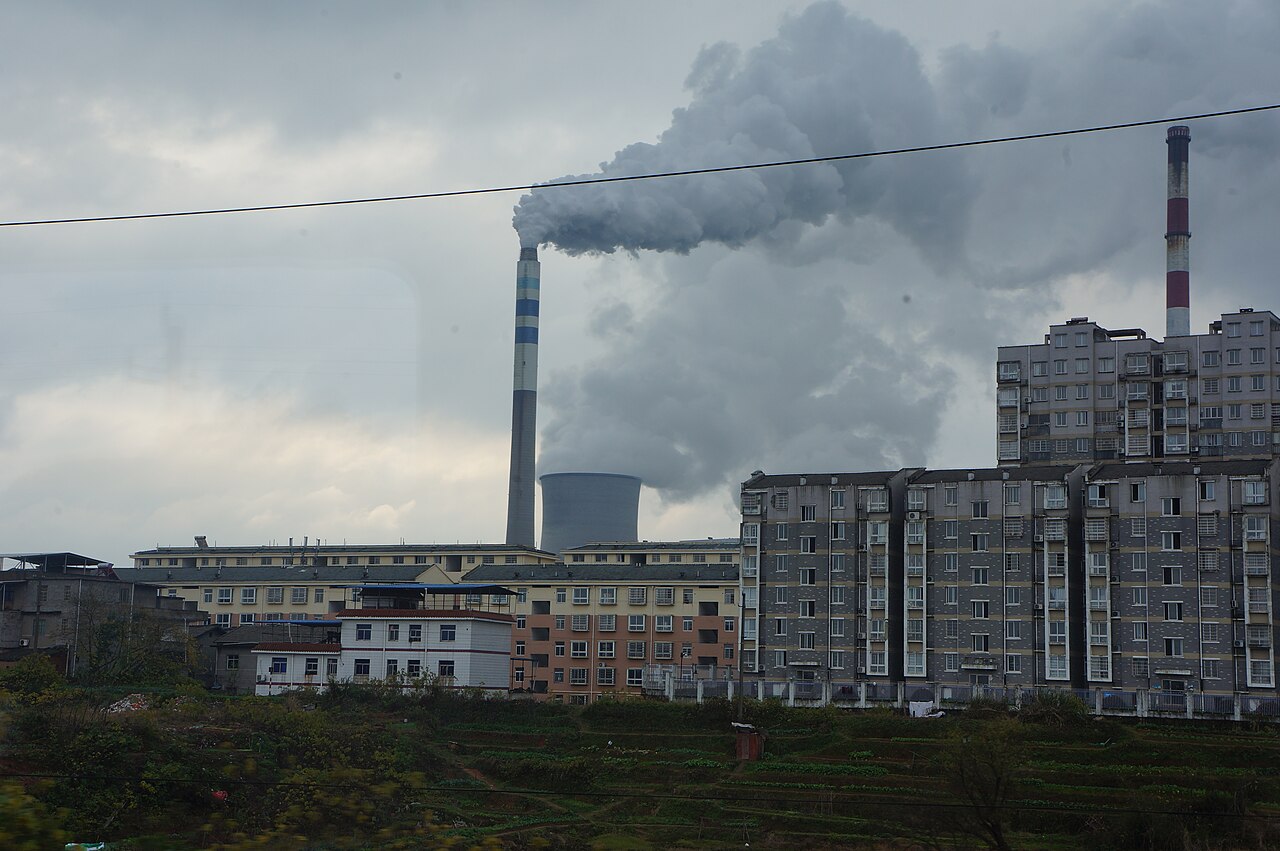
Image source: MNXANL, CC BY-SA 4.0, via Wikimedia Commons.
China’s Power in the Copper Industry
Unlike rare earths, where China dominates nearly every stage of the supply chain, its strength in the copper industry lies in the transformation of raw concentrate into refined metal. For instance, it accounts for over 50% of global copper refining capacity and possesses the world’s largest smelting capacity. In recent years, China has rapidly accelerated the development of its copper industry. China has accounted for 75% of global smelter capacity growth since 2000.
China’s leading copper companies are predominantly state-owned enterprises (SOEs), reflecting Beijing’s emphasis on exerting state influence over the sector. For instance, Jiangxi Copper, the largest copper producer in China, operates under close state oversight, with the Jiangxi Provincial State-owned Assets Supervision and Administration Commission (SASAC) being the actual controller of the company. Additionally, government support such as subsidised electricity costs has provided Chinese smelters significant cost advantages over others. Such an edge proved critical during periods of price fluctuations, allowing Chinese companies to sustain margins while their competitors struggled.
China’s dominance in the global market is reinforced by the absence of effective alternatives. For instance, Indian mid-stream processors reportedly operate at low utilisation rates, despite government initiatives to boost domestic copper production. The United States also faces significant bottlenecks in copper processing, with no new primary smelter project approved since 1971.
Consequential Geostrategic Implications
It is undeniable that Chinese copper refiners face their own vulnerability, which may limit Beijing’s willingness and ability to use the metal for export restrictions as it has with rare earths. For instance, Chinese refineries and smelters heavily rely on sourcing raw materials globally, with copper ores and concentrates being the 7th most imported product in China in 2025. Additionally, China’s domestic mining capacity remains limited and has to significantly rely on external suppliers such as Chile, Peru, and Mexico. Most of China’s copper deposits are of low to medium grade, relatively lower grade as compared with those found in countries such as Chile and Peru. In 2023, it produced around 12 million tonnes of refined copper but mined output only amounted to around 1.7 million tonnes. Aggressive moves to cut off copper exports to geopolitical rivals such as the United States and its allies risk disrupting China’s own refining and smelting industry. Thus, the weaponisation logic may not be Beijing’s optimal strategy.
However, China’s geostrategic potential in copper could still be significant. Copper pricing is a crucial factor sustaining the global economy. Fluctuations in refined copper prices could trigger widespread industry panic, given copper’s critical role across energy transition technologies from solar panels and wind turbines to energy storage systems and electrical applications. Refineries outside China are unlikely to scale up to sufficient output in the short term to compensate. For instance, China dominates global smelting capacity, operating over 60 copper smelters compared to just two smelters in the United States. Electrification of grids and construction projects would be significantly impacted, given their reliance on copper supplies. Renewable energy infrastructure and vehicle electrification would also face constraints, as both depend heavily on copper.
Heightened national security concerns are driving increased attention among policymakers to the risk of a copper crisis. The US commerce secretary recommended a phased universal tariff on refined copper of 15% in 2027 and 30% in 2028. In April 2026, the US government announced that it will apply Section 232 tariffs to the full customs value of certain imported copper products. While tariffs could facilitate the development of smelting capacity in the United States domestically in theory, in reality, they may render United States’ copper less competitive. The cost of wiring and other copper products for downstream industries will increase, and copper producers could be pressured by reduced margins. Additionally, the impact on China is likely to be limited. In 2024, around 14,000 tonnes of copper pipe fittings were the only significant copper product exported from China to the United States. Beyond this, China exports few other copper products to the United States.
Conclusion: China’s Powerhouse and Hurdles on the Horizon
In the foreseeable future, China is likely to strengthen its dominance in refined copper, with provincial governments taking the lead. For instance, Shandong province plans to develop a provincial copper industry that will be worth more than 200 billion yuan by 2027. In its 15th Five-Year Plan, Jiangxi province has pledged, to develop a world-leading hub for advanced copper-based new materials. The United States is unlikely to replace China due to a mismatch in its strategies. The US federal efforts focus on accelerating domestic mining, while a major constraint is limited smelting and refining infrastructure.
However, environmental externalities could become an increasingly significant hurdle for China as it expands such operations. A multimillion-pound copper alloy plant in Shifang was cancelled in 2012 following mass environmental protests. Additionally, at Guixi Copper Smelter, high levels of heavy metals concentration were found in local residents’ hair and urine samples. Adverse health effects were found even in people who lived 7 kilometres away. The Chinese Mining Association released Environmental, Social, and Governance guidelines at the end of 2025; however, they remain voluntary in practice, allowing companies room to scale back compliance. Pollution and health-related costs are likely to be the major challenges to China’s long-term dominance in the global copper supply chain and ultimately affect its ability to shape global copper pricing.
Xinyue Hu is a Senior Analyst in the China Programme at the Institute of Defence and Strategic Studies (IDSS), S. Rajaratnam School of International Studies (RSIS). Yaqi Li is an MSc (International Relations) candidate and a student research assistant at RSIS.
KEY TAKEAWAYS
• A copper shock could trigger widespread panic due to its extensive use across everyday technologies and industries.
• China’s dominance in refined copper is primarily shaped by industrial policy and state-owned enterprises, whose decision-making is strongly influenced by the Chinese government.
• Despite China’s reliance on imported upstream inputs, its ability to shape midstream copper product price movements remains significant.
COMMENTARY
Rare earths are China’s trump card in escalating tensions with the US government. However, they represent only one dimension of global asymmetric dependence on China for metals that form the backbone of the global economy. China has quietly established itself as indispensable in the copper supply chain. A key concern for global policymakers and technology industries is the extent to which China could use copper for geostrategic objectives.
China’s efforts to translate market dominance into geostrategic potential were highlighted in early 2026, when the state‑backed China Nonferrous Metals Industry Association recommended expanding strategic copper reserves while including copper concentrates in China’s strategic reserves. Rather than overt export restriction, China’s power lies more in the pricing and allocation decisions of a concentrated processing node.
Image source: MNXANL, CC BY-SA 4.0, via Wikimedia Commons.
China’s Power in the Copper Industry
Unlike rare earths, where China dominates nearly every stage of the supply chain, its strength in the copper industry lies in the transformation of raw concentrate into refined metal. For instance, it accounts for over 50% of global copper refining capacity and possesses the world’s largest smelting capacity. In recent years, China has rapidly accelerated the development of its copper industry. China has accounted for 75% of global smelter capacity growth since 2000.
China’s leading copper companies are predominantly state-owned enterprises (SOEs), reflecting Beijing’s emphasis on exerting state influence over the sector. For instance, Jiangxi Copper, the largest copper producer in China, operates under close state oversight, with the Jiangxi Provincial State-owned Assets Supervision and Administration Commission (SASAC) being the actual controller of the company. Additionally, government support such as subsidised electricity costs has provided Chinese smelters significant cost advantages over others. Such an edge proved critical during periods of price fluctuations, allowing Chinese companies to sustain margins while their competitors struggled.
China’s dominance in the global market is reinforced by the absence of effective alternatives. For instance, Indian mid-stream processors reportedly operate at low utilisation rates, despite government initiatives to boost domestic copper production. The United States also faces significant bottlenecks in copper processing, with no new primary smelter project approved since 1971.
Consequential Geostrategic Implications
It is undeniable that Chinese copper refiners face their own vulnerability, which may limit Beijing’s willingness and ability to use the metal for export restrictions as it has with rare earths. For instance, Chinese refineries and smelters heavily rely on sourcing raw materials globally, with copper ores and concentrates being the 7th most imported product in China in 2025. Additionally, China’s domestic mining capacity remains limited and has to significantly rely on external suppliers such as Chile, Peru, and Mexico. Most of China’s copper deposits are of low to medium grade, relatively lower grade as compared with those found in countries such as Chile and Peru. In 2023, it produced around 12 million tonnes of refined copper but mined output only amounted to around 1.7 million tonnes. Aggressive moves to cut off copper exports to geopolitical rivals such as the United States and its allies risk disrupting China’s own refining and smelting industry. Thus, the weaponisation logic may not be Beijing’s optimal strategy.
However, China’s geostrategic potential in copper could still be significant. Copper pricing is a crucial factor sustaining the global economy. Fluctuations in refined copper prices could trigger widespread industry panic, given copper’s critical role across energy transition technologies from solar panels and wind turbines to energy storage systems and electrical applications. Refineries outside China are unlikely to scale up to sufficient output in the short term to compensate. For instance, China dominates global smelting capacity, operating over 60 copper smelters compared to just two smelters in the United States. Electrification of grids and construction projects would be significantly impacted, given their reliance on copper supplies. Renewable energy infrastructure and vehicle electrification would also face constraints, as both depend heavily on copper.
Heightened national security concerns are driving increased attention among policymakers to the risk of a copper crisis. The US commerce secretary recommended a phased universal tariff on refined copper of 15% in 2027 and 30% in 2028. In April 2026, the US government announced that it will apply Section 232 tariffs to the full customs value of certain imported copper products. While tariffs could facilitate the development of smelting capacity in the United States domestically in theory, in reality, they may render United States’ copper less competitive. The cost of wiring and other copper products for downstream industries will increase, and copper producers could be pressured by reduced margins. Additionally, the impact on China is likely to be limited. In 2024, around 14,000 tonnes of copper pipe fittings were the only significant copper product exported from China to the United States. Beyond this, China exports few other copper products to the United States.
Conclusion: China’s Powerhouse and Hurdles on the Horizon
In the foreseeable future, China is likely to strengthen its dominance in refined copper, with provincial governments taking the lead. For instance, Shandong province plans to develop a provincial copper industry that will be worth more than 200 billion yuan by 2027. In its 15th Five-Year Plan, Jiangxi province has pledged, to develop a world-leading hub for advanced copper-based new materials. The United States is unlikely to replace China due to a mismatch in its strategies. The US federal efforts focus on accelerating domestic mining, while a major constraint is limited smelting and refining infrastructure.
However, environmental externalities could become an increasingly significant hurdle for China as it expands such operations. A multimillion-pound copper alloy plant in Shifang was cancelled in 2012 following mass environmental protests. Additionally, at Guixi Copper Smelter, high levels of heavy metals concentration were found in local residents’ hair and urine samples. Adverse health effects were found even in people who lived 7 kilometres away. The Chinese Mining Association released Environmental, Social, and Governance guidelines at the end of 2025; however, they remain voluntary in practice, allowing companies room to scale back compliance. Pollution and health-related costs are likely to be the major challenges to China’s long-term dominance in the global copper supply chain and ultimately affect its ability to shape global copper pricing.
Xinyue Hu is a Senior Analyst in the China Programme at the Institute of Defence and Strategic Studies (IDSS), S. Rajaratnam School of International Studies (RSIS). Yaqi Li is an MSc (International Relations) candidate and a student research assistant at RSIS.


