


05 June 2026
IP26070 | India’s Growing Naval Diplomacy in the Indian Ocean: Challenges and Opportunities

KEY TAKEAWAYS
• India’s growing naval diplomacy in the Indian Ocean region hinges on four pillars – capacity building, capability enhancement, constructive engagement and collaborative efforts.
• Since 2014, the Indian Navy has institutionalised various forms of engagement through each pillar with the Indian Ocean littoral and island states.
• India needs to now focus on translating this growing engagement into tangible strategic outcomes.
COMMENTARY
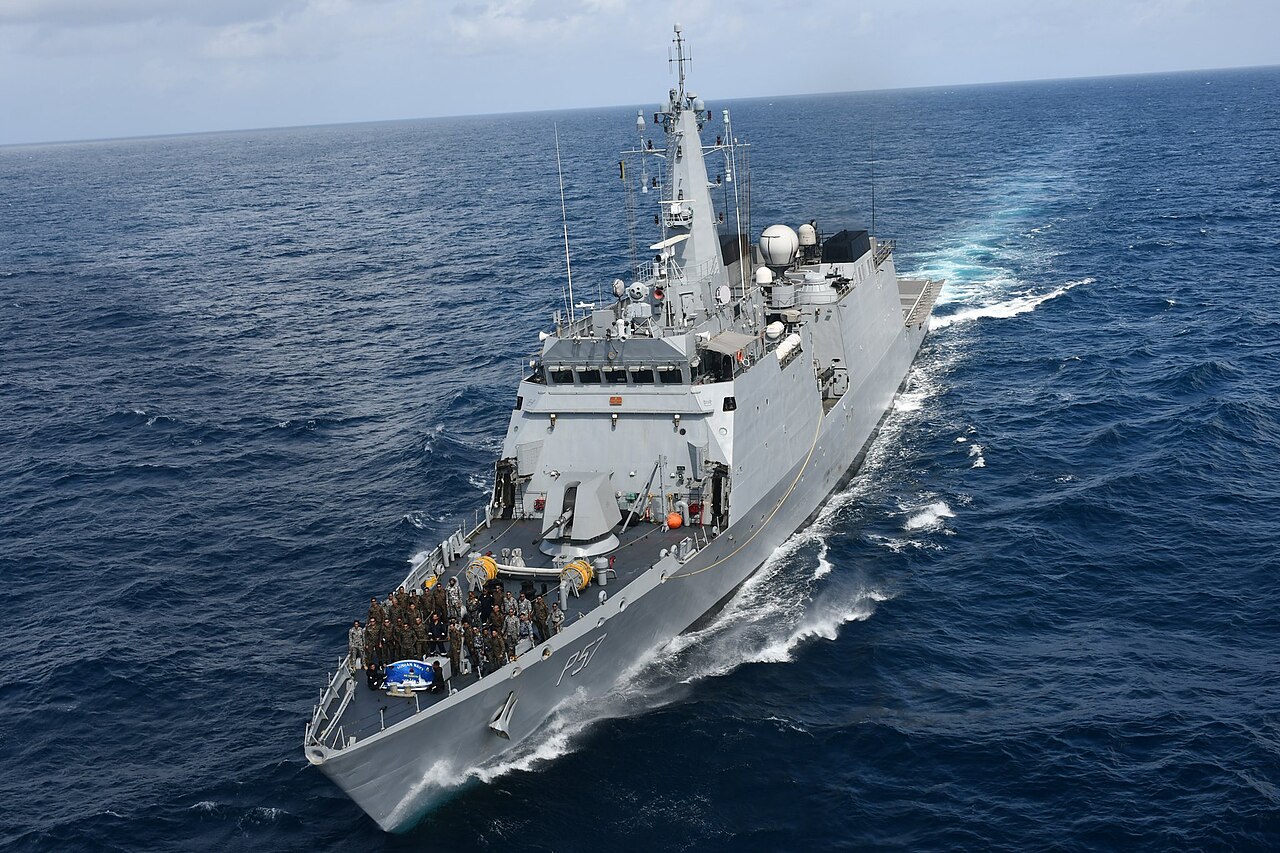
On 20 May, the Indian Navy ship INS Sunayna, sailing under the aegis of an initiative known as IOS SAGAR, completed a seven-week voyage that involved visiting seven countries, six of which are in the eastern Indian Ocean region (IOR). The offshore patrol vessel docked in Singapore on 26 April and also visited Indonesia, Thailand and Myanmar.
IOS (Indian Ocean Ship) SAGAR is an initiative by the Indian Navy to increase its multilateral engagement in the IOR. Under the initiative, naval personnel from partner countries in the IOR deploy onboard an Indian vessel (designated IOS SAGAR) as it conducts an operational deployment around the region. In the latest iteration, personnel from 16 IOR navies were present on INS Sunayna. Prior to the deployment, the ship’s participating personnel underwent a two-week harbour phase, during which they undertook “professional exchanges, training, and coordination” exercises.
IOS SAGAR highlights India’s expanding engagement in the maritime domain. It is one of several recent initiatives that the Indian Navy is undertaking to deepen engagements in the IOR and bolster its standing as a preferred security partner.
A Decade of India’s Naval Diplomacy in the Indian Ocean
In 2015, Prime Minister Narendra Modi articulated a model for India’s engagement within its primary maritime sphere, the IOR, called SAGAR or Security and Growth for All in the Region. During a visit to Mauritius in March 2025, Modi launched a broader concept, MAHASAGAR or Mutual and Holistic Advancement for Security and Growth Across Regions. MAHASAGAR entails a larger geographical scope, with the prime minister invoking the term in engagements not only with the Philippines but also the Caribbean. MAHASAGAR looks to enhance cooperation specifically with the Global South countries. From public statements, especially speeches by high-level cabinet officials, including the prime minister, both SAGAR and MAHASAGAR appear as geopolitical visions and statements of intent rather than a clear doctrine or strategy.
Despite these changes, India’s naval diplomacy, which is central to both the SAGAR and MAHASAGAR visions, has revolved around four pillars. These are capacity building, capability enhancement, constructive engagement and collaborative efforts.
Capacity building initiatives involve developing the hardware capabilities of navies and coast guards of Indian Ocean states. India has transferred 33 coastal patrol vessels of different types and nine surveillance aircraft to Mozambique, Seychelles, the Maldives, Mauritius, Sri Lanka and Myanmar. It is also developing maritime surveillance facilities in Sri Lanka, Seychelles, Mauritius and the Maldives. In 2025, India announced that it would help establish a National Maritime Information Sharing Centre in Mauritius.
Capability enhancement focuses on qualitative elements of maritime strength. India provides training, technical, materiel and infrastructure support to the maritime forces of IOR states. It has trained around 20,000 personnel from 45 countries across the globe and deployed nearly 40 mobile training teams to states in the IOR and Africa. Mobile training teams involve small detachments of personnel who train partner militaries in a range of activities, from counterterrorism to maritime special operations. India has also partnered with island states to conduct hydrographic surveys of their coastal waters.
Under the final two pillars, India is building a network of institutions and frameworks within the IOR, buttressed by increasing multilateral engagements. The Indian Ocean Naval Symposium (IONS) and the Information Fusion Centre – Indian Ocean Region (IFC-IOR) are possibly the largest such engagements involving representatives from several IOR states. More recent initiatives include IOS SAGAR (described above), the ASEAN-India Maritime Exercise (AIME) of 2023 and the Africa India Key Maritime (AIKEYME) initiative in 2025. Participants in the AIKEYME initiative undertake table-top exercises and information-sharing sessions as well as training on seamanship, search and rescue, visit board search and seizure (VBSS) and heliborne operations.
These activities are buttressed by India’s own power projection operations within the region. They are centred around the notion of mission-based deployments (MBD) launched in 2016–2017. The aim of MBDs is to remain continuously deployed and maintain around-the-clock surveillance on key maritime choke points and sea lines of communication into and around the IOR. To further improve its power projection capabilities, India has signed logistics agreements with major maritime partners like the United States, France, Singapore, Australia and Vietnam, among others. These agreements grant the Indian Navy access to overseas bases and resupply assets, enabling more sustained deployments and close coordination of naval and aerial deployments in the IOR with these countries. As a result, India has been able to extend its visibility, presence and operational reach.
Challenges and Opportunities Confronting the Indian Navy
The most pressing challenge for the Indian Navy is securing the requisite resources to support this enhanced posture. Through most of India’s history, the Indian Army has garnered the lion’s share of resources, followed by the Indian Air force. The Indian Navy has been regarded as the Cinderella service, receiving the lowest allocation of budgetary resources. This resource crunch affects the Indian Navy’s ability to effectively meet its growing commitments.
In 2021, the Indian Navy had to cut down its desired force structure, reducing its target, set in 2015, of becoming a 200-ship navy by 2027 to 170 ships. Apart from simply adding ships to its inventory, the Indian Navy also needs to prudently adapt its ship refit and maintenance strategies. In 2014, the Comptroller and Auditor General criticised the Indian Navy for several delays in refits and repairs of Indian warships, noting that the navy’s “operational readiness to meet ‘contemporary’ threats and challenges was being adversely hit”. Some 10 years on, naval analysts continue to worry about the maintenance of Indian naval vessels, given the navy’s growing commitments. For MBDs, the Indian Navy deploys 12–15 ships out to sea for around three months, which in effect requires 36–45 ships each year, with one set deployed, one set in transit, and one set in maintenance. These MBD numbers are separate from several other ships on other deployments throughout the year.
A recent bright spot for the Indian Navy is its ability to improve ship-construction timelines. India now constructs a naval warship in 31 months on average, down from the previous duration of 55–60 months. In 2025, India was adding a new warship every 40 days. This still pales in comparison with China, which adds a new ship every week on average and is expected to field 435 ships by 2030. Moreover, China already deploys ships into the Indian Ocean on a regular basis against the backdrop of its multifaceted engagement in South Asia and the IOR.
Notwithstanding the above challenges, improvements in Indian shipbuilding capabilities have led to more optimistic outlooks on force levels. Bureaucrats in New Delhi hope to reach a force level of 200 ships by 2035 and potentially even 230 ships by 2037.
In addition to resource constraints, India needs to confront a perception problem, especially in Southeast Asia. According to the ISEAS State of Southeast Asia 2026 report, which was based on elite perceptions, India’s perceived political and strategic influence has been declining, with only 1.6% of respondents in ASEAN as a whole ranking India as influential, down from 2.3% in 2025. India was ranked ASEAN’s seventh most important dialogue partner out of eleven such partners. Its ability to provide leadership in upholding the rules-based order was the lowest among ten major players surveyed.
These results suggest that India is unable to build consensus around its views on existing and emerging maritime threats and challenges in the region. It should leverage its growing multilateral engagement platforms – IONS, IFC-IOR, AIME, AIKEYME – towards this end. These platforms should not only highlight Indian sensitivities and concerns but also advance frameworks to address challenges jointly with partner countries. They should complement ongoing operational cooperation between the Indian Navy and navies of Southeast Asia and the Indian Ocean states. Such a comprehensive approach can help India translate growing engagement into strategic influence and tangible gains.
Nishant Rajeev is a Senior Analyst with the South Asia Programme at the S. Rajaratnam School of International Studies (RSIS).
KEY TAKEAWAYS
• India’s growing naval diplomacy in the Indian Ocean region hinges on four pillars – capacity building, capability enhancement, constructive engagement and collaborative efforts.
• Since 2014, the Indian Navy has institutionalised various forms of engagement through each pillar with the Indian Ocean littoral and island states.
• India needs to now focus on translating this growing engagement into tangible strategic outcomes.
COMMENTARY
On 20 May, the Indian Navy ship INS Sunayna, sailing under the aegis of an initiative known as IOS SAGAR, completed a seven-week voyage that involved visiting seven countries, six of which are in the eastern Indian Ocean region (IOR). The offshore patrol vessel docked in Singapore on 26 April and also visited Indonesia, Thailand and Myanmar.
IOS (Indian Ocean Ship) SAGAR is an initiative by the Indian Navy to increase its multilateral engagement in the IOR. Under the initiative, naval personnel from partner countries in the IOR deploy onboard an Indian vessel (designated IOS SAGAR) as it conducts an operational deployment around the region. In the latest iteration, personnel from 16 IOR navies were present on INS Sunayna. Prior to the deployment, the ship’s participating personnel underwent a two-week harbour phase, during which they undertook “professional exchanges, training, and coordination” exercises.
IOS SAGAR highlights India’s expanding engagement in the maritime domain. It is one of several recent initiatives that the Indian Navy is undertaking to deepen engagements in the IOR and bolster its standing as a preferred security partner.
A Decade of India’s Naval Diplomacy in the Indian Ocean
In 2015, Prime Minister Narendra Modi articulated a model for India’s engagement within its primary maritime sphere, the IOR, called SAGAR or Security and Growth for All in the Region. During a visit to Mauritius in March 2025, Modi launched a broader concept, MAHASAGAR or Mutual and Holistic Advancement for Security and Growth Across Regions. MAHASAGAR entails a larger geographical scope, with the prime minister invoking the term in engagements not only with the Philippines but also the Caribbean. MAHASAGAR looks to enhance cooperation specifically with the Global South countries. From public statements, especially speeches by high-level cabinet officials, including the prime minister, both SAGAR and MAHASAGAR appear as geopolitical visions and statements of intent rather than a clear doctrine or strategy.
Despite these changes, India’s naval diplomacy, which is central to both the SAGAR and MAHASAGAR visions, has revolved around four pillars. These are capacity building, capability enhancement, constructive engagement and collaborative efforts.
Capacity building initiatives involve developing the hardware capabilities of navies and coast guards of Indian Ocean states. India has transferred 33 coastal patrol vessels of different types and nine surveillance aircraft to Mozambique, Seychelles, the Maldives, Mauritius, Sri Lanka and Myanmar. It is also developing maritime surveillance facilities in Sri Lanka, Seychelles, Mauritius and the Maldives. In 2025, India announced that it would help establish a National Maritime Information Sharing Centre in Mauritius.
Capability enhancement focuses on qualitative elements of maritime strength. India provides training, technical, materiel and infrastructure support to the maritime forces of IOR states. It has trained around 20,000 personnel from 45 countries across the globe and deployed nearly 40 mobile training teams to states in the IOR and Africa. Mobile training teams involve small detachments of personnel who train partner militaries in a range of activities, from counterterrorism to maritime special operations. India has also partnered with island states to conduct hydrographic surveys of their coastal waters.
Under the final two pillars, India is building a network of institutions and frameworks within the IOR, buttressed by increasing multilateral engagements. The Indian Ocean Naval Symposium (IONS) and the Information Fusion Centre – Indian Ocean Region (IFC-IOR) are possibly the largest such engagements involving representatives from several IOR states. More recent initiatives include IOS SAGAR (described above), the ASEAN-India Maritime Exercise (AIME) of 2023 and the Africa India Key Maritime (AIKEYME) initiative in 2025. Participants in the AIKEYME initiative undertake table-top exercises and information-sharing sessions as well as training on seamanship, search and rescue, visit board search and seizure (VBSS) and heliborne operations.
These activities are buttressed by India’s own power projection operations within the region. They are centred around the notion of mission-based deployments (MBD) launched in 2016–2017. The aim of MBDs is to remain continuously deployed and maintain around-the-clock surveillance on key maritime choke points and sea lines of communication into and around the IOR. To further improve its power projection capabilities, India has signed logistics agreements with major maritime partners like the United States, France, Singapore, Australia and Vietnam, among others. These agreements grant the Indian Navy access to overseas bases and resupply assets, enabling more sustained deployments and close coordination of naval and aerial deployments in the IOR with these countries. As a result, India has been able to extend its visibility, presence and operational reach.
Challenges and Opportunities Confronting the Indian Navy
The most pressing challenge for the Indian Navy is securing the requisite resources to support this enhanced posture. Through most of India’s history, the Indian Army has garnered the lion’s share of resources, followed by the Indian Air force. The Indian Navy has been regarded as the Cinderella service, receiving the lowest allocation of budgetary resources. This resource crunch affects the Indian Navy’s ability to effectively meet its growing commitments.
In 2021, the Indian Navy had to cut down its desired force structure, reducing its target, set in 2015, of becoming a 200-ship navy by 2027 to 170 ships. Apart from simply adding ships to its inventory, the Indian Navy also needs to prudently adapt its ship refit and maintenance strategies. In 2014, the Comptroller and Auditor General criticised the Indian Navy for several delays in refits and repairs of Indian warships, noting that the navy’s “operational readiness to meet ‘contemporary’ threats and challenges was being adversely hit”. Some 10 years on, naval analysts continue to worry about the maintenance of Indian naval vessels, given the navy’s growing commitments. For MBDs, the Indian Navy deploys 12–15 ships out to sea for around three months, which in effect requires 36–45 ships each year, with one set deployed, one set in transit, and one set in maintenance. These MBD numbers are separate from several other ships on other deployments throughout the year.
A recent bright spot for the Indian Navy is its ability to improve ship-construction timelines. India now constructs a naval warship in 31 months on average, down from the previous duration of 55–60 months. In 2025, India was adding a new warship every 40 days. This still pales in comparison with China, which adds a new ship every week on average and is expected to field 435 ships by 2030. Moreover, China already deploys ships into the Indian Ocean on a regular basis against the backdrop of its multifaceted engagement in South Asia and the IOR.
Notwithstanding the above challenges, improvements in Indian shipbuilding capabilities have led to more optimistic outlooks on force levels. Bureaucrats in New Delhi hope to reach a force level of 200 ships by 2035 and potentially even 230 ships by 2037.
In addition to resource constraints, India needs to confront a perception problem, especially in Southeast Asia. According to the ISEAS State of Southeast Asia 2026 report, which was based on elite perceptions, India’s perceived political and strategic influence has been declining, with only 1.6% of respondents in ASEAN as a whole ranking India as influential, down from 2.3% in 2025. India was ranked ASEAN’s seventh most important dialogue partner out of eleven such partners. Its ability to provide leadership in upholding the rules-based order was the lowest among ten major players surveyed.
These results suggest that India is unable to build consensus around its views on existing and emerging maritime threats and challenges in the region. It should leverage its growing multilateral engagement platforms – IONS, IFC-IOR, AIME, AIKEYME – towards this end. These platforms should not only highlight Indian sensitivities and concerns but also advance frameworks to address challenges jointly with partner countries. They should complement ongoing operational cooperation between the Indian Navy and navies of Southeast Asia and the Indian Ocean states. Such a comprehensive approach can help India translate growing engagement into strategic influence and tangible gains.
Nishant Rajeev is a Senior Analyst with the South Asia Programme at the S. Rajaratnam School of International Studies (RSIS).