

15 July 2026
IP26081 | A King in Paris: Understanding the Franco-Thai Diplomatic Momentum

KEY TAKEAWAYS
• The 28 June–2 July state visit by King Rama X and Queen Suthida – only the third visit by a Thai monarch to France – comes at a symbolically significant moment, coinciding with the 340th anniversary of Franco-Thai relations and the 170th anniversary of formal diplomatic ties between the two countries.
• The visit reflects France’s broader efforts to deepen its engagement with Southeast Asia as Paris seeks to expand its Indo-Pacific strategy beyond its traditional partners and position Thailand as a key regional pillar.
• Thailand, meanwhile, is looking to France as a credible “third path” amid intensifying US-China rivalry, using closer ties with Paris to diversify its strategic partnerships, including through cooperation on its OECD accession bid, nuclear energy, and space.
COMMENTARY
On 28 June 2026, King Maha Vajiralongkorn (Rama X) and Queen Suthida of Thailand arrived in Paris for a state visit – only the third ever undertaken by a Thai sovereign to France, following those of King Chulalongkorn (Rama V) in 1897 and King Bhumibol Adulyadej (Rama IX) in 1960. The visit coincided with the 170th anniversary of the establishment of diplomatic relations between France and Thailand and came shortly after Thai Prime Minister Anutin Charnvirakul’s official visit to Paris in May 2026, during which time the two governments adopted a three-year bilateral action plan focused on energy transition, sustainable development, innovation and space cooperation.
This convergence of high-level visits reflects a broader recalibration of France’s posture towards Southeast Asia as Paris seeks to extend its diplomatic reach beyond its traditional Indo-Pacific partners. For Bangkok, France is a valuable partner for diversifying its external engagement amid a fluctuating geopolitical environment.
This paper argues that the current momentum in Franco-Thai relations is the product of two intertwined dynamics: first, a long and at times fraught shared history spanning over three centuries; and second, a mutually crucial contemporary strategic alignment.
340 Years of Mutual History, 170 Years of Diplomatic Relations
Thailand is France’s oldest partner in Southeast Asia. Following the settlement of Christian missionaries in 1665 in Ayutthaya, formal diplomatic contact began through reciprocal missions – by Chevalier de Chaumont in 1685 and Kosa Pan in 1686. At the time, King Louis XIV pursued a dual ambition: converting King Narai to Catholicism and using Siam as a foothold to counter the Anglo-Dutch spice trade monopoly, while Siam sought a counterweight to Dutch regional domination. These early contacts yielded no lasting results – France’s growing influence at Narai’s court triggered a local backlash and the 1688 revolution. Over 160 years passed before France re-engaged with Siam. This engagement was formalised by the 1856 Franco-Siamese Treaty, marking the start of modern diplomatic relations and the heightening of geopolitical rivalry in Asia.
French colonial expansion in Indochina through the establishment of protectorates in Cambodia (1863) and Laos (1893) brought Paris into direct territorial competition with Siam. A series of unequal treaties (1867, 1893, 1904, and 1907) stripped Siam of territory, including the area around the Preah Vihear Temple, which is contested today by both Thailand and Cambodia. This colonial “gunboat diplomacy” fostered deep resentment, culminating in the 1940–1941 Franco-Thai War. Under Japanese mediation, Vichy France was compelled to cede Battambang Province and much of neighbouring Siem Reap to Bangkok. These gains proved temporary: Thailand returned these territories under the Franco-Siamese Settlement Agreement signed in Washington on 17 November 1946.
Yet cultural ties endured. In the early 20th century, several future leaders of the Thai elite studied and received professional training in France. Among them were Field Marshal Plaek Phibunsongkhram (Phibun) and Pridi Banomyong, two prominent figures emerging from Siam’s 1932 transition to a constitutional monarchy who later became wartime leaders. Phibun drove Thai irredentist nationalism that set off the war with Vichy France. Thanat Khoman, one of the founding fathers of ASEAN, was likewise French-educated.
This tumultuous but layered history continues to shape a relationship in which Thailand’s strategic relevance now makes it a key partner in France’s ASEAN engagement.
Thailand: A Key Pillar of France’s ASEAN Pivot
Since unveiling its Indo-Pacific strategy in 2018, France has structured its regional approach around two pillars: sovereignty through its Indian and Pacific territories, and a network of strategic partnerships. Southeast Asia has become an increasingly important priority, with Thailand emerging as a key regional partner.
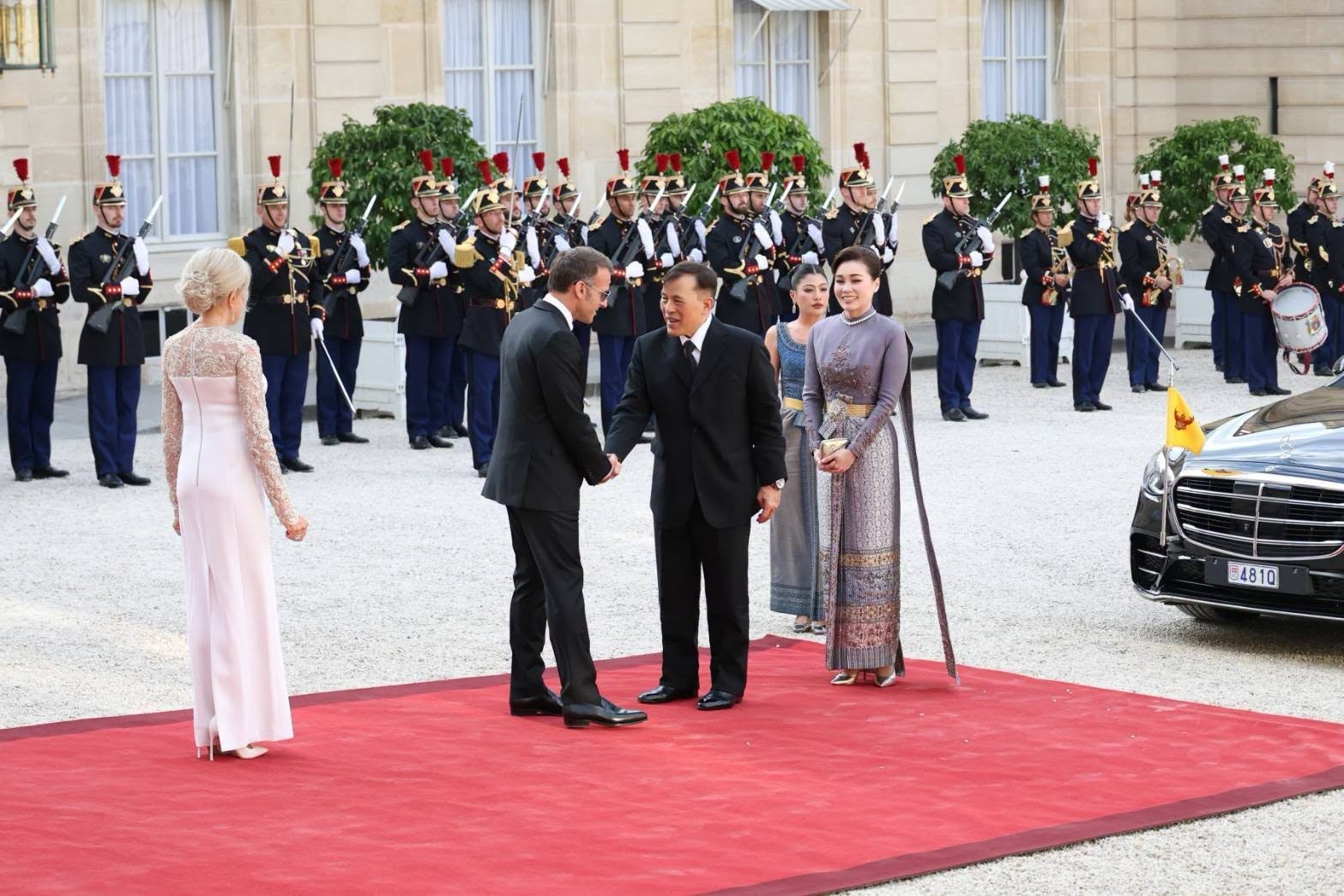
Bangkok occupies a unique position in this engagement. Its accession to the Organisation internationale de la Francophonie in 2008 reflects longstanding cultural and educational ties, while its invitation to French President Emmanuel Macron to attend the 2022 APEC Summit in Bangkok – the first ever extended to a European head of state – underscored the relationship’s renewed political significance.
Strong human and economic ties reinforce this partnership: Thailand hosts Southeast Asia’s largest French expatriate community (around 16,000 people) and nearly 800,000 French tourists yearly. It is also France’s third-largest economic partner in ASEAN, with some 300 French companies employing 45,000 people across the aerospace, automotive, healthcare, logistics and luxury goods sectors.
Defence cooperation, though modest, has deepened through combined exercises, port calls, officer training and procurement ties involving Thai purchases of artillery and helicopters – a solid foundation for further collaboration.
France: A Credible Third Path for Thailand
A core objective of Thailand’s international engagement is to gain support – in diplomatic backing, investments, and expertise – to underpin national development and security. Current targets include joining the Organisation for Economic Co-operation and Development (OECD) by 2028 and becoming a high-income economy by 2037. Another fundamental purpose is to maximise its strategic autonomy. Thailand has intensified its efforts to connect with countries other than its major partners, the United States and China, whose respective unpredictability and economic-security overreach have grown unsettling. European powers represent the viable “third path” as they face similar strategic predicaments vis-à-vis the major powers while offering investments and expertise in the sectors that Thailand will need in future. Furthermore, in view of Europe’s well-known adherence to the rule of law and high standards, a closer relationship with the region will help strengthen Thailand’s image as a mature, responsible international actor.
France stands out in this respect not only by steering European leadership with Germany but also through its permanent seat on the United Nations Security Council and its status as a nuclear weapon state recognised under the Nuclear Non-Proliferation Treaty. The latter matters to Thailand more than is generally understood. The setting up of small modular reactor plants was among the areas of scientific cooperation discussed by Thai and French delegates in May 2026. Despite intermittent efforts, Thailand has endeavoured to develop civilian nuclear capabilities since the late 1960s, and public conversations have resumed in response to oil and gas price spikes and depletion. Relatedly, France has played an anchoring role in Thailand’s aerospace advancement. This has been highlighted practically through France’s active involvement in developing Thailand’s THEOS earth observation satellites, and symbolically through the Thai King and Queen’s recent visit to Airbus facilities in Toulouse.
In the immediate term, France’s endorsement will be vital for Thailand’s OECD accession. As a founding OECD member that also hosts its headquarters and functions as the depositary, France naturally enjoys an agenda-setting edge vis-à-vis other members. With France already expressing full support for Thailand’s bid, the decisive determinant will be whether Thailand can curb its surging corruption.
Most important and sensitive is, as noted earlier, France’s colonial legacy that shapes Thailand’s contested border demarcations. Put differently, France is hardly a bystander to the deterioration in Thailand-Cambodia relations. It is no coincidence, then, that the blossoming of Franco-Thai relations comes against this backdrop. At a basic level, both sides would want to prevent any misunderstanding that might affect broader cooperation.
Conclusion: Balancing the Border Dispute
The ongoing Franco-Thai diplomatic momentum underscores a shared commitment to moving beyond historical sensitivities and carving out new avenues for wider strategic collaboration. Concerning the Thailand-Cambodia conflict, French diplomacy has so far responded cautiously, calling for restraint and dialogue while reaffirming its support for ASEAN’s central role in resolving the dispute. For Thailand, which might have expected the worst-case scenario of France taking Cambodia’s side owing to historical roots, this is certainly a fair response.
With Macron set to attend the Francophonie Summit in Cambodia later this year, France’s diplomatic activism towards Thailand can also be read as part of its broader ambition to reinforce its regional posture without showing favour to either side while ensuring that no key partner is left behind.
Paco Milhiet is a Visiting Fellow at the S. Rajaratnam School of International Studies (RSIS). Tita Sanglee is Associate Fellow with ISEAS – Yusof Ishak Institute and Columnist at The Diplomat.
KEY TAKEAWAYS
• The 28 June–2 July state visit by King Rama X and Queen Suthida – only the third visit by a Thai monarch to France – comes at a symbolically significant moment, coinciding with the 340th anniversary of Franco-Thai relations and the 170th anniversary of formal diplomatic ties between the two countries.
• The visit reflects France’s broader efforts to deepen its engagement with Southeast Asia as Paris seeks to expand its Indo-Pacific strategy beyond its traditional partners and position Thailand as a key regional pillar.
• Thailand, meanwhile, is looking to France as a credible “third path” amid intensifying US-China rivalry, using closer ties with Paris to diversify its strategic partnerships, including through cooperation on its OECD accession bid, nuclear energy, and space.
COMMENTARY
On 28 June 2026, King Maha Vajiralongkorn (Rama X) and Queen Suthida of Thailand arrived in Paris for a state visit – only the third ever undertaken by a Thai sovereign to France, following those of King Chulalongkorn (Rama V) in 1897 and King Bhumibol Adulyadej (Rama IX) in 1960. The visit coincided with the 170th anniversary of the establishment of diplomatic relations between France and Thailand and came shortly after Thai Prime Minister Anutin Charnvirakul’s official visit to Paris in May 2026, during which time the two governments adopted a three-year bilateral action plan focused on energy transition, sustainable development, innovation and space cooperation.
This convergence of high-level visits reflects a broader recalibration of France’s posture towards Southeast Asia as Paris seeks to extend its diplomatic reach beyond its traditional Indo-Pacific partners. For Bangkok, France is a valuable partner for diversifying its external engagement amid a fluctuating geopolitical environment.
This paper argues that the current momentum in Franco-Thai relations is the product of two intertwined dynamics: first, a long and at times fraught shared history spanning over three centuries; and second, a mutually crucial contemporary strategic alignment.
340 Years of Mutual History, 170 Years of Diplomatic Relations
Thailand is France’s oldest partner in Southeast Asia. Following the settlement of Christian missionaries in 1665 in Ayutthaya, formal diplomatic contact began through reciprocal missions – by Chevalier de Chaumont in 1685 and Kosa Pan in 1686. At the time, King Louis XIV pursued a dual ambition: converting King Narai to Catholicism and using Siam as a foothold to counter the Anglo-Dutch spice trade monopoly, while Siam sought a counterweight to Dutch regional domination. These early contacts yielded no lasting results – France’s growing influence at Narai’s court triggered a local backlash and the 1688 revolution. Over 160 years passed before France re-engaged with Siam. This engagement was formalised by the 1856 Franco-Siamese Treaty, marking the start of modern diplomatic relations and the heightening of geopolitical rivalry in Asia.
French colonial expansion in Indochina through the establishment of protectorates in Cambodia (1863) and Laos (1893) brought Paris into direct territorial competition with Siam. A series of unequal treaties (1867, 1893, 1904, and 1907) stripped Siam of territory, including the area around the Preah Vihear Temple, which is contested today by both Thailand and Cambodia. This colonial “gunboat diplomacy” fostered deep resentment, culminating in the 1940–1941 Franco-Thai War. Under Japanese mediation, Vichy France was compelled to cede Battambang Province and much of neighbouring Siem Reap to Bangkok. These gains proved temporary: Thailand returned these territories under the Franco-Siamese Settlement Agreement signed in Washington on 17 November 1946.
Yet cultural ties endured. In the early 20th century, several future leaders of the Thai elite studied and received professional training in France. Among them were Field Marshal Plaek Phibunsongkhram (Phibun) and Pridi Banomyong, two prominent figures emerging from Siam’s 1932 transition to a constitutional monarchy who later became wartime leaders. Phibun drove Thai irredentist nationalism that set off the war with Vichy France. Thanat Khoman, one of the founding fathers of ASEAN, was likewise French-educated.
This tumultuous but layered history continues to shape a relationship in which Thailand’s strategic relevance now makes it a key partner in France’s ASEAN engagement.
Thailand: A Key Pillar of France’s ASEAN Pivot
Since unveiling its Indo-Pacific strategy in 2018, France has structured its regional approach around two pillars: sovereignty through its Indian and Pacific territories, and a network of strategic partnerships. Southeast Asia has become an increasingly important priority, with Thailand emerging as a key regional partner.
Bangkok occupies a unique position in this engagement. Its accession to the Organisation internationale de la Francophonie in 2008 reflects longstanding cultural and educational ties, while its invitation to French President Emmanuel Macron to attend the 2022 APEC Summit in Bangkok – the first ever extended to a European head of state – underscored the relationship’s renewed political significance.
Strong human and economic ties reinforce this partnership: Thailand hosts Southeast Asia’s largest French expatriate community (around 16,000 people) and nearly 800,000 French tourists yearly. It is also France’s third-largest economic partner in ASEAN, with some 300 French companies employing 45,000 people across the aerospace, automotive, healthcare, logistics and luxury goods sectors.
Defence cooperation, though modest, has deepened through combined exercises, port calls, officer training and procurement ties involving Thai purchases of artillery and helicopters – a solid foundation for further collaboration.
France: A Credible Third Path for Thailand
A core objective of Thailand’s international engagement is to gain support – in diplomatic backing, investments, and expertise – to underpin national development and security. Current targets include joining the Organisation for Economic Co-operation and Development (OECD) by 2028 and becoming a high-income economy by 2037. Another fundamental purpose is to maximise its strategic autonomy. Thailand has intensified its efforts to connect with countries other than its major partners, the United States and China, whose respective unpredictability and economic-security overreach have grown unsettling. European powers represent the viable “third path” as they face similar strategic predicaments vis-à-vis the major powers while offering investments and expertise in the sectors that Thailand will need in future. Furthermore, in view of Europe’s well-known adherence to the rule of law and high standards, a closer relationship with the region will help strengthen Thailand’s image as a mature, responsible international actor.
France stands out in this respect not only by steering European leadership with Germany but also through its permanent seat on the United Nations Security Council and its status as a nuclear weapon state recognised under the Nuclear Non-Proliferation Treaty. The latter matters to Thailand more than is generally understood. The setting up of small modular reactor plants was among the areas of scientific cooperation discussed by Thai and French delegates in May 2026. Despite intermittent efforts, Thailand has endeavoured to develop civilian nuclear capabilities since the late 1960s, and public conversations have resumed in response to oil and gas price spikes and depletion. Relatedly, France has played an anchoring role in Thailand’s aerospace advancement. This has been highlighted practically through France’s active involvement in developing Thailand’s THEOS earth observation satellites, and symbolically through the Thai King and Queen’s recent visit to Airbus facilities in Toulouse.
In the immediate term, France’s endorsement will be vital for Thailand’s OECD accession. As a founding OECD member that also hosts its headquarters and functions as the depositary, France naturally enjoys an agenda-setting edge vis-à-vis other members. With France already expressing full support for Thailand’s bid, the decisive determinant will be whether Thailand can curb its surging corruption.
Most important and sensitive is, as noted earlier, France’s colonial legacy that shapes Thailand’s contested border demarcations. Put differently, France is hardly a bystander to the deterioration in Thailand-Cambodia relations. It is no coincidence, then, that the blossoming of Franco-Thai relations comes against this backdrop. At a basic level, both sides would want to prevent any misunderstanding that might affect broader cooperation.
Conclusion: Balancing the Border Dispute
The ongoing Franco-Thai diplomatic momentum underscores a shared commitment to moving beyond historical sensitivities and carving out new avenues for wider strategic collaboration. Concerning the Thailand-Cambodia conflict, French diplomacy has so far responded cautiously, calling for restraint and dialogue while reaffirming its support for ASEAN’s central role in resolving the dispute. For Thailand, which might have expected the worst-case scenario of France taking Cambodia’s side owing to historical roots, this is certainly a fair response.
With Macron set to attend the Francophonie Summit in Cambodia later this year, France’s diplomatic activism towards Thailand can also be read as part of its broader ambition to reinforce its regional posture without showing favour to either side while ensuring that no key partner is left behind.
Paco Milhiet is a Visiting Fellow at the S. Rajaratnam School of International Studies (RSIS). Tita Sanglee is Associate Fellow with ISEAS – Yusof Ishak Institute and Columnist at The Diplomat.