


16 July 2026
IP26082 | From “Apprentice” to Practitioner: China’s Export Control Regime Comes of Age

KEY TAKEAWAYS
• China’s export controls are becoming normalised, institutionalised and strategically embedded in its response to geopolitical and technological competition.
• The strength of China’s export control regime rests on structural dominance, streamlined legal machinery and calibrated discretion and opacity.
• Despite the opacity, each use of China’s export control instruments is impactful as it teaches the rest of the world where China’s strengths and vulnerabilities lie.
COMMENTARY
On 29 June 2026, China’s Ministry of Commerce added 20 Japanese entities to its export control list, the third round of such measures in six months. Earlier, in February, Beijing listed 20 Japanese entities and placed another 20 on its watch list. These decisions trace back to the diplomatic rupture between China and Japan triggered by Japanese Prime Minister Sanae Takaichi’s remarks on Taiwan in November 2025.
Two features of these episodes of blacklisting deserve attention. First, the targets have widened from Japanese importers of critical raw materials to Japan’s technology and defence sectors. Second, and more consequentially, the measures have moved beyond China’s borders, targeting the export activities of Chinese-origin companies based overseas. Therefore, China’s export controls are becoming normalised, institutionalised and strategically embedded in its response to geopolitical tension. As China flexes its export control muscle, the regime increasingly resembles the US export control system that it was built to counter.
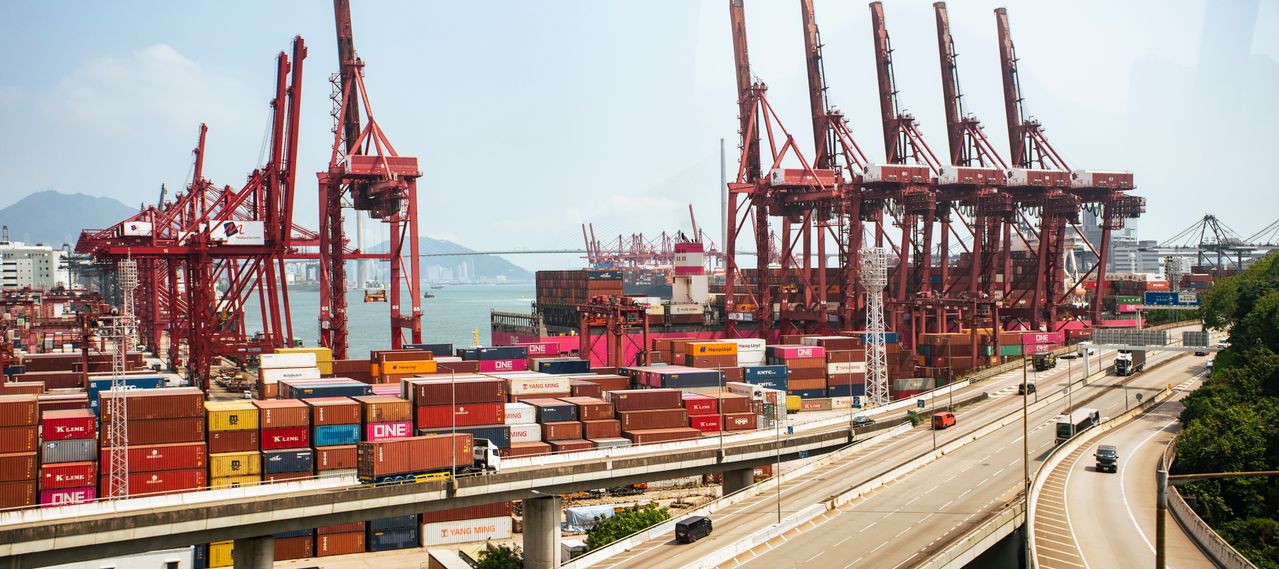
Image source: Pexels.
Same Same, But Different
On the surface, the US and Chinese export control regimes are converging. Both invoke national security and non-proliferation considerations through measures such as entity lists, end-user verification and compliance obligations. However, the regimes are built and implemented differently.
The US system is the product of eight decades of experience. To counter communism, the Export Control Act of 1949 was enacted to deny strategic goods to the Soviet bloc, laying the foundation for today’s US export control regime. Subsequently, the Export Administration Acts of 1969 and 1979 established the regulations from which today’s system is derived. The post-Cold War period brought US foreign policy changes that prioritised globalisation, free trade, market liberalisation and the expansion of the liberal international order. The US export control regime also transitioned into a specifically targeted tool for non-proliferation and counterterrorism. During this period, the Entity List was created in 1997 for proliferation concerns, while export controls were maintained under the presidential emergency authority granted by the International Emergency Economic Powers Act until the passage of the Export Control Reform Act of 2018 that has given the US export control regime a permanent statutory basis and a new target.
To compete with China, the US export control regime is centred on technological denial against adversaries that cannot retaliate in kind. For example, the United States tries to prevent China from acquiring frontier technologies such as advanced chips, with its jurisdiction extending to chips made anywhere with US-origin technology.
China, on the contrary, has compressed the eight-decade evolution of the US export control regime into just over five years and codified precisely what it needs, such as retaliation. Its first comprehensive Export Control Law entered into force only in December 2020. Its operational details were established only with the Regulations on Export Control of Dual-Use Items in 2024. Retaliation is clearly embedded in the law, as Article 48 authorises China to “take reciprocal measures” against any country that “abuses” export controls to endanger the national security and interests of the country. It operates alongside purpose-built countermeasure toolkits such as the Unreliable Entity List and the Anti-Foreign Sanctions Law of 2021.
The Strengths: Dominance, Design and Discretion
The Chinese regime’s first strength in exercising export controls lies in the country’s structural dominance. China’s leverage lies not in frontier technology, although it is trying to build up its strength in that area. Instead, such leverage lies in China’s possession of critical resources and the capacity for extracting and processing them for use in end products. According to the International Energy Agency, China refines about 91% of the world’s magnet rare earths and produces 94% of permanent magnets. Such dominance substantially boosts the impact of China’s export controls. For instance, automakers in the West suddenly found themselves crippled after China announced a ban on the export of certain rare earths in April 2025 and then extended it in October.
The second strength of China’s export control regime lies in its much more coherent, streamlined and compliant legal design. The shift from ad hoc restrictions to a codified legal machinery means foreign firms must treat each announcement as enforceable law rather than diplomatic rhetoric. Beijing learned a major lesson in its 2014 defeat at the World Trade Organization over its rare earth export quota restrictions that mainly targeted Japan following a diplomatic escalation revolving around maritime disputes in the East China Sea. Although the export control regime is still in its infancy, Beijing now tactfully justifies any trade restriction by framing it as a rule-governed security regulation. For instance, citing national security and national interests, China effectively banned the export of gallium, germanium, antimony and superhard materials to the United States in 2024 by prohibiting the re-export or transshipment of such materials. That became the first time that Beijing had asserted extraterritorial jurisdiction under its export control regime.
The third strength is the discretion and opacity that Beijing has intentionally designed into its export control regime. On the one hand, the regime is based on the statute that protects “national security and interests”, with the definition of “interests” being fluid. On the other hand, the opacity gives Beijing the flexibility to tighten, loosen or suspend restrictions as diplomacy demands. For instance, as part of a trade understanding reached at the 30 October 2025 summit between presidents Xi Jinping and Donald Trump, Beijing suspended for a year the rare earth measures it had issued earlier that month.
The Vulnerabilities: A Self-Eroding Instrument
Yet, each of these strengths generates a corresponding weakness. The most fundamental is that the leverage is self-eroding. Every restriction reminds the rest of the world of the vulnerabilities arising from dependence on any single source of supply. China’s growing use of export controls has in fact accelerated the West’s efforts to build alternative, friend-shored supply chains.
The second vulnerability is reputational. Increased use of export controls casts China as an unreliable player, contrary to its pledged commitment to the stability of supply chains. Even states with no immediate issues with Beijing start to hedge by diversifying their supply chains because they cannot know with certainty what bilateral disputes will next trigger Beijing’s export controls that could ensnare their firms and entities in the crossfire. The third vulnerability for China is internal. As Beijing’s export control regime expands, it is also targeting China’s own firms, subjecting their cross-border technology transfers and acquisitions to scrutiny and intervention. The lack of transparency that gives Beijing flexibility deters the foreign investment and technology partnerships that China still needs. And herein lies the dilemma.
Implications
If Beijing refrains from using export controls, it appears vulnerable to US-led technology containment and engulfed in disputes with countries like Japan; if Beijing overuses them, it accelerates the restructuring of supply chains away from itself. Therefore, it is likely that Beijing will control the escalation of trade wars and erosion of its own economy by selectively targeting entities instead of imposing blanket bans.
China’s export controls have become more institutionalised and well embedded in geopolitical competition. They may well expand, but expanding them will not be cost-free for China. In the short term, Beijing can use its export control regime as leverage. In the long run, the question is whether each use of export controls strengthens China’s long-term position or prompts the rest of the world to depend less on China.
Xue Gong is Assistant Professor and Deputy Coordinator of the China Programme, S. Rajaratnam School of International Studies (RSIS).
KEY TAKEAWAYS
• China’s export controls are becoming normalised, institutionalised and strategically embedded in its response to geopolitical and technological competition.
• The strength of China’s export control regime rests on structural dominance, streamlined legal machinery and calibrated discretion and opacity.
• Despite the opacity, each use of China’s export control instruments is impactful as it teaches the rest of the world where China’s strengths and vulnerabilities lie.
COMMENTARY
On 29 June 2026, China’s Ministry of Commerce added 20 Japanese entities to its export control list, the third round of such measures in six months. Earlier, in February, Beijing listed 20 Japanese entities and placed another 20 on its watch list. These decisions trace back to the diplomatic rupture between China and Japan triggered by Japanese Prime Minister Sanae Takaichi’s remarks on Taiwan in November 2025.
Two features of these episodes of blacklisting deserve attention. First, the targets have widened from Japanese importers of critical raw materials to Japan’s technology and defence sectors. Second, and more consequentially, the measures have moved beyond China’s borders, targeting the export activities of Chinese-origin companies based overseas. Therefore, China’s export controls are becoming normalised, institutionalised and strategically embedded in its response to geopolitical tension. As China flexes its export control muscle, the regime increasingly resembles the US export control system that it was built to counter.
Image source: Pexels.
Same Same, But Different
On the surface, the US and Chinese export control regimes are converging. Both invoke national security and non-proliferation considerations through measures such as entity lists, end-user verification and compliance obligations. However, the regimes are built and implemented differently.
The US system is the product of eight decades of experience. To counter communism, the Export Control Act of 1949 was enacted to deny strategic goods to the Soviet bloc, laying the foundation for today’s US export control regime. Subsequently, the Export Administration Acts of 1969 and 1979 established the regulations from which today’s system is derived. The post-Cold War period brought US foreign policy changes that prioritised globalisation, free trade, market liberalisation and the expansion of the liberal international order. The US export control regime also transitioned into a specifically targeted tool for non-proliferation and counterterrorism. During this period, the Entity List was created in 1997 for proliferation concerns, while export controls were maintained under the presidential emergency authority granted by the International Emergency Economic Powers Act until the passage of the Export Control Reform Act of 2018 that has given the US export control regime a permanent statutory basis and a new target.
To compete with China, the US export control regime is centred on technological denial against adversaries that cannot retaliate in kind. For example, the United States tries to prevent China from acquiring frontier technologies such as advanced chips, with its jurisdiction extending to chips made anywhere with US-origin technology.
China, on the contrary, has compressed the eight-decade evolution of the US export control regime into just over five years and codified precisely what it needs, such as retaliation. Its first comprehensive Export Control Law entered into force only in December 2020. Its operational details were established only with the Regulations on Export Control of Dual-Use Items in 2024. Retaliation is clearly embedded in the law, as Article 48 authorises China to “take reciprocal measures” against any country that “abuses” export controls to endanger the national security and interests of the country. It operates alongside purpose-built countermeasure toolkits such as the Unreliable Entity List and the Anti-Foreign Sanctions Law of 2021.
The Strengths: Dominance, Design and Discretion
The Chinese regime’s first strength in exercising export controls lies in the country’s structural dominance. China’s leverage lies not in frontier technology, although it is trying to build up its strength in that area. Instead, such leverage lies in China’s possession of critical resources and the capacity for extracting and processing them for use in end products. According to the International Energy Agency, China refines about 91% of the world’s magnet rare earths and produces 94% of permanent magnets. Such dominance substantially boosts the impact of China’s export controls. For instance, automakers in the West suddenly found themselves crippled after China announced a ban on the export of certain rare earths in April 2025 and then extended it in October.
The second strength of China’s export control regime lies in its much more coherent, streamlined and compliant legal design. The shift from ad hoc restrictions to a codified legal machinery means foreign firms must treat each announcement as enforceable law rather than diplomatic rhetoric. Beijing learned a major lesson in its 2014 defeat at the World Trade Organization over its rare earth export quota restrictions that mainly targeted Japan following a diplomatic escalation revolving around maritime disputes in the East China Sea. Although the export control regime is still in its infancy, Beijing now tactfully justifies any trade restriction by framing it as a rule-governed security regulation. For instance, citing national security and national interests, China effectively banned the export of gallium, germanium, antimony and superhard materials to the United States in 2024 by prohibiting the re-export or transshipment of such materials. That became the first time that Beijing had asserted extraterritorial jurisdiction under its export control regime.
The third strength is the discretion and opacity that Beijing has intentionally designed into its export control regime. On the one hand, the regime is based on the statute that protects “national security and interests”, with the definition of “interests” being fluid. On the other hand, the opacity gives Beijing the flexibility to tighten, loosen or suspend restrictions as diplomacy demands. For instance, as part of a trade understanding reached at the 30 October 2025 summit between presidents Xi Jinping and Donald Trump, Beijing suspended for a year the rare earth measures it had issued earlier that month.
The Vulnerabilities: A Self-Eroding Instrument
Yet, each of these strengths generates a corresponding weakness. The most fundamental is that the leverage is self-eroding. Every restriction reminds the rest of the world of the vulnerabilities arising from dependence on any single source of supply. China’s growing use of export controls has in fact accelerated the West’s efforts to build alternative, friend-shored supply chains.
The second vulnerability is reputational. Increased use of export controls casts China as an unreliable player, contrary to its pledged commitment to the stability of supply chains. Even states with no immediate issues with Beijing start to hedge by diversifying their supply chains because they cannot know with certainty what bilateral disputes will next trigger Beijing’s export controls that could ensnare their firms and entities in the crossfire. The third vulnerability for China is internal. As Beijing’s export control regime expands, it is also targeting China’s own firms, subjecting their cross-border technology transfers and acquisitions to scrutiny and intervention. The lack of transparency that gives Beijing flexibility deters the foreign investment and technology partnerships that China still needs. And herein lies the dilemma.
Implications
If Beijing refrains from using export controls, it appears vulnerable to US-led technology containment and engulfed in disputes with countries like Japan; if Beijing overuses them, it accelerates the restructuring of supply chains away from itself. Therefore, it is likely that Beijing will control the escalation of trade wars and erosion of its own economy by selectively targeting entities instead of imposing blanket bans.
China’s export controls have become more institutionalised and well embedded in geopolitical competition. They may well expand, but expanding them will not be cost-free for China. In the short term, Beijing can use its export control regime as leverage. In the long run, the question is whether each use of export controls strengthens China’s long-term position or prompts the rest of the world to depend less on China.
Xue Gong is Assistant Professor and Deputy Coordinator of the China Programme, S. Rajaratnam School of International Studies (RSIS).