

21 July 2026
IP26084 | One Label, Two Languages and Three Fronts: China and the Global South

KEY TAKEAWAYS
• “Global South” has become one of the most contested concepts in international politics.
• China frames it as a language of solidarity, while much of the rest of the Global South increasingly uses it as a language of bargaining and agency.
• China’s June 2026 White Paper shows three fronts on which the term “Global South” is contested: narrative, economic and institutional.
COMMENTARY
On 17 June, Beijing released its Global Governance White Paper. Within its five chapters on reforming the global governance system, China’s emphasis on the Global South is striking. From casting itself as a “natural member” of the Global South to declaring that it “will always be a member of the Global South”, China’s identification with the concept is simultaneously historical, ideological and strategic.
Historically, Beijing has for decades invoked its Global South identity through the Bandung Conference of 1955 and the Non-Aligned Movement. Ideologically, the use of the term casts China as a victim of Western dominance and colonialism. Strategically, Beijing’s use of the term positions China as the convener of a peripheral-states coalition at a moment when its rivalry with the United States makes such a coalition valuable.
Yet the same term means different things. For most Global South countries, the use of the term is not just motivated by a need for global governance to support their development; it is increasingly recalibrated as a way to resist being drawn into great-power rivalry, in which China itself is a major player.
An Old Label, A New Vehicle
The term “Global South” is increasingly used today as a more politically correct, albeit vague, term for what was historically called the “Third World”, referring to countries with a shared peripheral status in the international order. China was part of this history. During the Cold War, Mao Zedong proposed the Three Worlds theory while Deng Xiaoping later pledged China’s strong support for anti-hegemonism at the 1974 UN General Assembly. Jiang Zemin rebuilt China’s post-1989 diplomacy on developing-country solidarity, calling for a just and equitable international order. After China’s Global South identity was officially acknowledged by the United Nations Development Programme (UNDP) in 2004, Hu Jintao’s “harmonious world” concept cast China as “the largest developing country” in order to expand China’s ties with other Global South countries. During this period, China sought “special and differential treatment” in the World Trade Organization until 2025, when it renounced such trade benefits.
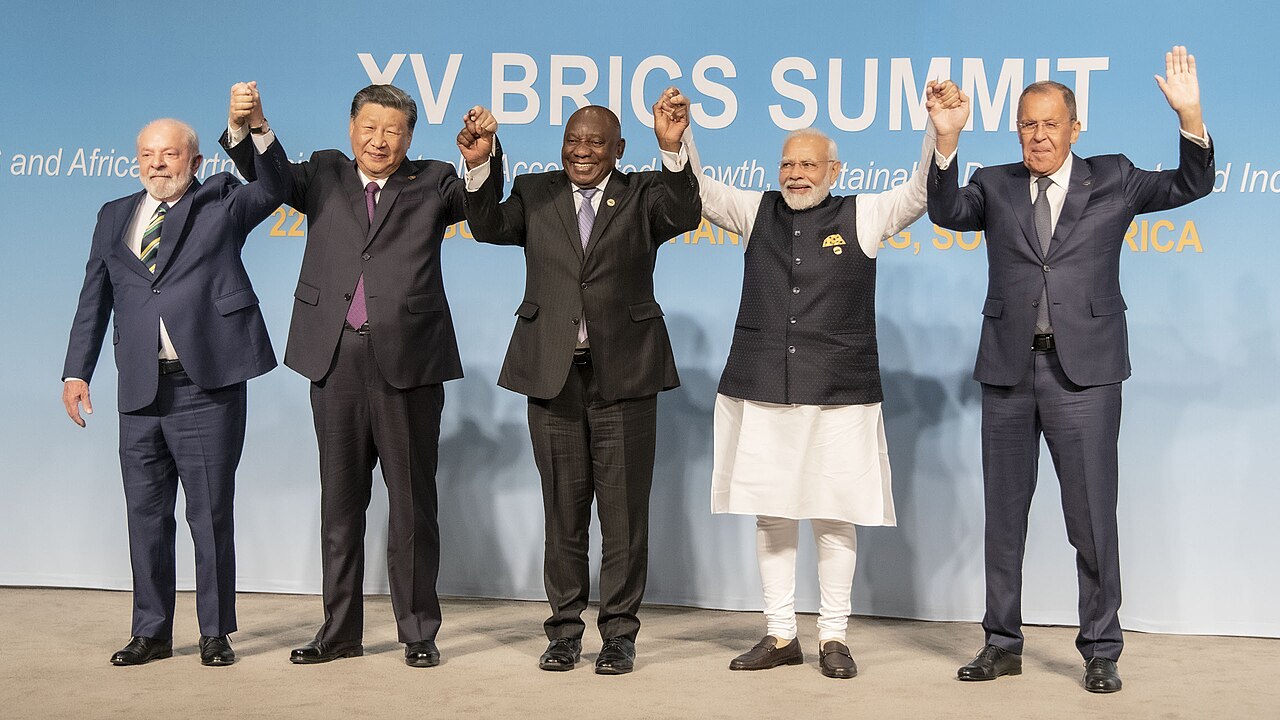
Under Xi Jinping, however, the vocabulary has changed. Beijing has continued to champion the Global South, but it has quietly re-centred the concept on anti-hegemonism, independence and reform of the existing international order. His administration has also built on China’s Belt and Road Initiative (BRI) by adding four Global Initiatives while casting the BRICS bloc as the “major platform” for Global South cooperation.
This wholesale embrace of the Global South has been accelerated by the US-China rivalry and leadership claims by other Global South countries such as India. The June White Paper further consolidates the efforts that Beijing has been pursuing on three fronts with the Global South.
One Paper, Three Fronts
On the narrative front, Beijing gives the Global South unprecedented prominence in its grand strategy. By emphasising China’s enduring membership and its efforts to safeguard the group’s common interests, Beijing seeks to address criticism that China has outgrown its Global South status as a result of its technological advancement and economic power.
Moreover, the White Paper elevates the Global Governance Initiative (GGI) proposed by Xi in 2025, which claims support from nearly 160 countries and international organisations. Although the White Paper explicitly stresses that the existing system needs reform, not rebuilding or replacement, the reported level of support allows Beijing to present its governance agenda as the majority view of international community.
However, the Global South audience is challenging China’s narratives. For instance, India has been sceptical about China’s role in the Global South. India did not include China from its “Voice of the Global South” summits. The majority of the other Global South countries, for their part, treat China’s solidarity language instrumentally and conditionally: they may accept Chinese framing when it delivers infrastructure, market access or trade benefits, but also quietly resist these narratives if they are China-centric.
On the economic front, the White Paper’s offer is generous. It offers zero-tariff treatment for least developed countries and countries in Africa, open trade platforms, and support for greater Global South country representation in international institutions.
But China is also the world’s largest bilateral creditor to low- and middle-income countries, a powerful buyer of their raw commodities, and a formidable exporter to their markets. More than a quarter of developing-country external debt is owed to China today. Beijing has written off some debts, but the bulk of outstanding debt still poses challenges to both China and the borrowers. Some borrowers have tried to exercise agency through multilateral platforms like the International Monetary Fund (IMF) and the G20 Common Framework to bind China to terms comparable with those offered by other creditors. For instance, Angola’s pursuit of debt relief placed pressure on China to engage with the G20’s Debt Service Suspension Initiative, despite Beijing’s initial preference for bilateral negotiations.
Meanwhile, China’s export surge in areas such as electric vehicles (EVs) and solar panels creates tensions with other Global South countries’ industrial ambitions. It is reported that developing countries are increasingly pushing back against China’s overcapacity, as seen in the rise of China-related trade investigations they have initiated. For instance, Brazil has imposed anti-dumping duties and is ramping up EV tariffs targeting China. Jakarta, for its part, “forced” Chinese companies mining Indonesia’s nickel deposits to invest in downstream industries in Indonesia and adhere to its other terms, eventually helping to increase Indonesia’s global share of nickel output.
While the White Paper makes no explicit claims to leadership, it seeks to position Beijing at the centre of the Global South’s institutional architecture by highlighting initiatives and organisations in which China plays a leading role. These include the BRI, BRICS+, the Shanghai Cooperation Organisation and the Forum on China-Africa Cooperation. By presenting these initiatives and organisations as components of a coherent institutional network, the White Paper consolidates Beijing’s claim to be the Global South’s institutional hub.
That claim is contested in reality. India has never endorsed China’s BRI and has frequently highlighted risks associated with the so-called “debt-trap diplomacy”, including potential vulnerabilities arising from dependence on Chinese financing. Brazil also declined to accede to the BRI. The Philippines was said to have withdrawn from the BRI in 2024 because of tensions concerning maritime disputes in the South China Sea, and Panama, the first country in Latin America to join the BRI, chose to exit eight years later.
Implications
Both China and other Global South countries do benefit from the label. China needs it because the term “Global South” converts its material power into legitimacy and dresses up its competition with the United States as the pursuit of justice for the world’s majority. In turn, the rest of the Global South needs China to keep the term because it can be used as a lever to push for reform of global governance.
But it does not follow that the Global South is a China-aligned bloc. For all of China’s economic scale, Global South states are also exercising their own agency. From Indonesia’s nickel downstreaming demands to debtor governments extracting better debt restructuring terms and growing trade defences of developing countries, they are doing what the Global South label was always meant to be – a term enabling them to assert agency in the interest of their economic development.
For China, its standing in the Global South will be decided less by the summits it convenes than by how it manages Global South debt, economic overcapacity and trade imbalances. In the end, the difference is not over who owns the label but what the label is for. “Global South” can serve as a banner for a counter-hegemonic coalition or a bargaining chip in a world where the periphery needs agency. It would seem that the Global South’s use of the term resonates more widely than China’s.
Xue Gong is Assistant Professor and Deputy Coordinator of the China Programme, S. Rajaratnam School of International Studies (RSIS).
KEY TAKEAWAYS
• “Global South” has become one of the most contested concepts in international politics.
• China frames it as a language of solidarity, while much of the rest of the Global South increasingly uses it as a language of bargaining and agency.
• China’s June 2026 White Paper shows three fronts on which the term “Global South” is contested: narrative, economic and institutional.
COMMENTARY
On 17 June, Beijing released its Global Governance White Paper. Within its five chapters on reforming the global governance system, China’s emphasis on the Global South is striking. From casting itself as a “natural member” of the Global South to declaring that it “will always be a member of the Global South”, China’s identification with the concept is simultaneously historical, ideological and strategic.
Historically, Beijing has for decades invoked its Global South identity through the Bandung Conference of 1955 and the Non-Aligned Movement. Ideologically, the use of the term casts China as a victim of Western dominance and colonialism. Strategically, Beijing’s use of the term positions China as the convener of a peripheral-states coalition at a moment when its rivalry with the United States makes such a coalition valuable.
Yet the same term means different things. For most Global South countries, the use of the term is not just motivated by a need for global governance to support their development; it is increasingly recalibrated as a way to resist being drawn into great-power rivalry, in which China itself is a major player.
An Old Label, A New Vehicle
The term “Global South” is increasingly used today as a more politically correct, albeit vague, term for what was historically called the “Third World”, referring to countries with a shared peripheral status in the international order. China was part of this history. During the Cold War, Mao Zedong proposed the Three Worlds theory while Deng Xiaoping later pledged China’s strong support for anti-hegemonism at the 1974 UN General Assembly. Jiang Zemin rebuilt China’s post-1989 diplomacy on developing-country solidarity, calling for a just and equitable international order. After China’s Global South identity was officially acknowledged by the United Nations Development Programme (UNDP) in 2004, Hu Jintao’s “harmonious world” concept cast China as “the largest developing country” in order to expand China’s ties with other Global South countries. During this period, China sought “special and differential treatment” in the World Trade Organization until 2025, when it renounced such trade benefits.
Under Xi Jinping, however, the vocabulary has changed. Beijing has continued to champion the Global South, but it has quietly re-centred the concept on anti-hegemonism, independence and reform of the existing international order. His administration has also built on China’s Belt and Road Initiative (BRI) by adding four Global Initiatives while casting the BRICS bloc as the “major platform” for Global South cooperation.
This wholesale embrace of the Global South has been accelerated by the US-China rivalry and leadership claims by other Global South countries such as India. The June White Paper further consolidates the efforts that Beijing has been pursuing on three fronts with the Global South.
One Paper, Three Fronts
On the narrative front, Beijing gives the Global South unprecedented prominence in its grand strategy. By emphasising China’s enduring membership and its efforts to safeguard the group’s common interests, Beijing seeks to address criticism that China has outgrown its Global South status as a result of its technological advancement and economic power.
Moreover, the White Paper elevates the Global Governance Initiative (GGI) proposed by Xi in 2025, which claims support from nearly 160 countries and international organisations. Although the White Paper explicitly stresses that the existing system needs reform, not rebuilding or replacement, the reported level of support allows Beijing to present its governance agenda as the majority view of international community.
However, the Global South audience is challenging China’s narratives. For instance, India has been sceptical about China’s role in the Global South. India did not include China from its “Voice of the Global South” summits. The majority of the other Global South countries, for their part, treat China’s solidarity language instrumentally and conditionally: they may accept Chinese framing when it delivers infrastructure, market access or trade benefits, but also quietly resist these narratives if they are China-centric.
On the economic front, the White Paper’s offer is generous. It offers zero-tariff treatment for least developed countries and countries in Africa, open trade platforms, and support for greater Global South country representation in international institutions.
But China is also the world’s largest bilateral creditor to low- and middle-income countries, a powerful buyer of their raw commodities, and a formidable exporter to their markets. More than a quarter of developing-country external debt is owed to China today. Beijing has written off some debts, but the bulk of outstanding debt still poses challenges to both China and the borrowers. Some borrowers have tried to exercise agency through multilateral platforms like the International Monetary Fund (IMF) and the G20 Common Framework to bind China to terms comparable with those offered by other creditors. For instance, Angola’s pursuit of debt relief placed pressure on China to engage with the G20’s Debt Service Suspension Initiative, despite Beijing’s initial preference for bilateral negotiations.
Meanwhile, China’s export surge in areas such as electric vehicles (EVs) and solar panels creates tensions with other Global South countries’ industrial ambitions. It is reported that developing countries are increasingly pushing back against China’s overcapacity, as seen in the rise of China-related trade investigations they have initiated. For instance, Brazil has imposed anti-dumping duties and is ramping up EV tariffs targeting China. Jakarta, for its part, “forced” Chinese companies mining Indonesia’s nickel deposits to invest in downstream industries in Indonesia and adhere to its other terms, eventually helping to increase Indonesia’s global share of nickel output.
While the White Paper makes no explicit claims to leadership, it seeks to position Beijing at the centre of the Global South’s institutional architecture by highlighting initiatives and organisations in which China plays a leading role. These include the BRI, BRICS+, the Shanghai Cooperation Organisation and the Forum on China-Africa Cooperation. By presenting these initiatives and organisations as components of a coherent institutional network, the White Paper consolidates Beijing’s claim to be the Global South’s institutional hub.
That claim is contested in reality. India has never endorsed China’s BRI and has frequently highlighted risks associated with the so-called “debt-trap diplomacy”, including potential vulnerabilities arising from dependence on Chinese financing. Brazil also declined to accede to the BRI. The Philippines was said to have withdrawn from the BRI in 2024 because of tensions concerning maritime disputes in the South China Sea, and Panama, the first country in Latin America to join the BRI, chose to exit eight years later.
Implications
Both China and other Global South countries do benefit from the label. China needs it because the term “Global South” converts its material power into legitimacy and dresses up its competition with the United States as the pursuit of justice for the world’s majority. In turn, the rest of the Global South needs China to keep the term because it can be used as a lever to push for reform of global governance.
But it does not follow that the Global South is a China-aligned bloc. For all of China’s economic scale, Global South states are also exercising their own agency. From Indonesia’s nickel downstreaming demands to debtor governments extracting better debt restructuring terms and growing trade defences of developing countries, they are doing what the Global South label was always meant to be – a term enabling them to assert agency in the interest of their economic development.
For China, its standing in the Global South will be decided less by the summits it convenes than by how it manages Global South debt, economic overcapacity and trade imbalances. In the end, the difference is not over who owns the label but what the label is for. “Global South” can serve as a banner for a counter-hegemonic coalition or a bargaining chip in a world where the periphery needs agency. It would seem that the Global South’s use of the term resonates more widely than China’s.
Xue Gong is Assistant Professor and Deputy Coordinator of the China Programme, S. Rajaratnam School of International Studies (RSIS).