23 July 2026
IP26085 | Solidarity, Geopolitics and the Venezuelan Earthquakes: Lessons for ASEAN

KEY TAKEAWAYS
• The earthquakes in Venezuela hit during a period of political crisis, stymieing relief efforts and underlining the importance of long-standing bilateral relationships to facilitate access.
• The success of Vietnam’s official deployment of 124 rescue and relief personnel highlighted this.
• To realise the One ASEAN, One Response: ASEAN Responding to Disasters as One Inside the Region and Outside the Region declaration, member states need to explore frameworks to facilitate responses outside the region. One way is to further coordinate the deployment of rescue and relief teams and leverage external bilateral relationships.
COMMENTARY
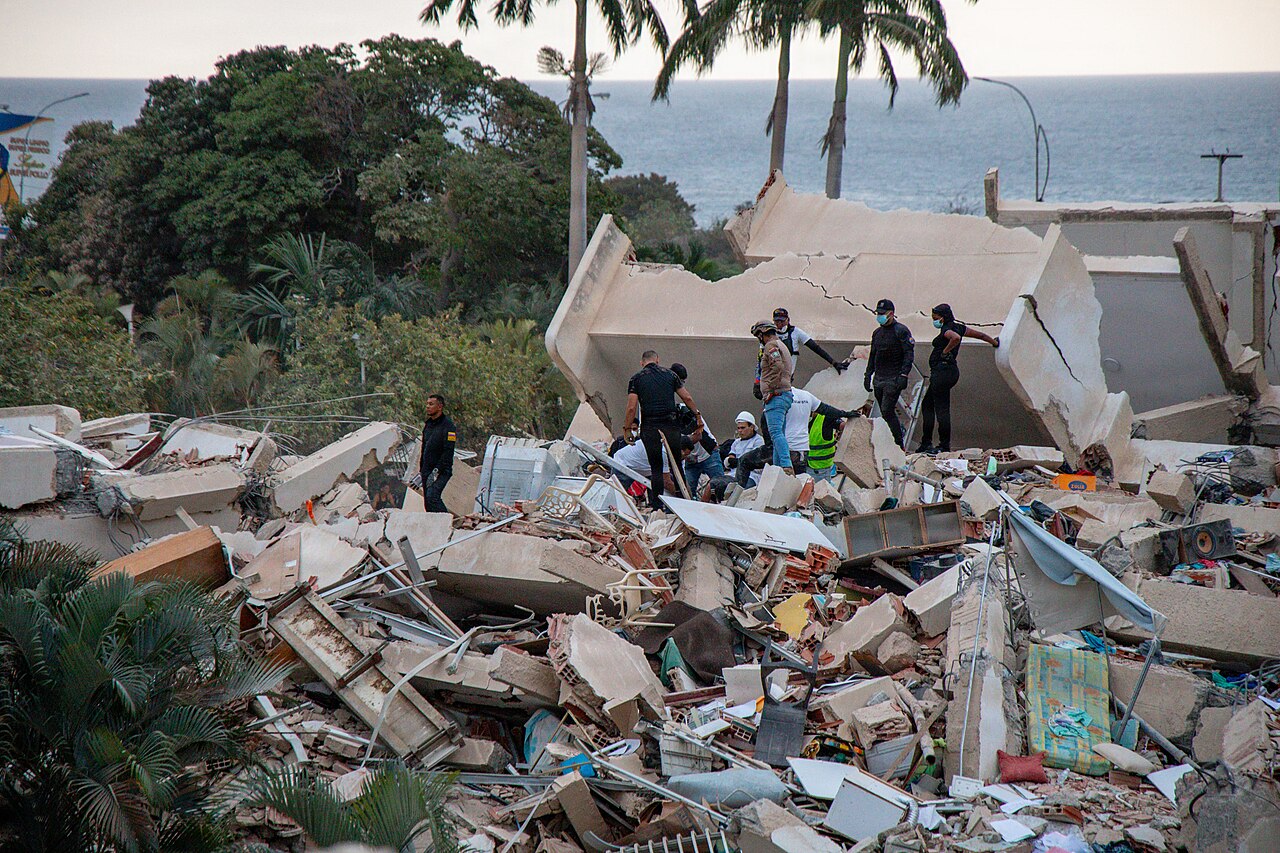
On 24 June 2026, Venezuela was hit by two earthquakes of magnitudes 7.2 and 7.5 in the northwestern and central parts of the country. The capital city Caracas was badly damaged in the disaster, and around 80% of buildings in the state of La Guaira collapsed. 21 days later, Venezuelan lawmaker Jorge Rodríguez released figures showing that the death toll had risen from the initial 1,430 after the 72-hour “golden window” to 5,119 on 18 July, while the number of injured remained unchanged at 16,740 and 17,907 people remained homeless. The United Nations estimates that direct damage to housing and infrastructure amounts to around US$37 billion. The rising death toll illustrates the body recovery operation underway and the limits of international search and rescue teams in saving lives. What happened?
A Pre-Existing Geopolitical Crisis
Since the disputed 2018 national elections, Venezuela has experienced domestic political upheaval. Nicolás Maduro claimed victory and the presidency, but this was disputed by many countries in the international community. In January 2026, the United States captured Nicolás Maduro in Caracas and took him to the United States to face trial. The international community is split on the US government’s actions. Many in the international community denounced his capture as violating the UN Charter and Venezuela’s sovereignty. Afterwards, the Venezuelan government remained in place with Maduro’s Vice President Delcy Rodríguez sworn in as acting president. The US government remains in control over much of Venezuela, covering its finances, natural resources and government.
The political crisis in Venezuela meant that public services were already facing shortages and inertia. The interim government has also faced criticism for its slow response to the earthquake. Public hospitals had limited emergency supplies, only 29% of households had running water before the earthquakes struck, and electricity connectivity was already degraded.
Despite government claims of 4,000 officials being deployed in the aftermath of the earthquake, national military personnel and police were scarcely visible according to reports. The rescue effort faced delayed military deployment orders and overlapping chains of command. The limited availability of operational heavy excavation tools, cranes, and specialised rescue vehicles further impacted the response. This was witnessed in the shadow of community-based responses facing regulatory and administrative hurdles, with authorities opting not to trigger international humanitarian response mechanisms leaving international offers of help on standby.
The Closing of the Golden Window
The impact of the earthquakes affected government services such as immigration. The main international airport in Caracas was shut due to extensive damage. All commercial flights were cancelled while authorities undertook assessments. While cargo, humanitarian, and official flights were exempted, many international rescue teams ready to deploy on commercial flights were left looking for alternative routes, including humanitarian and military options.
Local reports suggested that government offices were effectively shut and the online portal run by the Ministry of Foreign Affairs for visa applications was down due to technical outages following the earthquakes. Authorities processing visas were only processing passport and national identity card applications in the immediate aftermath. Reports also suggested that delays were in part due to authorities’ suspicion of foreign nationals entering Venezuela as spies. This led to delays in processing international search and rescue team applications during the “golden window” of 48 to 72 hours when survivors are most likely to be rescued. The delays in official requests and processing times effectively ruled out the support of international efforts from further away, like Thailand, which had its primary Urban Search and Rescue team of 46 personnel on standby waiting for an official request for assistance. When the window closed, they stood down.
Bilateral Ties – The Vietnamese Exception
There were instances where international offers of help worked. During a 10-day mission, Vietnam deployed 124 military and public security personnel to Venezuela in the aftermath of the earthquakes. The mission was directed by Vietnamese top leadership and operated by Vietnam’s national carrier. A second humanitarian flight was operated to deliver an additional wave of relief supplies. The humanitarian aid deployment was framed in terms of their long-established strong bilateral relationship and a spirit of solidarity. Many of those involved in the rescue and relief team had recently deployed to the 2023 Türkiye earthquakes and the 2025 Myanmar earthquakes. Likewise, most other ASEAN member states also had similar experience.
On completion of the mission, the Venezuelan government bestowed the “Hero of Venezuela” medal on the Vietnamese rescue and relief delegation for their courageous humanitarian efforts, outstanding bravery, and profound solidarity. Acting President Delcy Rodríguez, via Vietnamese Ambassador to Venezuela Vũ Trung Mỹ, sent a letter of gratitude and presented the medal to Party General Secretary and State President Tô Lâm.
The success of the official Vietnam humanitarian deployment highlights the importance of strong bilateral relations. The operation of a special humanitarian flight by the national state-owned flag carrier meant only a technical stop in France en route to Caracas. As a state-backed response, the Venezuelan government granted airspace clearance and landing rights in Caracas to the official Vietnamese deployment and bypassed the standard procedures for commercial flights.
Policy Implications for One ASEAN, One Response
As countries in Southeast Asia look towards realising the declaration of One ASEAN, One Response: ASEAN Responding to Disasters as One Inside the Region and Outside the Region, it is important to review the lessons learned from recent deployments outside the region to understand the areas for enhanced cooperation within the region for a more effective response.
ASEAN should explore framework agreements for greater coordination and cooperation between member states’ disaster responses outside the region. This may involve more shared official flights for rescue and relief teams to deploy into disaster zones. Initiatives like the deployment through the Changi Regional Humanitarian Assistance and Disaster Relief Coordination Centre of the Singapore Armed Forces and the Royal Brunei Armed Forces on a Republic of Singapore Air Force C-130 aircraft to the 2015 Nepal earthquake is one example. Another potential avenue should be to explore official flights on civilian national flag carriers for fellow ASEAN member states’ teams when possible.
Ultimately, the Venezuelan earthquakes demonstrate that in a highly tense geopolitical environment, technical readiness means little without political access. Good bilateral relationships are key to skipping bureaucratic red tape in a crisis. Improving these ties is just as important as building the capacity of internationally certified search and rescue teams. It is timely to review how ASEAN member states can work together to leverage their relationships outside ASEAN to facilitate smarter disaster response efforts from Southeast Asia.
Alistair D. B. Cook is a Senior Fellow and Coordinator in the Humanitarian Assistance and Disaster Relief Programme, Institute of Defence and Strategic Studies, S. Rajaratnam School of International Studies (RSIS).
KEY TAKEAWAYS
• The earthquakes in Venezuela hit during a period of political crisis, stymieing relief efforts and underlining the importance of long-standing bilateral relationships to facilitate access.
• The success of Vietnam’s official deployment of 124 rescue and relief personnel highlighted this.
• To realise the One ASEAN, One Response: ASEAN Responding to Disasters as One Inside the Region and Outside the Region declaration, member states need to explore frameworks to facilitate responses outside the region. One way is to further coordinate the deployment of rescue and relief teams and leverage external bilateral relationships.
COMMENTARY
On 24 June 2026, Venezuela was hit by two earthquakes of magnitudes 7.2 and 7.5 in the northwestern and central parts of the country. The capital city Caracas was badly damaged in the disaster, and around 80% of buildings in the state of La Guaira collapsed. 21 days later, Venezuelan lawmaker Jorge Rodríguez released figures showing that the death toll had risen from the initial 1,430 after the 72-hour “golden window” to 5,119 on 18 July, while the number of injured remained unchanged at 16,740 and 17,907 people remained homeless. The United Nations estimates that direct damage to housing and infrastructure amounts to around US$37 billion. The rising death toll illustrates the body recovery operation underway and the limits of international search and rescue teams in saving lives. What happened?
A Pre-Existing Geopolitical Crisis
Since the disputed 2018 national elections, Venezuela has experienced domestic political upheaval. Nicolás Maduro claimed victory and the presidency, but this was disputed by many countries in the international community. In January 2026, the United States captured Nicolás Maduro in Caracas and took him to the United States to face trial. The international community is split on the US government’s actions. Many in the international community denounced his capture as violating the UN Charter and Venezuela’s sovereignty. Afterwards, the Venezuelan government remained in place with Maduro’s Vice President Delcy Rodríguez sworn in as acting president. The US government remains in control over much of Venezuela, covering its finances, natural resources and government.
The political crisis in Venezuela meant that public services were already facing shortages and inertia. The interim government has also faced criticism for its slow response to the earthquake. Public hospitals had limited emergency supplies, only 29% of households had running water before the earthquakes struck, and electricity connectivity was already degraded.
Despite government claims of 4,000 officials being deployed in the aftermath of the earthquake, national military personnel and police were scarcely visible according to reports. The rescue effort faced delayed military deployment orders and overlapping chains of command. The limited availability of operational heavy excavation tools, cranes, and specialised rescue vehicles further impacted the response. This was witnessed in the shadow of community-based responses facing regulatory and administrative hurdles, with authorities opting not to trigger international humanitarian response mechanisms leaving international offers of help on standby.
The Closing of the Golden Window
The impact of the earthquakes affected government services such as immigration. The main international airport in Caracas was shut due to extensive damage. All commercial flights were cancelled while authorities undertook assessments. While cargo, humanitarian, and official flights were exempted, many international rescue teams ready to deploy on commercial flights were left looking for alternative routes, including humanitarian and military options.
Local reports suggested that government offices were effectively shut and the online portal run by the Ministry of Foreign Affairs for visa applications was down due to technical outages following the earthquakes. Authorities processing visas were only processing passport and national identity card applications in the immediate aftermath. Reports also suggested that delays were in part due to authorities’ suspicion of foreign nationals entering Venezuela as spies. This led to delays in processing international search and rescue team applications during the “golden window” of 48 to 72 hours when survivors are most likely to be rescued. The delays in official requests and processing times effectively ruled out the support of international efforts from further away, like Thailand, which had its primary Urban Search and Rescue team of 46 personnel on standby waiting for an official request for assistance. When the window closed, they stood down.
Bilateral Ties – The Vietnamese Exception
There were instances where international offers of help worked. During a 10-day mission, Vietnam deployed 124 military and public security personnel to Venezuela in the aftermath of the earthquakes. The mission was directed by Vietnamese top leadership and operated by Vietnam’s national carrier. A second humanitarian flight was operated to deliver an additional wave of relief supplies. The humanitarian aid deployment was framed in terms of their long-established strong bilateral relationship and a spirit of solidarity. Many of those involved in the rescue and relief team had recently deployed to the 2023 Türkiye earthquakes and the 2025 Myanmar earthquakes. Likewise, most other ASEAN member states also had similar experience.
On completion of the mission, the Venezuelan government bestowed the “Hero of Venezuela” medal on the Vietnamese rescue and relief delegation for their courageous humanitarian efforts, outstanding bravery, and profound solidarity. Acting President Delcy Rodríguez, via Vietnamese Ambassador to Venezuela Vũ Trung Mỹ, sent a letter of gratitude and presented the medal to Party General Secretary and State President Tô Lâm.
The success of the official Vietnam humanitarian deployment highlights the importance of strong bilateral relations. The operation of a special humanitarian flight by the national state-owned flag carrier meant only a technical stop in France en route to Caracas. As a state-backed response, the Venezuelan government granted airspace clearance and landing rights in Caracas to the official Vietnamese deployment and bypassed the standard procedures for commercial flights.
Policy Implications for One ASEAN, One Response
As countries in Southeast Asia look towards realising the declaration of One ASEAN, One Response: ASEAN Responding to Disasters as One Inside the Region and Outside the Region, it is important to review the lessons learned from recent deployments outside the region to understand the areas for enhanced cooperation within the region for a more effective response.
ASEAN should explore framework agreements for greater coordination and cooperation between member states’ disaster responses outside the region. This may involve more shared official flights for rescue and relief teams to deploy into disaster zones. Initiatives like the deployment through the Changi Regional Humanitarian Assistance and Disaster Relief Coordination Centre of the Singapore Armed Forces and the Royal Brunei Armed Forces on a Republic of Singapore Air Force C-130 aircraft to the 2015 Nepal earthquake is one example. Another potential avenue should be to explore official flights on civilian national flag carriers for fellow ASEAN member states’ teams when possible.
Ultimately, the Venezuelan earthquakes demonstrate that in a highly tense geopolitical environment, technical readiness means little without political access. Good bilateral relationships are key to skipping bureaucratic red tape in a crisis. Improving these ties is just as important as building the capacity of internationally certified search and rescue teams. It is timely to review how ASEAN member states can work together to leverage their relationships outside ASEAN to facilitate smarter disaster response efforts from Southeast Asia.
Alistair D. B. Cook is a Senior Fellow and Coordinator in the Humanitarian Assistance and Disaster Relief Programme, Institute of Defence and Strategic Studies, S. Rajaratnam School of International Studies (RSIS).