13 April 2026
CO26078 | Learned in Text, Literate in Context: The Vision for the Singapore College of Islamic Studies

SYNOPSIS
The new Singapore College of Islamic Studies represents a paradigm shift in local Islamic religious education. By integrating classical Islamic theology with social sciences through a collaborative partnership with the Singapore University of Social Sciences, the college aims to produce leaders who are “learned in text and literate in context”.
COMMENTARY
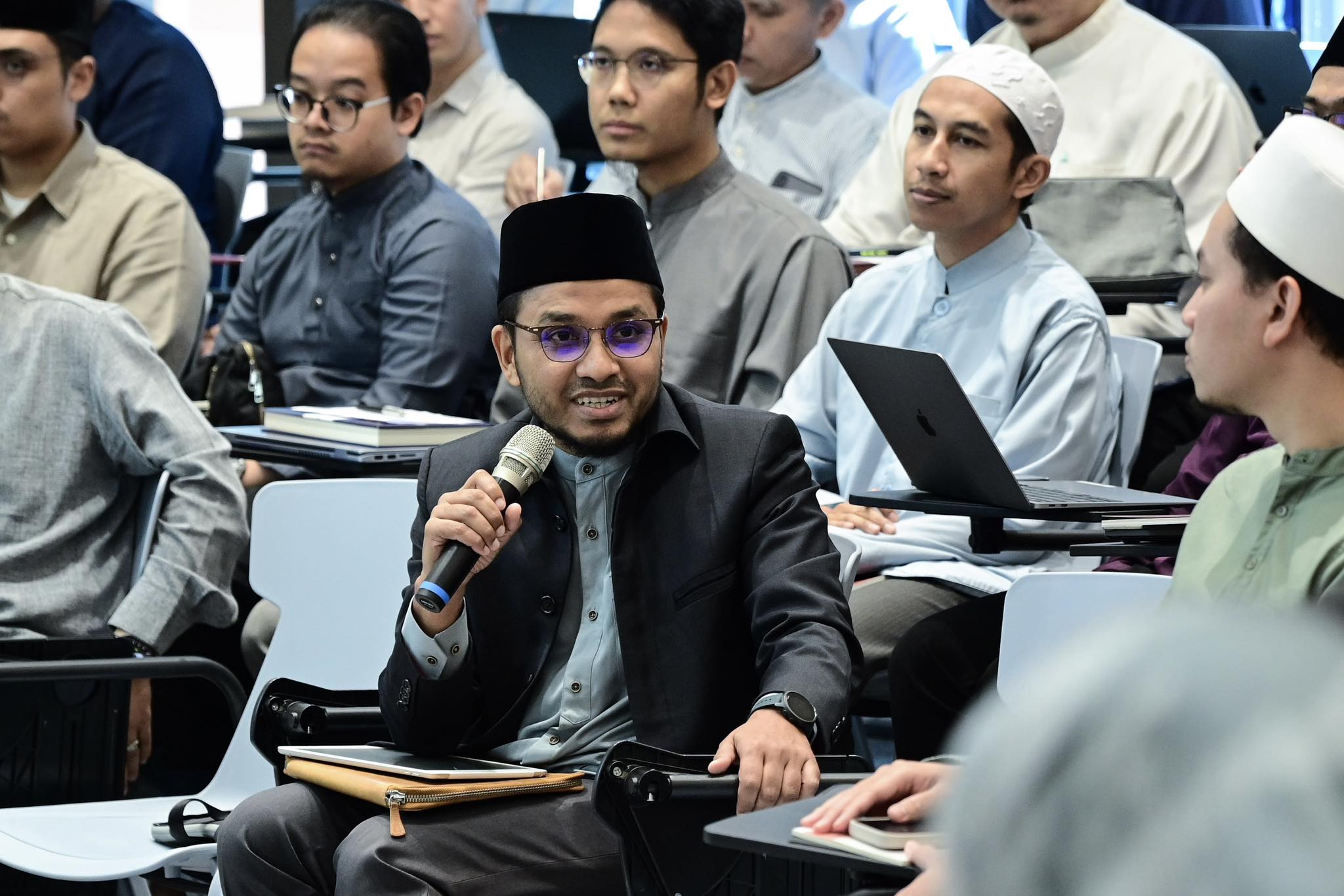
On 27 January 2026, at the inaugural Singapore College of Islamic Studies (SCIS) symposium, the abstract vision of a local Islamic college became a concrete reality. First proposed in 2016 by then Minister-in-charge of Muslim Affairs Dr Yaacob Ibrahim, the SCIS will welcome its inaugural cohort in 2028. The establishment of the SCIS represents a paradigm shift in Islamic education in Singapore. Historically, aspiring religious scholars (asatizah) travelled to the Middle East – to Al-Azhar University in Egypt, Madinah University in Saudi Arabia, Al-Qarawiyyin University in Morocco, Yarmouk University in Jordan, or regional universities in Malaysia and Indonesia.
While traditional institutions remain relevant, returning graduates often faced challenges applying their classical learning to Singapore’s cosmopolitan, high-tech, and multi-faith context. Hence, MUIS (Majlis Ugama Islam Singapura) has previously relied on supplementary certificate programmes to help them adapt and apply their learning in the context of Singapore. The SCIS aims to bridge this gap at the foundational level by providing a localised, globally recognised educational pathway. The substantive output of the SCIS is clear: a new generation of religious teachers and leaders equipped with higher tertiary degrees and intimately familiar with the nuances of a modern, pluralistic society.
Demystifying the Curriculum: Beyond the Text
There is often a misconception that an Islamic college’s curriculum is limited purely to the continuous memorisation of the Qur’an or a singular focus on the Arabic language. While the theological core – the deep study of Qur’an and Sunnah (prophetic traditions), mastery of the Arabic language, and Islamic jurisprudence – is the undisputed foundation of Islamic higher learning, the SCIS curriculum goes further.
To be “literate in context”, students must understand how faith interacts with the contemporary world. The curriculum being designed will explore the role of Islam in a plural society, guiding students on how Islam interacts with other religions and secular civic structures. It will also tackle contemporary issues that religious leaders often face in interacting with their adherents.
Religious rulings or pastoral guidance today seldom exists in isolation; they intersect with sociology, science, environment, mental health, family dynamics, digital ethics, and social cohesion. By demystifying the broader societal applications of Islamic values, SCIS ensures its graduates are not just theologians, but broad-minded members of the society.
A Synergy of Strength: The SUSS Partnership
The expansive curriculum is made possible through SCIS’ unique collaborative relationship with the Singapore University of Social Sciences (SUSS). The SCIS will independently offer its own degrees, ensuring the theological integrity of its religious modules. Where students undertake modules in social sciences, such as counselling, social work, or psychology, those modules will be offered and accredited by SUSS.
With a campus adjacent to SUSS, SCIS integrates religious scholarship with social science disciplines, creating a pedagogy of “Contextualisation, Interdisciplinarity, and Applied Research”.
By collaborating with SUSS, SCIS ensures that its students are introduced to vital disciplines. SUSS brings its expertise in the social sciences, while SCIS anchors the academic curriculum in rigorous Islamic scholarship. This cross-pollination ensures that future religious leaders possess the diverse academic toolkit required to address the modern challenges of their congregants.
A Historic and Integrated Campus
SCIS will be strategically located in the Rochor area, a site of immense historical and cultural significance. This is a highly convenient, traditional district that already beats with the heart of Singapore’s Malay-Muslim heritage, situated near prominent landmarks like the Sultan Mosque, the Malabar Mosque and the Malay Heritage Centre.
The integration of the SCIS campus into the public space, alongside the new SUSS, is a creative piece of urban planning and social engineering. By sharing facilities and being close to peers from different faiths and courses of study, this “campus osmosis” encourages a lived experience no textbook can teach, helping future religious leaders feel comfortable and confident in Singapore’s diverse social fabric.
Harnessing National and International Expertise
Building on a pluralistic educational approach, the commitment to a world-class institution is evident in its diverse leadership appointments for SCIS. The tripartite governance structure consists of an Advisory Panel, a Board of Governors, and a Steering Committee.
The Board of Governors will be chaired by former Speaker of Parliament, Mr Abdullah Tarmugi, and will include respected community leaders such as Mdm Zuraidah Abdullah and Ms Kohe Hasan. The Steering Committee, led by the Mufti of Singapore, Dr Nazirudin Mohd Nasir, focuses on academic and operational build-up. It also draws on expertise in interreligious studies, with Professor Paul Hedges and Ustaz Dr Mohamed Bin Ali of the S. Rajaratnam School of International Studies (RSIS), Nanyang Technological University (NTU) providing the scholarly foundation for graduates to navigate faith leadership in Singapore’s diverse, multi-faith society.
Establishing a university-level college demands expertise in curriculum design, quality assurance, university administration and governance, and interdisciplinary pedagogy. To achieve this, SCIS has harnessed the best expertise available. This includes distinguished Muslim leaders alongside experts like Professor Lily Kong (President of Singapore Management University), Professor Tan Tai Yong (President of SUSS), and Professor Robbie Goh (Provost of SUSS). These well-known academics are not in SCIS to teach theology; their role is to advise on how to build a world-class research and educational facility, ensuring the degrees awarded to graduating students meet the national and international standards.
The fundamental teachings of Islamic religious sciences remains entirely under the authority and trust of Singapore’s asatizah and Islamic scholars, as affirmed by the Mufti of Singapore in a Berita Harian news article. Much like other forms of religious advice, such as legal opinions (fatwa), guidance (irsyad), and sermons, this theological core remains firmly entrusted to Singapore’s Islamic religious leadership.
The SCIS will have an international Advisory Panel comprising prominent luminaries like the Grand Mufti of Egypt, Dr Nazir Mohamed Ayyad, and Professor Mona Siddiqui (University of Edinburgh).
Conclusion
The SCIS is a visionary undertaking. It seeks to combine Islamic theology with the evolving demands of a modern, pluralistic nation-state. The synergistic partnership with SUSS and collaboration with theologians, social scientists, and academics forms the bedrock of its resilience. The distinctive Singaporean Muslim ethos emerging from SCIS will be anchored in collaboration and innovation. This contributes to the nurturing of leaders learned in text and literate in context, strengthening a cohesive, modern, multicultural society.
About the Author
Mohamed Nassir is Head of the Studies in Inter-Religious Relations in Plural Societies (SRP) Programme at the S. Rajaratnam School of International Studies (RSIS), Nanyang Technological University (NTU), Singapore. His research interests include interfaith studies, Islamic education, and religious exclusivism and extremism.
SYNOPSIS
The new Singapore College of Islamic Studies represents a paradigm shift in local Islamic religious education. By integrating classical Islamic theology with social sciences through a collaborative partnership with the Singapore University of Social Sciences, the college aims to produce leaders who are “learned in text and literate in context”.
COMMENTARY
On 27 January 2026, at the inaugural Singapore College of Islamic Studies (SCIS) symposium, the abstract vision of a local Islamic college became a concrete reality. First proposed in 2016 by then Minister-in-charge of Muslim Affairs Dr Yaacob Ibrahim, the SCIS will welcome its inaugural cohort in 2028. The establishment of the SCIS represents a paradigm shift in Islamic education in Singapore. Historically, aspiring religious scholars (asatizah) travelled to the Middle East – to Al-Azhar University in Egypt, Madinah University in Saudi Arabia, Al-Qarawiyyin University in Morocco, Yarmouk University in Jordan, or regional universities in Malaysia and Indonesia.
While traditional institutions remain relevant, returning graduates often faced challenges applying their classical learning to Singapore’s cosmopolitan, high-tech, and multi-faith context. Hence, MUIS (Majlis Ugama Islam Singapura) has previously relied on supplementary certificate programmes to help them adapt and apply their learning in the context of Singapore. The SCIS aims to bridge this gap at the foundational level by providing a localised, globally recognised educational pathway. The substantive output of the SCIS is clear: a new generation of religious teachers and leaders equipped with higher tertiary degrees and intimately familiar with the nuances of a modern, pluralistic society.
Demystifying the Curriculum: Beyond the Text
There is often a misconception that an Islamic college’s curriculum is limited purely to the continuous memorisation of the Qur’an or a singular focus on the Arabic language. While the theological core – the deep study of Qur’an and Sunnah (prophetic traditions), mastery of the Arabic language, and Islamic jurisprudence – is the undisputed foundation of Islamic higher learning, the SCIS curriculum goes further.
To be “literate in context”, students must understand how faith interacts with the contemporary world. The curriculum being designed will explore the role of Islam in a plural society, guiding students on how Islam interacts with other religions and secular civic structures. It will also tackle contemporary issues that religious leaders often face in interacting with their adherents.
Religious rulings or pastoral guidance today seldom exists in isolation; they intersect with sociology, science, environment, mental health, family dynamics, digital ethics, and social cohesion. By demystifying the broader societal applications of Islamic values, SCIS ensures its graduates are not just theologians, but broad-minded members of the society.
A Synergy of Strength: The SUSS Partnership
The expansive curriculum is made possible through SCIS’ unique collaborative relationship with the Singapore University of Social Sciences (SUSS). The SCIS will independently offer its own degrees, ensuring the theological integrity of its religious modules. Where students undertake modules in social sciences, such as counselling, social work, or psychology, those modules will be offered and accredited by SUSS.
With a campus adjacent to SUSS, SCIS integrates religious scholarship with social science disciplines, creating a pedagogy of “Contextualisation, Interdisciplinarity, and Applied Research”.
By collaborating with SUSS, SCIS ensures that its students are introduced to vital disciplines. SUSS brings its expertise in the social sciences, while SCIS anchors the academic curriculum in rigorous Islamic scholarship. This cross-pollination ensures that future religious leaders possess the diverse academic toolkit required to address the modern challenges of their congregants.
A Historic and Integrated Campus
SCIS will be strategically located in the Rochor area, a site of immense historical and cultural significance. This is a highly convenient, traditional district that already beats with the heart of Singapore’s Malay-Muslim heritage, situated near prominent landmarks like the Sultan Mosque, the Malabar Mosque and the Malay Heritage Centre.
The integration of the SCIS campus into the public space, alongside the new SUSS, is a creative piece of urban planning and social engineering. By sharing facilities and being close to peers from different faiths and courses of study, this “campus osmosis” encourages a lived experience no textbook can teach, helping future religious leaders feel comfortable and confident in Singapore’s diverse social fabric.
Harnessing National and International Expertise
Building on a pluralistic educational approach, the commitment to a world-class institution is evident in its diverse leadership appointments for SCIS. The tripartite governance structure consists of an Advisory Panel, a Board of Governors, and a Steering Committee.
The Board of Governors will be chaired by former Speaker of Parliament, Mr Abdullah Tarmugi, and will include respected community leaders such as Mdm Zuraidah Abdullah and Ms Kohe Hasan. The Steering Committee, led by the Mufti of Singapore, Dr Nazirudin Mohd Nasir, focuses on academic and operational build-up. It also draws on expertise in interreligious studies, with Professor Paul Hedges and Ustaz Dr Mohamed Bin Ali of the S. Rajaratnam School of International Studies (RSIS), Nanyang Technological University (NTU) providing the scholarly foundation for graduates to navigate faith leadership in Singapore’s diverse, multi-faith society.
Establishing a university-level college demands expertise in curriculum design, quality assurance, university administration and governance, and interdisciplinary pedagogy. To achieve this, SCIS has harnessed the best expertise available. This includes distinguished Muslim leaders alongside experts like Professor Lily Kong (President of Singapore Management University), Professor Tan Tai Yong (President of SUSS), and Professor Robbie Goh (Provost of SUSS). These well-known academics are not in SCIS to teach theology; their role is to advise on how to build a world-class research and educational facility, ensuring the degrees awarded to graduating students meet the national and international standards.
The fundamental teachings of Islamic religious sciences remains entirely under the authority and trust of Singapore’s asatizah and Islamic scholars, as affirmed by the Mufti of Singapore in a Berita Harian news article. Much like other forms of religious advice, such as legal opinions (fatwa), guidance (irsyad), and sermons, this theological core remains firmly entrusted to Singapore’s Islamic religious leadership.
The SCIS will have an international Advisory Panel comprising prominent luminaries like the Grand Mufti of Egypt, Dr Nazir Mohamed Ayyad, and Professor Mona Siddiqui (University of Edinburgh).
Conclusion
The SCIS is a visionary undertaking. It seeks to combine Islamic theology with the evolving demands of a modern, pluralistic nation-state. The synergistic partnership with SUSS and collaboration with theologians, social scientists, and academics forms the bedrock of its resilience. The distinctive Singaporean Muslim ethos emerging from SCIS will be anchored in collaboration and innovation. This contributes to the nurturing of leaders learned in text and literate in context, strengthening a cohesive, modern, multicultural society.
About the Author
Mohamed Nassir is Head of the Studies in Inter-Religious Relations in Plural Societies (SRP) Programme at the S. Rajaratnam School of International Studies (RSIS), Nanyang Technological University (NTU), Singapore. His research interests include interfaith studies, Islamic education, and religious exclusivism and extremism.