

23 April 2026
CO26088 | Reading in the Age of AI: A Life Skill More Crucial Than Ever Before

SYNOPSIS
On World Book Day, marked by UNESCO on 23 April since 1995, we are reminded of the crucial role that reading, critical thinking and judgement play in ensuring that our societies remain rational, open and cohesive. Reading, in its broad sense, plays a part in almost every solution proposed to tackle some of the pressing concerns of our times, from dealing with scams, countering disinformation and curbing the rise of populism and polarisation in societies.
COMMENTARY
Today (April 23) is World Book Day, launched in 1995 by UNESCO to celebrate writers and promote reading.
In another era, this might have seemed like a quaint festival marked mostly by book lovers. But today, there is a new urgency.
Paradoxically, in a world inundated with information, insight and understanding seem to be in short supply. Surveys show higher levels of anxiety, diminishing trust in institutions, and rising polarisation within and between societies.
Consider some of the challenges we face. We read about scams defrauding the elderly, often with heart-wrenching consequences. A key part of any response must surely be to encourage people to read carefully, to question and cross check, to pause before they press “share” or click “send”.
Some of our young people struggle with mental wellness and lament about adulting. They would benefit from reading that others before them have also grappled with the joys and pains of growing up. Much has rightly been said about the need for stronger safeguards and better support systems to address the issue of bullying – in schools and online. But there is also a deeper capability we need to build: the ability to distinguish between rhetoric and reality, and to develop resilience. Words can wound. But, read in the right context, they can also diffuse and disarm.
Deepfakes and disinformation in our age of artificial intelligence make it increasingly hard to tell what is real. Unless we are able to read, think critically and form judgements, we risk being not just misinformed, but more readily manipulated.
Against this backdrop, polarisation is rising in many societies. Populist movements gain ground by offering simple solutions to complex problems, often appealing to emotion rather than evidence.
Our world is becoming more complex, contested, and uncertain. In such a world, the ability to read – carefully, critically, contextually – is not just useful, it is essential. Essential for individuals, parents, leaders, citizens, and voters. It is not just a nice to have, but a necessity for societies that want to remain rational, open, and cohesive.
Reading alone will not be sufficient to address these challenges. Each of these requires its own response, from regulation to education to community support. But promoting reading is a necessary part of any solution.
Yet, even as these capabilities become more crucial, they are under strain. A recent OECD report found that literacy and numeracy among adults declined or stagnated in most countries over the past decade. One in five adults globally lacks even basic levels of these skills.
In Singapore, the picture is mixed. Reading levels remain relatively high, but the OECD study showed that adult literacy is below the international average, and declines after the age of 35. That is a sobering finding.
Singapore has worked hard over generations to raise literacy. Today, most of our people can read. But our reading brain is like a muscle. We either use it, or lose it.
As Mark Twain is said to have observed: A person who will not read has no advantage over one who cannot.
That observation feels especially relevant today, as several of the contributors to my book on reading noted.
Among them was Senior Minister Lee Hsien Loong, who recounted how he made time to read, no matter busy he was running the country. Reading was not an indulgence. It was part of how he stayed informed, reflected on complex issues, and made decisions.
Several CEOs echoed this. Despite their demanding schedules, they view reading as a way to sharpen thinking, broaden perspectives, and stay ahead. One described it as a “workout for the mind” – something that AI cannot do for you.
These reflections point to a broader truth: reading is not just about acquiring information. It is about developing the capacity to think and form judgements.
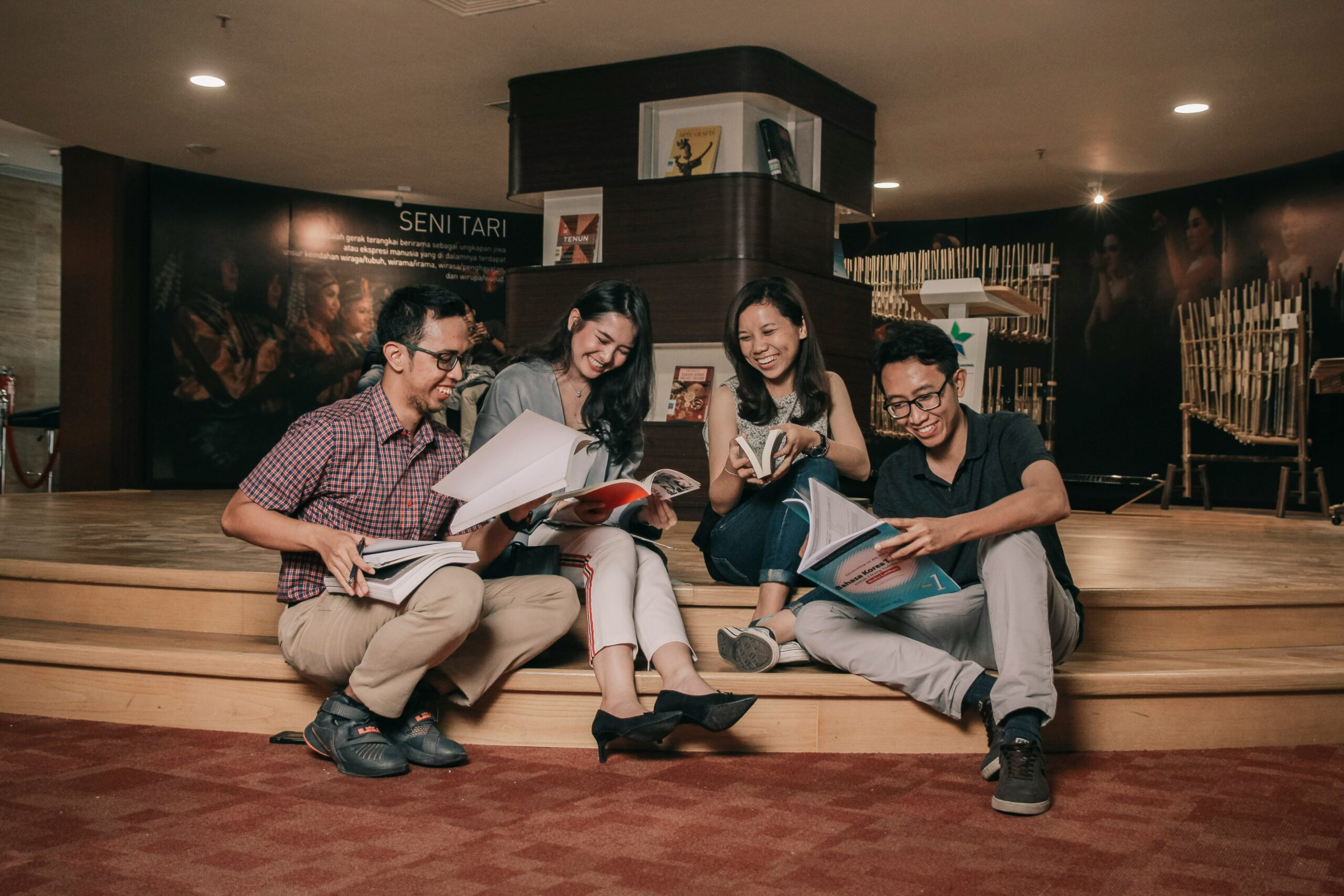
Nor is reading just about books, or printed pages. When we read deeply, we also learn to read beyond the page: to read people, situations, and the room. We become attune to nuance and context, more capable of judgement, and empathetic about human and societal realities.
In that sense, reading is not just an intellectual exercise. It is a life skill.
Reading helps us slow down to think more clearly – to weigh evidence, see connections, and hold more than one idea in mind at the same time. The cognitive scientist Maryanne Wolf has written about the need to read both quickly and deeply – to scan efficiently, but also to slow down and reflect. She draws on the old Latin idea of festina lente – to “make haste, slowly”.
Some countries have begun to recognise the need to sustain this capacity for reading well. China has mandated the promotion of reading, through campaigns and festivals, as a matter of national cultural policy. The United Kingdom designated 2026 as a “Year of Reading”, aimed not just at improving literacy, but reshaping how reading is perceived – mobilising schools, libraries and communities to make reading visible and valued, for both purpose and pleasure. Its mantra is simple and powerful: “If you are into it, read into it”. Whether it be history, sport, business or popular culture, people are encouraged to “Go All In”.
This approach is worth watching. If reading is to thrive in an age of social media and AI, it cannot be left to chance. It must be actively nurtured – at home, in schools, and across society.
More than 2,000 years ago, Confucius said: “Learning without thought is labour lost; thought without learning is perilous.” Centuries later, René Descartes reminded us, “I think, therefore I am.”
If thinking lies at the heart of what it means to be human, then the habits that sustain thinking – reading, reflection, judgement – matter more than ever before.
Reading is how we turn information into knowledge, and understanding into judgement.
In an age of noise and distraction, sustaining this skill may be one of the most important things we can do.
About the Author
Warren Fernandez is Deputy Chairman of the National Library Board, and a former editor of The Straits Times. He is also the Head of the National Security Studies Programme at the S. Rajaratnam School of International Studies (RSIS), Nanyang Technological University (NTU). His book, What we read, and Why, was launched recently. This commentary was first published in The Straits Times on 23 April 2026. It is republished here with permission.
SYNOPSIS
On World Book Day, marked by UNESCO on 23 April since 1995, we are reminded of the crucial role that reading, critical thinking and judgement play in ensuring that our societies remain rational, open and cohesive. Reading, in its broad sense, plays a part in almost every solution proposed to tackle some of the pressing concerns of our times, from dealing with scams, countering disinformation and curbing the rise of populism and polarisation in societies.
COMMENTARY
Today (April 23) is World Book Day, launched in 1995 by UNESCO to celebrate writers and promote reading.
In another era, this might have seemed like a quaint festival marked mostly by book lovers. But today, there is a new urgency.
Paradoxically, in a world inundated with information, insight and understanding seem to be in short supply. Surveys show higher levels of anxiety, diminishing trust in institutions, and rising polarisation within and between societies.
Consider some of the challenges we face. We read about scams defrauding the elderly, often with heart-wrenching consequences. A key part of any response must surely be to encourage people to read carefully, to question and cross check, to pause before they press “share” or click “send”.
Some of our young people struggle with mental wellness and lament about adulting. They would benefit from reading that others before them have also grappled with the joys and pains of growing up. Much has rightly been said about the need for stronger safeguards and better support systems to address the issue of bullying – in schools and online. But there is also a deeper capability we need to build: the ability to distinguish between rhetoric and reality, and to develop resilience. Words can wound. But, read in the right context, they can also diffuse and disarm.
Deepfakes and disinformation in our age of artificial intelligence make it increasingly hard to tell what is real. Unless we are able to read, think critically and form judgements, we risk being not just misinformed, but more readily manipulated.
Against this backdrop, polarisation is rising in many societies. Populist movements gain ground by offering simple solutions to complex problems, often appealing to emotion rather than evidence.
Our world is becoming more complex, contested, and uncertain. In such a world, the ability to read – carefully, critically, contextually – is not just useful, it is essential. Essential for individuals, parents, leaders, citizens, and voters. It is not just a nice to have, but a necessity for societies that want to remain rational, open, and cohesive.
Reading alone will not be sufficient to address these challenges. Each of these requires its own response, from regulation to education to community support. But promoting reading is a necessary part of any solution.
Yet, even as these capabilities become more crucial, they are under strain. A recent OECD report found that literacy and numeracy among adults declined or stagnated in most countries over the past decade. One in five adults globally lacks even basic levels of these skills.
In Singapore, the picture is mixed. Reading levels remain relatively high, but the OECD study showed that adult literacy is below the international average, and declines after the age of 35. That is a sobering finding.
Singapore has worked hard over generations to raise literacy. Today, most of our people can read. But our reading brain is like a muscle. We either use it, or lose it.
As Mark Twain is said to have observed: A person who will not read has no advantage over one who cannot.
That observation feels especially relevant today, as several of the contributors to my book on reading noted.
Among them was Senior Minister Lee Hsien Loong, who recounted how he made time to read, no matter busy he was running the country. Reading was not an indulgence. It was part of how he stayed informed, reflected on complex issues, and made decisions.
Several CEOs echoed this. Despite their demanding schedules, they view reading as a way to sharpen thinking, broaden perspectives, and stay ahead. One described it as a “workout for the mind” – something that AI cannot do for you.
These reflections point to a broader truth: reading is not just about acquiring information. It is about developing the capacity to think and form judgements.
Nor is reading just about books, or printed pages. When we read deeply, we also learn to read beyond the page: to read people, situations, and the room. We become attune to nuance and context, more capable of judgement, and empathetic about human and societal realities.
In that sense, reading is not just an intellectual exercise. It is a life skill.
Reading helps us slow down to think more clearly – to weigh evidence, see connections, and hold more than one idea in mind at the same time. The cognitive scientist Maryanne Wolf has written about the need to read both quickly and deeply – to scan efficiently, but also to slow down and reflect. She draws on the old Latin idea of festina lente – to “make haste, slowly”.
Some countries have begun to recognise the need to sustain this capacity for reading well. China has mandated the promotion of reading, through campaigns and festivals, as a matter of national cultural policy. The United Kingdom designated 2026 as a “Year of Reading”, aimed not just at improving literacy, but reshaping how reading is perceived – mobilising schools, libraries and communities to make reading visible and valued, for both purpose and pleasure. Its mantra is simple and powerful: “If you are into it, read into it”. Whether it be history, sport, business or popular culture, people are encouraged to “Go All In”.
This approach is worth watching. If reading is to thrive in an age of social media and AI, it cannot be left to chance. It must be actively nurtured – at home, in schools, and across society.
More than 2,000 years ago, Confucius said: “Learning without thought is labour lost; thought without learning is perilous.” Centuries later, René Descartes reminded us, “I think, therefore I am.”
If thinking lies at the heart of what it means to be human, then the habits that sustain thinking – reading, reflection, judgement – matter more than ever before.
Reading is how we turn information into knowledge, and understanding into judgement.
In an age of noise and distraction, sustaining this skill may be one of the most important things we can do.
About the Author
Warren Fernandez is Deputy Chairman of the National Library Board, and a former editor of The Straits Times. He is also the Head of the National Security Studies Programme at the S. Rajaratnam School of International Studies (RSIS), Nanyang Technological University (NTU). His book, What we read, and Why, was launched recently. This commentary was first published in The Straits Times on 23 April 2026. It is republished here with permission.