


02 June 2026
CO26118 | A World Rearmed: Re-imagining Arms Control

SYNOPSIS
Arms control is not dead – but its institutions are barely functioning. For the first time in fifty years, the world’s two largest nuclear powers operate without constraints – and no great power shows any appetite to change that. The task now falls to middle powers and regional coalitions – not through grand treaties, but through quiet diplomacy, norm-building, and institutional creativity.
COMMENTARY
We are living in perhaps the most precarious moment for arms control in over half a century. Two opposing trends explain this concern.
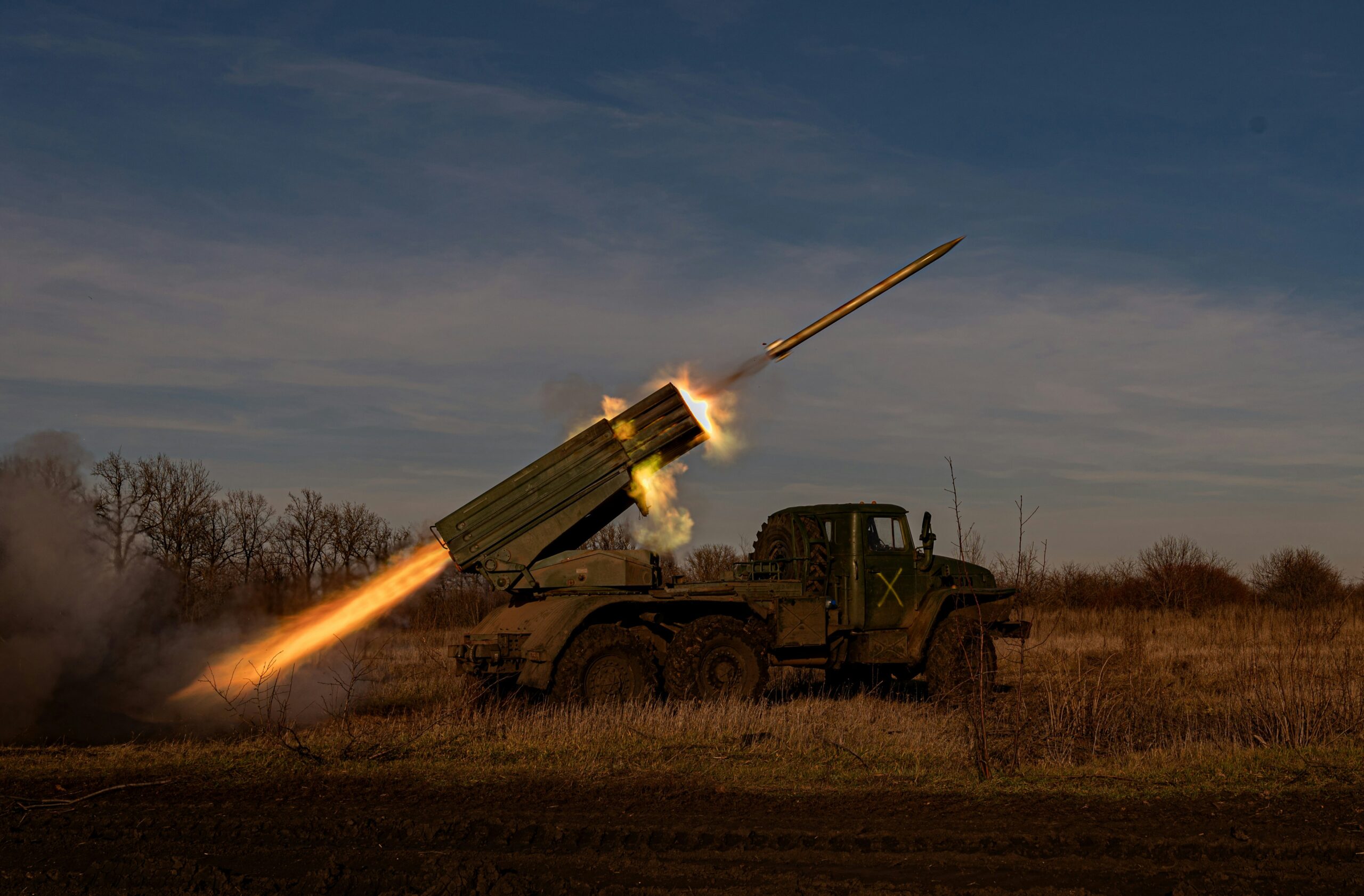
The first is a dramatic acceleration in military spending. For the eleventh consecutive year, worldwide defence expenditure climbed in 2025 – and this is not merely a great-power phenomenon. States across Europe and Asia are rearming at pace, driven by a fracturing world order and a deepening sense of insecurity.
The second is the unravelling of the very structures built to keep that spending in check. The architecture painstakingly constructed to manage global arsenals has quietly collapsed, culminating in the expiration of New START – the last binding nuclear arms control agreement between the United States and Russia – in February 2026. For the first time in more than fifty years, the world’s two largest nuclear powers are operating without formal constraints on their strategic weapons, marking a fundamental rupture in the global security order.
Three Fault Lines
Three factors help explain how these trends have unfolded.
The first is structural: a collapse of trust and political will. The current environment is defined by deep mutual suspicion, intensified geopolitical rivalry, and a near-total lack of appetite among leading actors for any constraining commitments. Russia’s invasion of Ukraine effectively buried what remained of the bilateral arms control dialogue between Washington and Moscow. Instead, all five permanent members of the UN Security Council are now strengthening their nuclear arsenals – hollowing out the Treaty on the Non-Proliferation of Nuclear Weapons’ (NPT) foundational bargain, under which non-nuclear states agreed to forgo weapons in exchange for progress towards P5 disarmament. This gap matters because it gives non-nuclear states little reason to believe the bargain still holds.
The second is complexity: the security landscape is fundamentally different from the one that Cold War frameworks were designed to manage. China’s rise has reshaped the equation entirely. Its nuclear arsenal has roughly doubled over five years, with concerns that it may have initiated a Launch Under Attack posture – a development dramatically raising risks of miscalculation. Washington now insists Beijing must be included in any successor to New START; Moscow wants London and Paris included too. The result is a geopolitical deadlock with no clear exit.
The third is scope: arms control problems now go well beyond nuclear weapons. Chemical and biological weapons’ regimes have faced sustained disinformation campaigns, while conventional arms control has been undermined by the use of cluster munitions by both sides in Ukraine. Moreover, entire domains – cyber, artificial intelligence, space – increasingly intersect with traditional weapons systems in ways that existing treaties were never designed to address. The result is a growing body of risk with no institutional home.
Taken together, these three factors point to a system on the brink of failing. One can argue that arms control is not dead – but “it is in a coma”. The agreements, institutions, and norms still exist, but no longer function as intended. The recent 2026 NPT Review Conference followed the pattern of its two predecessors in 2015 and 2022, ending again without agreement. Events in Iran have compounded the problem considerably: the attacks by Israel and the United States on a non-nuclear state have reinforced the perception that forgoing nuclear weapons provides no meaningful security guarantee – an impression that, if it takes hold, risks unravelling the normative foundations of the entire non-proliferation regime.
What makes this moment particularly dangerous, however, isn’t only the absence of agreements, but the absence of dialogue itself. When communication breaks down, transparency erodes, and verification becomes harder. These are the conditions under which miscalculation becomes most likely.
Re-imagining Arms Control Today
A re-imagined arms control needs to start with an honest reckoning: the era of sweeping bilateral formal agreements is, for now, over. Ambition must be recalibrated – not abandoned, but redirected towards what is actually achievable. The approach here is less about grand architecture and more about laying foundations for arms control to retain its core functions. Five pillars are suggested:
The first is confidence-building over treaty-writing. In a low-trust environment, the entry point must focus on risk reduction, transparency, and keeping communication channels open, not least between military and scientific communities. The immediate goal is not disarmament; it is preventing the kind of miscalculation that makes disarmament permanently out of reach.
The second approach is to identify the lowest common denominator and to build from there. Even adversaries share an interest in stability and in avoiding the reputational costs of catastrophe. Reaffirming the Reagan-Gorbachev principle that a nuclear war cannot be won and must never be fought costs nothing, yet signals something meaningful.
The third is norm-building as a pressure mechanism. The Treaty on the Prohibition of Nuclear Weapons (TPNW) is instructive: it has not been ratified by any nuclear-armed state, yet it has already shifted the terms of debate and prompted financial institutions to reconsider their involvement in nuclear weapons production. Political declarations, national strategies, and regional frameworks can shape behaviour and raise reputational costs – even without P5 buy-in.
The fourth is engaging the private sector. Dual-use technologies, AI systems, and advanced weapons platforms are outpacing existing regulatory frameworks, requiring collaboration with the industry driving these advancements. Embedding basic safeguards – against unsafe deployment, proliferation risk, and autonomous systems operating without meaningful human control – is now integral to the challenge.
The fifth is institutional innovation. The concept of a standing “COP for weapons” – loosely modelled on climate review mechanisms, with regular reporting cycles, target-setting, and broader participation than in traditional arms control forums – would sustain political attention between crises, provide a forum when bilateral mechanisms are stalled, and help rebuild the habit of multilateral engagement that has atrophied over the past decade.
Who Can Lead?
On leadership, the obvious answer is also the most deflating: those with the greatest power to act are least likely to use it, at least for now. The real question is who will fill that gap.
Europe has both the strategic incentive and the standing to lead. It is most directly exposed to the consequences of the US-Russia breakdown in arms control, and its two P5 members – the UK and France – give it leverage no other non-superpower coalition possesses. Yet, Europe has thus far prioritised rearmament, with France’s forward deterrence doctrine targeting extended nuclear cover across the continent. The argument is not that these are mutually exclusive, but that Europe cannot afford to accelerate the very dynamic it seeks to manage. Instead, its strategic leverage can open dialogue between nuclear powers – including, critically, nudging China towards greater engagement.
Asia is underappreciated as a locus of leadership. Vietnam, chair of the 2026 NPT Review Conference, brings a rare combination of assets: it has Comprehensive Strategic Partnerships with all five P5 members, credibility as an early TPNW ratifier, and lived experience of chemical weapons use in warfare. That is an unusual convergence of neutrality, moral authority, and diplomatic reach. Japan and South Korea bring deep nuclear expertise and long advocacy track records. Their potential drift towards reconsidering nuclear acquisition makes their continued engagement in the NPT framework not just valuable, but urgent to preserve.
Indonesia represents a second thread, through its role in the Non-Aligned Movement and ASEAN, that regional coalitions, when aligned, can set precedents that larger powers find difficult to ignore. Meanwhile, ASEAN’s nuclear-weapon-free zone treaty – the SEANWFZ – is instructive. China’s stated readiness to become its first P5 signatory shows that major powers can be drawn into regional frameworks when the reputational cost of disengagement rises sufficiently.
In a world where great powers are unlikely to lead, middle powers and coalitions must make arms control a concern for everyone.
About the Author
Mely Caballero-Anthony is the Ngee Ann Kongsi Professor of International Relations and Head of the Centre for Non-Traditional Security Studies (NTS Centre) at the S. Rajaratnam School of International Studies (RSIS), Nanyang Technological University (NTU), Singapore.
SYNOPSIS
Arms control is not dead – but its institutions are barely functioning. For the first time in fifty years, the world’s two largest nuclear powers operate without constraints – and no great power shows any appetite to change that. The task now falls to middle powers and regional coalitions – not through grand treaties, but through quiet diplomacy, norm-building, and institutional creativity.
COMMENTARY
We are living in perhaps the most precarious moment for arms control in over half a century. Two opposing trends explain this concern.
The first is a dramatic acceleration in military spending. For the eleventh consecutive year, worldwide defence expenditure climbed in 2025 – and this is not merely a great-power phenomenon. States across Europe and Asia are rearming at pace, driven by a fracturing world order and a deepening sense of insecurity.
The second is the unravelling of the very structures built to keep that spending in check. The architecture painstakingly constructed to manage global arsenals has quietly collapsed, culminating in the expiration of New START – the last binding nuclear arms control agreement between the United States and Russia – in February 2026. For the first time in more than fifty years, the world’s two largest nuclear powers are operating without formal constraints on their strategic weapons, marking a fundamental rupture in the global security order.
Three Fault Lines
Three factors help explain how these trends have unfolded.
The first is structural: a collapse of trust and political will. The current environment is defined by deep mutual suspicion, intensified geopolitical rivalry, and a near-total lack of appetite among leading actors for any constraining commitments. Russia’s invasion of Ukraine effectively buried what remained of the bilateral arms control dialogue between Washington and Moscow. Instead, all five permanent members of the UN Security Council are now strengthening their nuclear arsenals – hollowing out the Treaty on the Non-Proliferation of Nuclear Weapons’ (NPT) foundational bargain, under which non-nuclear states agreed to forgo weapons in exchange for progress towards P5 disarmament. This gap matters because it gives non-nuclear states little reason to believe the bargain still holds.
The second is complexity: the security landscape is fundamentally different from the one that Cold War frameworks were designed to manage. China’s rise has reshaped the equation entirely. Its nuclear arsenal has roughly doubled over five years, with concerns that it may have initiated a Launch Under Attack posture – a development dramatically raising risks of miscalculation. Washington now insists Beijing must be included in any successor to New START; Moscow wants London and Paris included too. The result is a geopolitical deadlock with no clear exit.
The third is scope: arms control problems now go well beyond nuclear weapons. Chemical and biological weapons’ regimes have faced sustained disinformation campaigns, while conventional arms control has been undermined by the use of cluster munitions by both sides in Ukraine. Moreover, entire domains – cyber, artificial intelligence, space – increasingly intersect with traditional weapons systems in ways that existing treaties were never designed to address. The result is a growing body of risk with no institutional home.
Taken together, these three factors point to a system on the brink of failing. One can argue that arms control is not dead – but “it is in a coma”. The agreements, institutions, and norms still exist, but no longer function as intended. The recent 2026 NPT Review Conference followed the pattern of its two predecessors in 2015 and 2022, ending again without agreement. Events in Iran have compounded the problem considerably: the attacks by Israel and the United States on a non-nuclear state have reinforced the perception that forgoing nuclear weapons provides no meaningful security guarantee – an impression that, if it takes hold, risks unravelling the normative foundations of the entire non-proliferation regime.
What makes this moment particularly dangerous, however, isn’t only the absence of agreements, but the absence of dialogue itself. When communication breaks down, transparency erodes, and verification becomes harder. These are the conditions under which miscalculation becomes most likely.
Re-imagining Arms Control Today
A re-imagined arms control needs to start with an honest reckoning: the era of sweeping bilateral formal agreements is, for now, over. Ambition must be recalibrated – not abandoned, but redirected towards what is actually achievable. The approach here is less about grand architecture and more about laying foundations for arms control to retain its core functions. Five pillars are suggested:
The first is confidence-building over treaty-writing. In a low-trust environment, the entry point must focus on risk reduction, transparency, and keeping communication channels open, not least between military and scientific communities. The immediate goal is not disarmament; it is preventing the kind of miscalculation that makes disarmament permanently out of reach.
The second approach is to identify the lowest common denominator and to build from there. Even adversaries share an interest in stability and in avoiding the reputational costs of catastrophe. Reaffirming the Reagan-Gorbachev principle that a nuclear war cannot be won and must never be fought costs nothing, yet signals something meaningful.
The third is norm-building as a pressure mechanism. The Treaty on the Prohibition of Nuclear Weapons (TPNW) is instructive: it has not been ratified by any nuclear-armed state, yet it has already shifted the terms of debate and prompted financial institutions to reconsider their involvement in nuclear weapons production. Political declarations, national strategies, and regional frameworks can shape behaviour and raise reputational costs – even without P5 buy-in.
The fourth is engaging the private sector. Dual-use technologies, AI systems, and advanced weapons platforms are outpacing existing regulatory frameworks, requiring collaboration with the industry driving these advancements. Embedding basic safeguards – against unsafe deployment, proliferation risk, and autonomous systems operating without meaningful human control – is now integral to the challenge.
The fifth is institutional innovation. The concept of a standing “COP for weapons” – loosely modelled on climate review mechanisms, with regular reporting cycles, target-setting, and broader participation than in traditional arms control forums – would sustain political attention between crises, provide a forum when bilateral mechanisms are stalled, and help rebuild the habit of multilateral engagement that has atrophied over the past decade.
Who Can Lead?
On leadership, the obvious answer is also the most deflating: those with the greatest power to act are least likely to use it, at least for now. The real question is who will fill that gap.
Europe has both the strategic incentive and the standing to lead. It is most directly exposed to the consequences of the US-Russia breakdown in arms control, and its two P5 members – the UK and France – give it leverage no other non-superpower coalition possesses. Yet, Europe has thus far prioritised rearmament, with France’s forward deterrence doctrine targeting extended nuclear cover across the continent. The argument is not that these are mutually exclusive, but that Europe cannot afford to accelerate the very dynamic it seeks to manage. Instead, its strategic leverage can open dialogue between nuclear powers – including, critically, nudging China towards greater engagement.
Asia is underappreciated as a locus of leadership. Vietnam, chair of the 2026 NPT Review Conference, brings a rare combination of assets: it has Comprehensive Strategic Partnerships with all five P5 members, credibility as an early TPNW ratifier, and lived experience of chemical weapons use in warfare. That is an unusual convergence of neutrality, moral authority, and diplomatic reach. Japan and South Korea bring deep nuclear expertise and long advocacy track records. Their potential drift towards reconsidering nuclear acquisition makes their continued engagement in the NPT framework not just valuable, but urgent to preserve.
Indonesia represents a second thread, through its role in the Non-Aligned Movement and ASEAN, that regional coalitions, when aligned, can set precedents that larger powers find difficult to ignore. Meanwhile, ASEAN’s nuclear-weapon-free zone treaty – the SEANWFZ – is instructive. China’s stated readiness to become its first P5 signatory shows that major powers can be drawn into regional frameworks when the reputational cost of disengagement rises sufficiently.
In a world where great powers are unlikely to lead, middle powers and coalitions must make arms control a concern for everyone.
About the Author
Mely Caballero-Anthony is the Ngee Ann Kongsi Professor of International Relations and Head of the Centre for Non-Traditional Security Studies (NTS Centre) at the S. Rajaratnam School of International Studies (RSIS), Nanyang Technological University (NTU), Singapore.