


12 June 2026
CO26125 | Malaysian PM Anwar Ibrahim and the Politics of Snap Polls

SYNOPSIS
Speculations about snap polls undermine Anwar’s position. There are no good reasons for him to call an unforced general election for now.
COMMENTARY
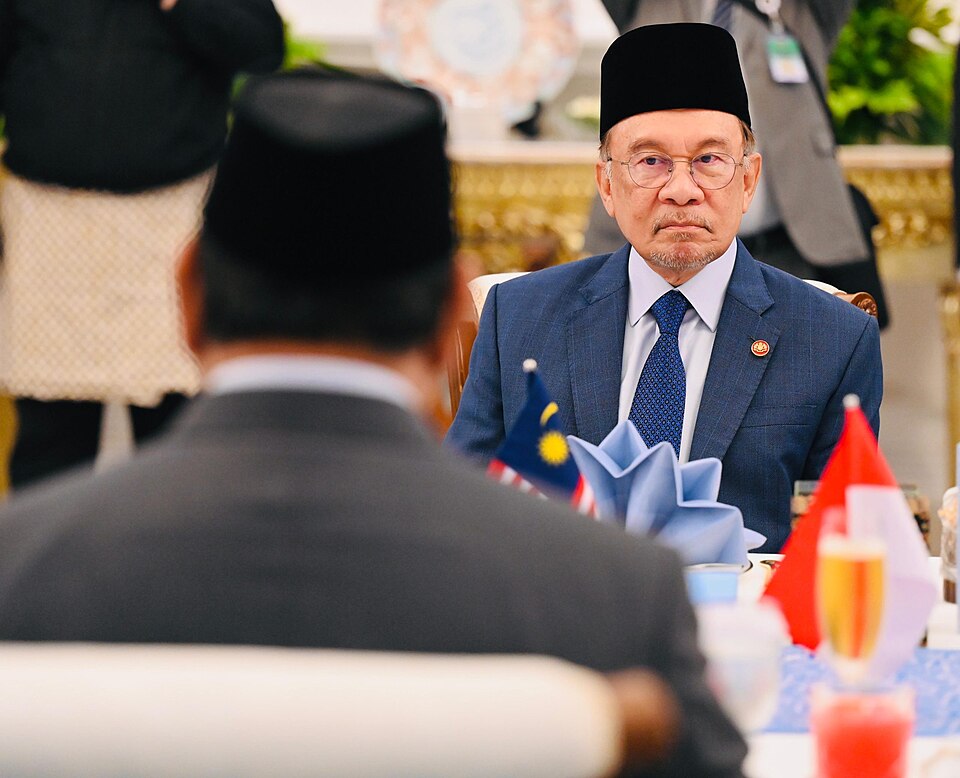
On 17 May, at the Pakatan Harapan (PH) convention and retreat in Johor, PM Anwar Ibrahim declared that he was prepared to face a snap general election if pressures persisted. This was in reaction to the announcement of the United Malays National Organisation (UMNO) in Johor that it would contest all 56 seats in the coming state election, thus setting up head-on clashes with UMNO’s partners in the federal government, namely, PH’s main component parties: Parti Keadilan Rakyat (PKR), the Democratic Action Party (DAP) and Amanah.
On the same day, former PKR deputy president Rafizi Ramli launched his takeover of a small party, Bersama, taking aim directly at Anwar.
While Anwar’s response won enthusiasm at the PH convention and briefly dominated headlines, he adopted a reconciliatory tone thereafter by saying that he would discuss the matter with UMNO.
It is bad enough to be dragged into early state elections by one’s coalition partner; it would be much worse to stake everything on an early general election that Anwar and PH are clearly not ready for.
Notwithstanding rumblings in the last three years over the lack of reforms and the disappointment of the PH voter base, this is the first time Anwar’s grip on power has been seriously questioned, under the looming spectre of snap polls in media and public discourse.
In fact, there are only two main reasons for snap polls. First, if Anwar loses the confidence of the majority in the country’s parliament. Second, if he calculates that among all the windows available before the latest possible election date of early 2028, now is the best moment to secure a second term.
If Anwar is seeking to improve his chances by chalking up more achievements and cultivating supporters, he would wait. If he believes this is likely to be the only term he may have, it makes sense for him to run it out and use the remaining time to shape the best conditions for his side in the aftermath.
Despite speculations, there have not to date been good reasons for Anwar to call unforced snap polls.
Recent History
Speculations of snap polls are a mainstay of Malaysian politics. When Barisan Nasional (BN) led by UMNO dominated national politics, the prime minister might do so to maximise his party’s win. It is often said that both PM Abdullah Badawi and PM Najib Razak lost several seats because they had waited too long to call the 2008 and 2018 general elections respectively, allowing cost of living pressures to build and the opposition time to coalesce.
In fact, as support began to ebb from UMNO, prime ministers since Abdullah have naturally become leerier of calling early polls. PM Ismail Sabri was forced by his own party leaders to call an early election in 2022 and lost, making his 15 months in office the shortest in Malaysian history. Then Johor Mentri Besar Hasni Mohammad was forced to call an early poll in 2022, and while he led UMNO to victory, he failed to be reappointed by Johor’s Sultan.
Recent events suggest that early polls have their perils and returns to power are becoming rarer with the greater unpredictability and jostling for influence among more power centres. Given the fragmentation of Malaysian politics into three main coalitions, most do not expect any coalition to win outright. Instead, as in 2022, the next government is expected to be formed by coalitions that can compromise, chalk up the numbers, and agree on which leader to be prime minister, who would be recognised and be sworn in by the King.
Reports of Snap Polls Under Anwar
Rumours of an early poll began last year, reportedly from Anwar’s inner circle. The reasoning had been that Anwar could claim credit for a good economy, and capitalise on an opposition in disarray. However, with the outbreak of war in Iran in February this year, the reasoning shifted to how the economy was going to see a downturn and it was better to call early and avoid the public backlash when prices rise.
The most recent trigger was UMNO’s snap polls in Johor – one year before they are due. Close observers would not have been surprised that UMNO and allies have refused to cooperate with PH. They had kept PH out of the state government despite the formation of a “unity government” at the federal level. (The question was whether UMNO and PH would find quiet accommodation to avoid direct clashes, closing ranks against their common rivals the Islamic party PAS and Bersatu in Perikatan Nasional).
UMNO is reportedly calling for polls in Johor because it is confident and wants to build momentum before the general election in Malaysia. But doing well in the Johor state election in March 2022 had not led to greater results for UMNO in the subsequent general election, so a strong Johor win this year should not on its own logically push UMNO to again rush for general election. UMNO has made some recovery in the southern states of Johor, Melaka and Negri Sembilan, but is not gaining on PAS elsewhere.
Thus, UMNO president Zahid Hamidi is not necessarily keen to give up federal power just yet. UMNO would likely only do so together with its old partner Gabungan Parti Sarawak (GPS), thus triggering a collapse and general election. All parties in the ruling government have suffered privations as the opposition and would want to avoid it.
Anwar cannot count on a fraying opposition alone as the opportunity to retake power has a way of focussing minds. Strange bedfellows such as Mahathir and Anwar had joined hands in 2018 even with the latter still in jail. An impending general election could prompt Anwar’s adversaries to put aside their differences temporarily, particularly in the name of “Malay unity”.
Instead, Anwar and his PH partners need to give their supporters a renewed reason to turn out at the polls. With the departure of Rafizi and former PKR vice president Nik Nazmi, PKR is vulnerable. Earlier leaks in May from PKR’s internal analysis for the next general election suggested that the party only had seven strong/safe seats and 13 leaning strong – not even Anwar’s seat, Tambun, was considered safe. PKR had won 31 seats in 2022, and is expected to lose more in the next race.
DAP’s base is sour over Anwar’s handling of the economy, including issues like e-invoicing that raise business costs, and his perceived ham-fisted efforts to pander to Malay sentiment at the cost of disillusionment among PH’s most loyal base – the Chinese and Indians. Yet, DAP has said that it would support Anwar as prime minister to the end of his term for the sake of stability.
At the federal level, parties that support Anwar’s continued premiership have not withdrawn support. His two-thirds majority is formidable. His government has demonstrated that it is prepared to withdraw fund allocations from MPs even from PKR who seem to support Rafizi.
Many who are publicly speculating early polls include groups who benefit from the “campaign economy” and politicians out of power. The MPs are quieter, having much to lose, as it is not to be assumed that they could contest and win again; the same can be said for supporters of the current government holding positions on boards and GLCs.
The person with the most to lose is Anwar. Full executive powers leave him once he calls snap polls – the power of the purse and official appointments to public offices, law enforcement, and the “bully pulpit”.
What’s Next?
Anwar has since declared that he and his government are focused on their job of governing, brushing aside elections for now.
In the coming months, apart from Johor and Negri Sembilan, Melaka and Sarawak are due for state polls. Perlis, Pahang, and Perak state assemblies may dissolve at the same time as parliament. Being federal incumbents, PH parties are bracing for poor results in the coming state elections.
There is much for PKR, DAP, and Amanah to use the remaining time to strengthen their party and renew their reformist and multiracial brand. Economically, they would have to exercise good stewardship of the economy at a very difficult time. Opposition leader Samsuri Mokhtar had earlier proposed a bipartisan committee to discuss the economic challenges arising from the Iran war’s energy shock. Engaging the opposition to solve serious policy challenges could be one way for Anwar to take back the initiative while exuding confidence and demonstrating his competency and focus on governance. Anwar would need to buy time to cultivate the continued acceptance of his leadership among PH partners and supporters, UMNO, GPS and the Malay establishment.
About the Author
Ariel Tan is a Senior Fellow and Coordinator of the Malaysia Programme at the Institute of Defence and Strategic Studies (IDSS), at S. Rajaratnam School of International Studies (RSIS), Nanyang Technological University (NTU), Singapore.
SYNOPSIS
Speculations about snap polls undermine Anwar’s position. There are no good reasons for him to call an unforced general election for now.
COMMENTARY
On 17 May, at the Pakatan Harapan (PH) convention and retreat in Johor, PM Anwar Ibrahim declared that he was prepared to face a snap general election if pressures persisted. This was in reaction to the announcement of the United Malays National Organisation (UMNO) in Johor that it would contest all 56 seats in the coming state election, thus setting up head-on clashes with UMNO’s partners in the federal government, namely, PH’s main component parties: Parti Keadilan Rakyat (PKR), the Democratic Action Party (DAP) and Amanah.
On the same day, former PKR deputy president Rafizi Ramli launched his takeover of a small party, Bersama, taking aim directly at Anwar.
While Anwar’s response won enthusiasm at the PH convention and briefly dominated headlines, he adopted a reconciliatory tone thereafter by saying that he would discuss the matter with UMNO.
It is bad enough to be dragged into early state elections by one’s coalition partner; it would be much worse to stake everything on an early general election that Anwar and PH are clearly not ready for.
Notwithstanding rumblings in the last three years over the lack of reforms and the disappointment of the PH voter base, this is the first time Anwar’s grip on power has been seriously questioned, under the looming spectre of snap polls in media and public discourse.
In fact, there are only two main reasons for snap polls. First, if Anwar loses the confidence of the majority in the country’s parliament. Second, if he calculates that among all the windows available before the latest possible election date of early 2028, now is the best moment to secure a second term.
If Anwar is seeking to improve his chances by chalking up more achievements and cultivating supporters, he would wait. If he believes this is likely to be the only term he may have, it makes sense for him to run it out and use the remaining time to shape the best conditions for his side in the aftermath.
Despite speculations, there have not to date been good reasons for Anwar to call unforced snap polls.
Recent History
Speculations of snap polls are a mainstay of Malaysian politics. When Barisan Nasional (BN) led by UMNO dominated national politics, the prime minister might do so to maximise his party’s win. It is often said that both PM Abdullah Badawi and PM Najib Razak lost several seats because they had waited too long to call the 2008 and 2018 general elections respectively, allowing cost of living pressures to build and the opposition time to coalesce.
In fact, as support began to ebb from UMNO, prime ministers since Abdullah have naturally become leerier of calling early polls. PM Ismail Sabri was forced by his own party leaders to call an early election in 2022 and lost, making his 15 months in office the shortest in Malaysian history. Then Johor Mentri Besar Hasni Mohammad was forced to call an early poll in 2022, and while he led UMNO to victory, he failed to be reappointed by Johor’s Sultan.
Recent events suggest that early polls have their perils and returns to power are becoming rarer with the greater unpredictability and jostling for influence among more power centres. Given the fragmentation of Malaysian politics into three main coalitions, most do not expect any coalition to win outright. Instead, as in 2022, the next government is expected to be formed by coalitions that can compromise, chalk up the numbers, and agree on which leader to be prime minister, who would be recognised and be sworn in by the King.
Reports of Snap Polls Under Anwar
Rumours of an early poll began last year, reportedly from Anwar’s inner circle. The reasoning had been that Anwar could claim credit for a good economy, and capitalise on an opposition in disarray. However, with the outbreak of war in Iran in February this year, the reasoning shifted to how the economy was going to see a downturn and it was better to call early and avoid the public backlash when prices rise.
The most recent trigger was UMNO’s snap polls in Johor – one year before they are due. Close observers would not have been surprised that UMNO and allies have refused to cooperate with PH. They had kept PH out of the state government despite the formation of a “unity government” at the federal level. (The question was whether UMNO and PH would find quiet accommodation to avoid direct clashes, closing ranks against their common rivals the Islamic party PAS and Bersatu in Perikatan Nasional).
UMNO is reportedly calling for polls in Johor because it is confident and wants to build momentum before the general election in Malaysia. But doing well in the Johor state election in March 2022 had not led to greater results for UMNO in the subsequent general election, so a strong Johor win this year should not on its own logically push UMNO to again rush for general election. UMNO has made some recovery in the southern states of Johor, Melaka and Negri Sembilan, but is not gaining on PAS elsewhere.
Thus, UMNO president Zahid Hamidi is not necessarily keen to give up federal power just yet. UMNO would likely only do so together with its old partner Gabungan Parti Sarawak (GPS), thus triggering a collapse and general election. All parties in the ruling government have suffered privations as the opposition and would want to avoid it.
Anwar cannot count on a fraying opposition alone as the opportunity to retake power has a way of focussing minds. Strange bedfellows such as Mahathir and Anwar had joined hands in 2018 even with the latter still in jail. An impending general election could prompt Anwar’s adversaries to put aside their differences temporarily, particularly in the name of “Malay unity”.
Instead, Anwar and his PH partners need to give their supporters a renewed reason to turn out at the polls. With the departure of Rafizi and former PKR vice president Nik Nazmi, PKR is vulnerable. Earlier leaks in May from PKR’s internal analysis for the next general election suggested that the party only had seven strong/safe seats and 13 leaning strong – not even Anwar’s seat, Tambun, was considered safe. PKR had won 31 seats in 2022, and is expected to lose more in the next race.
DAP’s base is sour over Anwar’s handling of the economy, including issues like e-invoicing that raise business costs, and his perceived ham-fisted efforts to pander to Malay sentiment at the cost of disillusionment among PH’s most loyal base – the Chinese and Indians. Yet, DAP has said that it would support Anwar as prime minister to the end of his term for the sake of stability.
At the federal level, parties that support Anwar’s continued premiership have not withdrawn support. His two-thirds majority is formidable. His government has demonstrated that it is prepared to withdraw fund allocations from MPs even from PKR who seem to support Rafizi.
Many who are publicly speculating early polls include groups who benefit from the “campaign economy” and politicians out of power. The MPs are quieter, having much to lose, as it is not to be assumed that they could contest and win again; the same can be said for supporters of the current government holding positions on boards and GLCs.
The person with the most to lose is Anwar. Full executive powers leave him once he calls snap polls – the power of the purse and official appointments to public offices, law enforcement, and the “bully pulpit”.
What’s Next?
Anwar has since declared that he and his government are focused on their job of governing, brushing aside elections for now.
In the coming months, apart from Johor and Negri Sembilan, Melaka and Sarawak are due for state polls. Perlis, Pahang, and Perak state assemblies may dissolve at the same time as parliament. Being federal incumbents, PH parties are bracing for poor results in the coming state elections.
There is much for PKR, DAP, and Amanah to use the remaining time to strengthen their party and renew their reformist and multiracial brand. Economically, they would have to exercise good stewardship of the economy at a very difficult time. Opposition leader Samsuri Mokhtar had earlier proposed a bipartisan committee to discuss the economic challenges arising from the Iran war’s energy shock. Engaging the opposition to solve serious policy challenges could be one way for Anwar to take back the initiative while exuding confidence and demonstrating his competency and focus on governance. Anwar would need to buy time to cultivate the continued acceptance of his leadership among PH partners and supporters, UMNO, GPS and the Malay establishment.
About the Author
Ariel Tan is a Senior Fellow and Coordinator of the Malaysia Programme at the Institute of Defence and Strategic Studies (IDSS), at S. Rajaratnam School of International Studies (RSIS), Nanyang Technological University (NTU), Singapore.