


09 July 2026
CO26148 | ASEAN Resilience: The Operationalisation Gap

SYNOPSIS
ASEAN Future Forum 2026 showed up ASEAN’s operationalisation gap: the region can identify vulnerabilities, weigh trade-offs, and build frameworks, but has found it difficult to make them work under pressure. Energy security and conflict prevention show why resilience requires clearer triggers, responsibilities, and procedures that preserve agency before crises erupt and narrow the options.
COMMENTARY
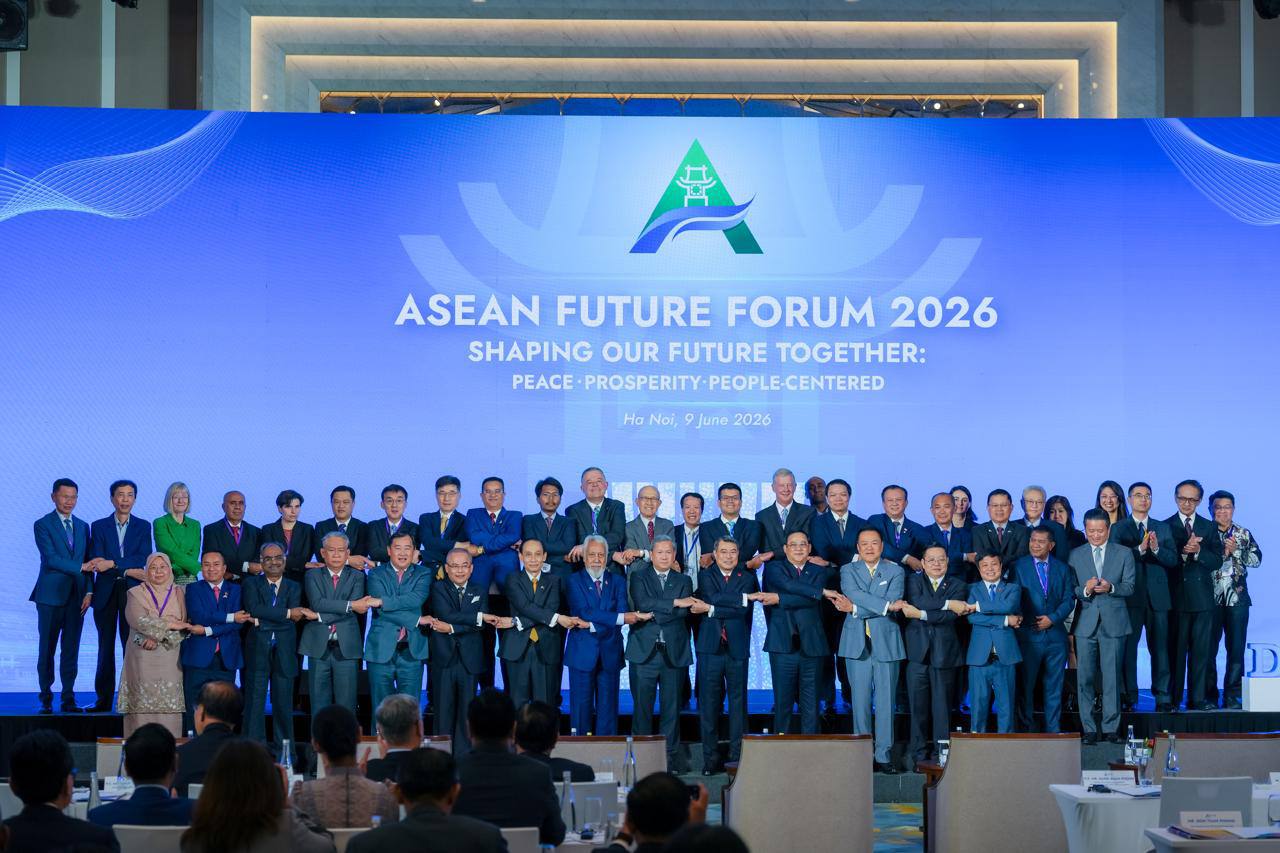
In its third iteration, the 2026 ASEAN Future Forum (AFF) reflects Vietnam’s ongoing effort to build a regional platform for forward-looking policy discussions. First proposed in 2023, the Forum has become part of Hanoi’s diplomatic convening repertoire.
This year’s attendance by the prime ministers of Cambodia, Lao PDR, Thailand, and Timor-Leste suggested that the AFF is regarded as a useful platform for regional signalling and agenda-setting. Their presence also underscored Vietnam’s convening role within mainland Southeast Asia, where Cambodia, Lao PDR, and Thailand each have distinct but important interests in engaging Hanoi, while Timor-Leste’s participation reflected its continued socialisation into ASEAN processes.
Beyond the diplomatic optics, discussions on resilience, conflict prevention, artificial intelligence, energy security, and development models converged on a common concern: ASEAN can identify vulnerabilities, weigh trade-offs, and build frameworks, but struggles to translate them into mechanisms that work when needed. Three takeaways from AFF 2026 illustrate how this operationalisation gap plays out in practice.
Responding to Energy Shocks
The recent crisis around the Strait of Hormuz was the central reference point in the forum’s energy discussion, repeatedly cited as evidence that an external shock far from Southeast Asia could rapidly ripple through the region via fuel, food, fertiliser, finance, and foreign workers. The recognition of exposure was clear and widely shared, but the response was equivocal.
Speakers highlighted that ASEAN already has much of the necessary architecture, including the ASEAN Framework Agreement on Petroleum Security and its coordinated emergency response measures, which were renewed in October 2025, as well as the ASEAN Power Grid.
Southeast Asian leaders at the 48th ASEAN Summit in Cebu had noted the proposal of a regional think tank (ERIA) to study regional joint oil stockpiling and called for the ASEAN Framework Agreement on Petroleum Security to be operationalised through clearer coordination, information-sharing, contingency planning, and emergency response mechanisms.
While the instruments are largely in place or in preparation, the weakness lies in operationalisation. ASEAN’s energy sectoral bodies and national agencies should focus on agreed-upon triggers, clear responsibilities during supply interruptions, and reliable information sharing before prices move sharply.
A second point concerns how readily national projects are presented as regional goods. At the forum, Thailand’s prime minister offered the proposed land bridge as a hedge against vulnerability to chokepoints. The underlying aim, keeping essential flows moving when others have the incentive or opportunity to interrupt them, is genuinely regional.
Such a project may have merit, but a hedge against one chokepoint that creates another, this time on land and under a state’s control, relocates the region’s vulnerability rather than reducing it. Genuine resilience lies in diversifying routes across member states, not in concentrating a new dependency on one of them.
Thirdly, a further gap in the energy and connectivity discussion remained underdeveloped. The forum treated the ASEAN Power Grid and digital connectivity as sources of resilience but paid less attention to the undersea infrastructure on which both depend, including cross-border interconnectors and submarine cables.
ASEAN has already begun this work: submarine cable resilience has featured in ASEAN documents, and defence ministers adopted a Concept Paper on Critical Underwater Infrastructure Security in October 2025. Given that energy, data, and connectivity resilience increasingly depend on assets beneath the sea, ASEAN’s energy, transport, and security mechanisms should treat critical undersea infrastructure as part of the connectivity agenda.
Conflict Prevention and the Thailand-Cambodia Test
The conflict-prevention plenary at the 2026 AFF produced a sensible inventory of proposals: incident-management mechanisms, measures to close the gap between early warning and early action, voluntary transparency and peer review, and a revival of the High Council provided for under the ASEAN Treaty of Amity and Cooperation. These ideas are incremental and voluntary, which is the kind of initiative ASEAN tends to absorb successfully.
The Thailand-Cambodia dispute offered a more immediate test, with several warnings of further clashes in the year ahead. While Malaysia’s 2025 ASEAN Chairmanship played an important role in facilitating talks and ceasefire efforts, the response was ad hoc and Chair-led rather than the product of standing preventive mechanisms.
The prominent role of the United States and China showed how readily intra-ASEAN tensions pass to outside powers when the region’s own tools are not institutionalised. The point is not that ASEAN must manage such disputes alone, but that it should have preventive tools in place before a crisis erupts.
As with energy, ASEAN’s task is to convert the most mature tools in the inventory, such as incident-management mechanisms, de-confliction hotlines, and strengthened observer arrangements, into standing procedures that can be activated before tensions escalate. Where parties agree, these arrangements should be pre-positioned for known flashpoints, with clear contact points and thresholds.
Resilience as Agency
AFF 2026’s clearest conceptual move was to narrow the definition of resilience. Former Indonesian foreign minister Marty Natalegawa returned to his idea of dynamic equilibrium: ASEAN must actively manage competing pressures to preserve its agency and not rely on a fixed regional balance.
Other speakers treated internal strength and external cooperation as mutually reinforcing, defining resilience as the capacity to preserve options under pressure, rather than merely pursuing self-sufficiency or insulation from shocks.
AFF 2026 provides two takeaways with a shared logic. A regional stockpiling mechanism with agreed triggers preserves options when supply is interrupted. ASEAN-led incident management and observer arrangements preserve the region’s room to manage its own disputes rather than ceding that role to external actors. In both cases, the value of resilience lies in retained agency.
Conclusion
AFF 2026 showed that ASEAN’s challenge is no longer simply to diagnose vulnerabilities or build frameworks, but to translate them into mechanisms that can be utilised effectively. The constructive response is to avoid overstating the region’s limits, while moving beyond familiar language about unity and centrality.
At its best, the Forum showed ASEAN’s diplomacy at work: the careful weighing of trade-offs and the search for consensus around workable proposals. The real test is whether such deliberation yields mechanisms that function under pressure. In conflict prevention, as in energy security, many of the collaborative components already exist. The task now is to operationalise them before the next shock tests ASEAN’s resilience.
About the Author
Chong De Xian is an Associate Research Fellow in the Maritime Security Programme at the S. Rajaratnam School of International Studies (RSIS), Nanyang Technological University (NTU), Singapore.
SYNOPSIS
ASEAN Future Forum 2026 showed up ASEAN’s operationalisation gap: the region can identify vulnerabilities, weigh trade-offs, and build frameworks, but has found it difficult to make them work under pressure. Energy security and conflict prevention show why resilience requires clearer triggers, responsibilities, and procedures that preserve agency before crises erupt and narrow the options.
COMMENTARY
In its third iteration, the 2026 ASEAN Future Forum (AFF) reflects Vietnam’s ongoing effort to build a regional platform for forward-looking policy discussions. First proposed in 2023, the Forum has become part of Hanoi’s diplomatic convening repertoire.
This year’s attendance by the prime ministers of Cambodia, Lao PDR, Thailand, and Timor-Leste suggested that the AFF is regarded as a useful platform for regional signalling and agenda-setting. Their presence also underscored Vietnam’s convening role within mainland Southeast Asia, where Cambodia, Lao PDR, and Thailand each have distinct but important interests in engaging Hanoi, while Timor-Leste’s participation reflected its continued socialisation into ASEAN processes.
Beyond the diplomatic optics, discussions on resilience, conflict prevention, artificial intelligence, energy security, and development models converged on a common concern: ASEAN can identify vulnerabilities, weigh trade-offs, and build frameworks, but struggles to translate them into mechanisms that work when needed. Three takeaways from AFF 2026 illustrate how this operationalisation gap plays out in practice.
Responding to Energy Shocks
The recent crisis around the Strait of Hormuz was the central reference point in the forum’s energy discussion, repeatedly cited as evidence that an external shock far from Southeast Asia could rapidly ripple through the region via fuel, food, fertiliser, finance, and foreign workers. The recognition of exposure was clear and widely shared, but the response was equivocal.
Speakers highlighted that ASEAN already has much of the necessary architecture, including the ASEAN Framework Agreement on Petroleum Security and its coordinated emergency response measures, which were renewed in October 2025, as well as the ASEAN Power Grid.
Southeast Asian leaders at the 48th ASEAN Summit in Cebu had noted the proposal of a regional think tank (ERIA) to study regional joint oil stockpiling and called for the ASEAN Framework Agreement on Petroleum Security to be operationalised through clearer coordination, information-sharing, contingency planning, and emergency response mechanisms.
While the instruments are largely in place or in preparation, the weakness lies in operationalisation. ASEAN’s energy sectoral bodies and national agencies should focus on agreed-upon triggers, clear responsibilities during supply interruptions, and reliable information sharing before prices move sharply.
A second point concerns how readily national projects are presented as regional goods. At the forum, Thailand’s prime minister offered the proposed land bridge as a hedge against vulnerability to chokepoints. The underlying aim, keeping essential flows moving when others have the incentive or opportunity to interrupt them, is genuinely regional.
Such a project may have merit, but a hedge against one chokepoint that creates another, this time on land and under a state’s control, relocates the region’s vulnerability rather than reducing it. Genuine resilience lies in diversifying routes across member states, not in concentrating a new dependency on one of them.
Thirdly, a further gap in the energy and connectivity discussion remained underdeveloped. The forum treated the ASEAN Power Grid and digital connectivity as sources of resilience but paid less attention to the undersea infrastructure on which both depend, including cross-border interconnectors and submarine cables.
ASEAN has already begun this work: submarine cable resilience has featured in ASEAN documents, and defence ministers adopted a Concept Paper on Critical Underwater Infrastructure Security in October 2025. Given that energy, data, and connectivity resilience increasingly depend on assets beneath the sea, ASEAN’s energy, transport, and security mechanisms should treat critical undersea infrastructure as part of the connectivity agenda.
Conflict Prevention and the Thailand-Cambodia Test
The conflict-prevention plenary at the 2026 AFF produced a sensible inventory of proposals: incident-management mechanisms, measures to close the gap between early warning and early action, voluntary transparency and peer review, and a revival of the High Council provided for under the ASEAN Treaty of Amity and Cooperation. These ideas are incremental and voluntary, which is the kind of initiative ASEAN tends to absorb successfully.
The Thailand-Cambodia dispute offered a more immediate test, with several warnings of further clashes in the year ahead. While Malaysia’s 2025 ASEAN Chairmanship played an important role in facilitating talks and ceasefire efforts, the response was ad hoc and Chair-led rather than the product of standing preventive mechanisms.
The prominent role of the United States and China showed how readily intra-ASEAN tensions pass to outside powers when the region’s own tools are not institutionalised. The point is not that ASEAN must manage such disputes alone, but that it should have preventive tools in place before a crisis erupts.
As with energy, ASEAN’s task is to convert the most mature tools in the inventory, such as incident-management mechanisms, de-confliction hotlines, and strengthened observer arrangements, into standing procedures that can be activated before tensions escalate. Where parties agree, these arrangements should be pre-positioned for known flashpoints, with clear contact points and thresholds.
Resilience as Agency
AFF 2026’s clearest conceptual move was to narrow the definition of resilience. Former Indonesian foreign minister Marty Natalegawa returned to his idea of dynamic equilibrium: ASEAN must actively manage competing pressures to preserve its agency and not rely on a fixed regional balance.
Other speakers treated internal strength and external cooperation as mutually reinforcing, defining resilience as the capacity to preserve options under pressure, rather than merely pursuing self-sufficiency or insulation from shocks.
AFF 2026 provides two takeaways with a shared logic. A regional stockpiling mechanism with agreed triggers preserves options when supply is interrupted. ASEAN-led incident management and observer arrangements preserve the region’s room to manage its own disputes rather than ceding that role to external actors. In both cases, the value of resilience lies in retained agency.
Conclusion
AFF 2026 showed that ASEAN’s challenge is no longer simply to diagnose vulnerabilities or build frameworks, but to translate them into mechanisms that can be utilised effectively. The constructive response is to avoid overstating the region’s limits, while moving beyond familiar language about unity and centrality.
At its best, the Forum showed ASEAN’s diplomacy at work: the careful weighing of trade-offs and the search for consensus around workable proposals. The real test is whether such deliberation yields mechanisms that function under pressure. In conflict prevention, as in energy security, many of the collaborative components already exist. The task now is to operationalise them before the next shock tests ASEAN’s resilience.
About the Author
Chong De Xian is an Associate Research Fellow in the Maritime Security Programme at the S. Rajaratnam School of International Studies (RSIS), Nanyang Technological University (NTU), Singapore.