

09 February 2026
CO26024 | Humanitarian Cooperation as Common Ground: Lessons from the Devon Bay Search-and-Rescue Operation

SYNOPSIS
Building on the momentum of the search-and-rescue operation following the sinking of the vessel Devon Bay, China and the Philippines could look at formalising maritime security cooperation through existing bilateral mechanisms. Such cooperation can be a practical way to build trust and encourage positive interactions amid ongoing tensions.
COMMENTARY
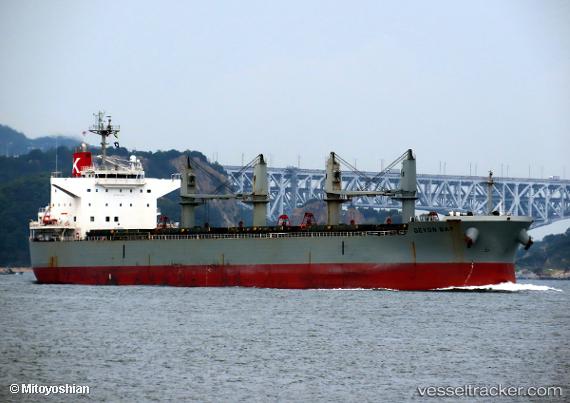
On 23 January 2026, the Singapore-flagged bulk carrier Devon Bay with 21 Filipino crew onboard capsized and sank in the South China Sea. The incident occurred 55 nautical miles northwest of Scarborough Shoal, a contested maritime feature claimed by both China and the Philippines.
Despite persistent tensions between the coastguards of both countries, the search-and-rescue (SAR) operation mounted stands out as a rare example of humanitarian cooperation between them. As it had assets closest to the incident location, the Chinese Coast Guard (CCG) was alerted by the Hong Kong Maritime Rescue Coordination Centre to help the distressed vessel.
The Philippine Coast Guard (PCG) also deployed two vessels and an aircraft to join the search. By midday on 23 January, Chinese authorities reported 17 people rescued (14 in stable condition, one under treatment, and two confirmed dead). The survivors and deceased were later transferred to the PCG in a coordinated handover at sea.
Both countries continued searching for the remaining four missing crew in the days after the sinking, supported by Singapore’s Maritime and Port Authority, which coordinated with relevant search-and-rescue authorities as the flag State authority, and the Republic of Singapore Navy’s Information Fusion Centre, utilising its Voluntary Community Reporting scheme to engage transiting merchant vessels for sightings and information.
Despite the often-hostile confrontations and rhetoric between Beijing and Manila in their ongoing territorial dispute in the South China Sea, humanitarian considerations clearly took priority in this instance. The PCG publicly expressed appreciation to China for its humanitarian assistance and cooperation in ensuring the safety of its countrymen. On the Chinese side, officials framed the rescue as part of its duty to uphold international humanitarian responsibilities at sea.
This rare positive interaction shows that even adversaries can collaborate when faced with a shared humanitarian imperative. More importantly, it lights up a clear pathway for practical cooperation on common grounds and reinforces the viability of maritime safety and humanitarian assistance as confidence-building measures in managing a persistently tense relationship at sea.
Institutionalising SAR Cooperation
There have been no publicly reported cases of SAR cooperation between China and the Philippines for the transit of commercial vessels through disputed waters prior to the Devon Bay incident. In this case, reports indicated that both coast guards conducted operations independently, with coordination emerging primarily around the at-sea transfer of rescued crew.
A standing SAR SOP would improve efficiency by enabling coordinated sector searches and tasking, rather than independent sweeps that risk duplication and gaps. This SOP could entail agreed points of contact between PCG and CCG operations centres and ships at sea. It could include a tested hotline, designated liaison officers to coordinate logistics, rapid sharing of essential information such as distress alerts, positions, and survivor status, and a pre-set rendezvous and handover routine so that transfers can be done promptly at sea. In this instance, the handover was completed within two days; a codified playbook could further shorten timelines and reduce uncertainty.
To keep the arrangement insulated from wider frictions, the SOP should be kept technical, framed as a humanitarian measure without compromising sovereignty positions, and activated only by verified distress indicators.
The SOP procedures could also be embedded into routine checklists, such that activation is automatic during emergencies rather than dependent on case-by-case decisions. If there is interest, both sides could also operationalise the SOP through table-top exercises and low-profile practical drills in non-sensitive waters to further build confidence.
Leveraging Existing Platforms
Both countries will not be starting from scratch in developing a SAR SOP. Article Six of the 2002 Declaration on the Conduct of Parties in the South China Sea (DOC), signed by claimant states, provides a basis for maritime cooperation, including commitments to the humane treatment of persons in danger or distress, the safety of navigation and communication at sea, and search-and-rescue operations.
However, the DOC, which is framed in broad terms, is non-binding and by itself does not translate into operational routines for time-critical emergencies. What is needed is a bilateral layer that turns these general commitments into actionable procedures, and there are several platforms both sides can use.
China-Philippines Bilateral Consultative Mechanism
Co-chaired by the Vice Foreign Minister of China and the Philippines Under Secretary for Foreign Affairs, the China-Philippines Bilateral Consultative Mechanism (BCM) is a diplomatic platform for structured dialogue. While SAR was recognised as an area for practical cooperation at the seventh BCM meeting in 2023, there have been no further developments, and no publicly known SOP has been established.
Building on the successful cooperation during the Devon Bay incident, it would be useful to resume such discussions, especially since maritime safety and humanitarian assistance can serve as low-hanging fruit for cooperation without prejudicing claims and thus avoiding the hard trade-offs that have stalled some other BCM agendas.
Joint Coast Guard Committee
During a brief rapprochement in bilateral relations, Manila and Beijing signed a Memorandum of Understanding in October 2016 to establish a Joint Coast Guard Committee (JCGC). This led to inaugural meetings in 2017 during which both sides agreed on areas of cooperation, including search and rescue, environmental protection, and combating crime, and even set up a direct hotline between the coast guards.
Unfortunately, as tensions later escalated over territorial issues, this mechanism lost momentum and has since been suspended. However, recent discussions between the foreign ministries of both sides on a new coast guard cooperation agreement in late 2025 suggest a chance to put humanitarian assistance and maritime safety coordination on the table as a practical starting point for re-engagement.
Conclusion
The Devon Bay incident should not be treated as a one-off anomaly; instead, the momentum should be harnessed to demonstrate how practical cooperation is possible even in a high-sensitivity area. By setting clear procedures for distress alerts, operational coordination, and at-sea handovers, Manila and Beijing could make life-saving collaboration more predictable, faster, and less vulnerable to political swings, while keeping any arrangement explicitly humanitarian and without prejudice to sovereignty positions.
There are existing channels which can be used to discuss this SOP with minimal political cost, and table-top exercises can help normalise coordination (before real emergencies) and promote positive interactions. In a maritime environment shaped by deterrence and contestation, search-and-rescue cooperation offers common ground that reduces risk, builds habits of communication, and reinforces the fundamental principle that saving lives at sea must come first.
About the Authors
Nicholas Lim Chye Khiang is a Senior Fellow at the S. Rajaratnam School of International Studies (RSIS), Nanyang Technological University (NTU), Singapore. Chong De Xian is an Associate Research Fellow in the Maritime Security Programme at RSIS.
SYNOPSIS
Building on the momentum of the search-and-rescue operation following the sinking of the vessel Devon Bay, China and the Philippines could look at formalising maritime security cooperation through existing bilateral mechanisms. Such cooperation can be a practical way to build trust and encourage positive interactions amid ongoing tensions.
COMMENTARY
On 23 January 2026, the Singapore-flagged bulk carrier Devon Bay with 21 Filipino crew onboard capsized and sank in the South China Sea. The incident occurred 55 nautical miles northwest of Scarborough Shoal, a contested maritime feature claimed by both China and the Philippines.
Despite persistent tensions between the coastguards of both countries, the search-and-rescue (SAR) operation mounted stands out as a rare example of humanitarian cooperation between them. As it had assets closest to the incident location, the Chinese Coast Guard (CCG) was alerted by the Hong Kong Maritime Rescue Coordination Centre to help the distressed vessel.
The Philippine Coast Guard (PCG) also deployed two vessels and an aircraft to join the search. By midday on 23 January, Chinese authorities reported 17 people rescued (14 in stable condition, one under treatment, and two confirmed dead). The survivors and deceased were later transferred to the PCG in a coordinated handover at sea.
Both countries continued searching for the remaining four missing crew in the days after the sinking, supported by Singapore’s Maritime and Port Authority, which coordinated with relevant search-and-rescue authorities as the flag State authority, and the Republic of Singapore Navy’s Information Fusion Centre, utilising its Voluntary Community Reporting scheme to engage transiting merchant vessels for sightings and information.
Despite the often-hostile confrontations and rhetoric between Beijing and Manila in their ongoing territorial dispute in the South China Sea, humanitarian considerations clearly took priority in this instance. The PCG publicly expressed appreciation to China for its humanitarian assistance and cooperation in ensuring the safety of its countrymen. On the Chinese side, officials framed the rescue as part of its duty to uphold international humanitarian responsibilities at sea.
This rare positive interaction shows that even adversaries can collaborate when faced with a shared humanitarian imperative. More importantly, it lights up a clear pathway for practical cooperation on common grounds and reinforces the viability of maritime safety and humanitarian assistance as confidence-building measures in managing a persistently tense relationship at sea.
Institutionalising SAR Cooperation
There have been no publicly reported cases of SAR cooperation between China and the Philippines for the transit of commercial vessels through disputed waters prior to the Devon Bay incident. In this case, reports indicated that both coast guards conducted operations independently, with coordination emerging primarily around the at-sea transfer of rescued crew.
A standing SAR SOP would improve efficiency by enabling coordinated sector searches and tasking, rather than independent sweeps that risk duplication and gaps. This SOP could entail agreed points of contact between PCG and CCG operations centres and ships at sea. It could include a tested hotline, designated liaison officers to coordinate logistics, rapid sharing of essential information such as distress alerts, positions, and survivor status, and a pre-set rendezvous and handover routine so that transfers can be done promptly at sea. In this instance, the handover was completed within two days; a codified playbook could further shorten timelines and reduce uncertainty.
To keep the arrangement insulated from wider frictions, the SOP should be kept technical, framed as a humanitarian measure without compromising sovereignty positions, and activated only by verified distress indicators.
The SOP procedures could also be embedded into routine checklists, such that activation is automatic during emergencies rather than dependent on case-by-case decisions. If there is interest, both sides could also operationalise the SOP through table-top exercises and low-profile practical drills in non-sensitive waters to further build confidence.
Leveraging Existing Platforms
Both countries will not be starting from scratch in developing a SAR SOP. Article Six of the 2002 Declaration on the Conduct of Parties in the South China Sea (DOC), signed by claimant states, provides a basis for maritime cooperation, including commitments to the humane treatment of persons in danger or distress, the safety of navigation and communication at sea, and search-and-rescue operations.
However, the DOC, which is framed in broad terms, is non-binding and by itself does not translate into operational routines for time-critical emergencies. What is needed is a bilateral layer that turns these general commitments into actionable procedures, and there are several platforms both sides can use.
China-Philippines Bilateral Consultative Mechanism
Co-chaired by the Vice Foreign Minister of China and the Philippines Under Secretary for Foreign Affairs, the China-Philippines Bilateral Consultative Mechanism (BCM) is a diplomatic platform for structured dialogue. While SAR was recognised as an area for practical cooperation at the seventh BCM meeting in 2023, there have been no further developments, and no publicly known SOP has been established.
Building on the successful cooperation during the Devon Bay incident, it would be useful to resume such discussions, especially since maritime safety and humanitarian assistance can serve as low-hanging fruit for cooperation without prejudicing claims and thus avoiding the hard trade-offs that have stalled some other BCM agendas.
Joint Coast Guard Committee
During a brief rapprochement in bilateral relations, Manila and Beijing signed a Memorandum of Understanding in October 2016 to establish a Joint Coast Guard Committee (JCGC). This led to inaugural meetings in 2017 during which both sides agreed on areas of cooperation, including search and rescue, environmental protection, and combating crime, and even set up a direct hotline between the coast guards.
Unfortunately, as tensions later escalated over territorial issues, this mechanism lost momentum and has since been suspended. However, recent discussions between the foreign ministries of both sides on a new coast guard cooperation agreement in late 2025 suggest a chance to put humanitarian assistance and maritime safety coordination on the table as a practical starting point for re-engagement.
Conclusion
The Devon Bay incident should not be treated as a one-off anomaly; instead, the momentum should be harnessed to demonstrate how practical cooperation is possible even in a high-sensitivity area. By setting clear procedures for distress alerts, operational coordination, and at-sea handovers, Manila and Beijing could make life-saving collaboration more predictable, faster, and less vulnerable to political swings, while keeping any arrangement explicitly humanitarian and without prejudice to sovereignty positions.
There are existing channels which can be used to discuss this SOP with minimal political cost, and table-top exercises can help normalise coordination (before real emergencies) and promote positive interactions. In a maritime environment shaped by deterrence and contestation, search-and-rescue cooperation offers common ground that reduces risk, builds habits of communication, and reinforces the fundamental principle that saving lives at sea must come first.
About the Authors
Nicholas Lim Chye Khiang is a Senior Fellow at the S. Rajaratnam School of International Studies (RSIS), Nanyang Technological University (NTU), Singapore. Chong De Xian is an Associate Research Fellow in the Maritime Security Programme at RSIS.