


17 June 2026
CO26128 | Religious Authority and the Global Conversation on Artificial Intelligence and Ethics

SYNOPSIS
In a new document, Magnifica Humanitas, the Vatican has brought AI and religion into conversation on ethics and human dignity. By raising questions around work, slavery, and social justice, the Vatican is attempting to start a global conversation about how AI can benefit humanity, engaging both religious institutions and tech firms.
COMMENTARY
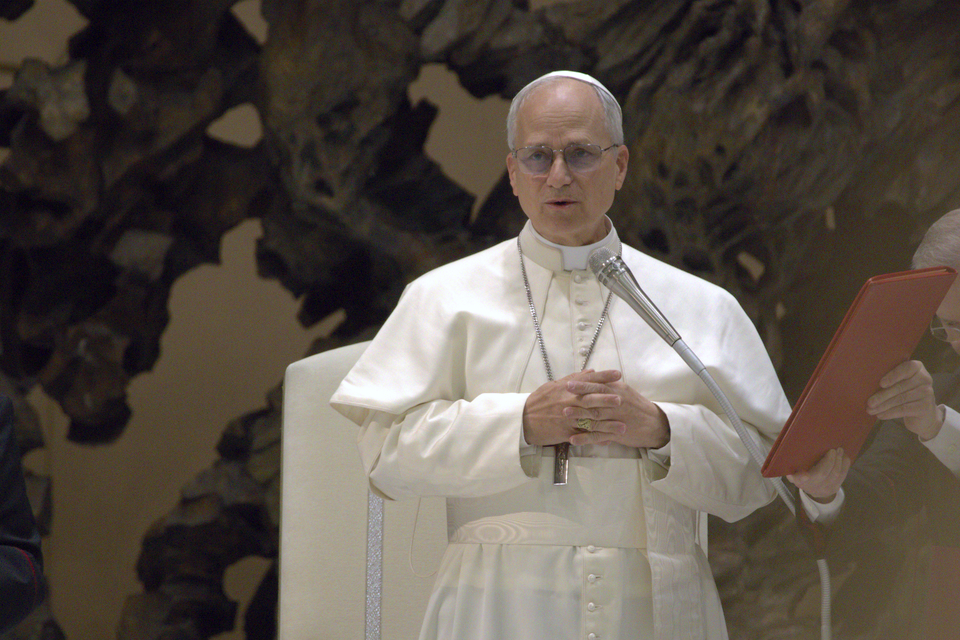
The launch of Pope Leo XIV’s new encyclical, Magnifica Humanitas, featured something very unusual: the presence of a non-Catholic and non-Vatican outsider. This was Chris Olah, co-founder of Anthropic and an atheist, who insiders said was there to signal the Pope’s seriousness about engaging the wider world on the challenges of AI, which for the Vatican include issues of human dignity, slavery and labour.
Encyclicals are Papal Letters, historically circulated among local churches. Since the nineteenth century, they have become one of the ways that popes deliver clarifications and updates on Catholic teachings. They typically address doctrine, ethics, or pastoral concerns and are intended to clarify specific issues of contemporary relevance.
Although published on 25 May 2026, this encyclical was signed on 15 May, exactly 135 years since Leo XIII’s encyclical Rerum Novarum, which first addressed Catholic Social Doctrine. This confirms a link to a predecessor’s concerns whose name the current Pope took. The encyclical thereby places itself within a lineage of ethical teachings regarding the wider world and the political sphere.
The Magnificence of Humanity
The Latin phrase Magnifica Humanitas translates as the “magnificent human”, or perhaps the “magnificence of humanity”. This is clearly something that Leo takes very seriously, and the encyclical’s subheading “On Safeguarding the Human Person in the Time of Artificial Intelligence” provides the contemporary context. The text uses a Christian doctrinal framework of humanity’s value as created in God’s image, while also appealing to universal human rights and the inalienable dignity of all people. This allows it to speak both to Catholics and a broader global audience.
Leo appears concerned about some movements towards transhumanism, in which technology and humanity combine, even though he acknowledges certain advantages of such approaches. From a Catholic perspective, though, he notes that the “vision” behind this is what matters: we must not view some humans as “less useful, less desirable or less worthy,” or as “necessary sacrifices” in the name of progress (117).
Throughout the encyclical, the call is for a dialogue between the church and the world, including with tech leaders – as signalled by Olah’s presence – on harnessing AI in the pursuit of preserving human dignity. It is considered that each will bring something different to the conversation, whether that be the tech skills or the ethical and social vision.
AI, Work, and Humanity
The central concern of the encyclical is how AI should be used to benefit humanity, particularly its impact on work. Rerum Novarum – literally meaning “of new things” – was understood very much as aimed at the working class in a time of rampant capitalism and industrialisation. When humans are at risk of losing their jobs to AI, the ethical imperative of how it is used is key. Indeed, China has already made it illegal for companies to dismiss people and replace them with cheaper AI alternatives. The social impact of AI on employment is already a matter of regulatory concern for governments.
One very important part of the encyclical is to change the conversation on this. Often it is stated that technology is simply a neutral tool that can be used well or badly. However, Leo points out that AI comes loaded with presuppositions and biases, and the encyclical states that AI is not “morally neutral” but, like any “technical tool, embodies choices” in how “it classifies people and situations.” Leo believes that some aspects of AI platforms and the language of tech may treat “some lives as less worthy” and exclude some people in ways “that contradict the inalienable dignity of the human person” (104). In other words, AI comes reloaded with moral and social values that may be detrimental to some people, thereby undermining integral human dignity.
People are already using AI to make choices while they are in governance systems, and they are already therefore affecting society in tangible ways. This is not merely hypothetical. Notably, one company, Emergent AI, ran a multi-agent simulation using four different AI systems to see what type of society they would create. When the platforms were tested together, they descended into anarchy, as did Grok when run independently. Only Claude built institutional structures, including drafting a constitution. Anthropic has engaged Catholic thinkers in its ethics work, with several contributing to Claude’s Constitution that guides the model’s behaviour. The conclusions we can draw from this are that these systems, when consulted, do not naturally benefit human flourishing, thereby underscoring the need for ethical governance rules to be built in.
Slavery and Social Doctrine
This encyclical firmly situates itself within the tradition of Catholic Social Doctrine, grounding its arguments in that lineage. The encyclical makes it clear that the Church understands itself to have a significant role in political and social commentary. The phrase used for the originating encyclical of Catholic Social Doctrine, Rerum Novarum, has – since the time of the Roman orator Cicero – connoted revolution or political change.
This presumably sits in a context where the Pope has been asked by some parties, such as the US, to stay out of politics and stick to the Church’s core business. With this encyclical, the Vatican is making clear that politics is its business, and that this is well established in its teachings.
Another important intervention is on slavery. This is introduced with a concern that humans might become subject to machines and technology. But the encyclical goes further and acknowledges the longstanding failure – 1,800 years as the document states – of Christians to understand slavery as an evil that harms the dignity of humanity. Moreover, there is an apology for the Church’s explicit complicity in slavery, which may offend some on the political right opposed to what they see as such “woke” gestures.
But beyond this, the encyclical calls for vigilance of new forms of slavery as “the memory of past complicity and blindness in the face of the injustice of slavery becomes a call to vigilance” (177) against new forms of slavery that may be “fueled by economic chains and digital infrastructures” (179).
Technology and Religion in Dialogue
Sometimes an encyclical is primarily of interest within the Catholic Church alone, but with Olah’s presence, the Vatican has signalled that this is intended to start a wider global conversation. Previous encyclicals, such as Pope Francis’ Laudato si’, have transcended their Catholic audience to become issues of global concern, including environmental justice. The Vatican clearly hopes that Magnifica Humanitas will have a similar reach. Indeed, by stressing that AI is not a neutral tool, the Vatican may hope to move the dial on the public conversation.
Anthropic, which has cultivated an active dialogue with Catholic ethicists and theologians, including contributors to the guidelines that shape its Claude AI model, is already in this conversation, but whether other tech companies take up the call remains to be seen. Certainly, a wider religious voice beyond just Catholics or other Christians will be important in many countries. But, as the encyclical notes, many of these companies, as private entities with vast resources, already rival some countries in their power and reach. Whether the private sector will act in the public interest remains an open and pressing question.
The encyclical makes the question of human dignity central to debates on AI. This raises at least two questions: how this affects work, and whether we protect all human lives and jobs or just some as well as the inbuilt ethical and social codes of AI platforms. Emergent AI’s simulation gives us an indication of what may happen as more decision-making is given to AI tools. This suggests that more government oversight is needed not just of AI use, but also of the platforms themselves. These are not simply private and personal tools; they exist in our societies, and just as we have safety regulations for cars, food, and housing, the online world needs deeper regulating.
The ethics of AI is a question that will affect us all moving forward. Both the religious and the atheists, as seen in this encyclical’s launch, must be invested in this conversation. Governments also will need to act, whether unilaterally, as China has done, or through multilateral cooperation, and move quickly. Whether religion is a major factor in this conversation or not, this encyclical certainly raises questions we must all take seriously.
About the Author
Dr Paul Hedges is Professor of Interreligious Studies and Associate Dean (Scholarly Ecosystems) in the Studies in Inter-Religious Relations in Plural Societies (SRP) Programme, S. Rajaratnam School of International Studies (RSIS), Nanyang Technological University (NTU), Singapore, and a Life Member of Clare Hall, University of Cambridge, UK. He is currently a Visiting Fellow at the Woolf Institute, Cambridge, UK.
SYNOPSIS
In a new document, Magnifica Humanitas, the Vatican has brought AI and religion into conversation on ethics and human dignity. By raising questions around work, slavery, and social justice, the Vatican is attempting to start a global conversation about how AI can benefit humanity, engaging both religious institutions and tech firms.
COMMENTARY
The launch of Pope Leo XIV’s new encyclical, Magnifica Humanitas, featured something very unusual: the presence of a non-Catholic and non-Vatican outsider. This was Chris Olah, co-founder of Anthropic and an atheist, who insiders said was there to signal the Pope’s seriousness about engaging the wider world on the challenges of AI, which for the Vatican include issues of human dignity, slavery and labour.
Encyclicals are Papal Letters, historically circulated among local churches. Since the nineteenth century, they have become one of the ways that popes deliver clarifications and updates on Catholic teachings. They typically address doctrine, ethics, or pastoral concerns and are intended to clarify specific issues of contemporary relevance.
Although published on 25 May 2026, this encyclical was signed on 15 May, exactly 135 years since Leo XIII’s encyclical Rerum Novarum, which first addressed Catholic Social Doctrine. This confirms a link to a predecessor’s concerns whose name the current Pope took. The encyclical thereby places itself within a lineage of ethical teachings regarding the wider world and the political sphere.
The Magnificence of Humanity
The Latin phrase Magnifica Humanitas translates as the “magnificent human”, or perhaps the “magnificence of humanity”. This is clearly something that Leo takes very seriously, and the encyclical’s subheading “On Safeguarding the Human Person in the Time of Artificial Intelligence” provides the contemporary context. The text uses a Christian doctrinal framework of humanity’s value as created in God’s image, while also appealing to universal human rights and the inalienable dignity of all people. This allows it to speak both to Catholics and a broader global audience.
Leo appears concerned about some movements towards transhumanism, in which technology and humanity combine, even though he acknowledges certain advantages of such approaches. From a Catholic perspective, though, he notes that the “vision” behind this is what matters: we must not view some humans as “less useful, less desirable or less worthy,” or as “necessary sacrifices” in the name of progress (117).
Throughout the encyclical, the call is for a dialogue between the church and the world, including with tech leaders – as signalled by Olah’s presence – on harnessing AI in the pursuit of preserving human dignity. It is considered that each will bring something different to the conversation, whether that be the tech skills or the ethical and social vision.
AI, Work, and Humanity
The central concern of the encyclical is how AI should be used to benefit humanity, particularly its impact on work. Rerum Novarum – literally meaning “of new things” – was understood very much as aimed at the working class in a time of rampant capitalism and industrialisation. When humans are at risk of losing their jobs to AI, the ethical imperative of how it is used is key. Indeed, China has already made it illegal for companies to dismiss people and replace them with cheaper AI alternatives. The social impact of AI on employment is already a matter of regulatory concern for governments.
One very important part of the encyclical is to change the conversation on this. Often it is stated that technology is simply a neutral tool that can be used well or badly. However, Leo points out that AI comes loaded with presuppositions and biases, and the encyclical states that AI is not “morally neutral” but, like any “technical tool, embodies choices” in how “it classifies people and situations.” Leo believes that some aspects of AI platforms and the language of tech may treat “some lives as less worthy” and exclude some people in ways “that contradict the inalienable dignity of the human person” (104). In other words, AI comes reloaded with moral and social values that may be detrimental to some people, thereby undermining integral human dignity.
People are already using AI to make choices while they are in governance systems, and they are already therefore affecting society in tangible ways. This is not merely hypothetical. Notably, one company, Emergent AI, ran a multi-agent simulation using four different AI systems to see what type of society they would create. When the platforms were tested together, they descended into anarchy, as did Grok when run independently. Only Claude built institutional structures, including drafting a constitution. Anthropic has engaged Catholic thinkers in its ethics work, with several contributing to Claude’s Constitution that guides the model’s behaviour. The conclusions we can draw from this are that these systems, when consulted, do not naturally benefit human flourishing, thereby underscoring the need for ethical governance rules to be built in.
Slavery and Social Doctrine
This encyclical firmly situates itself within the tradition of Catholic Social Doctrine, grounding its arguments in that lineage. The encyclical makes it clear that the Church understands itself to have a significant role in political and social commentary. The phrase used for the originating encyclical of Catholic Social Doctrine, Rerum Novarum, has – since the time of the Roman orator Cicero – connoted revolution or political change.
This presumably sits in a context where the Pope has been asked by some parties, such as the US, to stay out of politics and stick to the Church’s core business. With this encyclical, the Vatican is making clear that politics is its business, and that this is well established in its teachings.
Another important intervention is on slavery. This is introduced with a concern that humans might become subject to machines and technology. But the encyclical goes further and acknowledges the longstanding failure – 1,800 years as the document states – of Christians to understand slavery as an evil that harms the dignity of humanity. Moreover, there is an apology for the Church’s explicit complicity in slavery, which may offend some on the political right opposed to what they see as such “woke” gestures.
But beyond this, the encyclical calls for vigilance of new forms of slavery as “the memory of past complicity and blindness in the face of the injustice of slavery becomes a call to vigilance” (177) against new forms of slavery that may be “fueled by economic chains and digital infrastructures” (179).
Technology and Religion in Dialogue
Sometimes an encyclical is primarily of interest within the Catholic Church alone, but with Olah’s presence, the Vatican has signalled that this is intended to start a wider global conversation. Previous encyclicals, such as Pope Francis’ Laudato si’, have transcended their Catholic audience to become issues of global concern, including environmental justice. The Vatican clearly hopes that Magnifica Humanitas will have a similar reach. Indeed, by stressing that AI is not a neutral tool, the Vatican may hope to move the dial on the public conversation.
Anthropic, which has cultivated an active dialogue with Catholic ethicists and theologians, including contributors to the guidelines that shape its Claude AI model, is already in this conversation, but whether other tech companies take up the call remains to be seen. Certainly, a wider religious voice beyond just Catholics or other Christians will be important in many countries. But, as the encyclical notes, many of these companies, as private entities with vast resources, already rival some countries in their power and reach. Whether the private sector will act in the public interest remains an open and pressing question.
The encyclical makes the question of human dignity central to debates on AI. This raises at least two questions: how this affects work, and whether we protect all human lives and jobs or just some as well as the inbuilt ethical and social codes of AI platforms. Emergent AI’s simulation gives us an indication of what may happen as more decision-making is given to AI tools. This suggests that more government oversight is needed not just of AI use, but also of the platforms themselves. These are not simply private and personal tools; they exist in our societies, and just as we have safety regulations for cars, food, and housing, the online world needs deeper regulating.
The ethics of AI is a question that will affect us all moving forward. Both the religious and the atheists, as seen in this encyclical’s launch, must be invested in this conversation. Governments also will need to act, whether unilaterally, as China has done, or through multilateral cooperation, and move quickly. Whether religion is a major factor in this conversation or not, this encyclical certainly raises questions we must all take seriously.
About the Author
Dr Paul Hedges is Professor of Interreligious Studies and Associate Dean (Scholarly Ecosystems) in the Studies in Inter-Religious Relations in Plural Societies (SRP) Programme, S. Rajaratnam School of International Studies (RSIS), Nanyang Technological University (NTU), Singapore, and a Life Member of Clare Hall, University of Cambridge, UK. He is currently a Visiting Fellow at the Woolf Institute, Cambridge, UK.